Star Trek: Episode I

•October 23, 2007 • Leave a Comment

I’ve never really been a Trekkie, mostly because I grew up in a country where Trek episodes weren’t readily available on TV. I do, however, enjoy the occasional dabble. I’ve seen a few episodes of TOS, several of TNG, and almost nothing of Voyager, DS9, or Enterprise. Of the movies, I’ve seen (and enjoyed) The Motion Picture, The Voyage Home, The Undiscovered Country, Generations, First Contact, and Insurrection. That’s right, I’ve never seen The Wrath of Khan. Nevertheless, I do appreciate many of the characters that the various movies and series have brought to life and the stories that have been told over the decades, so naturally I’m interested in news about the upcoming Star Trek XI (currently slated for 2008).

Reportedly this will be a “franchise reboot,” featuring Kirk and Spock and the rest of the original crew during earlier days. This has been in the works for quite awhile, and I’ve caught the occasional casting rumor as the months went by, but now at last it appears that there is a set cast. All of the original roles have been filled . . . and I am decidedly intrigued. Of course, some of these actors I recognize by sight only, rather than by name, which is why I found this link handy. It’s got all of the new cast members listed, and placed side-by-side with their ’60s TV counterparts. Fascinating.

For starters we’ve got Spock being played by Zachary Quinto (that’s Sylar from TV’s Heroes). Uhura will be played by Zoe Saldana, who was a feisty pirate captain in the first Pirates of the Caribbean movie. John Cho steps in as Sulu (Harold from Harold & Kumar Go to White Castle, which I’m guessing you didn’t see). McCoy, oddly, is Karl Urban . . . yes, as in Eomer from Lord of the Rings. Chekov is AntonYelchin, whom I’ve never heard of or seen in anything. Wait, I take that back. I saw him in a trailer for Charlie Bartlett, in which he plays the title character. Chris Pine has been cast as Kirk. I’ve definitely never seen him in anything. And finally, Eric Bana will play the villain, intriguingly named “Nero.”

Okay, not quite finally. I saved my favorite bit of casting for last. Simon Pegg (Shaun of the Dead, Hot Fuzz) will be joining the production as Scotty. I love this actor and I think he’ll do a fun and fantastic job. His presence alone makes me feel a twinge of anticipation. Actually, in general as I scan through the pictures of the new crew and try to visualize them in the respective roles . . . I think this might just work and be really really cool to boot. Thank goodness I’m not a purist.

Go check ’em out.

I’m Back

•October 21, 2007 • Leave a Comment

New city, new house, new life . . . that’s the short explanation for my longer-than-expected hiatus. But I’m back now, watching movies again, and hopefully we can avoid further interruptions for quite some time to come. As a way of getting back up to speed, here are a few things I’d like to see developed in Moviegoings during the coming months:

  • Best Picture feature continued regularly to completion.
  • King Arthur film project continued to completion. I think there might be a substantial paper/book buried in there somewhere.
  • An ongoing, in-depth series on the work of my favorite director, Alfred Hitchcock, inspired by this bold undertaking (more on that momentarily).
  • The long-since-promised discussion on Zombie movies and other such topical considerations.
  • Current updates on and links to movie-related developments and discussions that interest me.
  • Timely reviews of the recent theatrical releases that capture my attention (at least two a month) in addition to my impressions of various items of interest, old and new, already available for smaller screens.

Those are just a few things knocking about in my head, but they ought to keep me quite busy I should think. I have access already to most of the material I’ll need, although some of my more demanding research projects will require a little hunting. I’m still assembling my Hitchcock collection, for instance, and I have a few more zombie movies to watch . . . etc. You are encouraged to follow the link to “31 Days of Spielberg” above, which I meant to post months ago.

The 31 days are, most regrettably, currently stalled at day 19. Apparently the author became embroiled in some charges of plagiarism (which are, quite honestly, only tangential to the substance and quality of the work he has produced here) and dropped out of the blogging world for a time so that he could reassess certain things. Nevertheless, the 19 days-worth of in-depth discussion of Spielberg and his films through 1991 is absolutely top-notch stuff, both informative and entertaining. I should very much like to accomplish a similar feat with Hitchcock and his films, but to achieve this level of scholarship will require some careful research and planning (a prospect which I relish, but cannot deliver quickly).

In closing, here are a few trailers for a movie I’m anticipating. Sweeney Todd: The Demon Barber of Fleet Street, an adaptation of the Stephen Sondheim production directed by Tim Burton and starring Johnny Depp, Helena Bonham-Carter and Alan Rickman, will be in theaters in a few months, and I think it’s looking grand. I may have a chance to see a live stage version next week, but that’s not solid yet. Meanwhile: trailer 1, trailer 2.

Fall Movielogue, 2007

•August 28, 2007 • Leave a Comment

August 28 – January 6

# Title (Production Year) Rating% Date Watched — Review links, if any (*Title* denotes top ten movie of period)

742 *City of God* (2002) 96% 8/30/2007
743 The Adventures of Ichabod and Mr. Toad (1949) 60% 9/1/2007
744 Guess Who (2005) 39% 9/2/2007
745 Like Water for Chocolate (1992) 83% 9/4/2007
746 Love’s Labour’s Lost (2000) 90% 9/7/2007
747 Hedwig and the Angry Inch (2001) 84% 9/8/2007
748 Cinderella (1950) 88% 9/15/2007
749 Accepted (2006) 64% 9/20/2007
750 Spider (2002) 90% 9/26/2007
751 The 40-Year-Old Virgin (2005) 84% 9/27/2007
752 High Anxiety (1977) 77% 9/27/2007
753 Looking for Comedy in the Muslim World (2005) 77% 10/4/2007
754 All the President’s Men (1976) 87% 10/4/2007
755 Resident Evil (2002) 50% 10/5/2007
756 Beauty and the Beast (1991) 94% 10/5/2007
757 Wild Wild West (1999) 23% 10/7/2007
758 Alice in Wonderland (1951) 91% 10/14/2007
759 Maxed Out (2006) 83% 10/15/2007
760 3:10 to Yuma (2007) 95% 10/18/2007 — Post
761 Vanilla Sky (2001) 98% 10/19/2007
762 No Reservations (2007) 51% 10/20/2007
763 Clueless (1995) 84% 10/21/2007
764 Separate Tables (1958) 93% 10/21/2007
765 The Cable Guy (1996) 82% 10/22/2007
766 Becket (1964) 94% 10/22/2007
767 *Gone Baby Gone* (2007) 97% 10/23/2007 — Post
768 Fido (2006) 90% 10/24/2007
769 Dick (1999) 84% 10/24/2007
770 From Hell (2001) 57% 10/25/2007
771 Rat Race (2001) 72% 10/25/2007
772 Peter Pan (1953) 93% 10/25/2007
773 Lady and the Tramp (1955) 88% 10/28/2007
774 Young Frankenstein (1974) 94% 10/29/2007
775 Secretary (2002) 74% 10/29/2007
776 Cinema Paradiso (1988) 96% 10/30/2007
777 Halloween (1978) 77% 10/31/2007 — Post
778 Halloween II (1981) 26% 10/31/2007 — Post
779 The Exorcist (1973) 95% 10/31/2007 — Post
780 The Camden 28 (2007) 85% 11/3/2007
781 Grosse Pointe Blank (1997) 84% 11/3/2007
782 Martian Child (2007) 63% 11/3/2007
783 *Lars and the Real Girl* (2007) 96% 11/4/2007
784 Jumanji (1995) 65% 11/4/2007
785 The Flintstones (1994) 66% 11/4/2007
786 Monster House (2006) 58% 11/4/2007
787 10 Things I Hate About You (1999) 84% 11/4/2007
788 Across the Universe (2007) 70% 11/5/2007
789 The Jungle Book (1967) 91% 11/6/2007
790 Scarface (1983) 83% 11/8/2007
791 American Gangster (2007) 95% 11/8/2007
792 The Parent Trap (1961) 83% 11/8/2007
793 The Darjeeling Limited (2007) 87% 11/9/2007 — Post
794 Dan in Real Life (2007) 90% 11/9/2007 — Post
795 30 Days of Night (2007) 82% 11/10/2007
796 Talk To Me (2007) 94% 11/11/2007
797 Grand Hotel (1932) 75% 11/14/2007 — Post
798 Saving Silverman (2001) 40% 11/17/2007
799Enchanted (2007) 88% 11/21/2007 — Post
800 Miracle on 34th Street (1994) 61% 11/22/2007
801 The Many Adventures of Winnie the Pooh (1977) 93% 11/25/2007
802 The Purple Rose of Cairo (1985) 90% 11/25/2007
803 *No Country for Old Men* (2007) 100% 11/27/2007 — Post, 2
804 The Rescuers (1977) 81% 11/28/2007
805 F*ck (2005) 86% 12/3/2007
806 Tin Man (2007) 62% 12/4/2007
807 *Blame it on Fidel* (2006) 97% 12/6/2007
808 Oliver and Company (1988) 67% 12/6/2007
809 Bella (2006) 70% 12/7/2007 — Post
810 I Am Legend (2007) 72% 12/14/2007 — Post
811 Edward Scissorhands (1990) 93% 12/17/2007
812 As You Like It (2006) 83% 12/18/2007
813 *Requiem for a Dream* (2000) 95% 12/19/2007
814 The Rescuers Down Under (1990) 83% 12/20/2007
815 *Sweeney Todd: The Demon Barber of Fleet Street* (2007) 95% 12/21/2007 — Post
816 Surf’s Up (2007) 88% 12/24/2007
817 The NeverEnding Story (1984) 29% 12/25/2007
818 *Juno* (2007) 93% 12/26/2007 — Post
819 *Memento* (2000) 95% 12/27/2007
820 *Atonement* (2007) 97% 12/28/2007 — Post
821 Star Trek II: The Wrath of Khan (1982) 84% 12/29/2007
822 Star Trek III: The Search for Spock (1984) 79% 12/29/2007
823 Star Trek IV: The Voyage Home (1986) 83% 12/30/2007
824 Star Trek V: The Final Frontier (1989) 66% 12/30/2007
825 Star Trek VI: The Undiscovered Country (1991) 89% 12/31/2007
826 The Savages (2007) 91% 12/31/2007
827 Star Trek: Generations (1994) 62% 1/1/2008
828 Star Trek: First Contact (1996) 91% 1/1/2008
829 The Lodger (1927) 85% 1/2/2008 — Post
830 Star Trek: Insurrection (1998) 82% 1/2/2008
831 Candleshoe (1977) 78% 1/3/2008
832 Star Trek: Nemesis (2002) 64% 1/3/2008
833 The AbsentMinded Professor (1961) 81% 1/4/2008
834 Charlie Wilson’s War (2007) 94% 1/4/2008 — Post
835 Son of Flubber (1963) 81% 1/6/2008

The Summer of the Threequel

•August 27, 2007 • Leave a Comment

That’s what it was . . . various and sundry trilogies hit their 3rd film: Spider-man, Shrek, Pirates of the Caribbean, Ocean’s Thirteen, Rush Hour . . . with a few other sequels popping in as well here and there. I *only* saw a dozen movies or so in the theater this summer. It should come as no surprise to anyone who sampled the available wide-release fare that only one of them made it into my top ten, although you can find two more with honorable mentions. Not one of them is a threequel. Yes, I saw some pretty wretched movies this summer, both on the large and small screens. Some came highly recommended, some didn’t (and I have no one but myself to blame). But let’s not talk about them. Let’s talk about these:Notes on a Scandal

The History Boys

In the Heat of the Night

Sunset Blvd.

Ratatouille

Finding Nemo

Ushpizin

A Raisin in the Sun

The New World

Howl’s Moving Castle

Oh, so you noticed that, did you? Yes, there are a lot of animated movies in there. Two of them are Pixar masterpieces, past and present, which most of you have probably seen. The other, Howl’s Moving Castle, is a thoroughly charming piece of work from Japan. I was completely disarmed by the gorgeous animation, original characters, and sweet story on display here from Hayao Miyazaki. It made me want to go right out and find all of his other movies (still working on that).

Most of what’s left defies easy categorization. I have already spent time on Notes on a Scandal, In the Heat of the Night, and A Raisin in the Sun in other posts. I might not have bothered with either Ushpizin and The New World without personal recommendations which led me to check them out. The former is a foreign film about a Jewish couple who find themselves saddled with two very unwanted guests in the midst of a holiday where guests are considered a blessing. The movie is unabashedly religious, but still excellent . . . I wish Christians could produce this sort of thing more often.

The latter I would never have watched (not being particularly compelled by the history-mauling Pocahontas/John Smith mythos), if not for the repeated and insistent praise heaped upon it by Jeffrey Overstreet from Looking Closer. I only vaguely remember what it did with its characters’ stories, but it doesn’t matter; the movie is just such an incredible experience visually. Terrence Malick does things with light and shadow on film that Thomas Kinkade only claims to do on a canvas.

Sunset Blvd. is a film I’ve been meaning to watch for years and I just happened to catch it on TCM one day . . . absolutely riveting. I didn’t want to leave the room for even a second. This is surely one of the best movies about the movies ever made. It’s just the sort of thing I grew up loving and am always on the lookout for more of.

I had wanted to see The History Boys after I saw the trailer, but probably still wouldn’t have gotten around to it if it hadn’t shown up at the library. This is the movie that tripe like Dead Poet’s Society and Mona Lisa Smile and The Emperor’s Club ought to have been . . . all about education and life and what (and if) they have to do with each other. There is a dreadful spirit in academics of teaching solely to tests and key facts, and boiling the Holocaust down to a 250-word essay and so on. But it doesn’t have to be that way, and The History Boys is a quirky, tragi-comic, and slightly edgy look at those questions. I would cite it as the perfect example of a movie that has both a brain and a heart.

Honorable Mention:

Deliver Us from Evil

This is such a difficult documentary that I didn’t even write about it at the time, just filed it away as “Seen” and went on. Even now, months later, I don’t really know what to say about it . . . just trying to think about it raises some strong emotions and it feels shallow and irrelevant to tack superlatives on it like “amazing” and “brilliantly-made” and “top ten.” Mostly I’m just incredibly sorry that the subject exists to have a documentary filmed about it, but I applaud the courage of those in front of and behind the camera for making it happen. I know vaguely what that must have been like for some of them.

Cast Away

A lot of people don’t like this movie, but I’ve seen it several times now, and I still enjoy it. Sure, the overarching plot (first and last half-hour) feels a bit silly, but at its heart this is a great survival movie . . . man against the elements and all that. You just can’t discount the riveting hour-and-a-half of almost no dialogue; just Tom Hanks, alone, trying to stay alive on a tiny deserted island in the middle of the ocean. I still shake my head when I recall that Russell Crowe got the acting Oscar that year for Gladiator. I mean, Tom Hanks wept disconsolately over the loss of a volleyball . . . and made it feel like he’d truly lost his best friend!

Adaptation

Speaking of movies about the movies (as I was a few paragraphs ago), Adaptation is so outrageously meta that it just blows my mind. After the success of Being John Malkovich, screenwriter Charlie Kaufman was hired to adapt a book called The Orchid Thief (and odd book to make a movie out of, to be sure) and hit a bit of writer’s block. The screenplay he came up with is Adaptation, the story of his own struggle to adapt The Orchid Thief into a feature film. I’ll probably never know exactly how much of Adaptation is fact and how much is pure fiction (most of it, in all likelihood), but the result is all smart, funny entertainment.

Hairspray

I knew next to nothing about Hairspray until I started seeing trailers several months ago, and very little more afterwards except that I probably didn’t want to see it. Well, once it came out I got dragged along to see it anyway, and thoroughly enjoyed myself. Hairspray is pure bubblegum, but the music is fantastic, the cast is perfect, and the slightly offbeat humor had me rolling. I don’t expect much more than that from a light-hearted musical.

Hot Fuzz

Shaun of the Dead was a brilliant, hilarious “romantic comedy . . . with zombies” that hit every high point of the genre and tweaked it just a little to great effect. Hot Fuzz is a slightly-less-brilliant-but-still-uproariously-funny riff on action films. I’ve seen it thrice, and it’s still just as funny. I can’t wait to see what Simon Pegg and Nick Frost show up in next. They’ve got a good thing going here.

The Silence of the Lambs: Best Picture, 1991

•August 16, 2007 • Leave a Comment

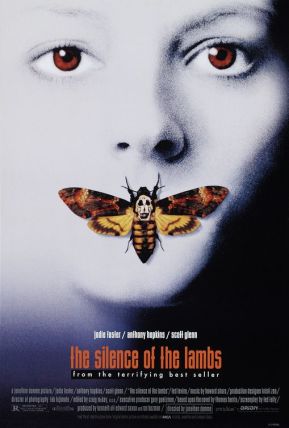
silenceofthelambsposter.jpgThe 64th Annual Academy Awards were hosted by Billy Crystal. The Silence of the Lambs was nominated for 7 Oscars: Best Picture, Best Director, Best Adapted Screenplay, Best Editing, Best Actor (Anthony Hopkins), Best Actress (Jodie Foster) and Best Sound. In the Best Picture category it bested Oliver Stone’s conspiracy-minded JFK, Warren Beatty gangster movie Bugsy, Barbra Streisand’s drama-laden The Prince of Tides and Disney’s Beauty and the Beast (the first and only animated film to be nominated for Best Picture).
Meanwhile, Anthony Hopkins’ Hannibal Lecter won over Robin Williams’ performance in The Fisher King and Robert De Niro in Cape Fear. Jodie Foster’s Clarice Starling beat both Thelma (Geena Davis) and Louise (Susan Sarandon) for her award. Jonathan Demme took Best Director from Ridley Scott (Thelma & Louise) and Oliver Stone. The Silence of the Lambs also won Best Adapted Screenplay, but lost Best Editing to JFK and Best Sound to Terminator 2: Judgment Day. The five awards it did take, however, (picture, director, screenplay, actor, actress) constitute an Oscar “grand slam,” making Silence the third of three films to achieve this tour de force. (The other two are It Happened One Night and One Flew Over the Cuckoo’s Nest).

Interestingly, Silence was originally slated for release during the fall of 1990, but it was pushed back until January of the following year so that Orion, the distribution company, could focus more attention on promoting Dances With Wolves for Oscar consideration (it went on to win Best Picture). Orion was in deep financial trouble at the time (in fact, it almost passed on Silence), and declared bankruptcy the following year (it was eventually bought by MGM in 1997). Despite being bankrupt, however, Orion still managed to dredge up $200,000 for the Silence Oscar campaign.

In The Silence of the Lambs, FBI agent-in-training Clarice Starling is called upon by her mentor Jack Crawford (Scott Glenn) to approach imprisoned mass-murderer and former psychologist Dr. Hannibal Lecter. Crawford hopes that Lecter will help them profile and capture another serial killer, “Buffalo Bill,” who has been kidnapping and killing young women. Lecter and Clarice soon develop a vaguely creepy teacher-pupil relationship even as Clarice struggles to establish herself as a competent female investigator in a masculine profession. Gender issues continue to take centerstage when it becomes apparent that Buffalo Bill is not simply killing his victims, he is removing portions of their skin in order to construct a “woman suit.”

The Silence of the Lambs popularized a now well-established breed of forensic thrillers, combining accurate depictions of modern police investigation techniques and titillating close-encounters with deranged criminals. Aside from spawning multiple sequels and prequels of its own, the success of Silence may well have paved the way for the later success of movies like Se7en as well as the multitude of CSI spin-offs and wannabes that clog prime time television today. The film has a very grainy, low-budget, made-for-TV feel beginning right at the opening credits, but the script is smart and suspenseful and very straightforward by more recent thriller standards. Hopkin’s chilling but sophisticated Dr. Hannibal Lecter is nothing short of legendary, a pop culture icon recently voted the #1 film villain of all time by the AFI.


Continue reading ‘The Silence of the Lambs: Best Picture, 1991′

Stardust

•August 11, 2007 • 3 Comments

starring Charlie Cox, Claire Danes, Michelle Pfeiffer and Robert DeNiro
written by Jane Goldman and Matthew Vaughn and directed by Matthew Vaughn
rated PG-13 for some fantasy violence and risque humor.
87%

Somewhere in the English countryside lies the village of Wall, named after the long stone wall that runs next to it. For as long as anyone remembers, a group of the villagers have diligently guarded a gap in the wall that leads to the magical kingdom of Stormhold. Now, a star has fallen from the sky and landed deep within the fairy kingdom, and young Tristran (Charlie Cox) is determined to retrieve it to prove his love to Victoria (Sienna Miller).

He is not the only searcher, however. The evil witch, Lamia (Michelle Pfeiffer), need the heart of the star to restore their youth, and Stormhold’s remaining princes will cut any throat (including each others’) to find the star and claim the throne. Add a few subplots involving sky pirates and an enslaved princess, and you just might have the makings of a quirky fantasy classic. That’s what Paramount hopes, anyway.

If you’ve seen a trailer for Stardust, you already know more than I’ve let on here, and you still don’t have anything approaching a complete picture of how the story plays out. This is all to the good: a more detailed synopsis would be far too long and complicated, and half the fun is seeing it for yourself.

There have been a lot of truly awful attempts to introduce an element of whimsical silliness into the traditional fantasy or fairy tale movie setting in recent years (Ella Enchanted, Happily ‘Never After, and the Shrek sequels, just to name a few), but it’s been a long time since I have seen it employed as successfully as Stardust employs it. And the movie itself is (if I may gush) totally frickin’ cool. Perhaps that is because Stardust is solid fantasy-adventure first and comical fairy-tale fun second, instead of the other way around. We laugh at the comical characters and doings in Stormhold and Wall, but we also want to visit.

I have not read Neil Gaiman’s Stardust, but my interest in the movie version was definitely piqued when a friend first pointed me to a trailer several months ago. I was further intrigued when I read a short story by Susanna Clarke, author of the brilliant Jonathan Strange and Mr. Norrell. The story (“The Duke of Wellington Misplaces His Horse” from The Ladies of Grace Adieu) was set in Gaiman’s universe, and has Wellington unwittingly chasing his horse through the gap in the wall with comical results.

The defining characteristic of Clarke’s fantasy is that it is quintessentially British. I don’t know about Stardust the book, but probably the only definably British thing about this movie is that part of it is set in England. One thing it does share with Clarke’s fanciful realms, however, is that while many of its elements are silly, whimsical, and comical, there is a dark and deadly-serious edge not far beneath the surface.

It is a delicate balance, well-maintained, but not the same sort of thing as, say, The Princess Bride. Princess Bride is simple and sweet, both gentle satire on and affectionate homage to “Once upon a time,” and by now firmly entrenched as a nigh-unassailable classic. It doesn’t need special effects because it’s all charm.

Stardust, by contrast, has pulse-pounding excitement, CG gloss, and an epic feel. It is unapologetically more adult than The Princess Bride (which I first saw at about age 5), but also more juvenile. It isn’t particularly fresh or original, but it feelsas though it is. What it lacks in meaning and substance, it makes up for in sheer entertainment. And if many elements of the plot are transparently contrived, at least they mesh well and keep things moving. With a run-time of over two hours, I never felt the need to check my watch.

So, as I say, Stardust is not the next The Princess Bride, but for a group of friends in search of a good time, the effect will be much the same. Loaded to the gills with action and fun and magic, it has strange characters, exotic locations, breathtaking visuals, and a rousing soundtrack. A few flaws aside, it’s really just about all an uncritical theatergoer could ask for in a fantasy adventure movie.

Of Dreams Deferred

•August 9, 2007 • Leave a Comment

A Raisin in the Sun is the finest film based on a stage play that I have seen since I watched A Streetcar Named Desire a few years ago. Raisin was released in 1961, two years after it opened on Broadway, and ten years after Streetcar. It stars its original Broadway cast, with Sidney Poitier in the lead.

The Youngers have never had much beyond a small apartment and steady work as household staff for rich whites. Until now. Following the death of her husband, family matriarch Lena (Claudia McNeil) has a fat $10,000 insurance check coming to her in the mail, and everyone seems to have big plans for it.

Lena’s daughter Beneatha (Diana Sands), an eternal and somewhat flighty student, dreams of becoming a doctor. Daughter-in-law Ruth (Ruby Dee) thinks Lena should use the money on herself, to take a much-deserved break. And Lena’s hot-blooded son, Walter Lee (Poitier), sees a chance to leave his soul-crushing chauffeur job behind him and set himself up in his own business: a liquor store.

For Walter Lee, this is his chance to finally win some personal dignity, in his own eyes and in the eyes of his young son, Travis, but his wife and sister know better than to count on him. Lena shocks them all when she lays down a third of the money down on a house in an all-white neighborhood and gives the rest to Walter Lee. Will he rise to meet the immense responsibility, or sink all of their hopes with his rash impulsiveness?

All of this plays out amidst some intense and powerful human drama, backed by solid performances all around, and thanks in no small part to Poitier’s immense skill. Poitier was undoubtedly one of the most talented actors of the 1950s and ’60s, a true class act. He is at the top of his game here, two years after his first Oscar nomination and two years before his first (and only) Oscar win. Poitier’s Walter Lee is a volatile force, a pleasure to watch. By turns sympathetic and pathetic, he rages and grits out his lines . . . It is a riveting spectacle.

The movie is perhaps slightly limited in its vision. There is never any doubt that this is based on a work written for the stage. 95% of the action takes place inside the Younger apartment, and the camera only ventures outdoors twice. Then again, I don’t know that there is anything wrong with staying faithful to these limitations. It certainly communicates a feeling of claustrophobia and entrapment to the Younger’s surroundings. They can’t get out of the apartment, and neither can we.

The title comes from “Harlem,” a poem by Langston Hughes. The poem begins . . . Well, actually, I may as well quote the whole thing:

What happens to a dream deferred?

Does it dry up
like a raisin in the sun?
Or fester like a sore—
And then run?
Does it stink like rotten meat?
Or crust and sugar over—
like a syrupy sweet?

Maybe it just sags
like a heavy load.

Or does it explode?

Maybe deferred dreams do dry up if left alone, but seeing them on the brink of resolution for even a short time is much more likely to produce an explosion, as we see here. Playwright Lorraine Hansberry and director Daniel Petrie show us a group of people struggling within a very specific context, but in doing so they open up a window on something universally human: the ability of our dreams to either empower or destroy us.

A Week’s Worth of Movies

•August 5, 2007 • 1 Comment

The Simpsons Movie

I started laughing the moment the feature started and I rarely stopped until the credits had finished rolling. It was manic and hilarious and brilliant, running the gamut from broad slapstick to cheap lowbrow to keen satire and back again in the space of a few seconds. The pace just never let up. Oh, and if I may say so, the Simpsons themselves are looking better than ever with glossy animation against backgrounds that appear to have a definite depth to them.

I’m not a long-time Simpsons fan, honestly . . . I’ve seen just enough to know most of the characters and catch a few in-jokes. It doesn’t even matter. This is just funny, funny stuff for sophomores of all ages.

Akeelah and the Bee

I’ve been waiting to see this movie for quite awhile, and I finally got my hands on a library DVD copy. Great performances from Laurence Fishburn and Keke Palmer strengthen a quality movie that also happens to be family-friendly (for what it’s worth). There are plenty of thoughtful themes and the film has a really nice soundtrack . . . lots to like, in other words.

For my money, though, you’ll get more bang for your buck out of the excellent Spellbound. Not to be confused with Hitchcock’s psychological thriller, Spellbound is a charming, riveting documentary about several kids who competed in the National Spelling Bee in 2002. Ultimately, Akeelah and the Bee is a fictionalized version of the same. It is good in its way, but lacks a certain tension when you’ve already seen the real deal.

Freedom Writers

I expected something a lot more cliche-ridden than this, to tell the truth, so Freedom Writers was already a little ahead of the game in my book. Inspirational-but-gritty teacher stories based on fact aren’t really my genre, but I have to admit that this movie had style and depth backed by some solid acting from all concerned. The only thing I didn’t find compelling was the driving force behind the last act: the students fight to keep the same teacher on into the remaining two years of their high school experience and succeed. The epilogue revealed that she went on to teach many of them in college.

What, so a first-year teacher works a miracle in bringing a group of high school students together and getting them excited about learning, but then they refuse to leave the nest? And she follows them for several years, nursing them along, denying her gifts from all the classes that came after? How is that an accomplishment worthy of its own feature film? Oh, well.

The Host

This Korean monster film made waves among those who like that sort of thing, so I checked it out. I guess I just don’t like that sort of thing. The creature was pretty sweet, I’ll grant that, with awesome visuals and a cool design. And there is some great comedy, as well . . . but not nearly enough. The movie takes itself too seriously, and gets severely bogged down along the way.

Also, I know that a really stupid origin is standard for the genre, but have we run so far out of ideas that an excess of formaldehyde in the river is the best they could come up with for the reason behind this creature’s existence? I suppose that just as monsters created by radiation spoke to a Cold War fear of nuclear annihilation, so this speaks to concerns about foreign (American) presence in Korea and pollution . . . or something. It still seemed a bit weak.

Hairspray

What an outrageously fun bubble-gum piece this is. Shallow as a half-filled kiddie pool, but with several show-stopping musical numbers and a disarmingly tongue-in-cheek sense of humor. The cast is pitch-perfect, with a distinctive blend of recognizable faces and talented newcomers. I saw it twice.

A friend that I saw it with the first time leaned over at the end and whispered, “And that’s the true story of how racial harmony was achieved in America.” Yes, this is a very facile treatment of the civil rights’ struggles of the ’60s, but it doesn’t even pretend to take itself seriously, so that’s okay. I’ve got the soundtrack now, and I might just want to add this to my growing collection of musicals when it hits DVD. Now if they’d just film a big-screen version of Wicked, my life would be complete.

The Best Years of Our Lives: Best Picture, 1946

•August 2, 2007 • Leave a Comment

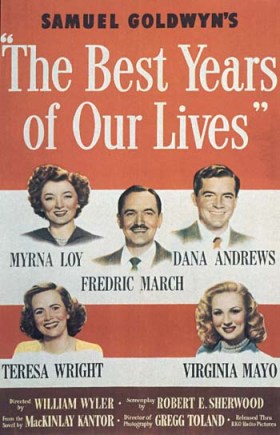
bestyearsofourlivesposter.jpgThe 19th Annual Academy Awards ceremony was hosted by Jack Benny. The Best Years of Our Lives was nominated for 8 awards: Best Picture, Best Director, Best Adapted Screenplay, Best Editing, Best Actor (Fredric March), Best Supporting Actor (Harold Russell), Best Sound and Best Original Score. It lost Best Sound to The Jolson Story and won everything else. In addition, Harold Russell was given an honorary award “for bringing hope and courage to his fellow veterans,” making him the first and only actor to receive two Oscars for a single performance. He deserved the honor. This is impressive work.

Russell lost both his hands on D-day while training paratroopers, and had them replaced with hooks. The role in Best Years was created for him after the director saw him in an army training film. Best Years was his first big-screen appearance. As for other notable nominees, Best Years beat out Laurence Olivier’s Henry V (which also won an honorary award), It’s a Wonderful Life and The Yearling for Best Picture (and various other awards), and beat Claude Rains from Hitchcock’s Notorious for Best Supporting Actor.

The Best Years of Our Lives is quite long, and understandably so, for it is really three movies packaged more or less seamlessly into a single large story. World War II is over, and veterans are pouring back into the United States. All of them want to get home, but most will soon become painfully aware that things aren’t the same as they were before the war started. Three veterans from very different walks of life find themselves returning together to the same town and form a fast friendship that will change all of their lives in ways they cannot yet imagine.

Al Stephenson (Fredric March), a sergeant in the army, has a wife (Myrna Loy), two older children, and a successful banking career to come home to. His superiors at the bank want to put him in charge of loans to ex-GIs, but they don’t quite see eye to eye on who is deserving of aid and who is not. Fred Derry (Dana Andrews), a captain in the air force, is coming back to the wife (Virginia Mayo) he knew for less than three weeks before he was deployed. As a former soda jerk, he finds his marketable skills somewhat lacking in the search for gainful employment, and his wife less sympathetic than Al’s daughter Peggy (Teresa Wright). Finally, Homer Parrish (Harold Russell), an ensign in the navy, both hands lost in combat, comes home to his parents and childhood sweetheart hoping they’ll be able to see past his hooks to the fact that not much else about him has really changed. Or has it?

I said this was three movies rolled into one. This is perhaps the movie’s only significant flaw. Each story intertwines effectively with the others to a certain degree, and perhaps more importantly, each stands firmly on its own. They are all excellent stories, well-scripted and well-acted, capable of holding the viewer’s attention, but all balled together the movie is simply too long. At times it is almost bound to defy our patience.

There is patriotism here, and raw emotion. Both elements could mire a lesser film in excessive sentimentality, but there is none of that here, only a quiet human nobility that makes you feel that this country is great instead of telling you that it is. When Homer swallows his pride and self-pity and shows his fiancée how he gets ready for bed every night . . . well, movie moments are only rarely that memorable.

However, its greatest value, great storytelling, powerful emotions, and magnificent performances aside, lies in the way it captures perfectly life in America after World War II. The eternal problem of what to do with a mass of fighting men when there isn’t any enemy left, translated into individual human terms in a particular place at a single moment in time. You can feel the mood of the nation 60 years ago and see the unique problems they faced. This is undoubtedly a great American movie experience.

Continue reading ‘The Best Years of Our Lives: Best Picture, 1946′

Ingmar Bergman is Dead

•July 30, 2007 • Leave a Comment

The great Swedish film director, Ingmar Bergman, died this Monday morning at the age of 89. I struggle to find something more to say about that fact, for it is significant, but tragically I knew him little (as a filmmaker, that is . . . personally, of course, I knew him not at all). IMDb has a brief obituary which includes an informative mini-biography. I first noticed the news over at Bible Films Blog, and the entry over there is worth reading.

My experience of Bergman to date (and I have every intention of broadening it) consists of having seen the three movies that sealed his renown in the mid- to late-50s: Smiles of a Summer Night, The Seventh Seal, and Wild Strawberries. Smiles of a Summer Night, a warm, tender, romantic dramedy, I just had the pleasure of seeing about a month ago.

The Seventh Seal, a stark, metaphysical masterpiece about a chess game with death, I saw about three years ago. I immediately loved it, and bought it shortly thereafter. I’ve probably watched it half a dozen times since, each viewing richer than the last. A few months later, I saw Wild Strawberries, a soft, moving reflection on life and love from the end looking back. Here’s a short reflection a friend of mine wrote when he saw it a few years ago.

I believe Bergman was my first real experience with foreign films, but at the same time, it doesn’t matter where his films were made. They transcend nationality and speak directly to the heart of the human experience. I look forward to the many movies he made that I haven’t seen yet. His legacy is secure.