Juno

•January 18, 2008 • Leave a Comment

juno-poster.jpgstarring Ellen Page, Michael Cera, Jennifer Garner and Jason Bateman
written by Diablo Cody and directed by Jason Reitman
rated PG-13 for mature thematic material, sexual content and language.
93%

Juno MacGuff (Page) is pregnant. This is a problem because she is only 16 years old, living at home with her parents, and the father (Cera) is a friend from high school. Nevertheless, with admirable courage, enviable charisma and an endless supply of snarky one-liners, she will navigate the difficulties of teenage pregnancy to deliver a baby to be adopted by perfect couple Mark and Vanessa Loring (Bateman and Garner). She’ll have a lot of growing up to do along the way, but as it turns out, she may not be the only one.

Note: I actually saw this for the first time about three weeks ago, and a second time today (and I’d gladly see it again). However, since now I don’t have time to see a new movie this week (and my stomach isn’t convinced it wants to take a crack at Cloverfield, even if the rest of me does) and the buzz around Juno has continued to build to the point where it might just score some hefty Oscar nominations in a few days, I thought I’d discuss it.

With Oscars in mind, let’s get this said and out of the way: Juno is this year’s Little Miss Sunshine in that it is a small-scale, heart-warming comedy with deeply-felt family values, but it is not in any way a family movie. Only time will tell if it is this year’s Little Miss Sunshine in other respects as well. Juno is a hilarious movie with a central character that is almost too likable. This is in part thanks to an inconsistently witty script by first-time screenwriter Diablo Cody, but mostly (in my opinion) thanks to the virtuoso performance given by Ellen Page in the role. Many of the lines she is given to fire saucily at her co-stars are awkward and a little too aware of their own sardonic quirkiness, but Page shows the character’s heart and allows her to be vulnerable in all the right ways and at all the right moments so we can see past her shield of crackling bluster.

I was reminded of something I’ve heard about Oscar Wilde’s The Importance of Being Earnest. As the story goes, the actors who appeared in the first performance ever of the extremely funny play hadn’t fully realized the humor behind the lines they were delivering, and they deadpanned their way through the script to great effect. The audience was rolling in the aisles. The following night, their delivery was colored by the knowledge that particular lines they were delivering were meant to elicit a laugh, and consequently the performance suffered greatly. I don’t know whether that’s true or not, but the reverse is true of Juno. It is the screenplay, rather than the performances, that is often all-too-aware of its own cleverness, and there are several moments of dialogue that couldn’t possibly be made to sound natural.

That cute indie soundtrack can also be a bit overwhelming at times. This is coming from someone who generally likes movies with that sort of sound going on in the background, but Juno allows the music to become invasive and distracting on more than one occasion. It sounds great and all, but it should never be allowed to pull the focus away from whatever is taking place on the screen. The musical selections are extremely typical of ever cutesy movie with quirky characters from Napoleon Dynamite to Thumbsucker, as are the “rough,” hand-drawn elements of credit sequences and so forth. Juno feels like it’s trying too hard to be endearingly odd; quirky when it should be conventional, and conventional when it should be unique.

These are, at best, minor quibbles in the context of discussing the entertainment value of the film. Juno is fun and watchable and definitely a pleasure to see more than once. Some people might find the overall tone extremely annoying, but it works in terms of total effect even if not every single moment plays perfectly. Ellen Page isn’t a lone stand-out, either (although her performance necessarily anchors and defines everything that happens). The whole cast is great, from large roles to small, and I wouldn’t be terribly surprised to see more than one acting nomination go Juno‘s way if any do. J.K. Simmons is always a pleasure to watch, for instance, and I saw some fine work by a few young actors that I haven’t seen in anything else yet (nope, didn’t see Superbad, but I’m starting to think that I want to).

Juno is a good movie and entertaining on more than one level, and it has a few profound things to say. It’s not exactly great cinema, more of a temporal hit that exists very successfully in this particular cultural moment. I think public reaction shows that this little film has tapped into something that our society wants to hear, even if that just means they like smart-alec teens who are far wittier than real teenagers (or even adults). I think it’s something more, as well, but mostly it’s just a really good time (or maybe more than one).

Week 3: The Lodger (1927)

•January 16, 2008 • 2 Comments

title.jpg“Tall he was – and his face all wrapped up.”
“Anyway, I’m glad he’s not keen on the girls.”
“Providence is concerned with sterner things than money, Mrs. Bunting.”
“Even if he is a bit queer, he’s a gentleman.”
“You don’t think he-?”
“Tell that to the judge.”
“Lost his arms, has he, dearie?”
“Your toothbrush – you left it behind.”

The Lodger

Although he had already directed two movies by the time The Lodger was released in 1927, Hitchcock always considered it his first film. In a way it was, since his other films weren’t released until after the success of The Lodger. It is also the first distinctly Hitchcockian picture: a thriller with a blonde heroine and a wrongfully-accused hero in search of the true criminal. The screenplay was adapted (once again by Eliot Stannard, who was the writer on 8 of Hitchcock’s 9 silent films) from a novel by Belloc Lowndes about the famous Jack the Ripper murders. Alma was along as well for her third and final turn as assistant director. The Hitchcocks were married by the time the film was released.

novello.jpgThe Lodger features matinee idol Ivor Novello in the title role, single-name star June as Daisy, Malcolm Keen as Police Detective Joe, and Marie Ault and Arthur Chesney as the landlady and her husband (Mr. and Mrs. Bunting). The plot centers around a mysterious young man with some very suspicious habits who rents a room at beautiful young Daisy’s house. When the lodger seems connected with the prominent Avenger murders, Daisy’s parents and suitor (who also happens to be the detective assigned to the case) are understandably concerned. There are three straightforward ideas woven skillfully together into the story: A murder investigation led by Detective Joe, a mysterious lodger who gives everydaisy.jpg appearance of being the murderer, and a love triangle between these two men and Daisy (who just happens to fit the victim profile perfectly). This is a lean, focused tale of crime and suspense, although Hitch found his plans for the ending at odds with the way movies at the time were made.

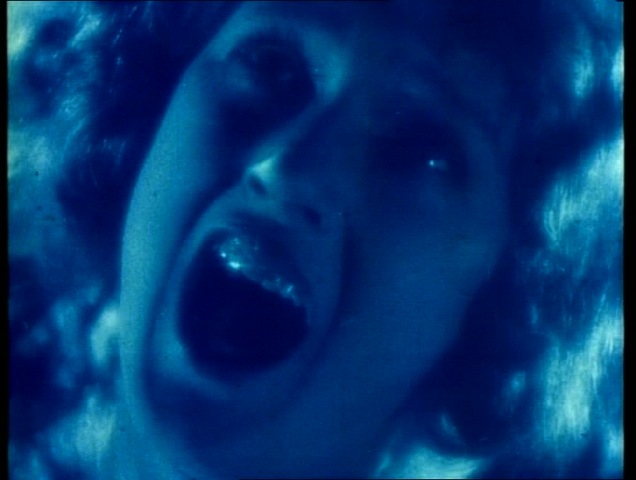
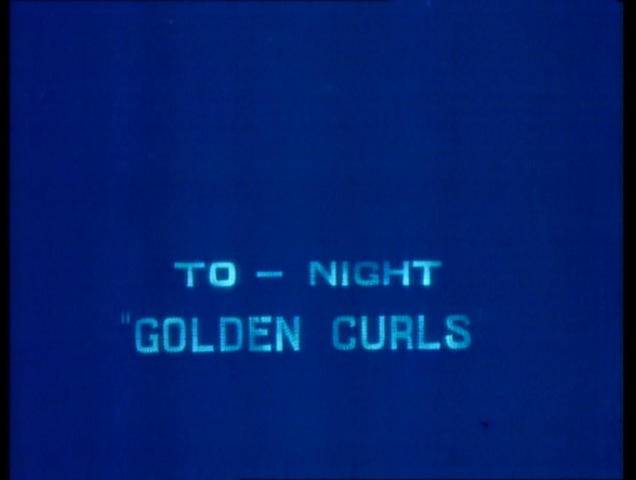
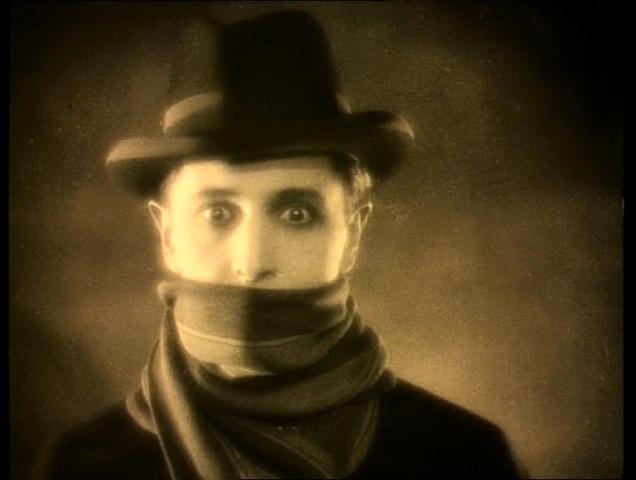
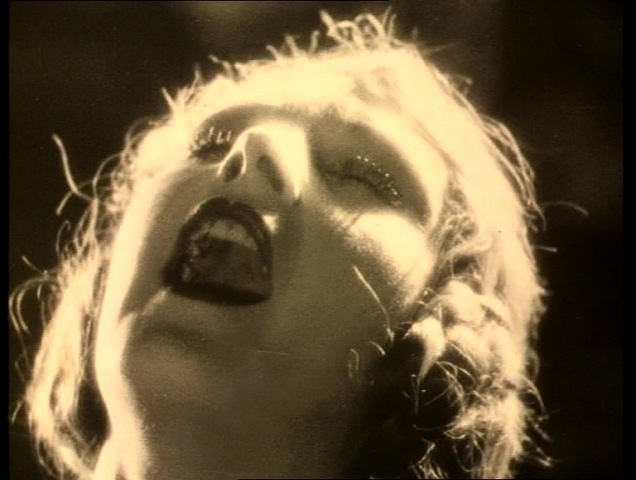
scream.jpgThe film begins with a woman’s scream ringing out in the night. A nearby marquee flashes (rather ironically) the words “TO-NIGHT GOLDEN CURLS” and we see the woman’s lifeless body in a heap on the ground. Pinned to her clothing is a note with a triangle drawngoldencurls.jpg on it and “The Avenger” written inside the shape. A shabbily-dressed, middle-aged woman describes the murderer to the police as a crowd gatherers: A tall man with his face wrapped up. A reporter rushes off from the small concession stand where everyone has gathered to phone in the news, and we follow it as it goes out to the papers, is printed on the giant presses, distributed to the newsstands, and broadcast over the radio.

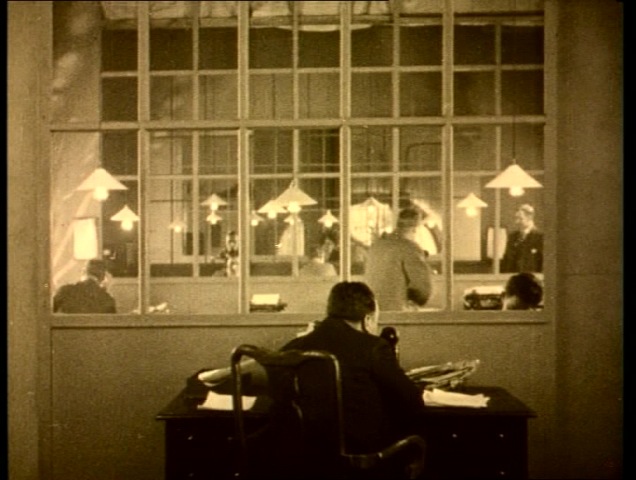
lodgercameo.jpgAs the news spreads, more facts are revealed about the case piece by piece: The murder is only the latest in a series of killings . . . The victims are always young, blonde women . . . The killer only strikes on Tuesday nights . . . and so on. Amidst the well-ordered chaos of these scenes, Hitchcock’s first cameo slips unobtrusively by, the result of an extra not showing up for work. The young director can be seen sitting at a news desk, his back to the camera as he works the phones. The entire sequence lasts about four minutes, and couples a great deal of basic information with a backstage look at how news traveled in late-1920s London. It is a striking use of montage that reveals a highly-developed sense of visual storytelling and expository economy.

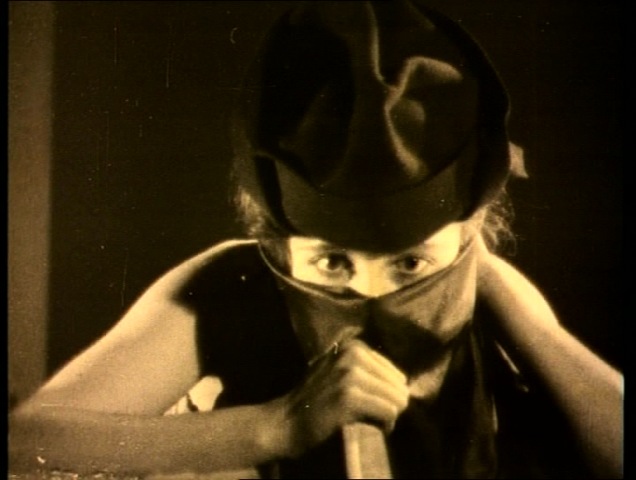
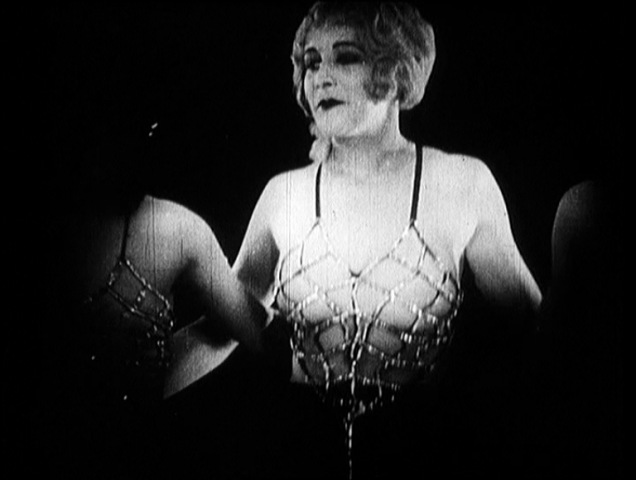
fakeavenger1.jpgFinally, the news comes full circle and lands in the dressing room of the theater featuring “GOLDEN CURLS” as the girls come off the stage (a really fast turn-around, but we’ll let that go). These girls, just like the chorus line of the Pleasure Garden Theater, perform in blonde wigs, but of course, some of them actually have blonde hair. While some of the people in these scenes respond with shock or apprehension, many respond quite differently. For instance, a newsboy comments, as he breaks out the fresh stack of evening editions, “Always happens Tuesdays – that’s my lucky day.” Other characters make light of the situation with practical jokes. As the woman in the first scene describesfakeavenger2.jpg the killer, a man standing behind the witness draws his collar across his face and the frightened woman screams at the sight of his distorted reflection in a metal teapot (he is chastised by fellow bystanders). In the dressing room, one of the girls covers her face and sneaks up on a true blonde as she nervously examines her hair in the mirror, prompting her to jump and then laugh nervously.

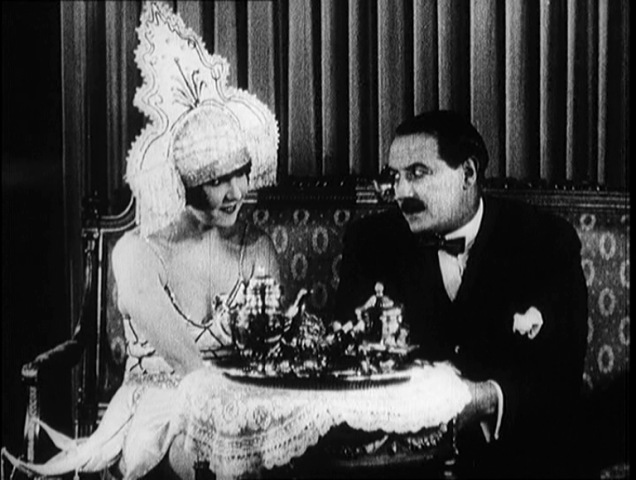
richdaisy.jpgThe scene now shifts to introduce Daisy, who enters a room wearing a luxurious white fur coat and various expensive-looking accessories. She pauses for a moment to listen to a newsboy crying the headlines outside, then moves forward. As the shot zooms out we see that she is not a wealthy socialite, as her appearance indicated, but a sort of runway model for an expensive clothing store. In demolishing our very first assumption about the female lead, the film offers a strong but subtle hint that first impressions are not necessarily to be trusted. The day’s work done, Daisy retires to the changing room with the other girls, where her fellow blondes are taking precautions against becoming the next headline. One swears off peroxide while another clips fake brunette curls to her head and covers her real hair with a hat. Better safe than sorry.

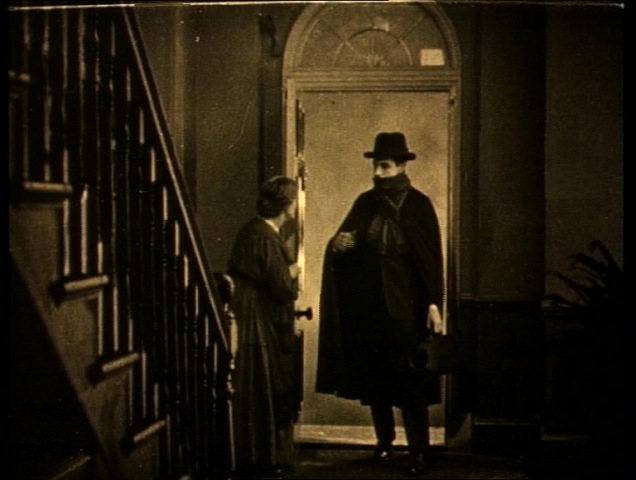
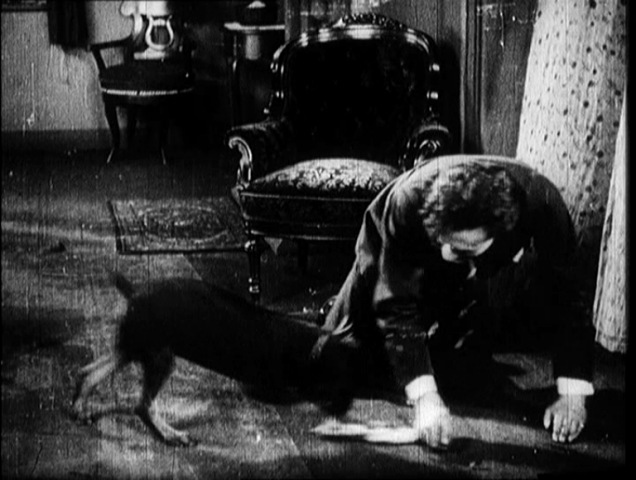
happyfamily.jpgDaisy, unmoved, hurries home to find Joe waiting. Daisy’s father is teasing him about the failure of the police to capture their man, while Joe insists that if he were on the case it would be closed by now. He flirts shamelessly with Daisy while her mother looks on benignly. As the family talks, a shadow falls across their door outside (the address, incidentally, is #13). Inside, the lights begin to dim just as there is a knock on the door. Mrs. Bunting goes to answer it while Mr. Bunting goes to adjust the gas. The front door opens to reveal a tall, dark figure with an intense gaze standing in the fog. His face is wrapped up, and Mrs. Bunting seems to shrink involuntarily from him even as she opens the door wider for him to step in. As he enters the house and takes off his hat, the gas flares, illuminating him suddenly and dramatically. Meanwhile, Mr. Bunting has slipped and fallen with a crash, and Daisy rushes out to help him. The stranger spots her and seems immediately fascinated before being led upstairs to examine the rooms.

stranger1.jpgstranger2.jpgstranger3.jpg

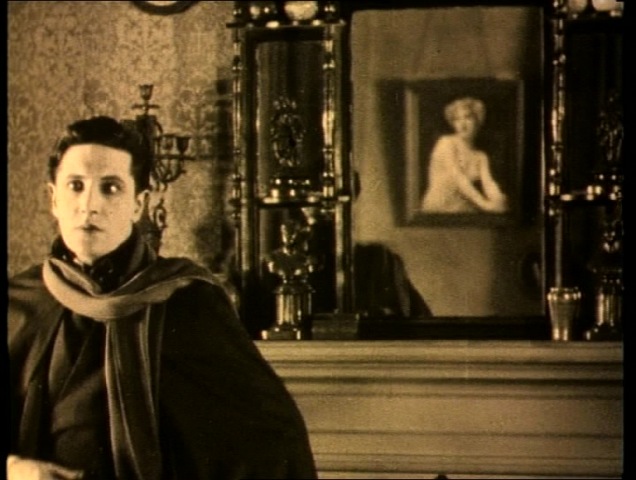
blondeportrait.jpgBeginning here, the next hour of the film is dedicated to convincing the audience and (a bit more slowly) the other characters that the Buntings’ new lodger is the Avenger, and that he intends to murder Daisy. Steadily mounting suspicion plays out as the primary narrative tension. When the lodger first walks into the rooms he’ll be renting, the walls are blanketed in suggestive paintings. There are several portraits of blonde women, and a copy of John Everett Millais’ “The Knight Errant” (depicting a knight rescuing a nude woman bound to a column). He seems bothered by the paintings, and when Mrs. Bunting returns from downstairs with some food she finds that he’s turned them all to the wall.

As they carry the portraits out of his room, Joe notes snidely “Anyway, I’m glad he’s not keen on the girls.” (Perhaps a reference both to star Novello’s homosexuality, an open secret among the British film and theatrical community, as well as a suggestion that the lodger is “not quite right.”) Joe’s desire to marry Daisy becomes increasingly wrapped up in his ambition to put the Avenger behind bars. Once he has been put in charge of the investigation, he cockily proclaims, “When I’ve put a rope around the Avenger’s neck, I’ll put a ring around Daisy’s finger.” This will add an extra layer to his suspicion of the lodger and his growing jealousy as his girl slips through his fingers and into the other man’s arms.

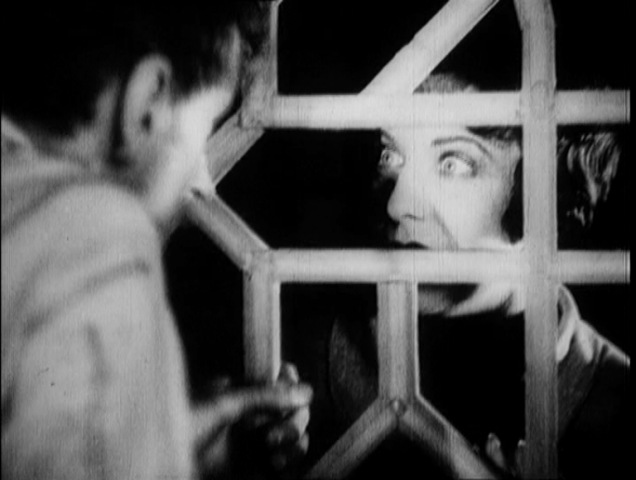
suggestiveshadow.jpgThere are also recurring shots of people glimpsed through bars, whether window panes, railings, bedposts, and so forth. The shots, though hardly ubiquitous, seem suggestive of imprisonment. Early on, for instance, the lodger goes to the window and looks down at a newsboy crying the latest headline. The window frame casts a striking shadow across his face which, in the context of thinking of him as a possible murder, appears to show him behind bars. However, later events and imagery indicate a very different interpretation (on which more later).

pacing.jpgThe lodger remains restless at night, moving around at all hours and going out very late. On his first night in the Bunting home, Joe and the family notice him pacing relentlessly back and forth over their heads. Without sound to indicate this, Hitch has them look up at the ceiling, which then dissolves into a glass pane, and we see the lodger walking around over their heads. Then, on the following Tuesday night, matters really come to a head.

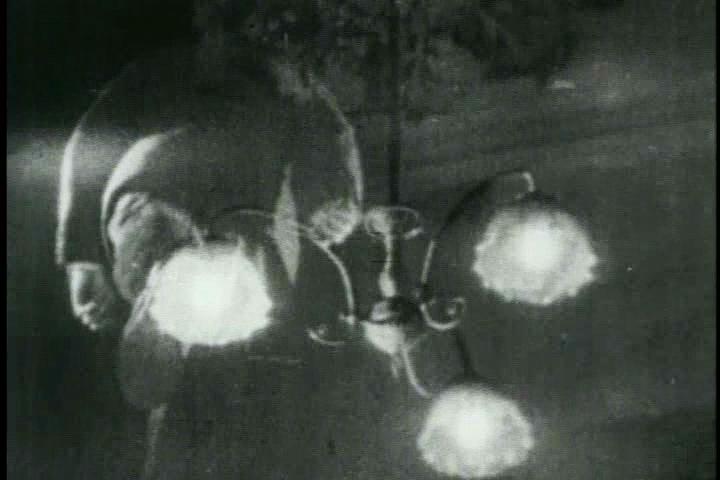
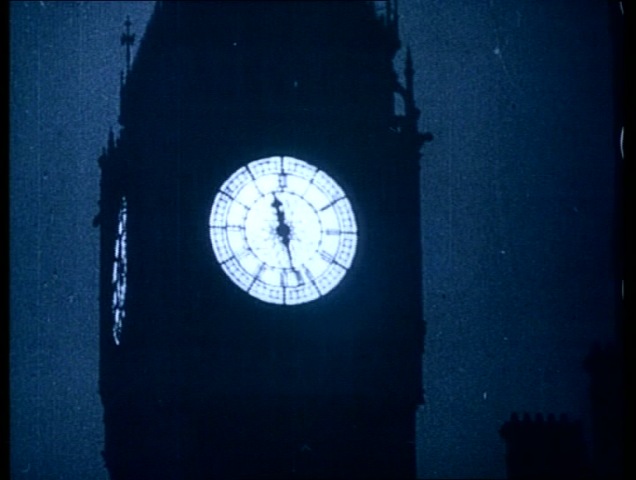
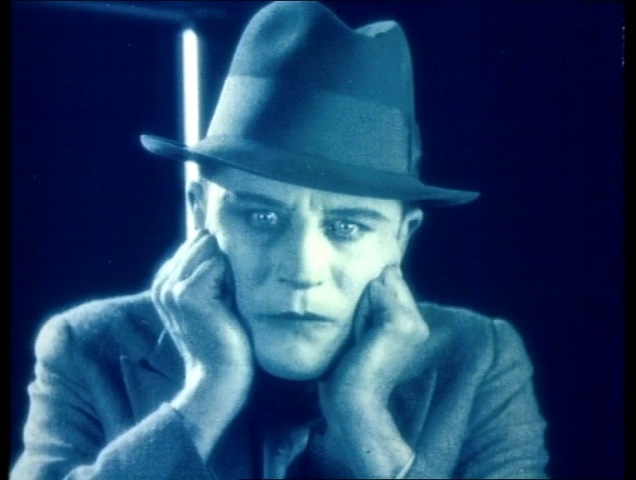
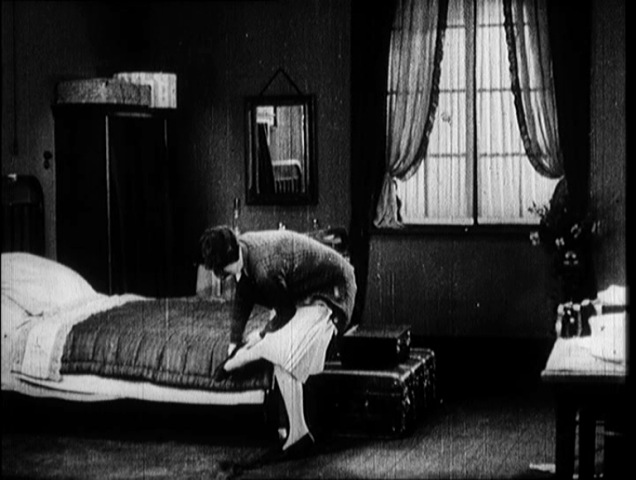
Mrs. Bunting is awakened by the sounds of the lodger slipping quietly out, all bundled up as he was when he first appeared. The scene is one of the most tense in the film. Outside, a party is breaking up and Big Ben shows the time at 11:30. Mrs. Bunting sits up in bed as the lodger leaves, and a large, angular patch of light from the window dominates the shot (strikingly expressionistic). The camera looks straight down the center of the stairwell from above and we see the lodger’s hand on the banister as he walks all the way down. Mrs. Bunting goes to the window to see that he is walking away before sneaking in to investigate his room.

night1.jpgnight2.jpgnight3.jpgnight4.jpgnight5.jpgnight6.jpg

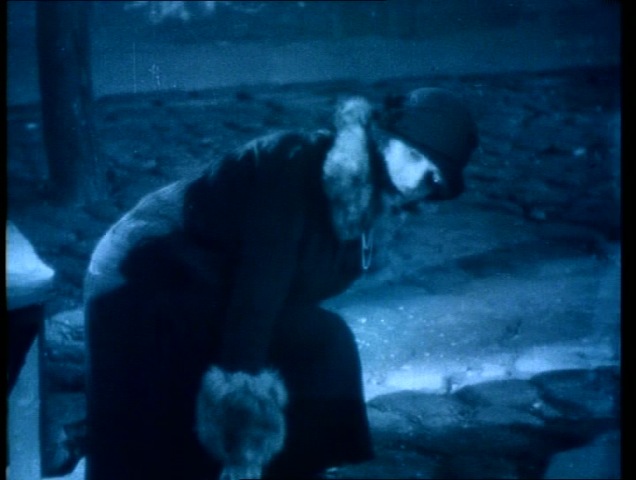
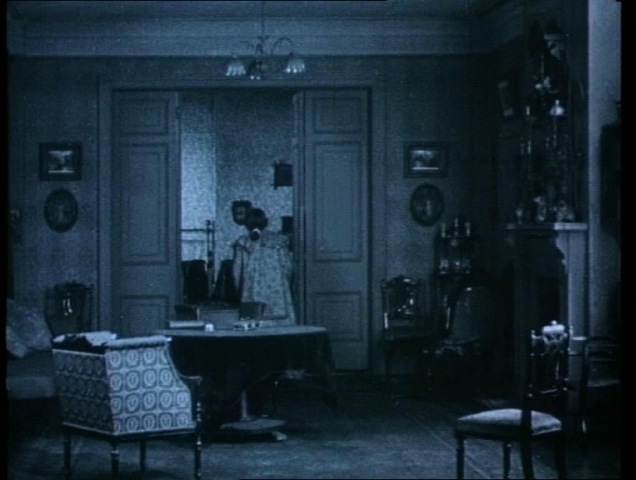
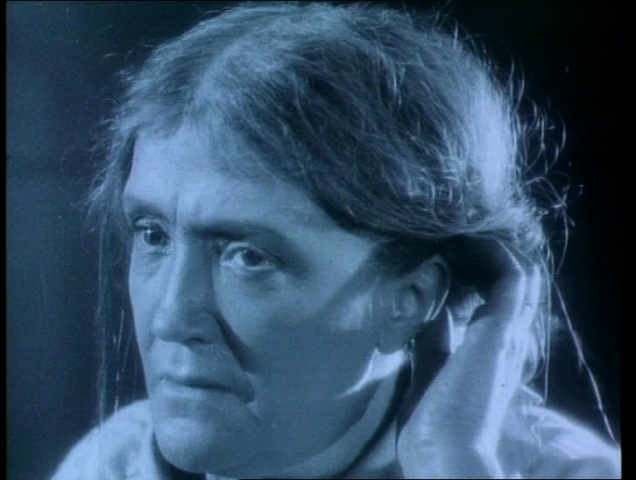
Out in the street, a woman who has left the party storms away from her male escort, and stops in an abandoned street to fiddle with her shoe. A shadow falls across her and she looks up and screams in a close-up that mimics the opening shot. Moments later, a gathering crowd has discovered another Avenger note. Back home, Mrs. Bunting has failed to turn up anything in the lodger’s room except a locked drawer (where we know from an earlier scene that he keeps his one small bag). Defeated, she returns to bed in time to hear the lodger returning as the clock strikes midnight.

night7.jpgnight8.jpgnight9.jpgnight10.jpgnight11.jpgnight12.jpg

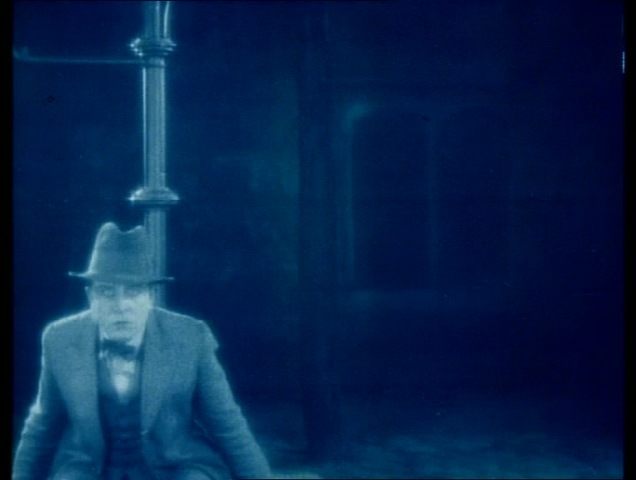
quarrel.jpgThe older Buntings are now extremely suspicious and concerned, but by now Daisy and the lodger have become quite friendly. They play chess together and have long conversations when Daisy brings up his supper. Another week goes by, and Joe’s investigation continues as he notes a pattern in the locations of the killings. They appear to be forming a triangular shape (the killer’s symbol) across the London cityscape. The next killing will take place very near the Bunting house. The lodger also has a map of the killings, and he marks the same location as the police before taking Daisy out for a stroll. Joe, patrolling the streets, catches them in a lip-lock under a street light and rushes over, enraged. The two nearly come to blows before Daisy draws the lodger away. Joe, dejected, sits down under the street light, staring down at the footprints the lodger has left in the dust. Suddenly, things begin to come together for him as clues about the lodger flash before his eyes in the dust. Galvanized, he rushes off.

clue1.jpgclue2.jpgclue3.jpg

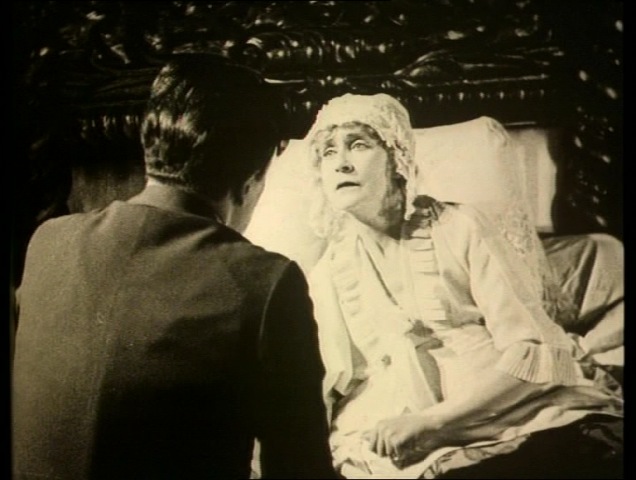
Shortly afterward, Joe shows up at the Buntings’ with a search warrant for the lodger’s room, and soon finds the map and a collection of newspaper clippings about the first murder. The lodger is finally constrained to offer an innocent explanation for his behavior: he claims that the first victim was his sister. Nevertheless, Joe triumphantly slaps the handcuffs on and leads him downstairs. However, an unlikely opportunity for escape opens up, and the lodger (whispering a rendezvous point to Daisy) bolts and makes a clean getaway. Daisy meets him beneath their street lamp, and we finally get the full back-story. The lodger is a member of the upper-class whose sister was murdered at her coming-out ball. His mother died of the shock, and he made a deathbed promise to her that he would see the Avenger brought to justice.

flashback1.jpgflashback2.jpgflashback3.jpg

Coming this late in the game, with all of the build-up, the explanation feels just a little anti-climactic and contrived (particularly the cheesy deathbed scene) . . . Is the lodger an unreliable narrator? Can he be trusted? As it happens, he can, although this is not faithful to the ending of the original novel, or to the ending Hitchcock himself would have preferred. Constrained by the celebrated status of the actor playing his central character, Hitch was forced by the conventions of the time to make him innocent (and not just innocent, but wealthy and eligible besides). Lowndes, who based the original novel on the stories of a woman who claimed Jack the Ripper rented a room from her, left the question of the lodger’s guilt completely open at the end. Hitchcock envisioned an ending where the lodger would turn out to be guilty, only to walk away scot-free in the final scene. It was not the last time a star’s larger-than-life persona would deny him artistic control over a film’s outcome.

pub1.jpgAfter rounding this slightly unconvincing hairpin turn in the plot, however, what we get for a climax is still pretty good. Daisy leads the lodger into a pub for some brandy to take the chill off, instructing him to keep his hands hidden beneath his coat. Several of the patrons notice her lifting the glass to his lips, and one even asks if he’s lost his arms (not implausible, given the temporal proximity of World War I). The two leave as quickly as possible, but not before a few people have noticed the metallic glint of the cuffs. A few moments later, Joe arrives and phones in to headquarters, making an off-handpub2.jpg comment about the handcuffs. Upon hearing this, everyone in the building rushes out into the night, mere seconds before Joe receives the news that the real Avenger was “taken red-handed” just a few minutes prior. He dashes off to halt the impromptu lynch mob, which is now closing in and has picked up reinforcements along the way.

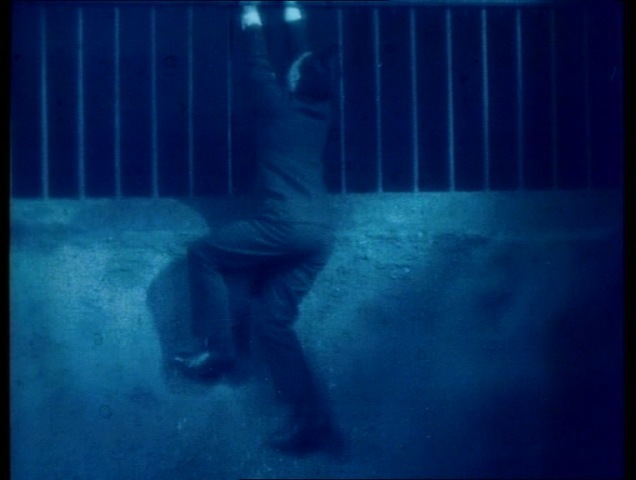
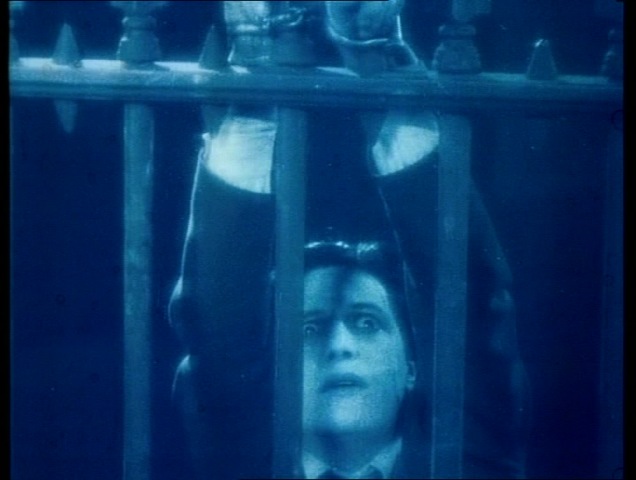
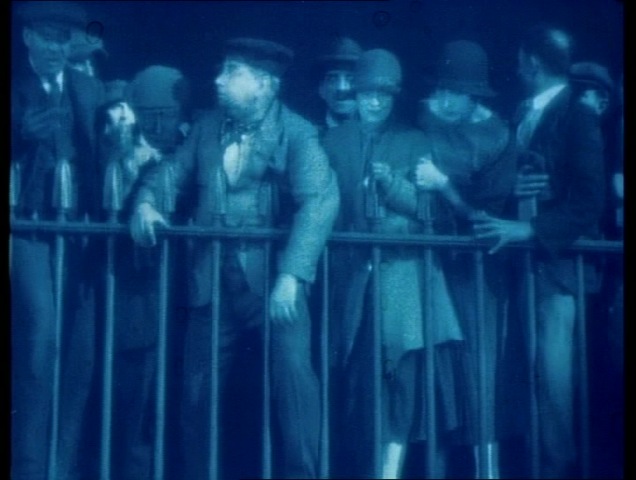
The lodger, blindly fleeing for his life, rather foolishly tries to climb over an iron railing and ends up dangling painfully by the cuffs as the angry crowd surges around him. The scene anticipates a very similar (but more developed) sequence in Fritz Lang’s M (1931), where a mob of angry criminals, motivated by self-preservation, tracks down a notorious child murder (played poignantly by Peter Lorre) in order to bring him to justice. Additionally, the iconography in play as the lodger dangles helplessly, eyes darting wildly, is very suggestive of martyrdom, even crucifixion. Recall the shot from much earlier in the movie where the window frame casts a shadow across his face. It turns out to be the shape of a cross, an early foreshadowing of both the lodger’s innocence and his suffering.

lynch1.jpglynch2.jpglynch3.jpg

cameo2.jpgJust when things are looking bleak for our hero, Joe and the evening papers arrive more or less simultaneously to save the day. The story of the real killer’s capture is blared from the headlines, probably still soaking wet from the press (that’s mighty quick work by London’s journalists once again), as Joe pushes through the crowd. The lodger is lifted down, only semi-conscious, and Daisy covers his face in kisses. Various unconfirmed claims report that Hitchcock has a second cameo during this crowd scene. When the lodger is being pulled down, the man in the center of the shot standing above the railing bears the most striking resemblance to the director, and I do not doubt he might have appeared again. Hitchcock’s earliest cameos were prompted by on-the-spot needs to fill the screen with extra bodies.

goldencurls2.jpgNever one to draw things out, Hitchcock concludes the film within four minutes. The lodger recovers nicely and he and Daisy are reunited with the Bunting parents, who are now the guests in his lavish home rather than the other way around. As the older couple survey their surroundings with great approval, Daisy and her lover slip into another room and end the story with a passionate embrace next to a window. Far in the background of the cityscape behind them, we can just make out the flashing marquee proclaiming, once again with great irony, “TO-NIGHT GOLDEN CURLS.”

The Lodger undoubtedly launched Alfred Hitchcock’s career in earnest. It was widely seen and acclaimed at the time of its release, and without that success, it is possible his previous films might never have seen the light of day, his career fading quickly and quietly into anonymity. The movie is very well realized, an excellent blend of entertaining, frightening, humorous (far more muted, or at least sparser, than the broad slapstick of The Pleasure Garden) and artistic elements. Hitchcock was now cranking out British films at a tremendous rate, and would continue for the next decade and change before even greater opportunities came knocking from across the pond.

Next Week: Hitchcock turns to the theatre

The Orphanage

•January 11, 2008 • Leave a Comment

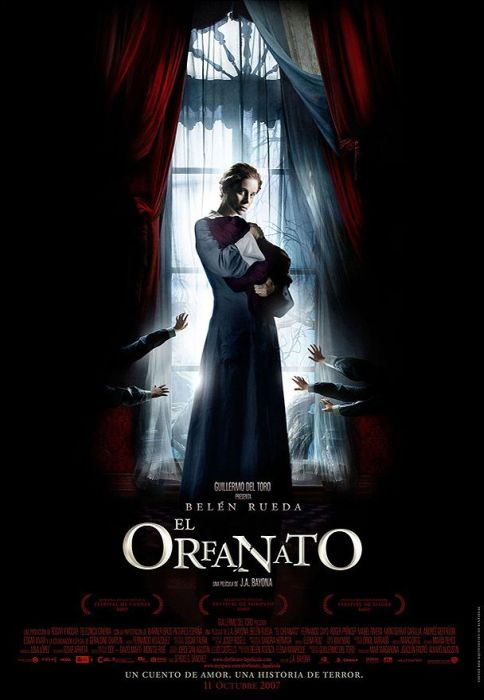
orfanato.jpgstarring Belén Rueda, Fernando Cayo and Roger Príncep
written by Sergio G. Sánchez and directed by Juan Antonio Bayona
rated R for some disturbing content.
83%

Some 30 years ago, Laura (Rueda) was an orphan living with other parent-less children in a large house in the country. Then she was adopted, moved away, and she never looked back. Now, with a husband and adopted son (Simón) of her own, she has purchased the old house that used to be an orphanage and hopes to reopen it as a home for handicapped children. But amidst the turmoil of moving in and preparing for the new arrivals, strange things begin to happen which may have some very sinister consequences for Laura and her family.

Much has been made in this film’s marketing of one particular person’s involvement: renowned Mexican director Guillermo del Toro, who produced the movie. I know very little about how large a part the producer may play in the authorship of any given movie, but there are certainly touches in The Orphanage which seem distinctive, particularly in the overall look of the film. The location is perfect, both in the appearance of creepy majesty and in the potential its layout offers for storytelling purposes. The sound in particular is fantastic. The old house creaks and groans magnificently, and as for the old merry-go-round in the yard . . . if I heard anything on my property make a noise like that, I would drop everything and run for the WD-40.

Belén Rueda is excellent as Laura, truly standing out among performances which are largely competent placeholders for a story that is really built entirely around her. She and the house (the other important character) play very well off of each other. They have a sort of chemistry, you might say. Rueda really feels like she is a part of her surroundings, which goes a long way towards mitigating choices which make less sense than they ought to (such as the ubiquitous, “Why must she rush to investigate every scary happening alone?”).

Environs aside (though they are a very important element), The Orphanage is a fairly standard ghost story, employing many of the usual elements: the scary children, the psychic consultation, the horrifying event from the past, the slow revelation of decades-old secrets brought to light. I hope that cataloging those sorts of things doesn’t make it seem that I’ve given anything away, but stories such as this one are less about plot details and more about evoking a sense of overwhelming dread.

In this respect, at least, The Orphanage succeeds thoroughly. There were long stretches of time during which I was truly terrified, and one or two moments which nearly propelled me straight out of my seat. These were not cheap “jump” moments of the sort which pervade the American slasher genre, but rather the deeper and more lasting frights which allow my imagination to play havoc with the rest of me. This is where The Orphanage excels for most of its runtime, despite a few missteps (the psychic scene was far too stagy, for instance).

Ultimately, however, it drops the ball. Unfortunately, a chilling and fairly brilliant denouement happens about 10 minutes before the movie actually ends, and the filmmakers slip in an out-of-place finale that fairly reeks of overwrought sentiment. Worse yet, it simply shows too much, like a magician ending his act by revealing the rather unimpressive secret behind that amazing final trick. The lackluster ending doesn’t really spoil the rest of the movie, but it impoverishes the quality of after-movie reflection and deadens the impact of its own terror.

One final note: It should be obvious to anyone who’s paying attention, but this film is in Spanish and is actually titled “El Orfanato.” I happen to love the way Spanish sounds, and really enjoyed this element of the film (though I am, of course, biased, since I speak the language). In any case, I’ve never really minded reading subtitles, and it is certainly preferable to the alternatives: 1) dubbing or 2) not seeing any films made by non-English speakers. However, there was a large sign over the register informing me that the movie was in Spanish with English subtitles when I purchased my ticket, and just in case I missed it, the girl who sold me my ticket made sure I knew.

It reminded me of a story my brother (who worked in a video rental store) once told me. A customer brought Pan’s Labyrinth up and Brett happened to mention that it was in Spanish. “It is?” the young man replied, clearly a bit put out. “Is that legal?” . . . If a person who speaks two languages is bilingual and a person who speaks three is trilingual, what do you call someone who only speaks one language?

An American.

Week 2: The Pleasure Garden (1925)

•January 9, 2008 • Leave a Comment

pleasuregardenposter.jpg“The highly popular reviews at the Pleasure Garden Theater are staged by Mr. Hamilton.”
“Take a chance, Mr. Hamilton, and I’ll show you some real hot steps!”
“Do you believe in love?”
“Odd, isn’t it – he never barked at Hugh.”
“You filthy animal!”
“That’s my wife you’re fooling around with, Hugh – and you’ll pay for it!”
“She wants me to use the sword – she won’t let me rest until I’ve killed you, too!”
“How do you like that? Cuddles knew all the time!”

-The Pleasure Garden

In 1923, Hitchcock and Alma were working under British director Graham Cutts. Cutts was a mediocre filmmaker who was perfectly willing to coast on the ability of his inferiors, but resented their superior skill. Hitchcock was assistant director to Cutts on five films during a two-year period, as well as filling a variety of other roles on the set at no extra cost. Cutts repaid the service by jealously complaining about Hitch to producer Michael Balcon. Balcon, however, busily trying to run a successful British film company (no mean feat at the time), was impressed by Hitchcock’s ability to save the studio money by doing so many different things so well. Having arranged for a cultural exchange with a large German studio, Universum-Film Aktien Gesellschaft (UFA), he sent Hitch along as assistant director on the first Anglo-German collaboration, The Prude’s Fall, in 1924.

While in Germany, Hitchcock had many opportunities to observe the work of major German directors. German cinema at the time rivaled American efforts in both artistry and technical skill, and Hitch had several opportunities to watch the direction of major filmmakers like F.W. Murnau (who was responsible for 1922’s terrifying Nosferatu and would soon film Faust in 1926) and Fritz Lang (who would go on to direct such major films as Metropolis in 1927 and the chilling M in 1931). “From Murnau,” he would later say, “I learned to tell a story without words.” Meanwhile, Cutts had had enough. After their second collaboration in Germany, he told Balcon that he didn’t want to work with Hitchcock again.

patsy.jpgThe Gainsborough director’s vote of no confidence could have meant a sudden end for Hitchcock’s budding career, but Cutts had unwittingly opened up new opportunities for the young man. Balcon offered Hitch the chance to direct his own picture, another UFA collaboration set to be filmed in Germany and Italy: The Pleasure Garden. Miles Mander and John Stuart, British actors, would play the male leads, and the rest of the cast would be filled out by American actresses: Virginia Valli (a veteran of several dozen films already), Carmelita Geraghty, and Nita Naldi (who had recently starred alongside Rudolph Valentino). Even from the beginning, Hitchcock was directing major Hollywood stars. Alma, always at his side, would be assistant director.

The movie is based on a novel by Oliver Sandys. The story, adapted by Eliot Stannard for the screen, is a highly moralistic romantic melodrama on the surface, and yet it is unexpectedly entertaining thanks to its use of humor and a few stylish surprises amidst a largely predictable plot. The film is no masterpiece, and the director himself would just as soon have seen it forgotten completely. However, despite certain flaws, it possesses an undeniable charm and points towards much greater things to come.

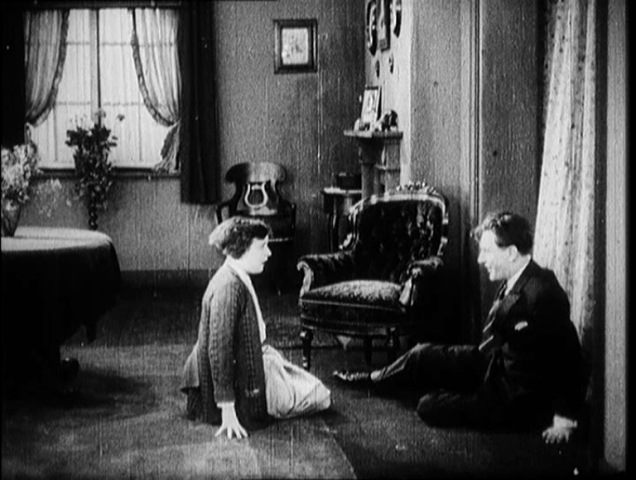
jill.jpgThe Pleasure Garden centers around two women, Patsy (Valli) and Jill (Geraghty). Patsy is a member of the popular chorus line at the Pleasure Garden Theater, while Jill is a fresh-faced ingenue looking for a break. Patsy gives her a place to stay and introduces her to the boss, who reluctantly grants an audition. Despite a lack of formal training, Jill wows everyone with her skill and energy, and quickly becomes the star of the show. Meanwhile, her fiance Hugh (Stuart) is about to embark on a two-year stint overseas at one of his company’s tropical plantations. His world-weary colleague Mr. Levet (Mander) is on a two-month furlough from the plantation and the four go out on the town together to celebrate Jill’s success and give Hugh a good send-off.

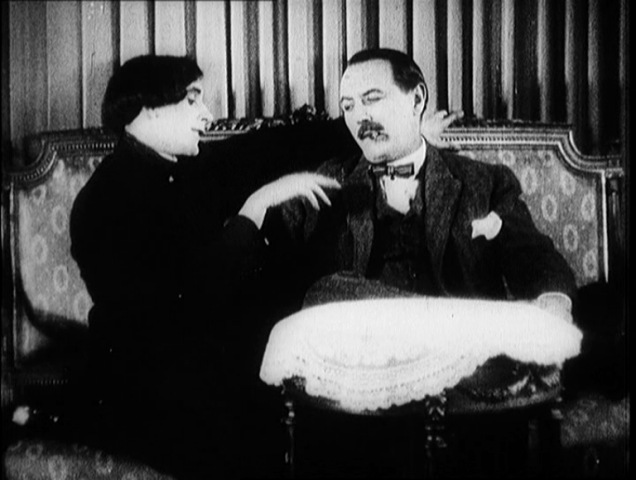
hughlevet.jpgPatsy notices that Hugh seems a bit distressed by the attentions being paid to his betrothed by various “stage-door tomcats,” most notably a certain Prince Ivan, and promises to keep an eye on her for him. However, no sooner has Hugh departed than Jill hooks up with the Prince, shunning Patsy and moving into her own place (and also fooling around with Hamilton on the side). Meanwhile, Levet seems quite taken by Patsy and the two of them are married. They enjoy an all-too-brief honeymoon in Italy together before he returns overseas for another two years. Upon his arrival, Hugh presses him for news of Jill, but he has none. It soon becomes apparent that he is rather a cad, carrying on an affair with a native girl (Naldi) and neglecting to write his anxious and devoted wife.

When he finally does write, he excuses his lack of correspondence by saying that he’s been sick. The ruse backfires rather drastically when Patsy hunts down enough money to pay her passage to be by his side. Jill, busily preparing for a wedding to the Prince, turns her down flat, but her parents come up with some cash that they had set aside and she is on her way. Arriving unannounced at Levet’s hut, she catches him in flagrante delicto with the native girl and drops him on the spot. It turns out that it is actually Hugh who is seriously ill and she rushes to his side.

nativegirl.jpgLevet, drunk and suffering from severe anger displacement, drowns the native girl in the ocean and stumbles off to collect his wife. Patsy agrees to accompany him back to the hut when he threatens to hurt Hugh. Once there, Levet goes crazy and thinks he sees the ghost of the girl he drowned advancing on him (the audience sees it too). He believes he can only put the spirit to rest by murdering his wife as well, but Hugh shows up with the cavalry just in time and Levet is shot dead. Patsy and Hugh, the virtuous, loyal halves of their respective couples, express their love for each other and return home triumphantly together.

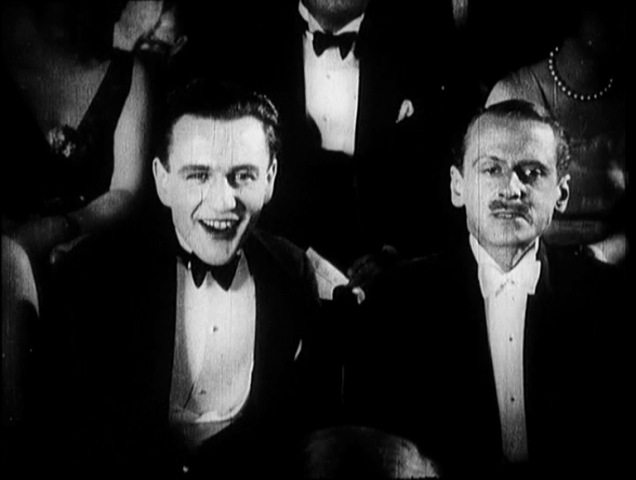
smokingprohibited.jpgIt certainly doesn’t sound like compelling stuff, but it is not without it’s points of interest. The plot arcs smoothly and without digression, and the shifting fortunes of the major characters complement each other nicely. More important, however, are the brief flashes of humor or style which, even when incidental to the story, make for an entertaining experience. The opening sequence is particularly notable for its humor. Hamilton, the theater director, is surrounded by a perpetual cloud of smoke from his cigars whenever he appears, and his character is introduced puffing away in front of a No Smoking sign. He is watching the dance number that the film opens with, as a chorus line of beautiful girls in blonde wigs perform for an attentive audience of much older men. While these men watch the performance, we watch them, and seeing their almost-drooling faces is both humorous and slightly creepy. They “like to watch,” and it is an early foreshadowing of themes of voyeurism that would show up in many Hitchcock films later on.

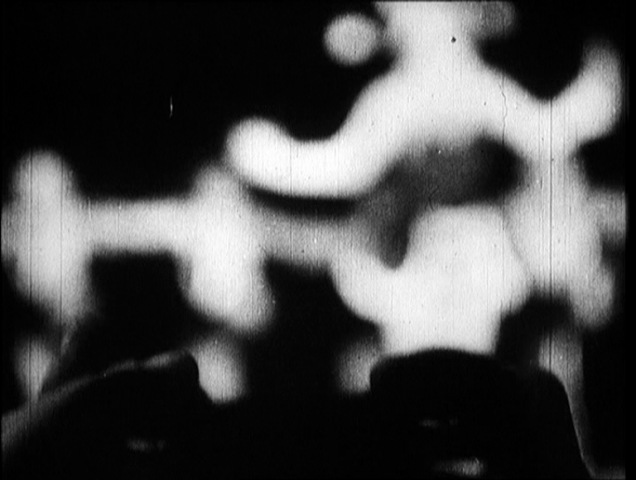
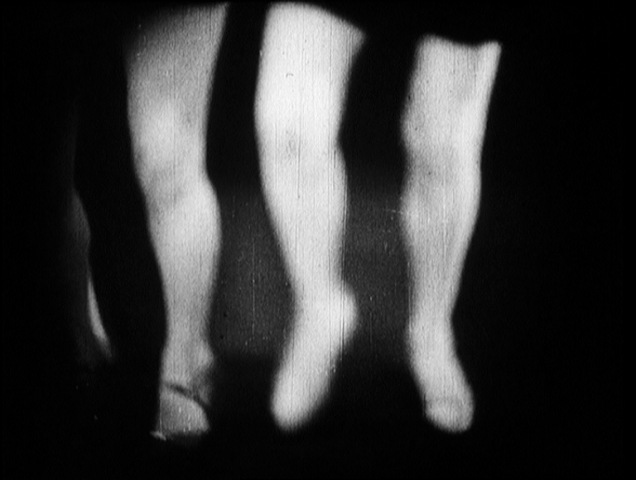
oldmonocle.jpgThe camera pans across the front row before cutting back to the face of a particularly large gentleman with a monocle, but just before the cut we see a lone female audience member on the far right of the frame. She appears to be fast asleep. Old Monocle seems to have exceptionally poor vision, as we see a line of blobs on the stage from his perspective, until he pulls out his opera glasses to catch aouch.jpg better view of an attractive pair of legs. He follows them up to the face of their owner and we get our first glimpse of Patsy, our heroine. Delighted by what he sees, he hoists himself to his feet and squeezes out of the row, stepping on one irate gentleman’s toes as he passes by. He demands to be introduced to Patsy, and compliments her golden curl. She wryly pulls it off and hands it to him, laughing at his discomfort before disappearing backstage.

badvision.jpgbettervision.jpgevenbetter.jpg

cuddles1.jpgOut in front of the theater, Jill is robbed by a couple of very shady-looking characters and finds herself penniless and without her letter of recommendation just in time for Patsy to come to her rescue. The next scene makes a great deal of Jill’s naivete and Patsy’s amusement at her innocence, belying the reversal which will come later. We are also introduced to a new source of comic relief: Patsy’s dog Cuddles, a troublesome and unattractive animal who is only funny because he doesn’t belong to me, the viewer.

prayer.jpg

Cuddles first appears making a mess of something on Patsy’s floor (she is amused), and proceeds to get into everything he can reach as the two girls get ready for bed. Jill, kneeling to say her prayers, is interrupted by Cuddles busily licking her feet. More important to the plot, however, is Cuddles’ relationship with the two male leads. When Hugh first walks in to see Jill, she is out trying on a costume for Hamilton (and behaving in a decidedly “loose” manner, as she will for the rest of the film). Meanwhile, Patsy struggles for several hilarious seconds to get dressed so she can go out to meet her roommate’s fiance,flirt.jpg and Hugh and Cuddles take an instant liking to each other. They are rolling around on the floor together when Patsy comes bursting out and trips over Hugh, landing in a heap. Thus, Cuddles provides what film critic Roger Ebert calls the “meet cute” of the film; that is, the storytelling convention whereby a potential couple is thrown together through some memorable and unusual circumstance. There is, notably, no meet cute between Patsy and Levet.

meetcute1.jpgmeetcute2.jpgmeetcute3.jpg

laughter.jpgCuddles also proves himself to be far more intuitive than his mistress. He barks incessantly at Levet whenever he appears. In terms of further foreshadowing, nature also remains unconvinced of the purity Levet’s intentions. There is a torrential downpour on the couple’s wedding day. Cuddles’ love for Hugh remains unshaken, however, and he joyfully greets him when the happy couple returns in the final scene (“How do you like that? Cuddles knew all the time!”). Make no mistake, though, he is still an annoying mutt. Patsy’s father wants to show Hugh his “wireless,” but for some reason it won’t turn on . . . Oh, Cuddles, you crazy pooch. You’ve gone and chewed through the cables.

cuddles21.jpgCuddles is the primary source of lowbrow comedy in the movie, but the best touches are less broad, like Hamilton smoking in front of the sign and Old Monocle’s shenanigans. And, certainly, it was this sort of dry, often slightly bawdy humor that would play a more prominent role in relieving the tensions of Hitchcock’s later suspense thrillers. Along those same lines, there are a few hints of more risque themes which Hitchcock would develop further in other films. I’ve already discussed the voyeuristic vibes of the opening scene, as well as a bit of the innuendo that runs through most of Jill’s later scenes. This is all part of the generally seedy theatrical world. Then, too, there is Levet’s affair, which will eventually turn murderous; it is a pairing of sex and violence which Hitchcock often specialized in.

whoopsie.jpgThere is also an uncredited minor character whose seems to be some sort of costume designer. He appears in two scenes; first when Jill is trying on that hideous costume for Hamilton while her fiance waits elsewhere, and second when Patsy comes to beg Jill for money, where he appears to be in charge of the bride’s wedding trousseau. To describe this character as effeminate would be a grosswhoopsie2.jpg understatement, as his behavior during every second he is on screen is overwhelmingly, even exaggeratedly, fay. If nothing else, his brief appearance begs the question: How long has the gay designer stereotype existed? Keep in mind, too, that all of these fairly subtle comedic and subversive elements exist in a movie that is ostensibly an adaptation of a simple British melodrama.

Throughout The Pleasure Garden, Hitchcock demonstrates his skill in conveying a great deal of information with an impressive economy of images. At the end of their honeymoon, as Levet is just beginning to reveal himself as, if not a bounder, then at least a grumpy lout, he plucks a rose from his lapel and tosses it into a nearby canal where it floats mournfully for a few seconds before disintegrating. “You threw away the rose I gave you,” Patsy exclaims. “Had to,” Levet replies,”it had wilted.”

It’s as concise a statement of the state of his affection as one could hope for, reinforced further by the very next scene where he departs from England by ship. Patsy stands on the shore, waving frantically and dejectedly as the ship pulls away, but Levet has already retired to a deck chair to read his paper. There is an excellent transition here as the camera focuses on Patsy’s waving hand, clutching a handkerchief, and then fades to a close-up of a different arm, also waving. The camera zooms back out and we see a dark-skinned girl in garb that suggests the South Pacific islands, waving to an arriving Levet before running up to embrace him as they retire to his hut.

wave1.jpgwave2.jpgwave3.jpg

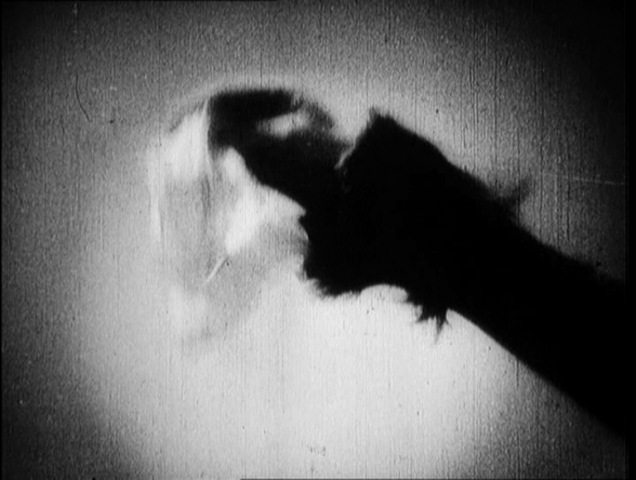
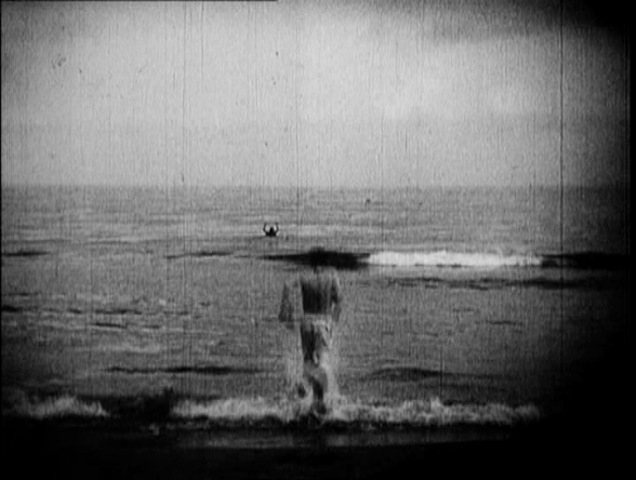
Later, after Patsy has discovered Levet’s unfaithfulness, we witness Hitchcock’s first murder. The native girl wanders out into the ocean in front of Levet’s hut for a swim and we wonder if perhaps she intends to commit suicide a la The Awakening. Then we see Levet run out into the surf after her, and we wonder if he intends to prevent her. Then we see her smile and reach out to him as he swims up and all seems well after all . . . until he deliberately places a hand on her head and pushes her under the surface with an eye on the shore to watch for witnesses. The scene presents a gruesome contrast to the glamour of the chorus line, the homey good-humor of Patsy’s lodgings, and the idyllic scenery of the Italian honeymoon, but it sets the tone for the tense finale.

drowning1.jpgdrowning2.jpgdrowning3.jpgdrowning4.jpgdrowning5.jpgdrowning6.jpg

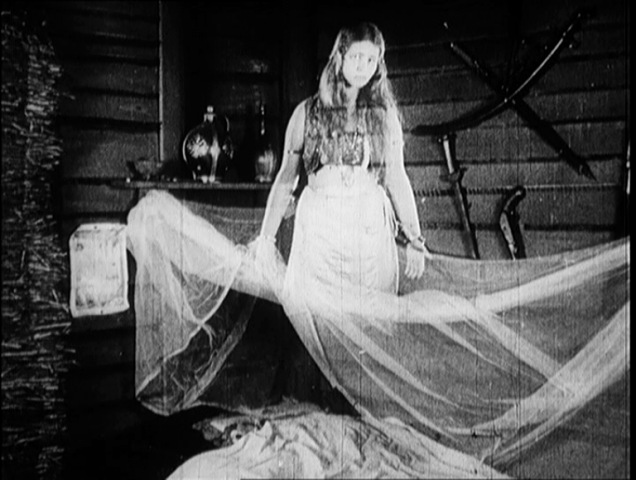
native-spirit.jpgWhen the ghost of the native girl appears to haunt Levet for what he has done, it could be viewed as a somewhat silly and over-the-top turn in the proceedings. It is worth noting, however, that the spirit appears to come out of the wispy mosquito netting hanging above Levet’s bed, and it never moves beyond that backdrop. The implication is that Levet is deranged and hallucinating based on his guilt and the visual cues provided by his surroundings, rather than imagining things out of the clear blue nowhere. In this way, the image of the dead girl becomes as startling to us as it is to Levet.

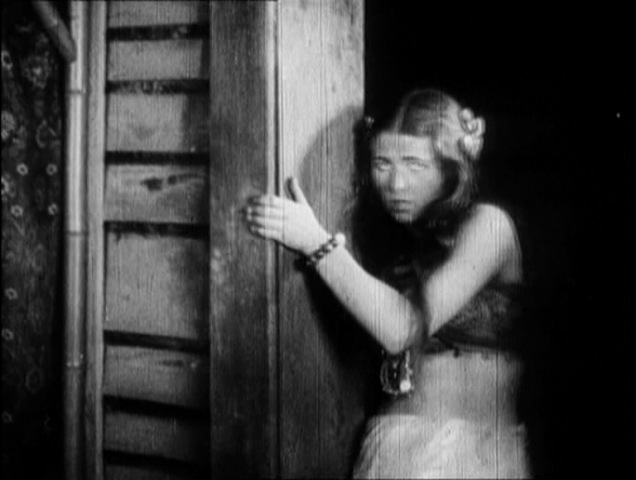
terror.jpgFrom here, things move quickly into the tense denouement. Patsy cowers behind a rather flimsy door, eyes wide with blind terror, as Levet swipes at her with the sword a few times before he is shot by the rescue party. In typical Hitchcock fashion, once the final moment of suspense has passed, it is time to bring the film to a swift and satisfying conclusion. Everything is wrapped up nicely within two and a half minutes.

Balcon was very happy with Hitchcock’s work on The Pleasure Garden, and put him straight to work on another film called The Mountain Eagle, starring Nita Naldi. Filmed in the Alps, but set in the Appalachians, it is an odd story of small-town jealousies and hillbilly religion that disappeared shortly after its initial release and is now believed lost. Certainly Hitchcock, by then a going concern, preferred it that way. In the meantime, The Pleasure Garden was kept from release for two years in England because C.M. Woolf, one of the pocketbooks behind Gainsborough, disapproved of the finished film.

This vintage, difficult-to-find piece of early Hitchcock remains worthy of attention for the signs of life buried unexpectedly amidst a largely unimpressive story. It is worth a look on those grounds alone, though I also found it surprisingly watchable. There is every indication that it was well-liked by audiences at the time, and that was certainly all Hitch’s studio asked of him. With two complete films notched on his director’s belt, Hitchcock left Germany behind in 1927 to make his first film on British soil (along with a host of other firsts).

Next Week: Hitchcock meets the suspense thriller

The iPhone Experience

•January 8, 2008 • Leave a Comment

David Lynch is a funny guy. Who knew? (F-bomb warning).

Spring Movielogue, 2008

•January 7, 2008 • Leave a Comment

January 7 – May 4

# Title (Production Year) Rating% Date Watched — Review links, if any (*Title* denotes top ten movie of period)

836 The Pleasure Garden (1925) 68% 1/9/2008 — Post
837 Trekkies (1997) 81% 1/9/2008
838 Trekkies 2 (2004) 77% 1/9/2008
839 The Orphanage (2007) 83% 1/11/2008 — Post
840 The Little Mermaid (1989) 88% 1/12/2008
841 Away From Her (2006) 93% 1/14/2008
842 Punch-Drunk Love (2002) 95% 1/17/2008
843 The Birdcage (1996) 85% 1/17/2008
844 Under the Tuscan Sun (2003) 60% 1/17/2008
845 Aladdin (1992) 94% 1/18/2008
846 Behind the Mask: The Rise of Leslie Vernon (2006) 90% 1/18/2008
847 The Ring (1927) 71% 1/22/2008 — Post
848 Easy Virtue (1928) 54% 1/23/2008 — Post
849 *There Will Be Blood* (2007) 98% 1/25/2008 — Post
850 Support Your Local Gunfighter (1971) 89% 1/25/2008
851 Suddenly, Last Summer (1959) 75% 1/27/2008
852 The Ten (2007) 61% 1/29/2008
853 Pocahontas (1995) 38% 1/29/2008
854 Pierrepoint: The Last Hangman (2005) 91% 1/30/2008
855 *The Sweet Hereafter* (1997) 95% 1/31/2008
856 Running Scared (2006) 0% 1/31/2008
857 *The Hunchback of Notre Dame* (1996) 96% 2/2/2008
858 Spaceballs (1987) 46% 2/2/2008
859 After the Wedding (2006) 60% 2/4/2008
860 The Farmer’s Wife (1928) 82% 2/4/2008 — Post
861 Gentleman’s Agreement (1947) 70% 2/5/2008 — Post
862 Black Book (2006) 96% 2/5/2008
863 Once (2006) 92% 2/7/2008
864 No End in Sight (2007) 95% 2/7/2008
865 The Devil Came on Horseback (2007) 91% 2/7/2008
866 *The King of Kong* (2007) 96% 2/8/2008
867 Amazing Grace (2006) 88% 2/9/2008
868 This Is England (2006) 92% 2/10/2008
869 Into Great Silence (2005) 98% 2/11/2008
870 Word Wars (2004) 87% 2/12/2008
871 Champagne (1928) 46% 2/12/2008 — Post
872 The Spiderwick Chronicles (2008) 90% 2/15/2008 — Post
873 The AristoCats (1970) 54% 2/16/2008
874 Waitress (2007) 94% 2/16/2008
875 Helvetica (2007) 72% 2/17/2008
876 Rescue Dawn (2006) 89% 2/18/2008
877 The Manxman (1929) 57% 2/20/2008 — Post
878 Persepolis (2007) 89% 2/22/2008 — Post
879 Hercules (1997) 64% 2/23/2008
880 La Vie en Rose (2007) 89% 2/24/2008
881 The Namesake (2006) 90% 2/26/2008
882 In the Shadow of the Moon (2007) 73% 2/26/2008
883 Blackmail (1929) 81% 2/27/2008 — Post
884 *Michael Clayton* (2007) 96% 2/27/2008
885 *The Assassination of Jesse James by the Coward Robert Ford* (2007) 99% 2/28/2008 — Post
886 Tarzan (1999) 75% 2/28/2008
887 The Other Boleyn Girl (2008) 81% 2/29/2008 — Post
888 E.T.: The Extra-Terrestrial (1982) 96% 3/1/2008
889 *Paprika* (2006) 98% 3/1/2008 — Post
890 Protagonist (2007) 83% 3/3/2008
891 Juno and the Paycock (1930) 50% 3/4/2008 — Post
892 My Kid Could Paint That (2007) 95% 3/4/2008
893 Murder! (1930) 80% 3/5/2008 — Post
894 Shadow of the Vampire (2000) 65% 3/5/2008
895 Fast, Cheap & Out of Control (1997) 70% 3/6/2008
896 Life After Tomorrow (2006) 78% 3/7/2008
897 Winter Passing (2005) 49% 3/8/2008
898 The Bourne Ultimatum (2007) 94% 3/9/2008
899 One Hundred and One Dalmatians (1961) 83% 3/11/2008
900 The Treasure of the Sierra Madre (1948) 95% 3/11/2008
901 The Skin Game (1931) 70% 3/12/2008 — Post
902 Chalk (2006) 92% 3/12/2008
903 The Big Picture (1989) 81% 3/13/2008
904 The Sting (1973) 98% 3/18/2008 — Post
905 Adam’s Apples (2005) 84% 3/24/2008
906 Manufacturing Dissent (2007) 83% 3/26/2008
907 Lilo and Stitch (2002) 91% 3/26/2008
908 Rich and Strange (1931) 63% 3/26/2008 — Post
909 The Lion King (1994) 82% 3/31/2008
910 Number Seventeen (1932) 60% 4/2/2008 — Post
911 Southland Tales (2006) 65% 4/3/2008
912 Brother Bear (2003) 60% 4/5/2008
913 Operation Dumbo Drop (1995) 82% 4/8/2008
914 The Man Who Knew Too Much (1934) 91% 4/9/2008 — Post
915 The Celluloid Closet (1995) 87% 4/10/2008
916 Confessions of a Superhero (2007) 91% 4/10/2008
917 Miss Pettigrew Lives for a Day (2008) 94% 4/11/2008 — Post
918 Leatherheads (2008) 91% 4/12/2008 — Post
919 *Lake of Fire* (2006) 99% 4/14/2008
920 Mr. Bean’s Holiday (2007) 68% 4/16/2008
921 Steamboy (2004) 81% 4/16/2008
922 Street Fight (2005) 90% 4/17/2008
923 Expelled: No Intelligence Allowed (2008) 51% 4/18/2008 — Post
924 Fantasia 2000 (1999) 93% 4/18/2008
925 Darkon (2006) 62% 4/19/2008
926 *The TV Set* (2006) 94% 4/20/2008
927 The Trials of Henry Kissinger (2002) 69% 4/22/2008
928 To Kill a Mockumentary (2006) 22% 4/22/2008
929 Secret Agent (1936) 85% 4/23/2008 — Post
930 Akira (1988) 74% 4/23/2008
931 Death at a Funeral (2007) 86% 4/23/2008
932 Days of Glory (2006) 96% 4/23/2008
933 The Sidehackers (1969) 0% 4/24/2008
934 Cowboy del Amor (2005) 89% 4/24/2008
935 Girl 27 (2007) 91% 4/25/2008
936 Home Movie (2001) 57% 4/28/2008
937 Fall from Grace (2007) 73% 4/28/2008
938 Sabotage (1936) 83% 4/30/2008 — Post
939 *Into the Wild* (2007) 96% 5/1/2008
940 Saludos Amigos (1942) 54% 5/2/2008
941 Cloverfield (2008) 89% 5/2/2008
942 Iron Man (2008) 87% 5/3/2008 — Post
943 The Three Caballeros (1944) 50% 5/4/2008

Poor Planning Notwithstanding

•January 6, 2008 • Leave a Comment

I kind of stole my own thunder in already doing a year-end list that included most of my top ten picks for the fall. I kind of thought that would be the case, and I should probably work on rethinking that in the future. Well, anyway, here’s the list:

City of God

Gone Baby Gone

Lars and the Real Girl

No Country for Old Men

Blame it on Fidel

Requiem for a Dream

Sweeney Todd: The Demon Barber of Fleet Street

Juno

Memento

Atonement

I’d been meaning to see City of God for some time. It is a story of drugs, murder and romance among a group of Brazilians who grow up together in the violent ghetto of Rio de Janeiro. One joins the criminal underworld while the other becomes a successful photographer for a large newspaper, but their fates remain intertwined. Told with incredible flair, energy and passion, this is a very impressive work that is well-worth seeing. I’m really looking forward to the follow-up that just came out: City of Men.

Blame it on Fidel is a thoroughly charming French movie about a little girl whose life is turned upside down when her wealthy parents suddenly become communists. Without even understanding what communism is, she is suddenly moved from a large mansion to a tiny apartment where strange-looking men with beards come and go at all hours of the day and night. All of these events are seen solely through young Anna’s eyes. For instance, when her parents take her on a protest march and a riot breaks out, we don’t know exactly what happened because Anna is too short to see over the crowd; a fun but poignant film that deserves a lot more attention than it’s gotten. Give it a look (available for instant watching on Netflix!).

Requiem for a Dream (along with maybe Gone Baby Gone) was among the most hard-hitting movies I sat through this fall. It’s about four very different people (a young man, his girlfriend, his best friend and his mother) and their terrifying descent into hellish private nightmares of drug addiction which costs them everything but (unfortunately) their lives. All four are sympathetic, understandable and believable and the director films the story in a way that comes as close as a movie can to making you experience what its characters are experiencing. It is horrifying and graphic and visceral, and I don’t know whether I could sit through it again, but there are probably many people who should be sitting through it at least once.

This is the second time I’ve seen Memento, although the first was quite some time ago. I liked it even better the second time around. It’s a twisty-turny noir-ish early effort by the guys behind The Prestige. The main character has a brain condition which doesn’t allow him to develop new memories. Consequently, every few minutes or so he forgets everything and is forced to refer to annotated photographs and tattoos on his body to jog his memory. Naturally, this makes his ongoing search for the man who raped and murdered his wife a bit complicated. His story is a fairly straightforward one, or at least it would be except every scene is in reverse chronological order. It’s a cerebral, slightly-disturbing movie that really makes you work to keep track of what’s going on.

Honorable Mention:

Fido

This is a hilarious cross between . . . I dunno, Pleasantville and Shaun of the Dead I guess. Something like that. Whatever. I watched it twice and loved it both times. It’s a dark comedy where the walking dead have become household servants in picturesque communities straight out of the 1950s. Funny, funny stuff.

Young Frankenstein

Everyone’s seen Mel Brooks’ send-up of the old Frankenstein flicks . . . but I hadn’t. I reiterate once again my ironclad principle of Mel Brooks movies: The man is extremely funny when he stays behind the camera. Gotta love that “Puttin’ on the Ritz” dance number. I’d kinda like to see the Broadway musical version now.

Edward Scissorhands

Wow, here’s another oddball take on the monster movie. I sense a theme. I really enjoyed Tim Burton’s sweet, enjoyable early masterpiece (which is pretty much the opposite of his other movie featuring Johnny Depp skillfully wielding sharp objects, see above). An eccentric inventor’s last creation sits alone and unfinished in the house on the hill, trimming marvelous hedge sculptures with the enormous scissors he has for hands. Then one day a friendly Avon lady takes him home to the suburbs below, and his adventures among the “normal” people begin.

Charlie Wilson’s War

Charlie Wilson’s War

•January 4, 2008 • Leave a Comment

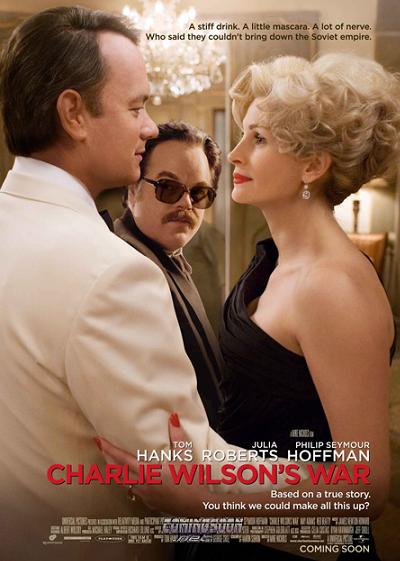
charliewilsonswar.jpg starring Tom Hanks, Philip Seymour Hoffman, Julia Roberts and Amy Adams
written by Aaron Sorkin and directed by Mike Nichols
rated R for strong language, nudity/sexual content and some drug use.
94%

It’s 1980, and Charlie Wilson (Hanks) is a hard-partying congressman from east Texas. He sits on several important committees and everyone owes him favors, mainly because his lack of pet causes has allowed him to do a lot of favors in the past. Joanne Herring (Roberts), a wealthy constituent from Houston, changes all of that when her passion for helping the people of Afghanistan fight off Soviet invaders leads Charlie to visit the massive refugee camps in neighboring Pakistan.

What he sees there affects him so deeply that he immediately commits all of his political capital to the cause. With the help of CIA operative Gust Avrakotos (Hoffman) and his colleagues on the Afghan desk, Charlie’s resources help wage a covert war in Afghanistan that ultimately funnels in $1 billion in American support and changes the course of history, for better or worse (or both).

What makes Charlie Wilson’s War so compelling is that it is based on a true story. It provides a fascinating glimpse into a side of government we rarely see, and casts light on a piece of recent history that most of America is probably unfamiliar with. What makes it so entertaining are great performances by Tom Hanks and Philip Seymour Hoffman. Both are brilliant alone. Scenes between them are fantastic. I don’t normally do this, but one of my favorite scenes of the film is up on YouTube right now (profanity discreetly bleeped). This scene highlights both the strength of the lead performances and the sharp comedic elements of sly dialogue, volatile character interaction and gentle political cynicism that kept me laughing the whole way through:

Perhaps my chief complaint about the movie is that, at barely over an hour and a half in length, it feels a bit rushed. Most of the runtime is spent on character development and rising action (not that those are bad things), while most of what Wilson actually accomplished is consigned to a rather brief montage that slides through several years in just a few minutes. However, it succeeds where every preachy political thriller this year has failed by largely allowing the events it depicts to speak for themselves. It makes thought-provoking points about the nature of global politics without inserting sermons about them into the mouths of its characters, and, of course, it isn’t afraid to laugh at the whole business.

I’m a bit late in seeing and reviewing this movie. As I noted earlier, it’s been in wide release for weeks now. However, after finally seeing it, I really wanted to weigh in. I think it is a movie that a lot of people should see for the light it sheds on the realities of the world we live in today (a world which, make no mistake, our country has had a large role in shaping). However, many of the people that I would like to share the movie with would never sit through it thanks to a scene of rather prolonged and gratuitous nudity (though to be fair, while the level of nudity is gratuitous, the scene itself is not) and a high profanity count.

This is a real shame. Charlie Wilson’s War is a pretty good film. A laugh-out-loud comedy punctuated by some extremely somber moments and images (and capped by a positively-chilling coda), it the cinematic embodiment of the phrase “Life is a tragedy to those who feel and a comedy to those who think.” It manages to be both deeply cynical and touchingly idealistic about American politics, a delicate balance to maintain. Most important of all, though, it raises questions about the wisdom of employing “the enemy of my enemy is my friend” as a universal truth in foreign policy dealings that far too few of the movers and shakers in our government have been asking during the last six decades of our history.

Week 1: Introducing Wednesdays with Hitchcock

•January 2, 2008 • 2 Comments

“Man does not live by murder alone. He needs affection, approval, encouragement and, occasionally, a hearty meal.”
“The only way to get rid of my fears is to make films about them.”
“Some films are slices of life, mine are slices of cake.”
“It’s only a movie, and, after all, we’re all grossly overpaid.”
“Ours not to reason why, ours just to scare the hell out of people.”
“Self-plagiarism is style.” — Hitchcock

The Hitchcock Project

Because I need yet another ongoing blog series involving extensive research and movie-watching, I have decided to spend a year examining the films of Alfred Hitchcock. In preparation for this project, I have read several books (including personal biographies, psychological biographies and critical discussions), spent countless hours scouring the internet for further sources, and assembled a collection of 47 of the 51 major Hitchcock films which I hope to discuss during each week of 2008.

While I already know far more than I did before about the man and his work, and I hope by the end to know more still, I remain merely a passionate amateur. I aspire to produce nothing more than a well-researched and informative, but casual and entertaining, series of discussions about these films. I will use whatever reliable supplementary resources are most readily available to me, but I intend to focus most intently on the films themselves (many of which I will be seeing for the first time this year).

I am not terribly interested, as some of Hitchcock’s more sensational biographers have been, in any personal phobias, repressions, fetishes or what have you that could have influenced the great director’s work. My chief interest is in the distinctive skill and artistry which Hitchcock brought to the images which fill the screen during any given moment during his films. I hope that by the end of this project, I and my readers will have a new appreciation for Hitchcock and his films, both greater and lesser.

Early Life & Career

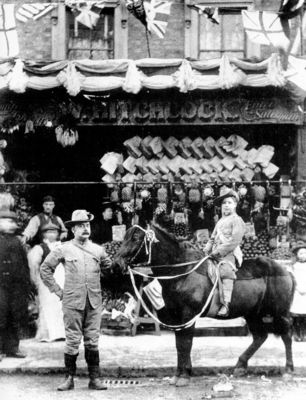
Hitchcock and his father in front of the family business

Alfred Joseph Hitchcock was born on August 13, 1899 to William, an Essex greengrocer like his father before him, and his wife Emma Jane. Alfred was the last of three children, three years younger than his sister Ellen Kathleen (“Nellie”) and seven years younger than brother William, Jr. His parents were hard-working and respectable, but they also loved the theater and would often take young Alfred along with them. He was a solitary child, not well-liked by his peers and given to developing his own interests alone. He disliked both of his names, and went by “Hitch” at school. As an adult he would introduce himself cheekily (only to men) with “Call me Hitch, without a cock.”

Throughout his career, Hitchcock often told a story of when he was perhaps six years old. He set out to follow the tram tracks near his house late in the afternoon. Before long, darkness had fallen and he realized he would be late for dinner. Hurrying home, he found his father angrily waiting to begin eating. William gave his son a note to take down to the local constabulary. When he arrived, the desk sergeant read the note and then locked the boy in a cell for 5, perhaps 10, minutes. When he was let out, he was told, “This is what we do to naughty boys.” Although it didn’t occur to him at the time, he eventually realized “perhaps [my father] was angry because he was worried about me.” Hitch went on to joke that he wanted the policeman’s final admonition placed on his tombstone. Nevertheless, the experience strengthened a life-long fear of policemen, and he had a morbid fascination for stories of wrongful accusation and imprisonment.

Hitchcock’s mother was a devout Roman Catholic, and at age 11 he was sent to attend St. Ignatius College, a Jesuit school in London. Hitch credited his religious schooling with investing in him “a consciousness of good and evil,” among other things. Then, shortly after World War I (or, rather, “The Great War”) broke out in 1914, Hitchcock’s father died very suddenly of a heart attack. He was 52 years old. William, Jr. took over the grocery, and Alfred had to give some consideration to what he wanted to do with his life.

His interests led him to a school of navigation and engineering, where he had vague dreams of becoming an aviation navigator. One of his greatest fascinations was with various systems of transportation. He knew the London underground system like the back of his hand at a very early age, and kept well-ordered collections of maps, timetables, schedules and other travel-related paraphernalia. He even memorized the New York subway routes decades before he ever visited the city. Nevertheless, his real talent was for drawing, and he made high marks in his drafting courses. This skill that would later come in handy when he decided to break into the fledgling British movie business. Meanwhile, he also started taking evening courses in art at Goldsmiths College.

Soon, he was hired by W.T. Henley Telegraph and Cable Company thanks to his electrical knowledge and the wartime labor shortage. In 1917, as soon as he had turned 18, Hitchcock presented himself to the army, eager to serve his country. They turned him down. The report noted that he was “overweight, with a glandular condition, and still disturbed by his father’s death.” Hitch was crestfallen. Meanwhile, however, he continued to move up in the telegraph company. Growing tired of the technical side of the business, he joined the sales department, and before long he was drafted into company advertising.

hitchdraw.jpgThanks to his aptitude for drawing, Hitchcock was a perfect fit. A natural storyteller as well as an artist, he also both edited and contributed to the “Henley Telegraph,” his company’s in-house magazine, and produced it so successfully that it was sold outside the business. In the very first issue he published “Gas,” a short story about an Englishwoman visiting Paris who finds herself abducted, robbed and left for dead in the river Seine, only to wake up and find she dreamed the whole experience while anesthetized at the dentist’s office.

It’s anyone’s guess where Hitchcock might have ended up by following the track he was on, but in 1919 a new opportunity presented itself. Hitch spotted an ad for a studio called Famous Players-Lasky which was opening a London Branch at Islington. A little insider information revealed what their first film would be, and Hitchcock burned the midnight oil for several nights running preparing an impressive portfolio of title cards for The Sorrows of Satan (based on a novel). Then, he called up the studio and rather brashly offered them his work, completely free of charge. The gambit payed off, and he was hired part-time to design more intertitles for a variety of silent films.

With a boundless enthusiasm for the business, Hitch made his presence felt all over the studio, volunteering for everything and learning all he could. Before long, he was asked to leave his old job with W.T. Henley (which he’d continued to keep) and join Famous Players-Lasky full time. Officially, his job for the next few years (from 1920 to 1922) was to design the intertitles, though in reality he continued to volunteer for all sorts of things, including some assistant directing on the side. In 1922, Hitch got his first directing experience on portions of the films Always Tell Your Wife and Number 13, neither of which was released (much to his eventual relief). During that year, the American studio sold the Islington Studios to Gainsborough Pictures, a new British company started by Michael Balcon.

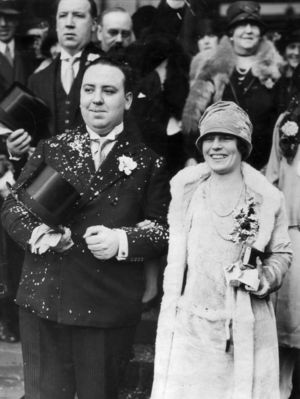
Balcon, one of the giants of early British cinema, hired Hitchcock as assistant director for Gainsborough’s first film, Woman to Woman. Hitchcock also volunteered to write the script and design the sets, both roles he would go on to fill in many of Gainsborough’s early pictures. With so much on his plate, Hitch was permitted to hire an assistant. To fill the role, he chose a young film editor who had been working at Islington since 1916, but who had been laid off when Gainsborough took over. Her name was Alma Reville. The pair worked together for the next few years, and were finally married latehitchwedding.jpg in 1926.

By that time, Hitchcock was directing his own pictures and Alma was his closest collaborator. She was involved in every film he ever directed in a variety of roles, and Hitch consulted her about everything. Accepting an important film award near the end of his life, he said “Among those many people who have contributed to my life, I ask permission to mention by name only four people who have given me the most affection appreciation and encouragement […] The first of the four is a film editor. The second is a scriptwriter. The third is the mother of my daughter, Pat. And the fourth is as fine a cook as ever performed miracles in a domestic kitchen. And their names are Alma Reville. […] I share my award, as I have my life, with her.”

The Hitchcock Touch
hitchdirect2.jpg

At a time when American cinema was sucking the life-blood (in the form of audiences) away from home-grown British films, Hitchcock became the savior of Britain’s movie business. At the time he began his directing career, fewer than 5% of films shown in the United Kingdom were British. In 1927, Parliament passed a law requiring that certain quota of British films be screened every year in an effort to boost the flagging industry. In that same year, Alfred Hitchcock completed his first hit thriller, The Lodger (hailed by contemporary audiences as the greatest British film ever made) and, before he was 30 years old, was soon the most recognizable film director in the country.

His films were so popular that, in 1929, he was given charge of the British “talkie.” Even a cursory study of the history of British film reveals that, during the difficult 1920s, Hitchcock is among the most important players in the industry. His films are virtually the only examples of British cinema during those years which have continued to merit preservation and distribution.
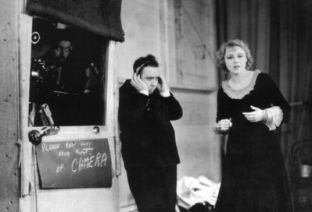
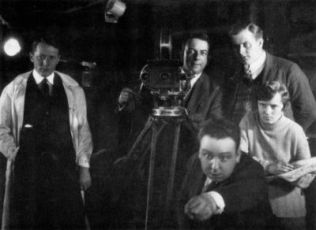
Hitchcock directing Blackmail, the first British film to feature sound

His approach to film-making was simple and methodical, and his technical knowledge of every aspect of his craft was immense. Hitch would exhaustively map out every aspect of a film in advance, maintaining (and sometimes fighting for)
an unusual degree of control over the finished product. Before shooting began, Hitchcock would have every frame and angle of the entire movie thought out and storyboarded. In fact, he was known to remark that he found the actual filming process rather boring, because all of the creative work of making the movie had already been completed before the cameras ever started rolling.

On-set he was notably workmanlike and professional, always showing up for filming in a dark suit and tie whether the camera was rolling on a studio back-lot or in the sweltering heat of the Moroccan sun. His overwhelming interest in the technical side of movie-making gave him a reputation among actors as a challenging director to work for, although many found the experience exhilarating and immensely valuable. Hitchcock gave little or no direction to the performers, demanding only that they stick to the script and stay within the frame of his camera, wherever it might move. If they got it wrong, he would offer suggestions, but more often than not he simply moved on to the next scene, leaving his actors to surmise that his lack of comment meant they had gotten it right.

hitchcattle.jpg

He hated method actors, expecting the characters to be delivered as they were written and imagined in the script. Ingrid Bergman, who worked with Hitchcock several times throughout the 1940s, once approached him with a difficulty about one of her scenes. “I don’t know if I can give you that emotion,” she told him. “Ingrid,” he replied curtly, “fake it.” He was often quoted as having said that “Actors are cattle,” an accusation many who worked with him had no trouble believing, but Hitchcock himself always denied ever having uttered any such thing. “What I probably said,” he protested, “was that actors should be treated like cattle.”

Cameramen, on the other hand, loved working with Hitchcock because, unlike many other directors, he knew what could and could not be done. He very often presented crews with interesting challenges even as he put his own expertise to work in helping solve them, and the results were innovative and distinctive. Indeed, more than a few of Hitchcock’s films seem to revolve around a series of technical challenges which he has set himself to overcome, and he was never interested in what he called “pictures of people talking.” He also despised an early trend he noted in British cinema of films that looked as though they had been made by merely placing a stationary camera in front of a stage. He had an immediate and intuitive grasp of the possibilities of cinema as an art form all its own, rather than merely as an extension of live theater.

This can be traced, no doubt, to the artistic imagination he developed in his youth. His flair for the visual was further strengthened during the decade he spent working in the silent era, and he never really lost the sense that, in a movie, one should never tell an audience anything when one could show them instead. Fast-forward to almost any of Hitchcock’s best-known scenes and you will immediately notice that, if there is any dialogue, it is purely incidental to the subtext of whatever the camera is watching.
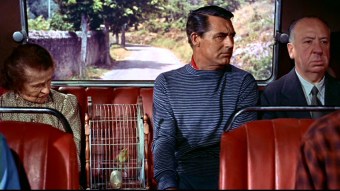
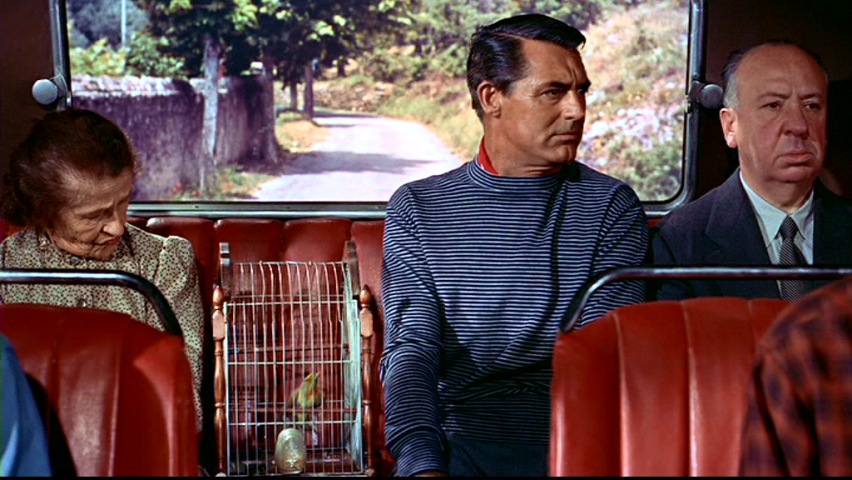
hitchcameo.jpgAlfred Hitchcock was one of the first directors recognizable in that role by the general public. At a time when movies were churned out of the major studios primarily as vehicles for big-name stars, it was unique that one went to see “a Hitchcock film” rather than, say, “a Cary Grant movie.” During Hollywood’s “Golden Age,” producers were generally regarded as a film’s primary “creators,” hiring directors to do the grunt work of barking orders on the ground. In this respect, Hitch definitely stood out from the pack. He was widely recognized by sight as well, thanks not only to the famous profile that opened each episode of his television show, but also to his trademark cameos. He appeared briefly in nearly every one of his films, beginning with The Lodger, which he just happened to step in to “simply to fill the screen.” “Later,” he explained, “it became a superstition, and then a gag.”

When influential French critic François Truffaut and his contemporaries began formulating their revolutionary auteur theory of cinema in the mid-1950s, Hitchcock, along with John Ford, was among their most idolized examples. Essentially, this controversial view of film postulated that the director, more than any other person involved in a movie, was ultimately responsible for the artistry of the best films. Through their personal stylistic flair alone, a good director could elevate even mediocre material into a work of art, infusing it with his or her distinctive touch.
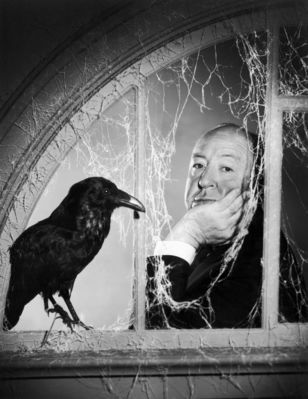
hitchbird.jpgEven today, the most critically-acclaimed films have come to be credited primarily to the skill of the director behind them. However, until the 1970s, with its Coppolas, Scorseses, Spielbergs, and so forth, very few directors achieved the sort of creative control and name recognition that Hitchcock enjoyed for most of his career. Even fewer can lay claim to a body of work as large, cohesive, and perennially-appreciated as Hitchcock’s distinctive films. Critics today still employ his name as an adjective. Those who imitate his style, whether knowingly or not, have their films labeled “Hitchcockian.”

Hitchcock’s work in the movies spanned five decades, from the silents in the 1920s, through early talkies in the 1930s and into the dream factory of the studio system in the 1940s. He transitioned his talent successfully to the demands of television in the 1950s, and flirted heavily with the edge of acceptability before the fall of the production code in the 1960s, finally churning out his final films as younger men ushered the cinema into the modern era in the 1970s. But he left behind him an indelible mark on the genre of which he was and is the uncontested master: the suspense thriller.
hitchsig.jpg

Next Week: Hitchcock directs his first film

Best Picture: The Movie

•January 2, 2008 • Leave a Comment

Here’s a cool little splice of all the Best Picture winners set to music. Very enjoyable way to spend 4 minutes (at least for me) . . . Check it out:

Thanks, Awards Daily. How many of them have you seen? My current count is 49. I’ve seen every Best Picture winner from the 1960s (currently the only decade with that distinction), but only four each from the ’30s, ’40s and ’70s.

Oh, and if you’re wondering where you’ve heard that cool and inspiring score before and not being able to remember is just bugging the snot out of you, wonder no more. It’s from The DaVinci Code. Gag me. It’s certainly put to far better use here, let me tell you this.