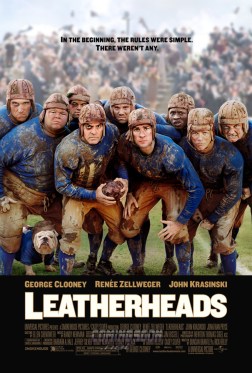
starring George Clooney, Renée Zellweger & John Krasinski
written by Duncan Brantley & Rick Reilly and directed by George Clooney
Rated PG-13 for brief strong language.
91%
The year is 1925, and Dodge Connelly (Clooney), fast-talking Minnesotan, is struggling to hold the fledgling Duluth Bulldogs, and the entire pro football league, together. What he needs is a star, and he finds one in Carter “The Bullet” Rutherford (Krasinski), a war hero who plays football for Princeton. With Rutherford on his team, and big-city reporter Lexie Littleton (Zellweger) in tow, pro football seems destined to really take off, but not without some hilarious, zany and unexpected twists along the way.
*
starring Amy Adams & Frances McDormand
written by David Magee & Simon Beaufoy and directed by Bharat Nalluri
Rated PG-13 for some partial nudity and innuendo.
94%
Guinevere Pettigrew (McDormand) is an incompetent governess struggling to hold down a job in late-1930s London. Delysia Lafosse (Adams) is an aspiring American actress and singer who is experiencing a bit of boy trouble. She is living in a flat belonging to the owner of the nightclub where she sings, sleeping with the producer of a West End musical and staving off proposals of marriage from the nightclub’s pianist. When Miss Pettigrew steals another woman’s assignment from the employment agency, the two women are thrown together for one very wild day.
Leatherheads and Miss Pettigrew Lives for a Day are both affectionate throwbacks to the screwball comedies of the early talkie era, the late 1920s-early 1940s. Watching them brings to mind titles like My Man Godfrey, His Girl Friday, The Lady Eve, Bringing Up Baby and The Awful Truth. As such, there are two ways to look at each film: in terms of how it succeeds as an homage, and in terms of how it succeeds as a movie.
Leatherheads features a lot of the rapid-fire dialogue and pointed barbs of witticism flying between the main characters. Clooney, the nearest approximation to Cary Grant in existence, has already proved himself to be a master of this art. Part of the reason he succeeds so thoroughly, I think, is that Clooney, like Grant before him, is equally good at playing drama and comedy, and can spin on a dime between the two. Zellweger proves to be an excellent foil, and she already showed with 2002’s Chicago that she can blend seamlessly into the background of the 1920s. Krasinski brings the same “everyman” brand of guileless charm to this role that he has displayed on television’s The Office for a few years now. He is a likable chump with a crooked smile in the vein of a young Jimmy Stewart or Gary Cooper.
The movie evokes both its period and the films that were made during it without belaboring them, which allows it to surprise and delight all the more. Leatherheads is just as comfortable with sight gags and slapstick as it is with wordplay, and knowledge of its sources, while not necessary, lays another rich layer of humor onto the proceedings (think references to the Keystone Cops and Sergeant York). Somewhere along the way, the movie tosses one too many balls in the air for it to juggle comfortably, and sags a bit as a result. The script could probably have used some general tightening up. However, it rallies for the big finale in a totally satisfying way.
Miss Pettigrew Lives for a Day is reminiscent of the Depression-era rags-to-riches stories, made to lift audiences’ spirits while they forgot their own troubles for a few hours. Adams and McDormand are both fantastic, as always, and they have an undeniable chemistry together. With all of the action crammed into a single day, the script is much more compact than that of Leatherheads (and some twenty minutes shorter, as well), and is in no danger of dragging at any point. The story suffers from one or two minor improbabilities, but keeps things moving too fast to trouble us.
Two things you would probably not find in a light-hearted comedy of the late-1930s are the air raid drill scene (this being the lead-up to the Second World War) and one or two hints that Europe, on the eve of re-initiating global conflict, had learned nothing from the First World War. The former would simply be something audiences seeking frivolous entertainment would find discomforting, while the latter would probably have come across as highly unpatriotic. However, there certainly would have been people thinking about these things. Interestingly, Leatherheads, though it is set closer to the event, has a far rosier view (if it can be called that) of “the Great War.” That seems only natural, though, as it is set in the United States, while Miss Pettigrew is in Britain where, for instance, one character lost virtually every friend he had from his school days.
In any case, Miss Pettigrew does not dwell for long on such somber thoughts. They make their point, then move on, leaving us to ponder their implications or leave them aside while we laugh at the antics of the characters on the screen. Still, hours later, those expressions of impending tragedy are what remain in my mind, even more than the wild hilarity swirling around them. The movie can be a pleasant evening’s entertainment, certainly. At least, I thought so. However, it is difficult to look back from this side of September 1st, 1939, and not think about the tribulations that likely lie ahead of Miss Pettigrew and her friends and loved ones.
As I watched Leatherheads and Miss Pettigrew, I couldn’t help but wonder how would these pieces of period homage would be seen by moviegoers of the time. I wonder if, in sixty or seventy years, filmmakers will attempt a comedy or two in the “style” of the ’90s and ’00s. What would that even look like from the perspective of people who won’t be born for another few decades? What sorts of seminal events will serve as the lens through which these people of the future view us? All such questions aside, though, if you’re a fan of old-style comedy, this is a great week to go the movies. I heartily recommend the double-feature approach. If you enjoy one, you will certainly appreciate the other as well.
In other news, Looking Closer has a link to a Cinematical post detailing a large chunk of the Disney and Pixar release slate for the next four years. Looks like next year’s Pixar release is called Up, plot described Wikipedia as “78-year old Carl Fredricksen befriends 8-year old Wilderness Explorer Russell, and [they] have numerous adventures.” The film logo shown on Wikipedia has a house that is being carried away by a large number of balloons emerging from the chimney. Interesting. 2010 will see the release of the long-rumored Toy Story 3. No story spoilers available yet, but the screenplay is being written by the guy behind Little Miss Sunshine. If it can live up to the sequel magic of Toy Story 2, it should be quite something.
Then, in 2011, Pixar has, not one, but two planned releases: In the summer, there will be Newt: “What happens when the last remaining male and female blue-footed newts on the planet are forced together by science to save the species, and they can’t stand each other?” Hmmm. I’m not too sure about that. Then, for Christmas, there is a Scottish action adventure called The Bear and the Bow: “The impetuous, tangle-haired
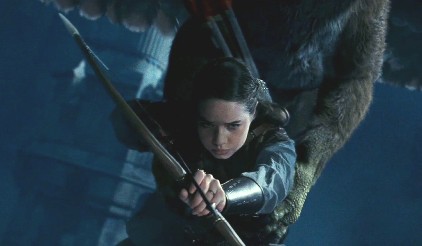
Merida, though a daughter of royalty, would prefer to make her mark as a great archer. A clash of wills with her mother compels Merida to make a reckless choice, which unleashes unintended peril on her father’s kingdom and her mother’s life. Merida struggles with the unpredictable forces of nature, magic and a dark, ancient curse to set things right.” We shall see. We shall see.
Finally, in 2012, we get Cars 2. Really? Cars 2? That was the the one movie you’ve made since Toy Story that you felt had real sequel potential? Truly, redneck culture walks among us as king. To my mind, there’s no question which Pixar movie ought to have a sequel (if any): Who among you would not love to go to The Incredibles 2? Come on.
On the non-Pixar slate, Disney DVD will be releasing, not one, not two, but fourTinkerbell movies in the coming years. Joy. Also, Disney finally returns (supposedly) to more traditional fairy tale fare with Rapunzel, which, before major retooling a few years back, started out to be yet another of the fractured, deconstructed fairy tales that have become so cliche since the success of Shrek. The movie will be completely CG.
Finally, in 2012, Disney will bring us an adaptation of the Philip K. Dick short story King of the Elves, about “a band of elves living in the modern-day Mississippi Delta who name a local man their king after he helps save them from an evil troll.” Sounds like a lot of fun.
Later on, in the “update” section, there are mentions of this year’s upcoming Bolt, a tired-sounding rehash of Pixar movies like Toy Story and Cars in which a dog who plays a superhero on TV believes he actually has superpowers, then gets lost and meets a host of weird characters before discovering that his powers are not real. Ho-hum. Also described is next year’s Disney release, The Princess and the Frog, which will be an animated musical set in New Orleans in the 1920s.
I’m still trying hard to catch up, but I’ve hit another snag, this one courtesy of WordPress, which I have adored since I first started this blog about a year ago. WordPress frequently makes slight tweaks and changes to the blogging that goes on behind the scenes, and without fail these changes are wonderful and useful and make my life easier . . . until now.
On the 4th, they suddenly upgraded everything from WordPress 2.0 to WordPress 2.5, a move that completely changed the interface of the “dashboard,” where all elements related to blog composition take place. Almost all of these changes, I have come to expect from WordPress, seem like definite improvements, unfortunately, a lot of them don’t work properly. Among the currently broken elements are spellcheck, wordcount and, worst of all, picture uploading.
Lesson #1: Do not make an irreversible upgrade that fails to function as well as the previous version of your software. You will be hated for it.
In the midst of my annoyance, I happened across a link to this article from The Guardian. It notes that there is a petition demanding the resignation of one Uwe Boll, considered by many to be the worst and sleaziest director operating in the motion picture industry today. According to the article, Boll, who once beat the snot out of four film critics when the accepted his challenge to go at it in a boxing ring, has stated that he would retire if the petition reached 1,000,000 signatures. As of the publication of that article, the count stood at 48,000. I proudly became the 125,854th signer of the petition (which can be found here).
For the record, yes, you do have to put your e-mail address in to sign. I did, and I set it to private, and I’ve had no further troubles. If it bothers you, take an extra five seconds and make a dummy address on yahoo or hotmail or something. I encourage you to sign, not because I believe Mr. Boll will actually resign, but because a) I will be amused to hear of his reaction to those who question him about what he promised earlier and b) because filmmaking this bad is always worthy of a response from those who recognize it.
Also for the record, to the hapless critics who stepped into that boxing ring: Never allow a stupid man to settle an argument with his fists instead of his brain. As Isaac Asimov pointed out, “Violence is the last refuge of the incompetent.” Keep explaining why his movies suck. That’s what you’re good at. Whether or not he can crush your skull like a walnut really doesn’t enter the picture. Seriously.
“Let that be a lesson to you: Never have any children.”
“Sir, you have beaten my wife and she has gone off with another man. You are a dirty dog.”
“Hullo, are you still here? Have you lost your whistle or something?”
“Well, if there is any trouble, I hope you’ll remember you’re to blame.”
“You will be smuggled, my friend, when, how and where I am pleased for you to be smuggled.”
“Before receiving the first degree of the Seventh Gold Ray, your mind must be wiped blank.”
“Tell her they may soon be leaving us. Leaving us for a long, long journey. How is it that Shakespeare says? ‘From which no traveler returns.’ Great poet.”
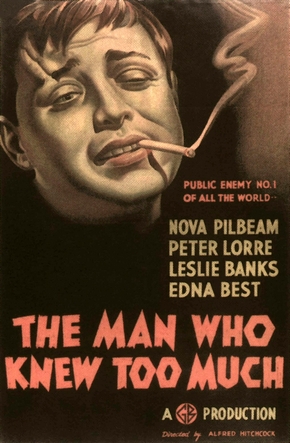
–The Man Who Knew Too Much
In 1933, famous but without a contract, Hitchcock reached what he would later call “my lowest ebb,” directing Waltzes from Vienna for an independent producer associated with the A-list branch of his old studio: Gaumont-British (G-B). It was a light-hearted musical about the love-life of Johann Strauss Jr. and his composition of “The Blue Danube.” The film is today as rare as Hitchcock’s 4th film, Downhill, and has only been released on DVD in Europe, so it will have to be passed over.
Gaumont-British was now under new ownership, but Hitchcock’s old friend and champion, Michael Balcon, was still in charge of the management. The two ran into each other on the set of Waltzes from Vienna, and Balcon discovered that Hitch had no further projects lined up. Initially awkward upon encountering Balcon, Hitch soon warmed up and told him about a thriller he had been developing for BIP before it had been killed for financial reasons.
When Balcon expressed interest, Hitchcock immediately bought the rights back from BIP and sold them to Balcon for twice the amount (guilt later prompted him to buy Balcon a gift with the profits). On the strength of the idea, Hitch was signed to a five-year contract with G-B. It was a deal which would ultimately turn him into a global sensation, and cement his reputation permanently.
The first of his films for Balcon was originally titled Bulldog Drummond’s Baby, and it was to be the latest in a series featuring war-veteran-turned-private-detective “Bulldog” Drummond. However, BIP owned the rights to the character, so when Hitch jumped ship, the project developed into something completely different, and probably much better: The Man Who Knew Too Much. Charles Bennett, who had written the play Blackmail a few years earlier, wrote the screenplay. He would be a frequent collaborator with Hitch during the remainder of his British period.
In the movie, a small British family (husband, wife and daughter, just like Hitchcock’s) is vacationing at a ski resort in Switzerland, where they befriend a Frenchman named Louis Bernard. When Bernard is assassinated while he dances with the wife, he whispers a message to her that could have an enormous impact on the future of Europe. Before husband and wife can tell the British authorities what they know, their daughter is kidnapped and they are warned to stay silent if they ever want to see her again.
With this film, Hitch continued to develop the idea of the MacGuffin, in this case making it a vague assassination plot amidst an indistinct landscape of espionage and international politics. The audience is never sure why the assassination is significant, or who is really behind it, but with ominous references to Archduke Ferdinand and the general atmosphere of unrest in Europe after Hitler’s rise to power in 1933, they don’t need to. Hitchcock had been influenced early in his career by the expressionist visual style of German filmmakers, and had been among the first to experiment with expressionist sound in 1929’s Blackmail. This was expressionist storytelling.
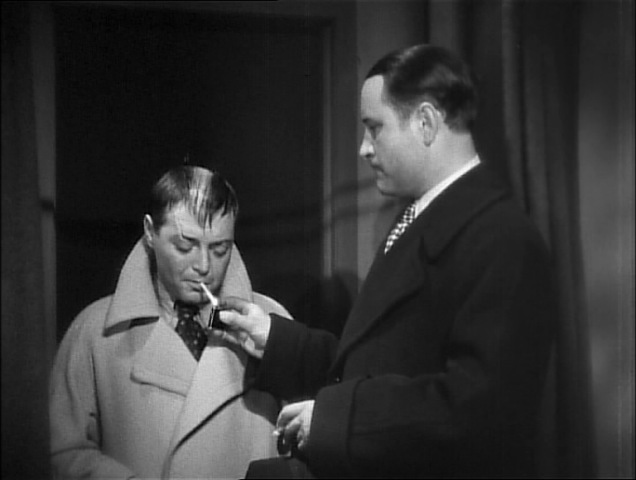
The birth of Nazi Germany didn’t only have an effect on the development of the story. Peter Lorre, a Hungarian Jew, had achieved international cinematic fame as a notorious child-killer in Fritz Lang’s M (1931). When Hitler became Chancellor of Germany, Lorre fled the country, eventually ending up in London, where he was soon cast as Abbott, the charming villain in Hitchcock’s latest film. Leslie Banks would play Lawrence, the protagonist, with Edna Best as his wife Jill and a celebrated young actress, Nova Pilbeam, as their teenage daughter Betty.
Not only was The Man Who Knew Too Much Lorre’s first English-language film, he knew almost nothing of the language before shooting began, learning most of his part phonetically. Hitchcock had no idea that this was the case when they first met, and Lorre bluffed his way through the conversation by smiling, nodding, saying “yes” and laughing uproariously whenever he thought Hitch had just finished a story.
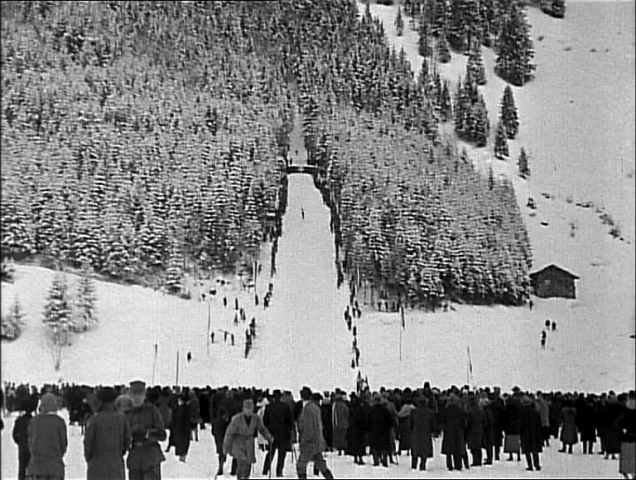
The film begins with an assortment of Swiss travel brochures before cutting to a beautiful scenic shot which it lays the credits over. The film proper opens on a ski slope. Lawrence and Betty are watching Louis Bernard perform a jump when Betty’s dachshund wriggles loose from her arms and runs out into the middle of the course. Betty dashes after it, prompting Bernard to swerve out of control and tumble into the midst of the crowd. It is the beginning of a recurring motif of the family blundering into the midst of events where they do not rightly belong.
After he picks himself up and apologizes to Abbott, the good-natured foreigner that he plowed into, Bernard returns to the lodge with Lawrence and Betty. He tells them that he is leaving on the following day. At the lodge, they find Lawrence’s wife Jill, a sharpshooter, engaged in a shooting match with Ramon, another guest. Betty, ignoring the need for silence, runs up to her mother to ask her a question. Jill gives her a small lapel pin and tells her to step back and be quiet.
Each shooter has one remaining shot, but Jill spoils her mother’s aim by making noise. In actuality, the noise is Abbott’s fault. He shows her his gently-chiming Swiss watch at the crucial moment. The noise made by the watch is immediately associated with this character, who will later be revealed as the villain. It is quite possible that Hitch intended the sound association as a sly reference to Lorre’s character in M, whose presence was announced throughout the film by his continuous whistling of a particular tune. In any case, Jill is upset, particularly when Ramon hits his target, although both are good sports and express a desire to have a rematch someday. Jill cheers up when she sees Bernard. She makes a great show of preferring him to her husband, who makes a great show of being broken-hearted, and they all trot laughingly inside.
That night, Jill dances with Bernard and taunts her husband further as he sits at the table with Betty. Jill’s unfinished knitting project lies on the table, and Lawrence mischievously attaches the end of the yarn to the back of Bernard’s jacket. As the couple dances away from the table, the knitting unravels, stretching the yarn across the room after them. Although the situation is humorous, it is also full of symbolic portent. As though it is the thread of Bernard’s life, the line wraps itself around Jill, sucking her into whatever he is involved in. Just as they notice the attached yarn, a small hole appears in the window near where they are dancing, and Bernard looks down at his chest, where a pool of blood is forming. He has been shot, and the thread of his life has been cut.
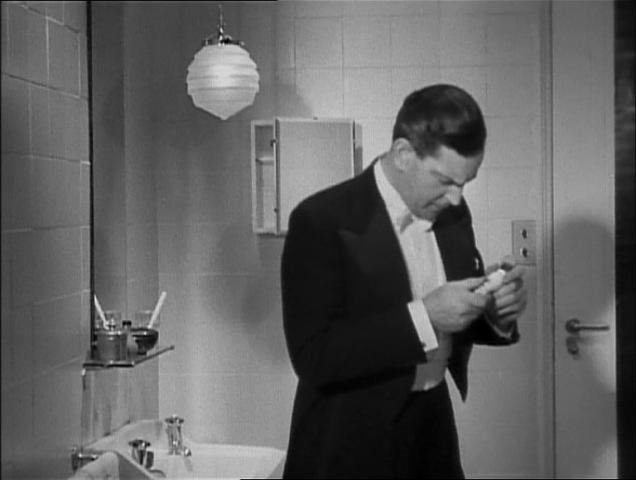
As he fades away, Bernard hands Jill a key and tells Jill to go to his room and retrieve the message from “the brush.” Lawrence sends Betty to bed and, after hearing from Jill, heads to Bernard’s room. As the hotel staff closes in, he digs through a variety of brushes until he finally discovers that the shaving brush unscrews. Inside is a dated message that reads simply, “Wapping, G. Barbor make contact A. Hall.” He leaves the room by the other door just as the staff bursts in, and promptly runs into Ramon in the hallway, thus revealing that he already “knows too much.”
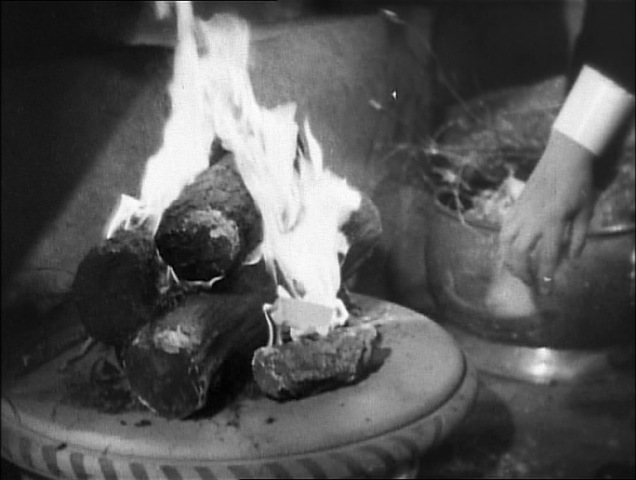
The upshot of all this is that, while Jill is being interrogated by the police and Lawrence is attempting to ascertain the whereabouts of the British consul, Ramon kidnaps Betty. He leaves behind a note for her parents at the hotel, warning them to say nothing of what they know if they ever want to see their daughter again. Lawrence bursts in on Jill’s interrogation, shows her the note, then quickly crumples it up and throws it into the fire before anyone else can see it. The scene cuts to a close-up shot of Betty’s lapel pin, given to her earlier by her mother, before zooming out to show her being whisked away into the night aboard a jingling sleigh driven by Ramon.
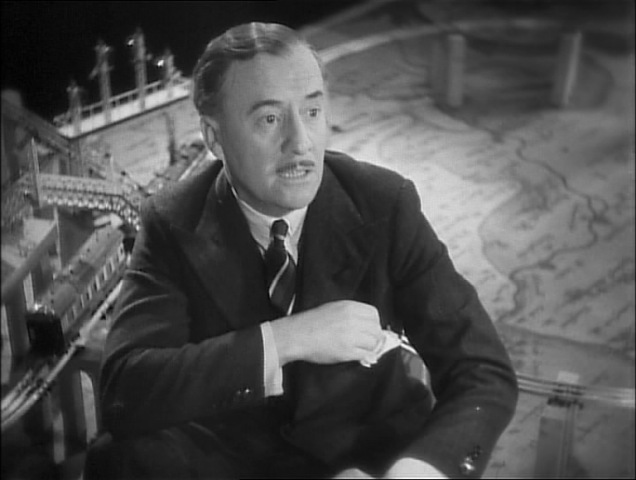
A fadeout transitions us from the natural beauty of the snow-covered alps to the man-made neon chaos of Piccadilly Circus. Lawrence and Jill have returned to England, and continue to say nothing about events in Switzerland. They are visited at home by a few men from the police. Lawrence fields their probing questions while Jill paces nervously in Betty’s playroom upstairs. Keeping her company is Clive (Hugh Wakefield), whose precise relationship to the family is never revealed. He is either a close family friend or, more likely, Betty’s uncle. His role in the story is that of moderately-useful comic relief. In an amusing visual nod to Hitchcock’s previous film, Clive is playing with a model train.
Finally, the policeman leaves, but one of the men with him stays behind. This fellow, Gibson (George Curzon), has a much higher position in government, and when Jill comes downstairs he pressures both parents to tell the truth for the good of their country. They refuse to cooperate for fear of reprisal, but Gibson is still there when Betty’s kidnappers call to make sure her parents are keeping their mouths shut. As soon as they hang up, Gibson immediately has the call traced and discovers that it originated in Wapping. Lawrence immediately remembers the note, but says nothing as Gibson orders plain-clothes detectives out in force, then leaves.
Certain that the presence of the detectives in Wapping will make the kidnappers believe they have been ratted out, Lawrence and Clive go to Wapping themselves, hoping to find Betty before anything terrible can happen. From here, the characters begin a mad dash from set piece to set piece right up to the tense climax. Each new misadventure manages to walk a surreal balance between the farcical and the darkly sinister.
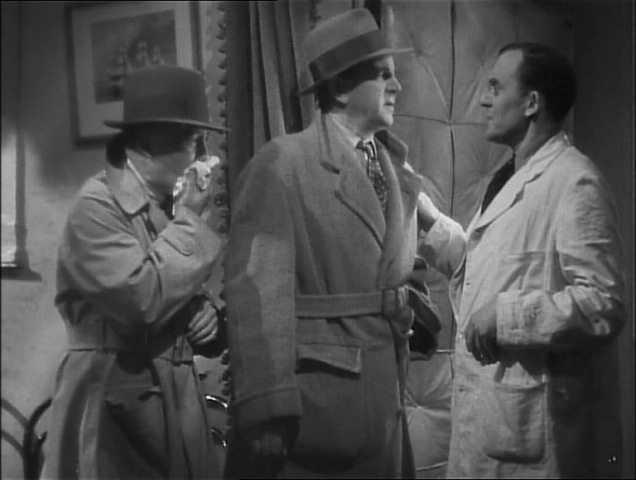
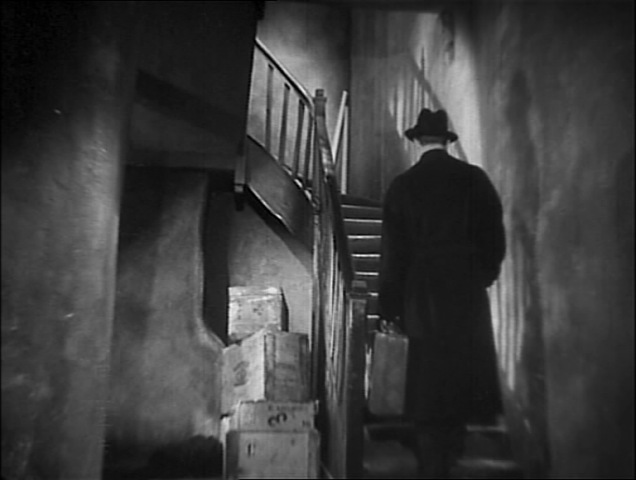
Soon after arriving in Wapping, Clive and Lawrence find the offices of a dentist named George Barbor (another name from the note). Hung above the door is perhaps the most frightening pair of over-sized dentures ever captured on film, and surely only a British dentist would advertise using a set of teeth that have such a monstrous overbite. In any case, the two step inside and walk up the dingy, narrow staircase leading to the offices above. Lawrence sends Clive in to gave his “toothache” attended to by Dr. Barbor (whose grim demeanor, hooked nose and thick glasses are as unsettling as one might expect) while he searches the waiting room for clues.
As he searches, a frightful yowl emerges from the other room, startling Lawrence into whipping a small revolver out of his coat pocket before he recognizes it as a noise one might expect to hear at the dentist’s. Soon, Clive emerges once more, nursing a sore jaw. Lawrence, having discovered nothing, also claims a toothache and proceeds into the inner room.
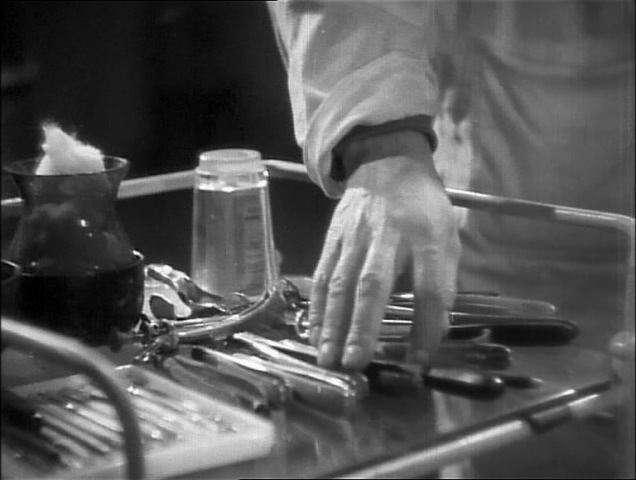
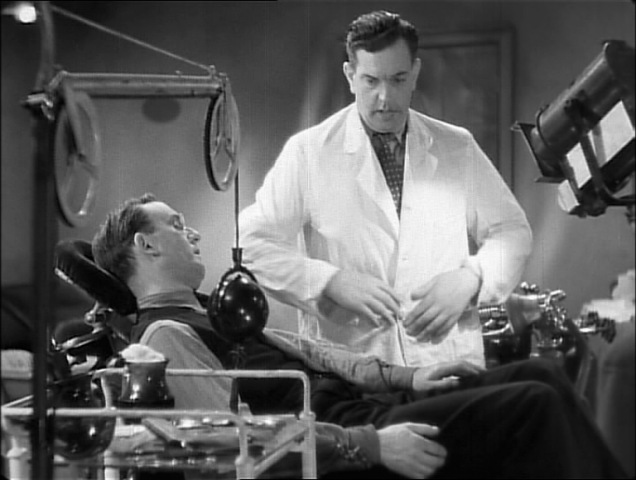
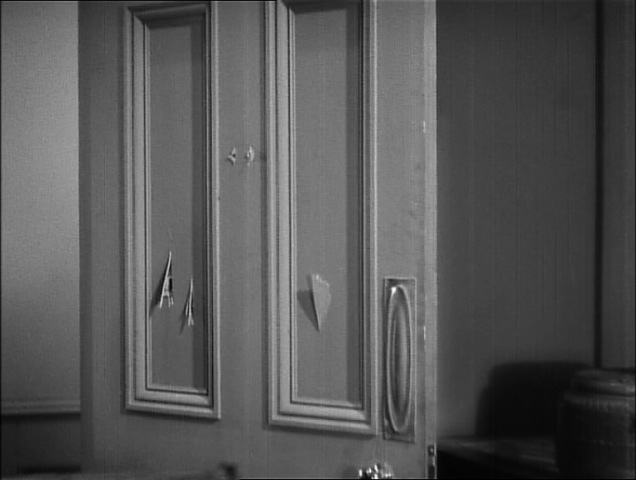
The ensuing scene (which was originally intended to take place in a barber shop, until Hitchcock saw a scene just like it in I Am A Fugitive From A Chain Gang) is a spine-tingling example of sustained suspense. Barbor gets Lawrence into the chair and peers into his mouth. The camera gives us an uncomfortable close-up of a tray full of the wicked-looking implements of dentistry as Barbor’s hand slides across them in search of just the right one. Just as he is about to begin poking around inside, someone comes in and Lawrence recognizes the distinctive chime of a certain Swiss watch. It is Abbott, who asks if someone has arrived before wandering into the next room.
The dentist begins to question Lawrence, who is pretending to be fresh off a ship. Unfortunately for Lawrence, Barbor is very knowledgeable about crews and shipping schedules, and very suspicious. He catches Lawrence in a few lies as he probes his mouth with a sharp tool. Finally, Barbor proclaims that Lawrence’s teeth are quite healthy, and he is just about to get out of the chair when the dentist claims to spot a tooth that “had better come out.” He forces Lawrence back into the chair and tries to gas him, but Lawrence reaches out and begins to strangle him. He wrestles the dentist around into the chair and knocks him out with his own gas instead.
Hearing someone coming up the stairs, Lawrence quickly puts on the unconscious dentist’s coat and glasses and aims the bright light at the door. Just as he bends over his “patient,” Ramon walks in the door. “Has he come?” he asks, and Lawrence points to the door Abbott just walked through. Just then, Abbott comes out and the two have a brief discussion, wherein they hint that they are going to the place where Betty is hidden.
As soon as they mention his daughter, Lawrence, startled, drops something on the floor, but the other two don’t seem to notice. Once they are gone, Lawrence strips off the white coat and glasses, pausing to gas the stirring dentist one last time, then dashes out to collect Clive.
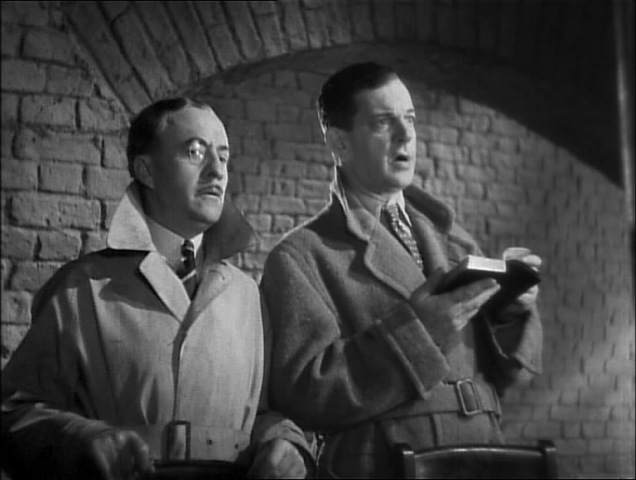
The two follow Ramon and Abbott at a safe distance until they duck into “The Tabernacle of the Sun.” Lawrence notices the symbol of the rising sun over the door, and remembers seeing the same symbol at the top of the message from Bernard’s shaving brush. Stepping inside, they find the worship service of some sort of sun cult already underway, and slip into seats in the back corner of the room. The congregation is singing a hymn, which they obviously don’t know the words to. However, Lawrence, spotting a woman across the aisle that he recognizes from Switzerland, sings this information to Clive in tune with the music.
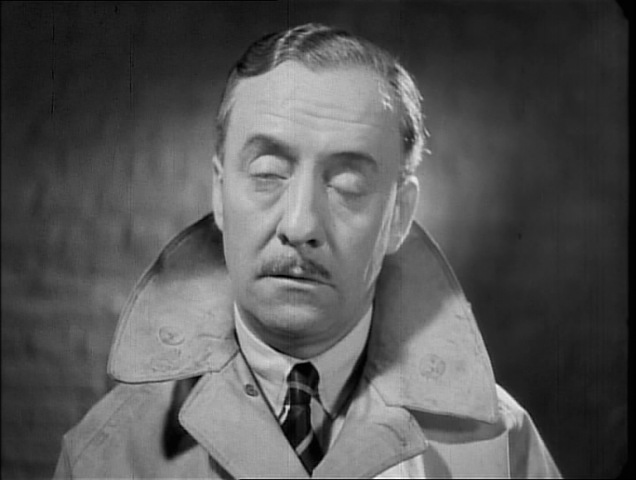
They go back and forth this way for a few seconds, then find that the woman, who has obviously spotted them, is headed for the front of the room, where she takes the podium. The woman addresses the congregation, using terminology like “the fourth circle” and “the seventh gold ray.” After a moment, she singles out Clive for something and asks him to come forward, where she sits him in a chair in front of the podium. Sitting across from him, she proceeds to hypnotize him, putting him deep into a trance. She then asks that everyone leave who is “not of the fourth circle.” Conveniently, this seems to apply to everyone in the room that isn’t working for Abbott.
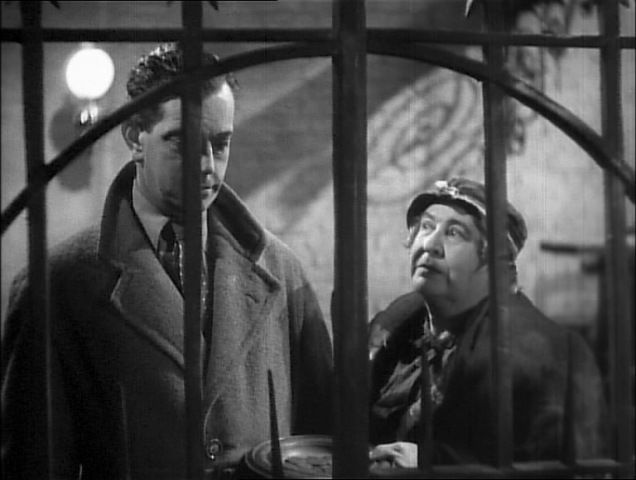
As Lawrence gets up to step out, a woman named Mrs. Sprocket and encourages him, at gunpoint, to stay behind. Incidentally, Mrs. Sprocket is played by an actress named Clare Greet, who had been doing bit parts in his films for years: the creepy fortune teller in The Ring (uncredited), Kate’s mother in The Manxman, and one of the three female jury members in Murder!. This was her largest and most memorable role to date.
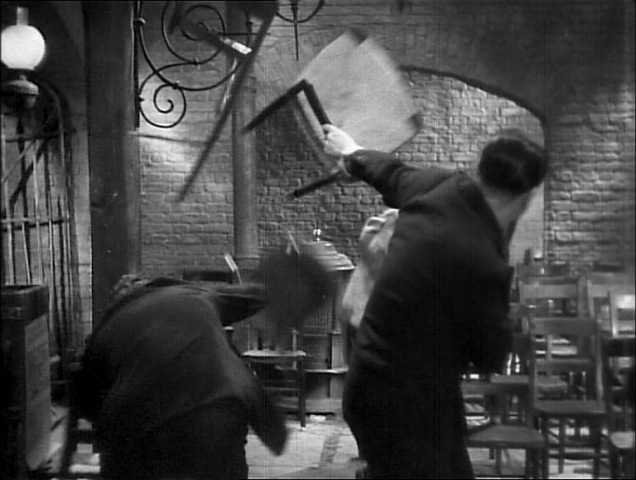
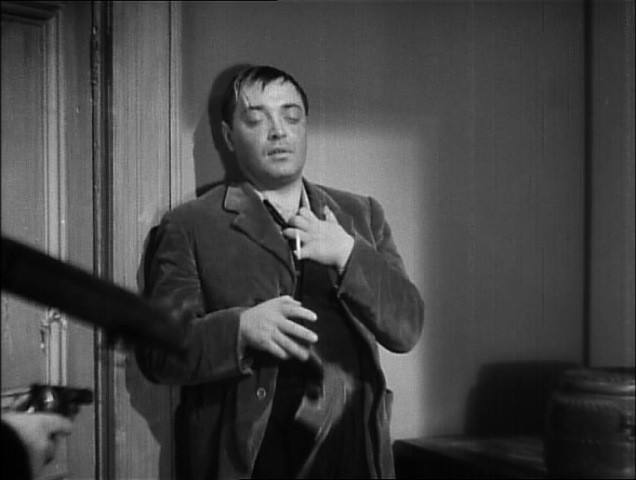
Abbott appears, offers him a cigarette, and reminds Mrs. Sprocket to collect Lawrence’s gun (his “offering”), while revealing that he knew Lawrence had switched places with the dentist. Lawrence cleverly tricks Mrs. Sprocket into revealing that his daughter is somewhere on the premises, then smashes Ramon’s gun out of his hand as he tries to get past. There are several enemies present, but they are afraid to draw the police if they shoot. Instead, a somewhat quieter battle ensues, as Lawrence and the other men throw chairs at each other. Mrs. Sprocket ascends to the organ to drown out the ruckus, and the whole scene takes on a very comical sense of menace. The situation is just so absurd.
Shouting for Clive to wake up, Lawrence finally bounces a chair off of him, bringing him to his senses. Just then, Ramon sneaks around behind him and they begin to grapple. Spotting a ticket in his pocket for a concert at Albert Hall, Lawrence remembers the “A. Hall” of the secret message, and shouts to Clive to phone Jill and tell her to go there. With Lawrence covering his escape, Clive makes it out through the window just as the other man is finally subdued. Abbott, clearly annoyed, instructs an underling to call Jill and warn her that her daughter will be killed if she goes to Albert Hall. Meanwhile, Lawrence is muscled upstairs. Clive’s call to Jill gets through first, and by the time the other call arrives, she is already gone.
Shortly thereafter, Clive arrives with the police, but he is no match for Abbott, and is soon hauled away for “disorderly behavior in a sacred edifice.” He won’t be back. While they wait for the concert to begin, Lawrence and Betty are finally reunited, and Abbott shows Ramon the exact moment in the program when the noise of the music will mask his shot. Abbott slyly remarks, “I think the composer would have appreciated that.” His observation is quite correct, as Hitchcock had the piece (entitled “Storm Clouds”) specially composed for the film by Arthur Benjamin.
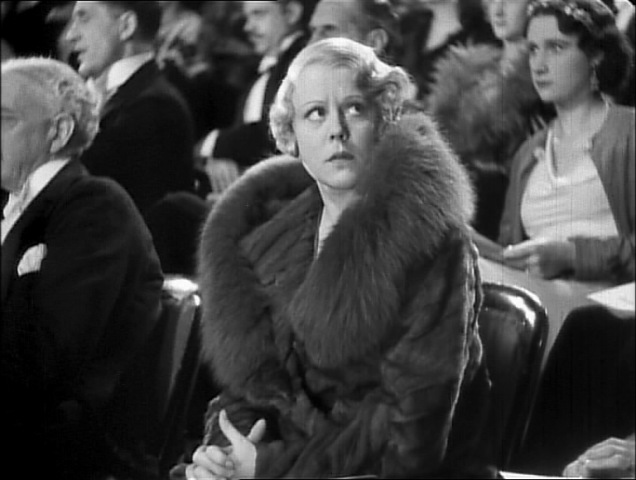
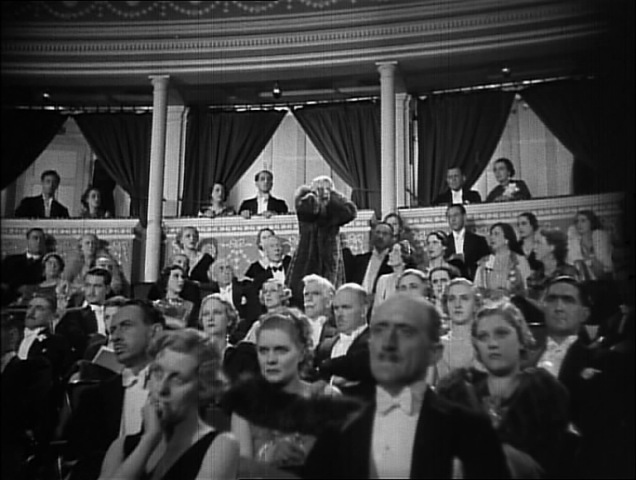
Ramon arrives at the Albert Hall and finds Jill already there. She spots him, too, but is not sure what to do. She takes a seat inside at ground level and looks carefully about as the music begins. The scene is magnificently suspenseful, as we are unsure at what point the assassin will be able to fire. It could be 10 minutes or 30 seconds. As the cantata slowly builds, Hitchcock gradually speeds up the cutting of the camera to match building tension. In addition to jumping all over the auditorium, he cuts back a few times to the spies, listening to the program on the radio.
As the percussionist pulls out the giant cymbal that will mask the sound of the shot, the barrel of the gun quietly emerges from behind the curtain of a balcony box and takes aim at the foreign dignitary in another portion of the balcony. Just as the crucial crescendo comes, Jill makes the connection and leaps to her feet with a scream. It is unclear for some minutes more whether the attempt has been successful. In the meantime, Ramon dashes out the front doors and takes off in a cab, unaware that Jill has pointed him out to the authorities, who give chase.
Ramon returns to the hideout just before the report comes in on the radio that the target has survived the assassination attempt. Ramon blames the noise of the scream, but is certain that no one saw him leave. Abbott, checking the window, immediately spots a few plain-clothes detectives lurking in a doorway. The spies switch off lights and prepare for a siege. Meanwhile, around the corner, a large force of policemen and an even larger crowd has gathered. One of the men is sent out to get the door open, but he is shot dead in the street.
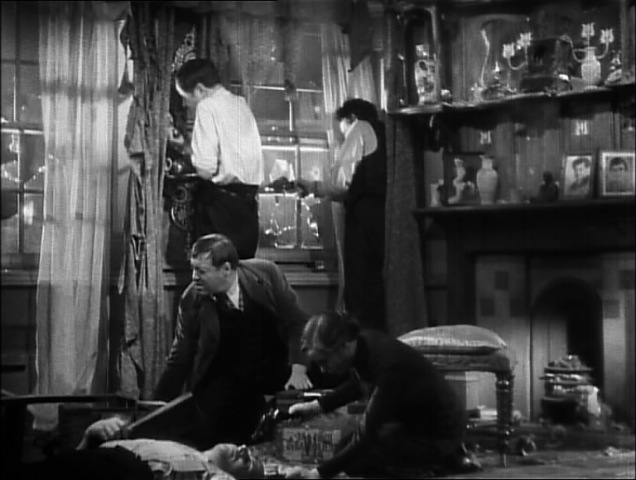
The large-scale gun battle that follows is based on an actual event known as the “Sydney Street Siege.” In 1910, a group of anarchists were holed up in a house, and the army (directed by then-Home Secretary Winston Churchill) had to be called in when the police were unable to handle the situation. In the movie, rifles are distributed to the policeman and they take up position in various houses up and down the street. The spies are slowly overwhelmed by the superior force, dropping one by one as a force of policeman start attempting to break into the tabernacle. The bar-like shadows cast by the window frame emphasizes the trapped and hopeless nature of their situation.
In the confusion, Lawrence sneaks out of the room he is in, past the open doorway of the room where Abbott is reloading his gun, and gets over to where Betty is being held just in time to escape the notice of the woman coming back with more ammunition. A few seconds after she re-enters the room, she is shot, a loss which Abbott obviously feels very keenly. Eventually, only he and Ramon are left. Ramon goes to get Betty so he can use her as a hostage to escape, while Abbot remains at the window.
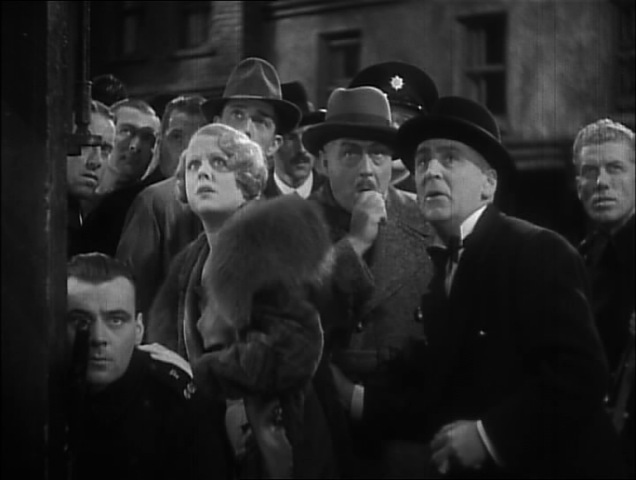
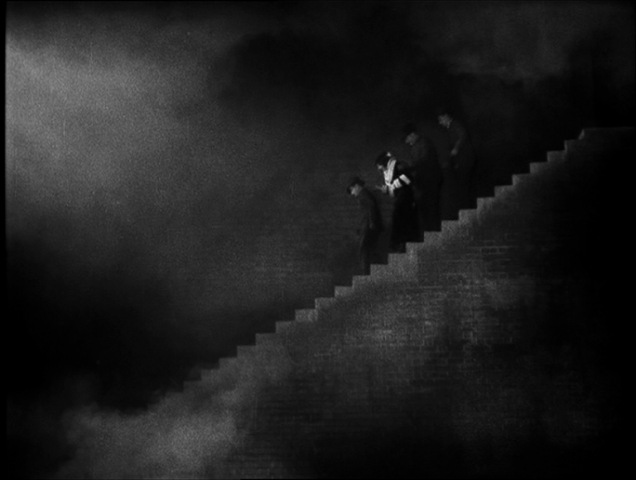
Ramon comes out into the stairwell just in time to see Lawrence helping Betty up onto the roof. He shoots, and Lawrence drops through the banister and collapses on the next level down, wounded but not dead. Ramon chases Betty out along the edge of the sloped roof and into full view of the crowd below. As they edge slowly out, three or four stories in the air, the police sharpshooter attempts to take aim, but won’t fire for fear of hitting the girl. Instead, Jill takes the gun from him and fires, plugging Ramon squarely. He topples over the edge, leaving Betty relatively safe.
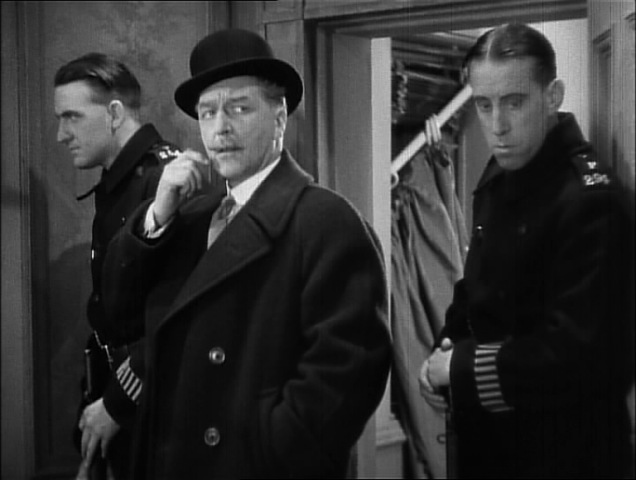
The police finally manage to burst inside and rush up to tend to Lawrence, help Betty off the roof, and smoke out any remaining baddies. Abbott, the only one left, is hiding behind a door, but his chiming watch gives him away and the police fire through the door, killing him. Meanwhile, a traumatized Betty is delivered back into the hands of her waiting parents at last.
The Man Who Knew Too Much takes a little while to really get going, but once it does it never lets up. There is an excellent progression and symmetry to the development of the film, as it moves gradually from the open, outdoor expanse of the Alps, into the district of Wapping, to Albert Hall (a crackerjack scene, as good as anything Hitchcock ever did) and finally into a stifling gun battle in the midst of a tight, claustrophobic warren of adjacent buildings.
The early shooting match between the mother and the assassin has its mirror image in the climax. What was initially a friendly competition of firing at clay pigeons becomes much more sinister and deadly. Just as Jill’s daughter disrupted her shot, Jill’s scream disrupts Ramon’s shot. And, with everything on the line, she claims victory by killing him with her child at stake. The visual imagery of the beginning and end are symmetrical as well, moving from the ski slope to the slope of the steep rooftop.
After a few false starts (most notably The Lodger and Blackmail), Hitchcock had definitively arrived as a director of thrilling suspense films. The Man Who Knew Too Much was both critically-acclaimed and wildly successful. However, the film almost didn’t see the light of day. C.M. Woolf, the wet blanket who had tried to bury Hitchcock’s first three films during the mid-1920s (before they were rescued and released by Balcon), was still a major force at the studio. He was the man in charge when Balcon was away, and when Hitch finished The Man Who Knew Too Much, it happened to be one of those times.
Woolf screened the movie and was appalled, calling in another director to shoot and insert new scenes. He also asked to see the script for Hitch’s next film, The 39 Steps, and declared it to be just as bad. Instead, he assigned Hitch to make a musical biopic, such as Waltzes from Vienna had been. The director was beside himself for days, frantically sending telegrams in an effort to reach Balcon.
Meanwhile, Ivor Montagu, the film’s associate producer and a Hitchcock collaborator from the silent days, convinced Woolf that Balcon would be most displeased if he didn’t give The Man Who Knew Too Much a theatrical run. Woolf grumbled and reluctantly gave the movie a spot as the second-half of a double bill. It was, of course, a hit, much to Woolf’s disgust.
Unfortunately for Hitchcock, most of the film’s revenue went to whatever was playing on the first half of the bill. Nevertheless, his work was a recognizable success and Balcon, when he was finally reached, overruled Woolf definitively. He put Hitchcock back to work on The 39 Steps and promised that, as long as he (Balcon) was in charge, Hitch would not be bothered again.
A lot of you have probably seen this before (I had), but I ran across it again, and it is so cool. Really a neat idea. How many movies do you recognize?
Also, have a look at this new trailer for Hellboy II, which I am beginning to be mildly intrigued by.
As I’ve said, I wasn’t terribly impressed by the franchise’s first outing. It was entertaining enough, but the villains (a very weird group of Nazis and . . . Rasputin? Really?) showed a serious lack of imagination (or perhaps far too much). Not only does that not seem to be the case in the sequel, but the richness of the universe looks to be expanding severalfold. In short, this looks like a little less Blade II and a little more Pan’s Labyrinth.
Filmchat points out that Quint of Ain’t It Cool News has seen and reported on 45 minutes of Prince Caspian. The outlook is grim indeed, although my worst fears about Eddie Izzard as the voice of Reepicheep seem to be unfounded. The Pevensie children seem to be departing further than even I expected from the books, and enormous chunks of the story appear to have been completely overhauled or exchanged for shiny new sequences. The descriptions of the new castle raid scene sound more than ever like an attempt to imitate Lord of the Rings rather than the film’s own source material (Helm’s Deep + eagles, anyone?).
I am beginning to wonder as I haven’t before whether the result we see in theaters in less than a month and a half will be remotely recognizable. What is to become of Lewis’s story? Now that cinema technology has caught up to his vision, is it too much of a relic of another time and place to be treated with respect? I still say no, but those in charge of bringing the story to the screen appear to disagree. Prince Caspian remains my least favorite Chronicle, and yet I find myself outraged by what I am reading. And where, in all of this, is Douglas Gresham? I was under the impression that he was very closely involved with the production, and I felt confident that he would be able to protect something.
There is no mention at all of Aslan in the report. Of course, assuming the length of this sequel is in any way comparable to the first movie, that still leaves over an hour and a half of film unseen, but for some reason I feel a bit apprehensive about the omission. Particularly when I remember that filmmakers were belly-aching about the problem of “realism” where Aslan is described in the book as being the size of an elephant at one point. Early rationalizing of unconscionable changes to come, perhaps?
*Update* April 8th
No sooner do I ask, “What of Douglas Gresham?” than CT Movies posts an interview with the man himself. I got the link from Looking Closer, and people over there sound rather unhappy with it. I have to admit that I am less than pleased with the way he comes across there. On the one hand, this man may well be the closest person to the continuing legacy of the Chronicles of Narnia apart from Lewis himself. As the stepson of the author, a fan of the stories and essentially their guardian for some decades, I suppose it is natural for him to across as a bit defensively arrogant when people question his handling of things.
On the other hand, that’s simply not right. The Chronicles of Narnia belong to their original creator and to the fans, all of them, equally, and some of the stuff Gresham is saying is simply dismissive and downright obtuse. As Overstreet points out, that he should deny having heard any criticism of, for instance, the depiction of Aslan in the first movie and claim to be the severest critic is just ludicrous.
Aslan was not awe-inspiring, by and large, and anyone who says that he was, I would suggest, was reacting to an idea that was not fully present on the screen or was merely being polite. And you can’t deny that possibility. I would have a very difficult time criticizing the film (which I very much enjoyed, overall, by the way) to Mr. Gresham’s face.
Then again, he does go on to say, “But I know that when the fans see the scenes, they will understand immediately why we’ve done what we done, and they will also love it.” Perhaps he truly is living in a protected bubble and no criticisms are reaching his ears. With the success of LWW, I’m sure he’s hearing nothing but the highest praise from everyone in the business. And thowing the G card (as Stuff Christians Like would say)? Come on. That’s just bad form, no matter who you are.
There seems to be an idea here that a story which millions of people have loved for decades couldn’t possibly be translated successfully into a movie in anything remotely resembling its current form, which I find to be a perfectly ridiculous idea. It seems to me that when he is talking about the sort of thing that “just doesn’t work in a movie,” what he’s really talking about is adhering to a very narrow and rigid set of sumemr blockbuster conventions, not actual filmmaking. I agree that the story as it appears in book form should not be mapped directly onto the screen, but I see no reason why most or all of the elements of the original could not be rearranged in a suitable fashion rather than practically starting from scratch in many cases.
For instance, I would envision beginning the film in Narnia with Caspian’s escape from the castle, but jump to the Pevensies in England before we know whether he managed to escape. We would see no more of him until the Pevensies have encountered Trumpkin and Trumpkin began to tell Caspian’s story . . . from there it would be relatively simple to have Trumpkin relate Caspian’s story as he travels with the Pevensies to meet up with him, interweaving the two.
It is grossly inaccurate to call the story “basically about a long walk in the woods with a battle at the end,” not only because of the presence Caspian’s backstory (which is cracking stuff), but because the story doesn’t even remotely end with a battle. The end of Prince Caspian is probably one of the most vivid and fun in the series as Aslan and the wild Narnians reclaim the land.
That sequence alone, if done properly, left intact and given its rightful weight in the story, should be the best part in the whole movie . . . and no one (as far as I can recall) dies and nothing blows up during the whole thing! If Prince Caspian has a major flaw, it is in meandering too much on its way to that scene of joyous reclamation. The success of a movie version ought to hinge on streamlining (but not rewriting) our journey to that point, without “punching it up” with extra action sequences and unpleasant character arcs.
In any case, many of his answers during the first portion of the interview are quite off-putting, but the later bits are a bit more balanced. The interviewer seems to have done an excellent job with what was shaping up to be a very unsympathetic chat in shifting the tone of things to allow Gresham a chance to express his commitment to, and love of, these books. I could pick a few more bones with this and that (i.e. that he has seen no need to exercise “veto power” as yet, not even on that wretchedly unnecessary ice floe sequence), but I won’t bother.
I am looking forward to seeing the movie when it comes out, and I will go in ready to appreciate it on its own terms in addition to judging its merits as an adaptation of a source that I am very familiar with. I believe that I can address and potentially both enjoy and critique the result, just as I did with its predecessor.
“I’ve played three presidents, three saints and two geniuses – and that’s probably enough for any man.” –Charlton Heston
I just got accepted into grad school and I’m looking for a new job, hence my woeful slackness in keeping things up-to-date here. While I keep working on catching things up from the last two weeks, particularly the Hitchcock project (and I’m so very close to the good stuff, but it’s rough going just at present), here is an item of particular note: Another legend passes.
Of course, the news of Charlton Heston’s death must have reached just about everywhere by now, but I couldn’t let it go by without a mention. He was, for better or worse, truly one of the most iconic major stars of the ’50s and ’60s. Could one call him, in some sense, the American Peter O’Toole? Then again, why would one have to call him by anything other than his eminently recognizable name?
Heston was probably one of the first actors I recognized by sight. As a child, I watched him win that chariot race in Ben-Hur over and over again, and never got tired of the epic length of The Ten Commandments, one of the most grandiose biblical productions (and biopics!) ever attempted. He was one of those actors that made my parents feel safe . . . they could walk into the room and ask what I was watching. “I dunno. It has Charlton Heston in it.” “Oh, okay.” These were all, of course, grand historical epics like El Cid, long before I discovered his later work in futuristic dystopias.
As a teenager, I finally saw Planet of the Apes, and it made such an impression that it served as a large fraction of the jumping off point for a science fiction movie that my friends and brothers and I filmed over the course of six months on a handheld camcorder. Recently, the release of I Am Legend made me aware of The Omega Man, which I would like very much to see . . . I’ll need to get my hands on that soon.
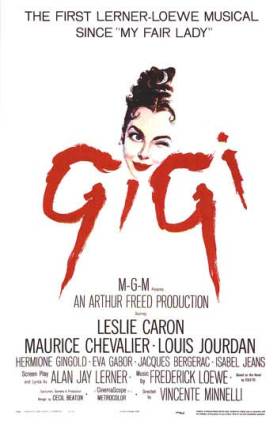
The 31st Annual Academy Awards ceremony was hosted by, among others, Bob Hope and Jerry Lewis on the night when Gigi became the biggest winner in motion picture history. The movie was nominated for Best Picture, Best Director, Best Adapted Screenplay, Best Cinematography, Best Editing, Best Art Direction, Best Costume Design, Best Music and Best Song. Other notable contenders included Cat on a Hot Tin Roof (6 nominations, 0 wins), Separate Tables (7 nominations, 2 wins), Auntie Mame (6 nominations, 0 wins), The Defiant Ones (9 nominations, 2 wins) and South Pacific (3 nominations, 1 win). Hitchcock’s masterful Vertigo received an insulting two nominations, for Art Direction and Sound, and didn’t win either. A Touch of Evil, Orson Welles’ famous south-of-the-border noir with Charlton Heston and Janet Leigh, was completely unnominated.
None of the contenders matter in the context of the outcome, though, as Gigi won all 9 awards for which it was nominated, breaking the 3-way tie for most Oscars won (eight) held jointly by Gone With the Wind (1939), From Here to Eternity (1953) and On the Waterfront (1954). Although the record would be broken again the very next year by Ben-Hur, Gigi would remain the largest winner to take home 100% of the awards it was nominated for until The Last Emperor joined it at 9 out of 9 in 1987. Both dropped to second place in 2003 when The Return of the King won all 11 of its nominations. Curiously, as with both The Last Emperor and The Return of the King, Gigi didn’t receive any acting nominations.
Gigi‘s plot, such as it is, tells the story of a young girl in 19th-century Paris (Leslie Caron) who is being groomed by her grandmother (Hermione Gingold) and great-aunt (Isabel Jeans) to one day be the elegant mistress of wealthy men, as they were. Meanwhile, Gaston (Louis Jordan), the wealthy nephew of an old flame of Gigi’s grandmother (Maurice Chevalier), is generally bored with life. The vivacious Gigi, whom he has known all her life, is the only person who can amuse him. It is only a matter of time before he notices that Gigi is not a little girl anymore, but will she be satisfied as nothing more than a mistress?
Gigi was a Lerner and Loewe musical created for the screen on the heels of their successful Broadway musical My Fair Lady (which would not be made into a movie until 1964). It is difficult not to fixate on the resemblance: Gigi plays like My Fair Lady‘s half-witted French cousin. Perhaps the best that can be said about this thoroughly tiresome affair is that it is fully an hour shorter than its infinitely superior musical relative. The production is marred throughout by an attempt to exploit shameless spectacle (outrageously lavish costumes and locations shot ultra-wide in rich, glowing technicolor) in an attempt to mask a complete bankruptcy of ideas.
The plot is obviously very similar to My Fair Lady, and the songs are as well. In fact, at least one song from Gigi was a number that was originally included in My Fair Lady, but was ultimately cut from that production. Many seem to consist of a single line repeated until the audience is thoroughly sick of hearing it. Gigi is a movie that is forced to make the best of the leftovers from superior material. Of course, one element that is sorely lacking here is the grace and charm of Audrey Hepburn in the lead. She was everyone’s ideal for the title character, but had other obligations at the time, prompting Caron to be cast instead.
Caron, of course, had her singing voice dubbed by someone else (as, indeed, Hepburn did), but songs aside, her screen presence cannot compare to that of her fellow actress. Add to that the fact that Gigi is supposed to age noticeably from young girl to beautiful young lady over the course of the movie, when in fact Caron was in her late-20s at the time, and looks it the entire time. Putting a 27-year-old woman in a schoolgirl uniform and sticking ribbons in her hair will not make her look 14, anymore than putting a 14-year-old girl in a sheer white dress and putting her hair up will make her look 27, and it shows. Of course, I am making a wild guess as to Gigi’s supposed age, as we are given no indication at all of what it might be, and she is obviously not meant to look as old at any point as the actress playing her appears to be.
Stripped of its frippery and whimsical frolicking, the core premise of Gigi is outrageous: The training of a young girl to make her living as a high-class prostitute satisfying a string of wealthy clients until they tire of her and cast her off. The abrupt reversal to denigration of the system that takes place during the final moments of the film does little to outweigh nearly two hours of glib glorification of it. And though Chevalier is a great actor and singer, whose irrepressible joie de vivre is one of the few pleasures Gigi has to offer, there is nothing that is not creepy about his rendition of the film’s opening song: “Thank Heaven for Little Girls.” If any of that sounds prudish, I apologize, but Gigi simply had no deeper food for thought to offer.
“Sausage. That’s what I ‘it ‘im on the ‘ead with.”
“Ya don’t have to do nothin’ in this ‘ere house – ya stand still and things happen!”
“I’ll remember that, guv’nor. Give you a job in the cabinet, next election . . . In the Messin’ About department.”
“Blimey, if I could blow like that, I’d blow the lot of you to Jericho, blast me if I wouldn’t!”
“Posh. His reputation’s probably grossly exaggerated.”
“It’s like the pictures, isn’t it?”
“Will you see me safely home, guv’nor, if I gives you a nice wedding present, eh?”
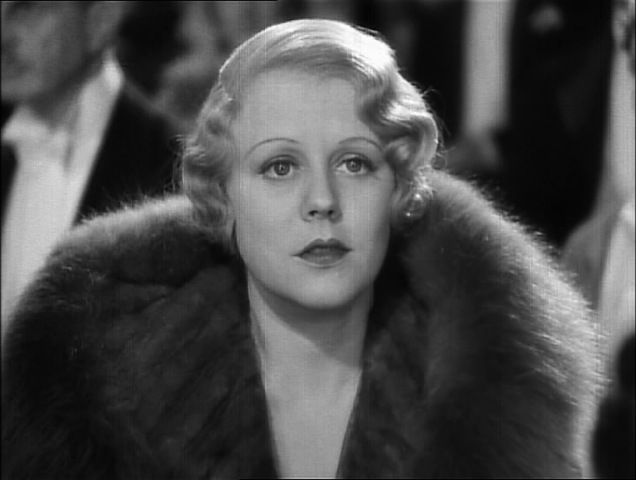
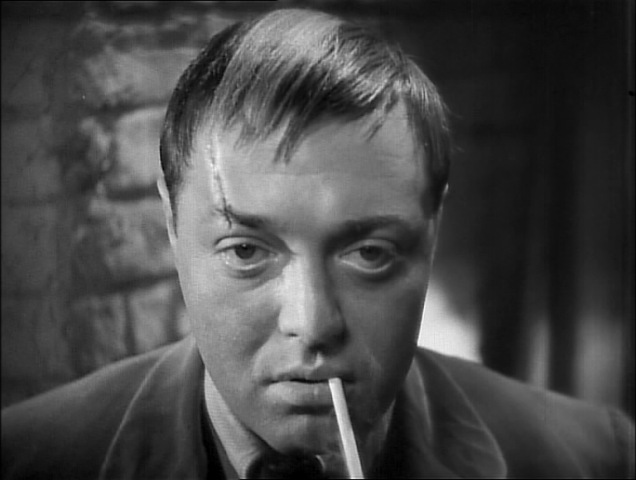
–Number Seventeen
Hitchcock actually filmed Number Seventeen before beginning work on Rich and Strange in 1931, but it was not released until the following year. For the fourth time in a row, Hitchcock found himself making a movie out of a successful stage play. This one was written by J. Jefferson Farjeon, and adapted by Hitchcock, Alma, and Rodney Ackland. The play is ostensibly a cheap thriller surrounding a group of odd characters who all find themselves in a deserted house late at night because of a stolen diamond necklace.
The material, as presented by Hitchcock, is often so broadly farcical and far-fetched that it all but refuses to be taken seriously. In fact, Hitchcock had wanted to make a completely different film, while fellow director Thomas Bentley wanted to make this one. However, Walter Mycroft assigned each of them to the project that the other wanted. Hitchcock, having already decided that his source material was hopelessly cliché, determined to film the play, according to co-writer Ackland, as “a burlesque of all the thrillers of which it was a pretty good sample – and do it so subtly that nobody at [the studio] would realize the subject was being guyed.”
He certainly succeeded in doing that, although his elaborate practical joke effectively torpedoed any chance the production might have had to amount to anything (and, at a mercifully short 63 minutes, there’s not much time for development either). The situation is patently absurd throughout, loaded with more plot holes than a gopher colony, and the result is far more reminiscent of an Alec Guinness Ealing comedy than a Hitchcock thriller.
However, be that as it may, Number Seventeen contains the first true example of Hitchcock’s use of a MacGuffin. “MacGuffin” (sometimes “McGuffin”) is a term popularized by Hitchcock as early as the late-1930s which describes a plot device that motivates characters and drives the forward, but is ultimately quite unimportant to the story itself. Hitchcock frequently made use of MacGuffins in his films, which might be anything at all: a person, an object, the answer to a question, etc. The MacGuffin in Number Seventeen is the diamond necklace which everyone wants to get their hands on, although ultimately nothing is revealed about its origins.
In describing the origins of the term, Hitch cited an anecdote about two men on a train. One asks the other about a package in the luggage rack, and the other tells him that it is a MacGuffin, which he goes on to explain is “an apparatus for trapping lions in the Scottish Highlands.” When the first man protests that there aren’t any lions in the Scottish Highlands, the other snippily replies, “Well, then that’s no MacGuffin!”
The lone cast member to make the transition from stage to screen was Leon M. Lion, whom Hitchcock despised. As both producer of the play and original creator of the plucky comic relief, however, his involvement was non-negotiable. Lion’s character, a Cockney rascal named Ben, is ironically the best thing about the film, as he is the only one not playing things straight. Most of the best dialogue and all of the laughs belong to him. Other cast members included John Stuart ( who had played Hugh Fielding, the sympathetic young man in Hitchcock’s very first film, The Pleasure Garden) as the leading man, and Hitchcock sound-picture regular Donald Calthrop (Blackmail, Murder!).
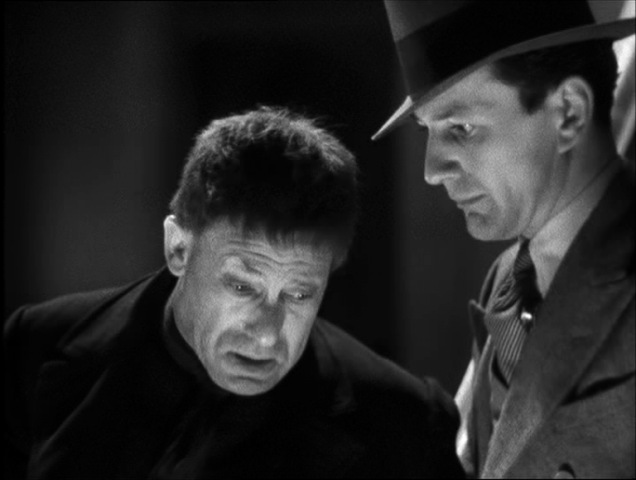
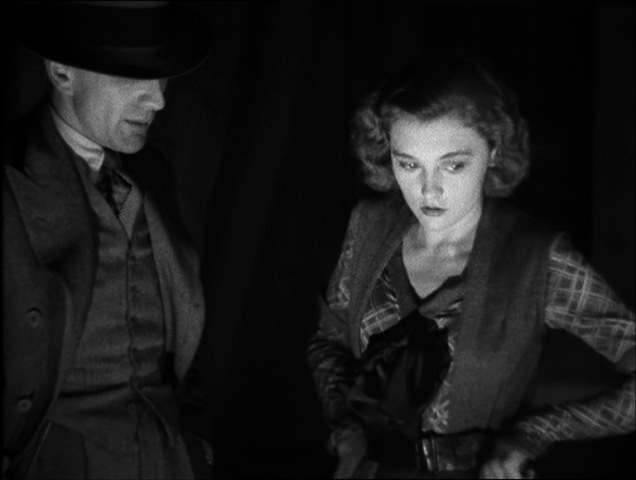
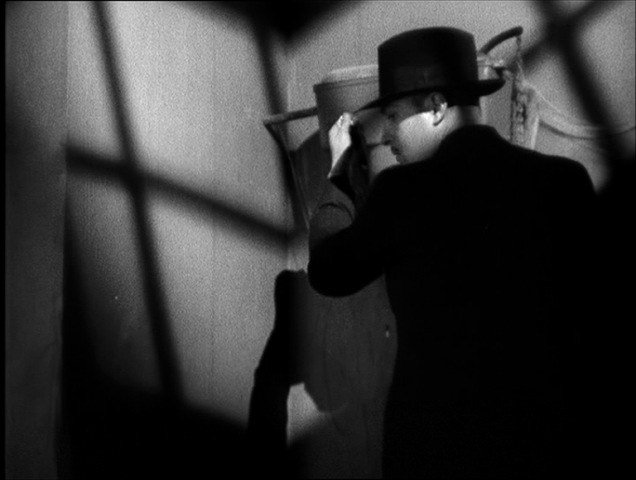
The film opens on a deserted street late one night as the camera tracks a man’s hat being blown along a sidewalk until it comes to a stop just inside the gate of number seventeen. The owner of the hat appears and retrieves it from the ground, replacing it on his head before peering up curiously at the house. He immediately notices two things: first, that the house is for sale and second, that there is someone wandering around in one of the upper stories.
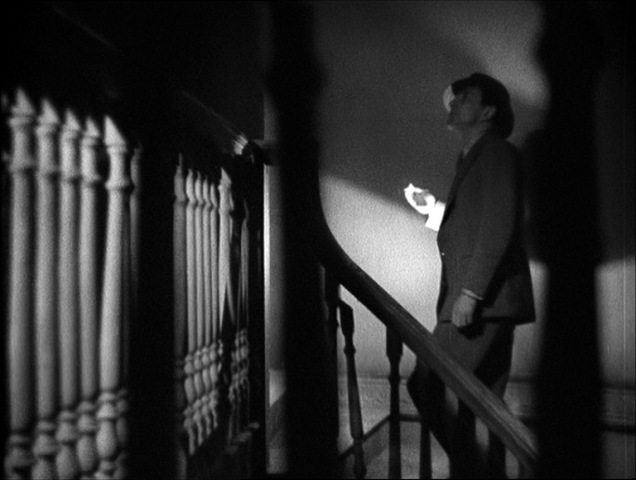
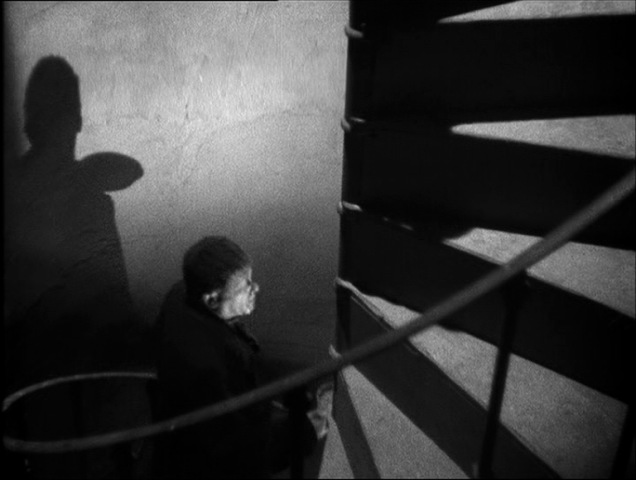
The man walks slowly forward to the door, with the camera following just behind, and steps inside. The house is definitely deserted, with not a stick of furniture in sight. The entryway is dominated by a large spiral staircase that disappears into the darkness above. As he steps towards the stairs, a black cat descends to meet him and he finds a box of matches in his pocket, lighting one so that he can see where he is going.
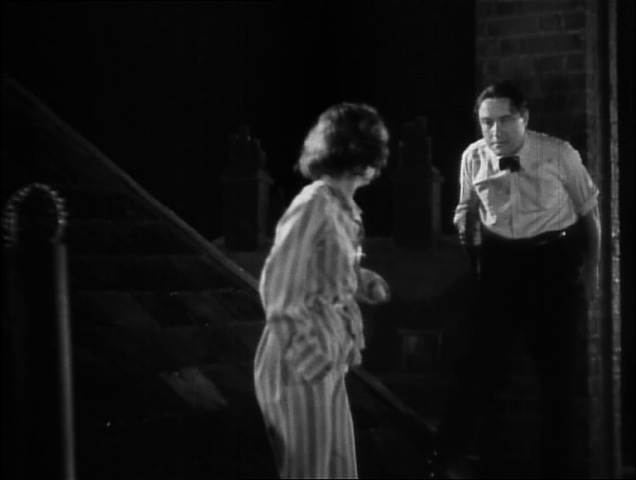
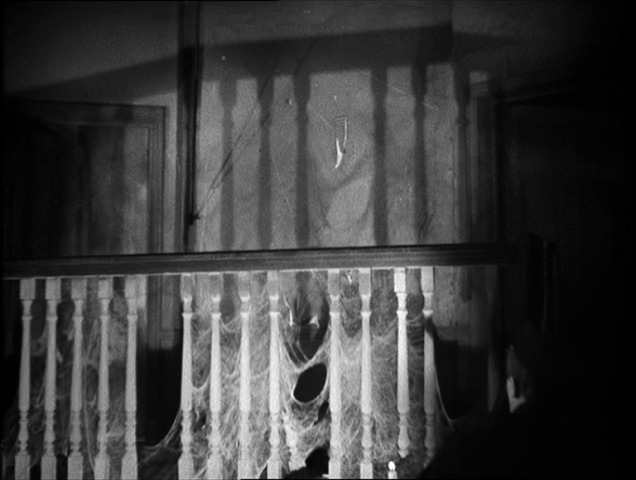
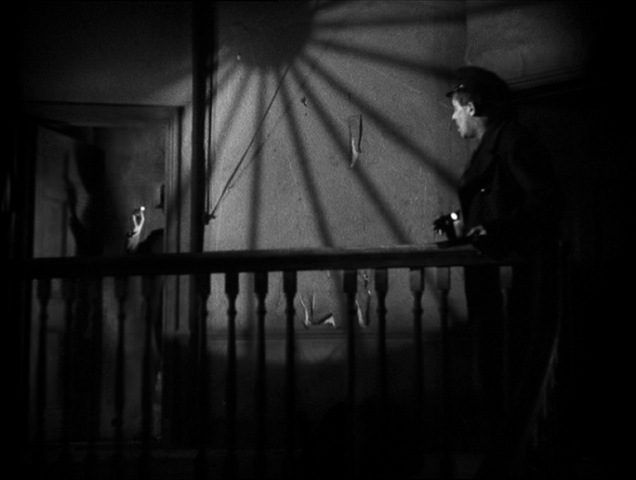
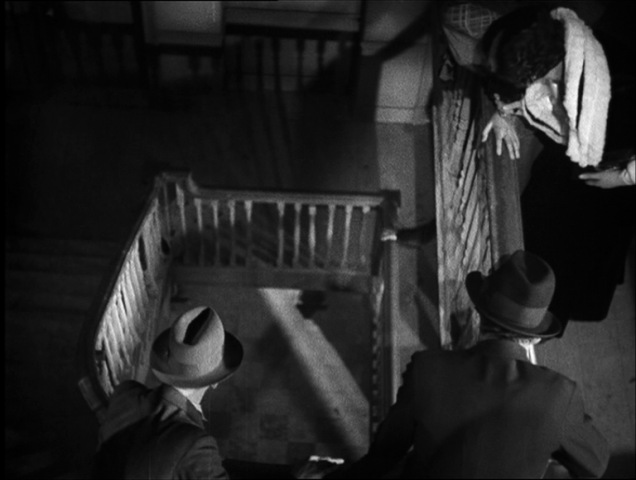
As he makes his way carefully up, another man holding a lit candle peers down from above, but apparently doesn’t see him coming up, wandering off into a side room. As the first man continues to ascend, Hitchcock treats us to all sorts of weird shadows created by the odd shape of the staircase and the faint sources of light. Everything in the house seems to be coated with a thick layer of cobwebs and dust, and the banister is broken in several places. Hitchcock makes great use of this staircase throughout the film, having already shown an aptitude for filming scenes in stairwells in earlier films like Blackmail and The Lodger.
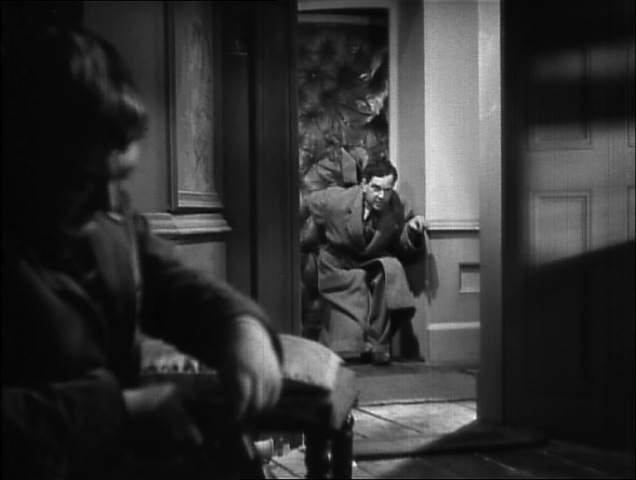
Reaching the top floor, the first man walks into one of the other rooms. Just then, the second man comes out of the room he was in and stands looking around on the landing. When the first man re-emerges, the second starts and drops his candle, which goes out. Just then, a train passes by just outside, and the light it throws into the room illuminates the corpse of a third man lying on his face between the first two. The second man lets out a yell, which is drowned out by the noise of the train, and bolts. The first gives chase and brings him down before he can get far.
Up to this point, about five minutes in, there hasn’t been a single bit of dialogue, the stage having been set by the faux-creepy ambiance of the deserted house and a thick layer of melodramatic mood music. Now, at last, the characters begin speaking to each other. Eventually, the first man will introduce himself as Thorndike, while the second reveals himself to be Ben. (“Ben what?” “Well, if it wasn’t for you, guv’nor, it’d be Ben Bolt.”) Most of the characters remain nameless for long periods of time, but I’ll be introducing them as quickly as possible to avoid “first man,” “third man,” “seventeenth man” and that sort of thing.
Thorndike, for no more apparent reason than the burning curiosity that led him to enter an abandoned house at nearly midnight in the first place, takes it upon himself to interrogate Ben about the body at the top of the stairs. Ben claims to be just as much in the dark as Thorndike is (and quite reluctant to investigate further), but Thorndike forces him to return to the scene of the crime anyway.
Over the course of the next half-hour, a host of characters assembles. First, there’s the girl from next-door, Rose Ackroyd, who crashes through a skylight as she wanders the rooftops looking for her father. She has a telegram for him, and was worried when she couldn’t find him to hand it over. The telegram is from someone named Barton, who advises Ackroyd to watch number seventeen in anticipation of his arrival, as he expects someone named Sheldrake to stop off there with the “Suffolk necklace” before making his getaway later that night.
Just as they are trying to decide what to do, the bell rings to announce the arrival of more characters. Thorndike goes down to answer the door and finds a shady-looking couple named Brant and Nora. Brant claims to be interested in buying the house, despite the lateness of the hour (as the camera zooms in slowly for an ominous close-up of his face). Nora is a deaf/mute. As they step inside, another man, Henry Doyle, walks up and asks if he can come in, too. He calls Brant his uncle, and though it is plain that the other doesn’t recognize him, he doesn’t say anything.
Meanwhile, back upstairs, Rose and Ben discover that the corpse has mysteriously disappeared. Thoroughly spooked, Ben is ready to leave, and when the others come up from below, he pulls a gun he found earlier. As he tries to push his way down the stairs, Doyle grabs at him from behind and they struggle. The gun accidentally goes off, and Thorndike instinctively throws his arm out to protect Nora, saving her life when he takes the bullet in his wrist.
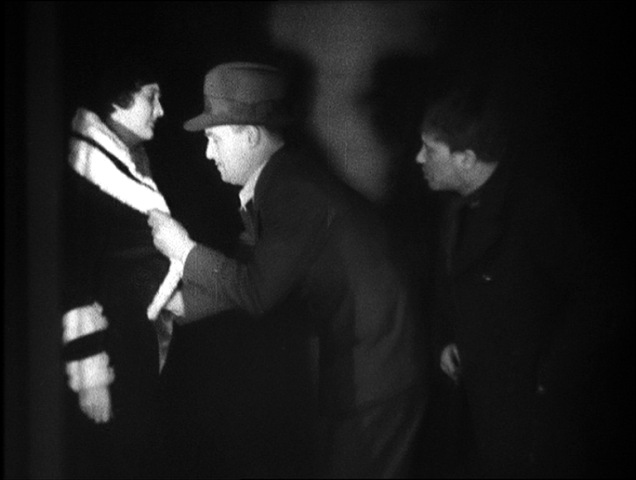
As Nora helps him bind the wound, the newcomers draw a gun of their own and quickly take charge of the situation. They search the others and find the telegram. When Ben tries to escape again, Brant and Doyle wrestle him into the bathroom and lock him up. Unbeknown to all of them, however, the bathroom is not unoccupied. A pair of thick, meaty hands appear from behind Ben and strangle him until he collapses to the floor. However, he is not dead, or even unconscious. He is merely pretending. As he watches carefully from the floor, the other man climbs onto the toilet and fishes the necklace in question out of the tank. When the man, presumably Sheldrake, climbs down and peers through the keyhole, Ben surreptitiously slips the necklace out of his pocket and stows it away.
Meanwhile, Brant and Doyle are discussing their situation on the landing. Apparently they’ve heard of Sheldrake and his necklace, but how they came to be at the house remains a murky subject. In any case, now that they know they determine to stick around and receive a cut of the spoils. After a few moments, the front door opens again and someone comes up the stairs. It is a man with a gash in his forehead; the very man, in fact, who formerly seemed to be a corpse on the floor, and he says that he is Sheldrake.
At Brant’s suggestion, he and Sheldrake tie Rose and Thorndike to the banister, but as Sheldrake ties Rose up, the two trade winks. Next, Sheldrake ushers the other three to a side room to retrieve the diamond, but quickly slams the door on them and locks it once they’ve gone through. It seems that he isn’t Sheldrake, after all, but Mr. Ackroyd, Rose’s father.
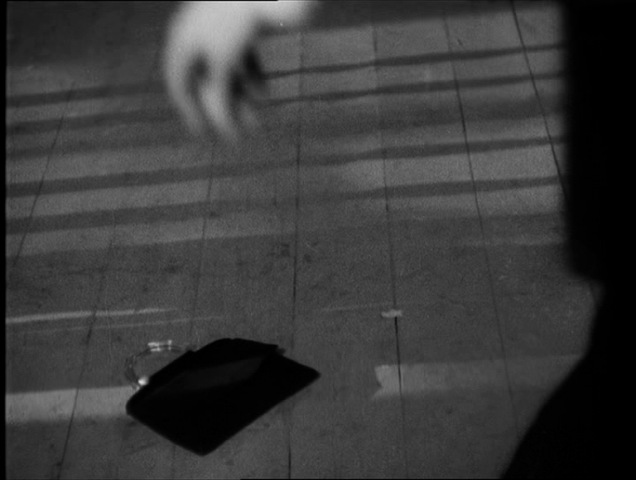
Ackroyd has a bit of trouble undoing Brant’s knots, and Rose suggests that he retrieve Ben from the bathroom first. Of course, he finds the real Sheldrake waiting inside, and the two struggle furiously while Rose and Thorndike watch helplessly from the banister. After a few moments, Ben comes out and tries to land a hit with a piece of wood he’s picked up, but he hits Ackroyd by mistake. Sheldrake gets Ackroyd and Ben back into the bathroom and locks the door and releases the other criminals. The four of them turn to leave, and Nora drops her handbag on the ground next to the prisoners. Doyle notices, but says nothing. As the three men turn the corner, Nora, the supposed deaf/mute, tells the prisoners, “I’m coming back.”
Before she returns, though, the rotting banister gives way, leaving Rose and Thorndike dangling by their wrists two or three stories above the ground. Nora arrives just in time to free them before the banister drops to the ground below. Thorndike asks her what she’s doing with the criminals, but her only explanation is, “You don’t think I want to be, do you?” She takes off to rejoin the others, while the freed prisoners rush to release the two locked in the bathroom.
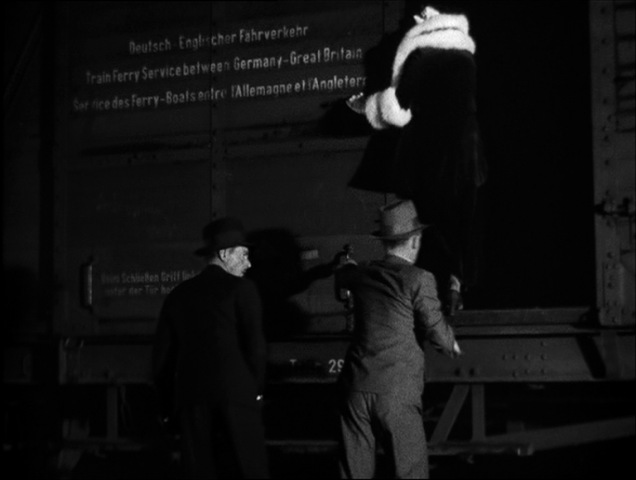
Rose stays to tend to her father while the other two men rush down to the cellar to intercept the crooks. They arrive just in time to overhear the escape plan. Just outside the house is a train-yard, and the thieves plan to board an empty train car, which will then be loaded directly onto a ferry and taken across the Channel to France, where they will be Scot-free.
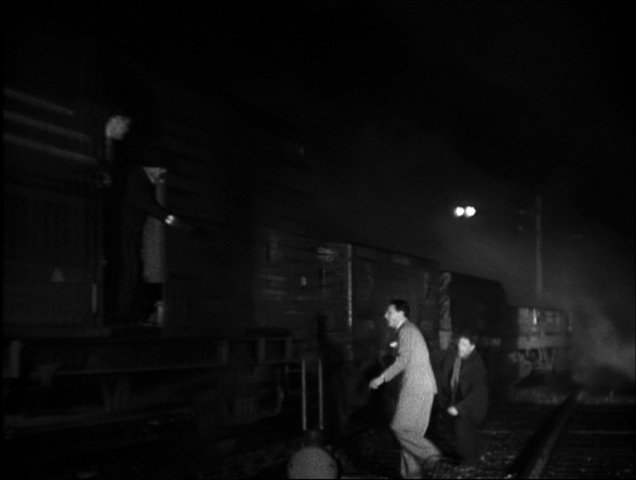
Nora doesn’t want to go, but the others force her. They get out just as Thorndike and Ben break through the door. Thorndike refuses to go to the police for fear Nora will be arrested if they get involved, and decides to handle things himself. They rush outside and locate the criminals just as the train begins to pull out. Ben manages to get aboard, but Thorndike is left behind.
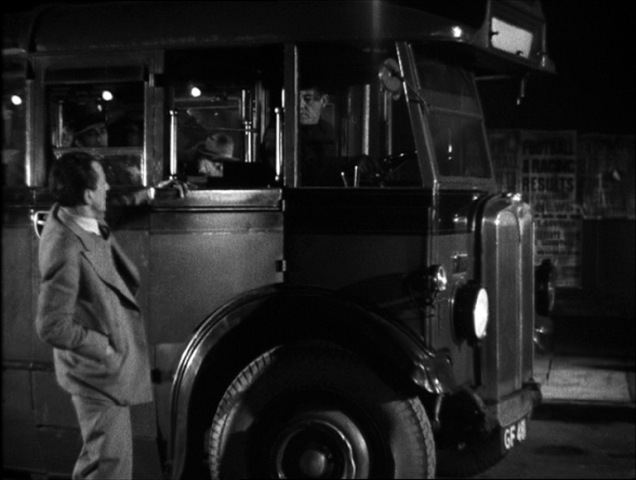
The three criminals realize that the guard on the train has spotted them, and they leave to take care of him. Ben has landed in a car full of wine and is gleefully getting drunk while he plays with the diamond necklace, which he still has. Meanwhile, back at the depot, Thorndike is trying to figure out what to do. He runs out into the street and commandeers a bus, forcing the driver to follow the route of the train at gunpoint.
On the train, the three criminals have discovered that the necklace is missing, and they all suspect each other. There is a great deal of running back and forth, up and down the speeding train. Doyle, it turns out, is Detective Barton, and he manages to evade the others and slip back to the car where Nora is waiting. Ben is already there, and as Barton begins to frisk Nora, who he suspects of having the necklace, Ben produces it for him. Unfortunately, just as he pulls it out, the other criminals poke their heads in. The necklace drops into the straw in the ensuing scuffle, and Barton makes a break for the front of the train, with the others in hot pursuit.
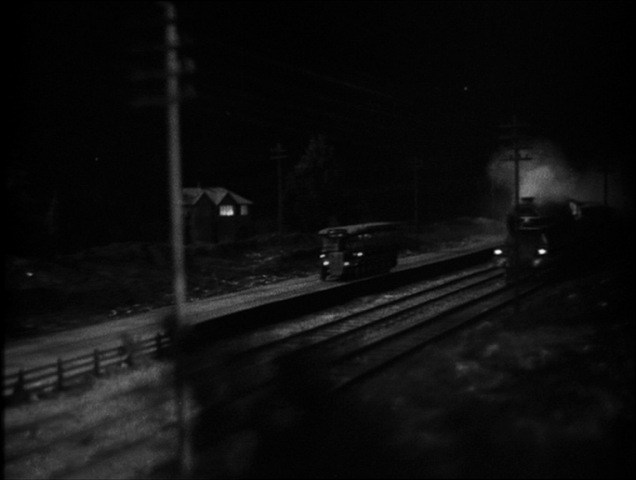
On the way forward, he gives them the slip again, but they continue on and take out the engineer and the fireman, discovering too late that they have no idea how to bring the train to a stop once it reaches the ferry. Barton, meanwhile, has returned to search for the necklace in the straw. As the train speeds out of control, Hitchcock brings his monumental piece de resistance into play. Since all thrillers end with a chase, his would be the greatest chase of all time: a mad race for the coast between a train and a bus.
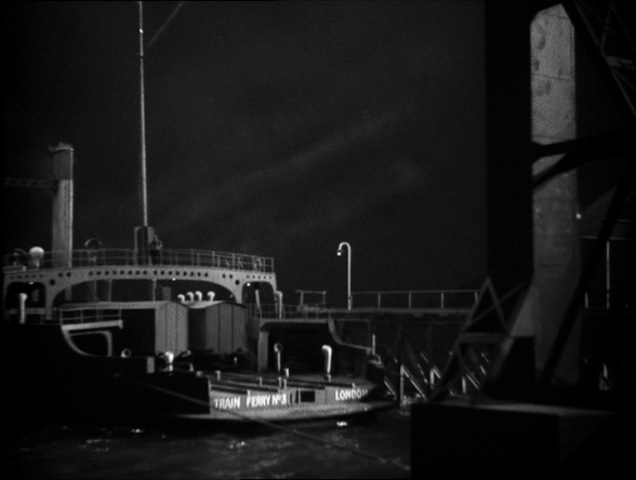
While there are some actual shots of trains and buses edited in here and there, the bulk of the climax was shot using models (which are quite clearly just that and nothing more). Nevertheless, the scene is quite elaborate, as the bus squeals around hairpin turns and under (model) bridges while the train flies over them, faster and faster all the time. On the final approach to the (model) ferry, the two speed along, side-by-side, past (model) villages and other scenery.
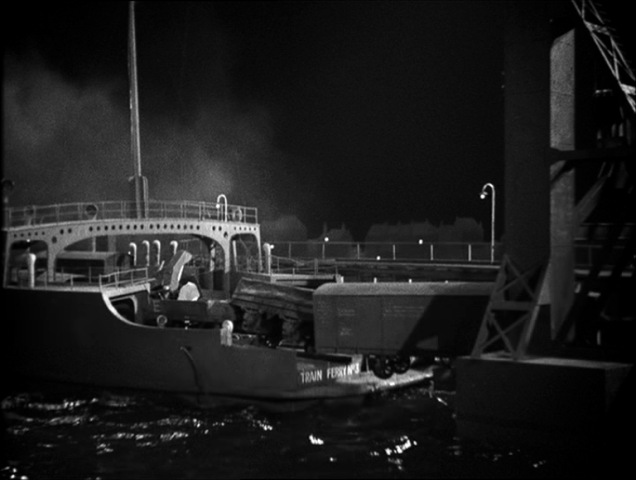
At last, the train, with Sheldrake and Brant still watching helplessly from the locomotive, plows onto the ferry. The force of the collision snaps the ropes mooring the ferry to the dock and shoves it away from the dock, dragging the train cars that are not already on board out over the water. The noise is terrific, and it’s all quite a spectacle, though clearly it is nothing more than a spectacle that has been built to scale.
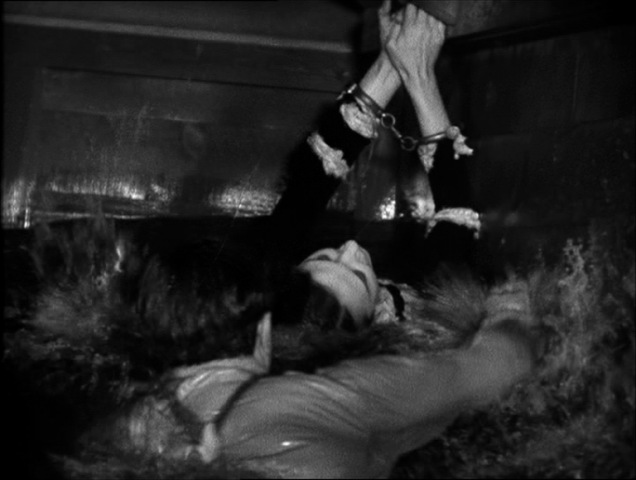
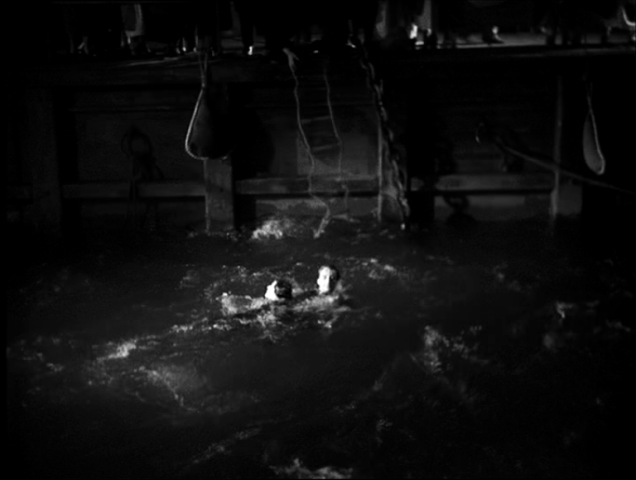
As some of the cars begin to sink, Thorndike, dashing up to the water’s edge, spots Nora inside one of them, handcuffed and hanging on as best she can. He strips off his coat and dives into the water to rescue her. Much to the delight of the gathering crowd, he swims inside the sinking train car and drags her out before it sinks. Ben, not handcuffed but apparently not much of a swimmer either, is left to fend for himself, comically clinging to the outside of another car.
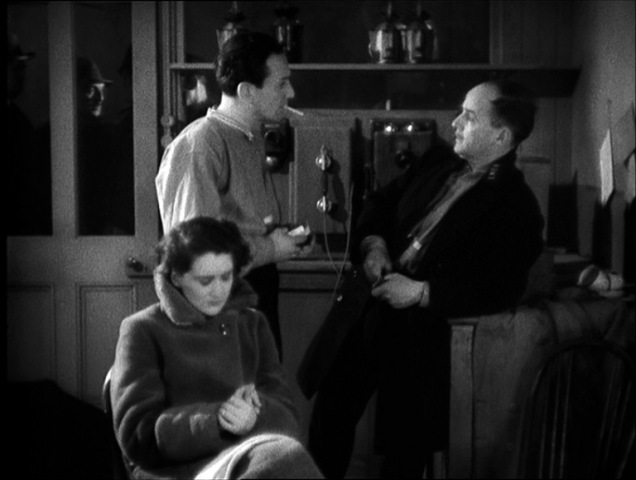
In the final scene, Ben, Thorndike, Barton and Nora are gathered indoors, bundled up in blankets for the final denouement. Barton tells Thorndike who he is, and lets him know that he hasn’t got the necklace yet, but he has got the girl, which amounts to the same thing. Nora, knowing she doesn’t have it, but certain she’ll be off to jail soon, remains stoic. However, there’s one thing that Barton, and to a greater extent, the audience, hasn’t counted on. Barton isn’t Barton at all, he is notorious criminal Henry Doyle, whom the police are just as anxious to capture as they are to retrieve the necklace. Thorndike was the real Barton all along, and he delivers Doyle into the waiting arms of the police outside.
Barton, the real one, then goes over to Nora and tells her, “You’d better come along with me.” “Where?” she asks, expecting him to answer “The police station.” Instead he says, “To get some breakfast,” and they share a good laugh. All seems well, but where is the necklace? Not to worry, Ben is wearing it around his neck, as he gladly reveals in exchange for breakfast.
Audiences didn’t understand what Hitchcock had been trying to do with his satirical take on the film anymore than the studio did. Number Seventeen and Rich and Strange were the beginning of the end of his association with British International Pictures, which was continuing to shy away from risk in favor of reliable adaptations and cheaply-produced “quota pictures.”
Later in 1932, Hitch supervised one of these, Lord Camber’s Ladies, which he only produced. About the film, he later said, “This was a poison thing. I gave it to Benn Levy to direct.” The movie did poorly, and Hitchcock, his standing at the studio already tenuous, was terminated. Disgruntled and out of a job, Hitch began to feel the lure of Hollywood, and he was briefly courted by Universal. With the Great Depression going on in America, however, the deal ultimately fell through.
Alfred Hitchcock was the most famous director in Britain, but he was also unemployed after a particularly poor run of early talkies, and had yet to establish his famous niche. The future of his film career looked bleak. However, his greatest opportunity yet, in the form of an old friend and an abandoned script, was waiting just around the corner.
Directed by Alejandro González Iñárritu of Amores Perros and written by Guillermo Arriaga, screenwriter of the same plus The Three Burials of Melquiades Estrada, 21 Grams is a chaotic, hard-hitting character study. Sean Penn plays a dying mathematician in desperate need of a heart transplant. Naomi Watts is a housewife with the perfect family. Benicio Del Toro is a newly-born again ex-con trying to raise his family right and give back to the community he has taken so much from. A horrible accident will throw these three characters violently together with wildly unexpected results. An interesting effort, but this pair went on to do much better with Babel in 2006.
Bowfinger – 51%
Steve Martin is Bobby Bowfinger, a no-talent hack trying to make movies in Hollywood. He is sure that his latest script, a sci-fi schlockfest called Chubby Rain, will be a surefire hit, all he needs is a major star. Enter Kit Ramsey (Eddie Murphy), a major star. The only problem is, Kit doesn’t want to be in Bowfinger’s movie. No problem at all, the director will simply assemble an amateur crew and shoot the movie around his recalcitrant leading man on a shoestring budget. With Kit’s dorky brother Jiff (also Murphy) standing in, what could wrong? It’s a premise rife with comic and satiric possibilities, but it largely fails to deliver in the execution. Intermittently entertaining, but far from consistently funny.
The Love God? – 49%
Abner Peacock (Don Knotts) is a devoted bird-watcher who happily publishes a small magazine based on this lifelong passion. Along comes notorious pornographer Osborn Tremaine, who cons him into changing the subject of his publication, transforming the malleable Peacock into a Hugh Hefner-esque figure. Don Knotts was a funny, funny guy: The Andy Griffith Show, The Ghost and Mr. Chicken, The Shakiest Gun in the West . . . he played variations on the same character in all of these, and that is what he is here. There’s just one tiny problem: The Love God? is essentially a family comedy about the adult entertainment industry. Even coming at the end of the free-love ’60s, this ought to have been an obviously bad idea. The incongruity of elements is far more painful than funny.
The Elephant Man – 95%
Dr. Frederick Treves (Anthony Hopkins) rescues a horribly disfigured man (John Hurt) from a circus sideshow. His real name is John Merrick, but due to the nature of his deformities, he was billed as the Elephant Man. With infinite compassion, Dr. Treves works to help Merrick regain his dignity and make a new life for himself as a human being.
Perhaps I’m a philistine, but this is the only David Lynch film that I have discovered to date which I found to be even remotely watchable. It is better than watchable. It is a deeply-moving story told with sensitivity and skill, and a significant technical achievement besides. Hurt’s transformation into the title character single-handedly inspired the Oscar now given each year for Best Achievement in Makeup.
Poltergeist – 57%
The Freelings are an average family living in an average home in the midst of an average suburb . . . until the angry spirits that haunt their house wake up and suck youngest daughter Carol Ann into her bedroom closet, perhaps never to be seen again. Now the family is terrified of staying and unable to leave, and they must do battle with forces far beyond their understanding if they are to rescue Carol Ann and escape alive.
Steven Spielberg produced two movies in 1982. The other one was E.T., and I would definitely recommend that over this often-cheesy, way over-the-top ghost story. It has some interesting ideas and some cool special effects, to be sure. But by the end it’s all just a bit . . . much.
Understand that all original content in Moviegoings is my property under copyright.
"Everyone has the right to the protection of the moral and material interests resulting from any scientific, literary or artistic production of which he is the author." -- Univ. Decl. of Human Rights
Unless otherwise noted, all original content in Moviegoings is licensed under a Creative Commons License.
Comment Policy
Commenting here is a privilege that may be revoked. Visitors to Moviegoings are allowed to post comments only for noncommercial purposes. Unsolicited advertising ("spam") may be altered or deleted at any time. Violation may result in appropriate countermeasures, including but not limited to IP banning, IP publishing, notification of ISPs, and civil and criminal legal action.

 starring George Clooney, Renée Zellweger & John Krasinski
 “Let that be a lesson to you: Never have any children.”


























 The 31st Annual Academy Awards ceremony was hosted by, among others, Bob Hope and Jerry Lewis on the night when Gigi became the biggest winner in motion picture history. The movie was nominated for Best Picture, Best Director, Best Adapted Screenplay, Best Cinematography, Best Editing, Best Art Direction, Best Costume Design, Best Music and Best Song. Other notable contenders included Cat on a Hot Tin Roof (6 nominations, 0 wins), Separate Tables (7 nominations, 2 wins), Auntie Mame (6 nominations, 0 wins), The Defiant Ones (9 nominations, 2 wins) and South Pacific (3 nominations, 1 win). Hitchcock’s masterful Vertigo received an insulting two nominations, for Art Direction and Sound, and didn’t win either. A Touch of Evil, Orson Welles’ famous south-of-the-border noir with Charlton Heston and Janet Leigh, was completely unnominated.
 “Sausage. That’s what I ‘it ‘im on the ‘ead with.”


















 Moviegoings