starring Harrison Ford, Cate Blanchett, Karen Allen and Shia LaBeouf
written by David Koepp, George Lucas and Jeff Nathanson & directed by Steven Spielberg
Rated PG-13 for adventure violence and scary images.
92%
Nearly 20 years after his last adventure (in both real and narrative time) Indiana Jones (Ford) finds himself matching wits with Soviet Communists in a search for a mysterious artifact with unspecified paranormal powers. The quest leads Indy from the deserts of Nevada to the jungles of South America, with the usual mad chases and death-defying stunts along the way, and yields results that even the world’s most famous archaeologist would never have expected.
At first blush, Indiana Jones in full costume looks a bit out of place in late-1950s America, where the Red Scare is in full cry. The consummate acquirer of priceless relics has become a bit of a relic himself, with distinguished service in the Second World War and a few dozen missions as a secret agent under his belt. As young upstart Mutt Williams (LaBeouf) points out, Indy isn’t as young as he used to be. Rather than try to pretend that he is, or tire us with an endless array of “old” jokes, the film makes Indy’s (and Ford’s) age an organic part of the script.
Along almost as a sort of corrective (at least at first) to Indy’s advancing age is the Mutt Williams character, who definitely does belong in the ’50s. LaBeouf is top-notch in the role, and the character is a likable addition to the franchise (Lucas has hinted that he might even assume a more central role in it, though we’ll leave that possibility alone for the time being). Speaking of Lucas, it is sometimes difficult to sniff out the contribution of any one person in a collaborative effort like this, but if I had to guess, I would say he is likely the one to blame for the excessive use of CG in the film. The new technology is marvelous, yes, but should always be used with restraint (a concept that appears to be quite beyond Lucas). In an Indiana Jones movie, it just contributes to lazy filmmaking. Did we really need the computer-animated gophers, for instance? And along the lines of goofy critter appearances, I suspect that the man who came up with Ewoks is also responsible for the ridiculous monkey interlude during the film’s spectacular jungle chase sequence, which adds nothing to the scene but an excellent reason for a collective groan from the audience.
The action in Crystal Skull is, let’s face it, a bit silly in general. Indy’s exploits have always inspired exclamations of “I can’t believe he just did that!” But more than once, the shenanigans on this outing will inspire a more skeptical, “I can’t believe he just did that.” It is a subtle, but important, difference. (Walking away from an atomic blast? Seriously? Side note: Close observers of the current president’s verbal foibles will be interested to know that he and Indiana Jones share their pronunciation of “nuclear.”) Really, though, each of the films has its moments that stretch suspension of disbelief to the breaking point (consider the leap from an airplane aboard a life raft in Temple of Doom). The action sequences in the Indiana Jones films have always been a little silly.
Harrison Ford and Karen Allen step comfortably back into their old roles, and the Lucas/Spielberg team is in top form bringing their latest adventure to life. I confess that I actually got chills when the “Lucasfilm” logo first appeared on the screen, and the feeling stayed with me more often than not. Having explored the possibilities offered by three of the oldest surviving world religions, the writers have turned in the only direction they logically could have (and one that will be familiar to any fan of “Stargate,” though perhaps I’ve said too much).
The historicity of this particular plot may prove to be a sticking point for some (hokey religions, indeed . . . it certainly doesn’t have the appeal, to me at least, of the Ark of the Covenant or the Holy Grail), but they really make it work. One of the greatest thing about Indy is that he is truly a pan-academic; an equal-opportunity scholar. He seems to know something about every period and culture in history, and is conversant in every language, dialect, and dead tongue under the sun. It’s all just part of the fun. And, just as The Last Crusade isn’t really about the search for the Holy Grail, this movie has much more to do with the continuing life of the Indiana Jones character than the surface action that drives the plot. After all, Lucas himself refers to the artifacts in all of the Indy films as “MacGuffins.”
Kingdom of the Crystal Skull is the film that Temple of Doom should have been (in many ways, one might almost say it is the same film conceptually). Thematically, this is the perfect third chapter, bringing character arcs that have been dangling for 20+ years to a satisfactory resolution. And, in addition to the other Indiana Jones movies, there are moments that are reminiscent of Lucas’s American Graffiti and Spielberg’s Close Encounters of the Third Kind . . . even a nod in the direction of Star Wars. While both Lucas and Spielberg have made better films, this one is in some ways the apotheosis of everything they’ve been doing cinematically for the past 30 years and more. At its heart, that simply means that once the lights go down, we’re in for a grand time.
Even though he’s been dead for nearly 11 years, today would be Jimmy Stewart’s 100th birthday if he were still alive. It seems a date worth commemorating, and when I realized that it was approaching, I cast around a bit to see what I might watch in honor of one of the greatest actors ever. I had several things on hand . . . the heart-warming and hilarious Harvey, edgy, hard-boiled Anatomy of a Murder, the magnificent collaborations with Alfred Hitchcock: Rope, Rear Window, The Man Who Knew Too Much, Vertigo. In the end, though, I turned to Netflix and found a couple of instantly-available choices that I hadn’t actually seen.
The first was Frank Capra’s classic political diatribe: Mr. Smith Goes to Washington (which I have seen, but not since I was very young). It was made fairly early in Stewart’s career (in 1939, just a year after his first collaboration with Capra in You Can’t Take It with You, see below). The second was the 1950 western Broken Arrow, in which Stewart plays a crusty cowboy who helps broker a lasting peace treaty between the Americans and the Apache Indians. 1950 wasn’t late in Stewart’s career by any means, but many believe that the tone of the actor’s roles changed after his participation in World War II. I wouldn’t call either film a great favorite, but I enjoyed watching both.
My favorite Stewart role is probably still his performance as the ultra-cynical lawyer Paul Biegler in Otto Preminger’s Anatomy of a Murder (1959). It’s a fantastic film with some fantastic work by Stewart (and the supporting cast). What’s your favorite?
The 11th Annual Academy Awards were the first to have no official host. You Can’t Take It with You was nominated for seven awards: Best Picture, Best Director, Best Adapted Screenplay, Best Editing, Best Supporting Actress (Spring Byington), Best Cinematography and Best Sound. Other important pictures that year included the following:
The Adventures of Robin Hood, a technicolor swashbuckler with Errol Flynn and Basil Rathbone; considered the definitive Robin Hood (4 nominations, 3 wins). Grand Illusion, an anti-war piece, and the first foreign film to receive a Best Picture nod (which was its sole nomination). Jezebel, an ante-bellum period movie with Bette Davis as the Scarlett O’Hara-like heroine (5 nominations, 2 wins). Pygmalion, based on the acclaimed play which would eventually become the musical My Fair Lady (4 nominations, 1 win). Boys Town, a heart-warming true story about a priest (Spencer Tracy) who starts opens a sanctuary for troubled boys (5 nominations, 2 wins, including Tracy’s sole Oscar). Alexander’s Ragtime Band, a light-hearted period musical with Tyrone Power and Ethel Merman (6 nominations, 1 win). Angels with Dirty Faces, a gangster movie starring James Cagney, and the only significant nominee that was not up for Best Picture (3 nominations, no wins).
Best Supporting Actress went to Fay Bainter for her performance in Jezebel. George Bernard Shaw won Best Adapted Screenplay for Pygmalion (talk about stiff competition). The Great Waltz took Best Cinematography, Best Sound went to The Cowboy and the Lady and The Adventures of Robin Hood won Best Editing. That left Best Picture and Best Director to Frank Capra’s You Can’t Take It with You. It is worth noting that Michael Curtiz directed five movies that year, and was nominated for Best Director for two of them, Angels with Dirty Faces and Four Daughters, but not for the biggest winner of the night, which he also directed: The Adventures of Robin Hood.
You Can’t Take It with You is based on a Pulitzer Prize-winning play by George S. Kaufman and Moss Hart, who also collaborated on the acclaimed comedy The Man Who Came to Dinner (Hart would later write the screenplay for Gentleman’s Agreement, Best Picture of 1947). Amidst a crowd of odd characters and wild goings-on, the heart of the story lies in the romance between Tony Kirby (Jimmy Stewart), wealthy heir to enterprising capitalist giant, and his secretary, Alice Sycamore (Jean Arthur). The tension in the story comes from the sparks that fly between Tony’s uptight, snooty parents and Alice’s excessively eccentric family, led by carefree, philosophical Grandpa Vanderhof (Lionel Barrymore).
This was Capra’s third Oscar win as director, following 1934’s It Happened One Night (which also won Best Picture) and 1936’s Mr. Deed’s Goes to Town. Capra was nominated the very next year for Mr. Smith Goes to Washington, and again in 1946 for It’s a Wonderful Life (which reunited Jimmy Stewart and Lionel Barrymore, playing a very different sort of character), but he never won again. Capra’s idealized visions of simple, wise and virtuous American men and women struck a chord with Depression-era audiences, and You Can’t Take It with You definitely shares the themes and basic philosophy of the rest of Capra’s films.
Capra and his characters in this film view ambition in the modern world of business as a soul-sucking, joyless life to lead. Even poverty is preferable to the drudgery of the office and the cut-throat nature of capitalism, because no one is truly wealthy without the love of friends and family. Grandpa Vanderhof is full of folksy wisdom like, “Lincoln said, ‘With malice toward none, with charity to all.’ Nowadays they say, ‘Think the way I do or I’ll bomb the daylights outta you,'” and “Communism, Fascism, Voodoo-ism, everybody’s got an -ism these days […] When things go a little bad nowadays, you go out, get yourself an -ism and you’re in business.”
The movie has some great comedic moments, but most of the best moments are a result of the chemistry between an excellent (but very young) Jimmy Stewart and appealing Jean Arthur. The film’s greatest fault is probably its length: at just over two hours, it’s probably at least twenty minutes too long. The extra runtime contributes to a definite lack of focus, and the main threads of the story sometimes feel lost amidst the hubbub. Capra can get rather preachy at times, and some of that preaching can grate on modern ears. But if he comes off at times as revoltingly saccharine and infuriatingly smug, Capra can also be refreshing and heart-warming under the right conditions. Still, this is definitely not his best (I’d probably put up It Happened One Night or It’s a Wonderful Life for that honor, with an entertainment vote tossed in the direction of Arsenic and Old Lace).
No, that’s not a typo. Someone’s (actually, many someones) gone and made a thread of Muppet-inspired movie posters. Here’s the link. Definitely check it out, there are some really good ones. Lots of funny and clever people out there. The one below just happens to be my favorite:
starring Ben Barnes, Georgie Henley and Peter Dinklage
written by Andrew Adamson, Christopher Markus and Stephen McFeely & directed by Andrew Adamson
Rated PG for epic battle action and violence.
85%
It has been one year since the four Pevensie siblings (Peter, Susan, Edmund and Lucy) first visited Narnia and helped overthrow the White Witch. But when they are suddenly recalled to the magical land via Susan’s old horn, they find a very different Narnia. Hundreds of years have passed in Narnian time, and the Narnians they remember (dwarves, centaurs, talking animals, etc.) have been driven into hiding and near extinction by the invading Telmarines. Now, a disinherited Telmarine prince named Caspian stands ready to lead the Narnians in a bid to take back what is theirs, but Caspian, the Pevensies, and the Narnians they lead will seemingly have to go into battle without the counsel or support of a mysteriously-absent Aslan.
I first read C.S. Lewis’s Prince Caspian when I was about five-years old. Almost before I could count, I had already lost track of how many times I read this story and the other Narnian Chronicles. As a result, Lewis’s version of Prince Caspian is buried deep in my psyche in an inextricable way, and it became clear to me almost immediately that I couldn’t watch Adamson’s Prince Caspian with any sort of detachment from that source. It cannot be “just a movie,” at least not the first few times. To my mind, there are three key questions to be answered about Prince Caspian. First, is it a faithful adaptation of Lewis’s source, either in letter or in spirit? Second, does it manage to translate Lewis’s thematic purpose from page to screen? Third, is the movie any good? Briefly, the answers to those questions are no, not very well, and yes. Potential spoilers follow.
In addressing Prince Caspian as an adaptation it would be very easy for this review to devolve into a laundry list of nitpicking. The bad news is, they’ve changed a lot. Some of these changes seemed rather pointless. Some were incredibly confusing, not only with respect to the source, but within the movie itself (think Edmund in the first movie, defacing the stone lion even though Mr. Beaver hadn’t mentioned that Aslan was a lion). Most of all, though, it was just difficult for me, as someone familiar with the story of the book, to get a good sense of the movie itself. Imagine someone tells you that they are going to show you a picture of a cat, only its actually of an octopus. The octopus still has a head, and eyes, and legs (though in the wrong quantity), but they are configured all wrong and there are parts missing. It’s just different, and you can’t really appreciate the octopus because you’re wondering how they can call this a cat.
I could go on for pages and pages about what they changed and why I wish they hadn’t, but by way of example, here are three of the major deviations from the book. First, the film opens with the birth of Miraz’s son and Dr. Cornelius hurrying Caspian out of the castle in the middle of the night. As he leaves, Cornelius presses Susan’s horn into his hands. About five minutes later, with pursuing Telmarines closing in, he blows it. If there is a reason for this, I completely missed it. Just after Caspian blows the horn, Trumpkin is captured by Miraz’s men, hauled back to the castle and kicked around a bit by Miraz. Then, a few scenes later (during what feels like the same day), he is rescued by the Pevensie kids as he is being dumped from a rowboat, as per the book. He realizes who they are almost immediately, and seems to have expected them, although it is not at all clear that he was even aware that the horn was blown, let alone what the result might be.
Second, the movie adds a major battle scene in the midst of the story: a daring nighttime raid on Miraz’s castle by the Narnians. Credit where credit is due, the scene is excellent. It is exciting and well-staged, and I enjoyed it immensely. At one point here (and not for the last time), the movie forgets that the prince in question is named “Caspian” not “Hamlet,” but one could draw from worse sources (and who is to say Lewis didn’t to begin with?). The scene does not only serve to add more action (although it does that admirably), but is worked neatly into a few character arcs and serves the overall plot well. I have two quibbles with it. As a result of Peter’s rash arrogance, a lot of Narnians end up dead, but this is never really dealt with. He doesn’t seem to care much, beyond playing the blame game with Caspian and looking mopey for a few minutes. Also, it contributes to a general fudging of the numbers that the movie suffers from in terms of the actual size of the Narnian force. It is never clear how many there are, but their army doesn’t ever seem to shrink, even when it seems that most of them must be dead.
Third, there is no joyous reclamation of Narnia whatsoever. Nothing. I cannot stress enough how disappointing this was, so I won’t even try. We were robbed. Enough said.
As for the themes from Lewis’s Prince Caspian, they are much diminished, as is Aslan. The movie is just under two-and-a-half hours long, and (aside from poking in for a couple of seconds in a dream), Aslan doesn’t appear until a few minutes after the two-hour mark. He is reduced to little more than a cameo, literally a deus ex machina (which is kind of what he is, but he’s also so much more) brought in to resolve the impossible fix that the main characters have gotten themselves into. For an excellent and thorough examination of the thematic deficiencies of Prince Caspian, see this review from Steven Greydanus at DecentFilms.
Well, but what did they get right? The supporting cast is very, very strong. All of the major Telmarine characters were fantastic, particularly Miraz. He is an evil tyrant, but not cartoonish in any way; a totally believable villain. Trumpkin doesn’t feel quite right, somehow (although I couldn’t lay my finger on why until I read what Greydanus wrote), and Reepicheep was just a little bit too tongue-in-cheek, but nothing like what I had feared. Trufflehunter, Nikabrik and Glenstorm are all there, and all great. Even Bulgy Bear and Pattertwig the Squirrel are present (though I don’t believe they are named). Ben Barnes is an excellent Caspian, and I look forward to seeing him in Voyage of the Dawn Treader.
Prince Caspian continues the trend of its cinematic predecessor of developing the four Pevensie kids beyond what Lewis wrote, though with weaker results, in my opinion. Peter gets most of the attention this time around, but his character is extremely unsympathetic. They make it work well for the story, but it is still disappointing. Whether unintentional or not, there are small hints foreshadowing Susan’s off-screen role in The Last Battle.
Speaking of battles, I think it is fair to say that the series has come into its own, visually. Snide remarks will still be made about Narnia as Lord of the Rings “lite,” but they are unfounded. The final battle is a grand spectacle, and a unique one. The only exception to this is that Susan continues to fight with her bow and arrow at melee range (throughout the movie). I blame this foolish trend entirely on Legolas, and yet even he occasionally pulled a knife. Still, the point is somewhat moot, as Susan will not be returning to Narnia.
In the end, Prince Caspian didn’t fail to reach me, despite the constant slighting of the source material. I enjoyed myself, and I look forward to seeing it again without having to cobble the story back together in my mind as it plays out before me. When it is good, it is very, very good, and I imagine that audiences largely ignorant of the book will find a great deal to like here, probably even more than in the first film. But for fans of the book, the outlook is grim indeed.
So, I was watching the 2nd trailer for Kingdom of the Crystal Skull and I had some thoughts. Have a quick look for yourself, in case you haven’t seen it or need a memory refresher:
The first thing that occurred to me after watching the initial 30 seconds (which give us a pretty good idea of the plot) was, “We would have called this one The Temple of Doom, but we used that already.” I see a thick creepiness factor, a little-known artifact tied to a third-world culture rather than a major element of western civilization, the whole, y’know, temple thing . . . even that crazy-looking rocket car on a track in a tunnel (mine car, anyone?). Temple of Doom would definitely not seem like the ideal film to imitate out of the first three, but we’ll see . . .
The other thing I thought I spotted was a brief glimpse of Sean Patrick Flanery, who played the young Indiana Jones in the series of the same name. It’s at about 1:27, but he isn’t listed as being in the movie anywhere that I can find. Maybe it’s not him, or maybe it’s an uncredited cameo . . . or maybe he’s part of a flashback sequence, like River Phoenix in the opening scenes of Last Crusade. Check out the side-by-side comparison below.
starring Emile Hirsch, Christina Ricci, Matthew Fox and John Goodman
written & directed by Andy and Larry Wachowski
Rated PG for sequences of action, some violence and language.
70%
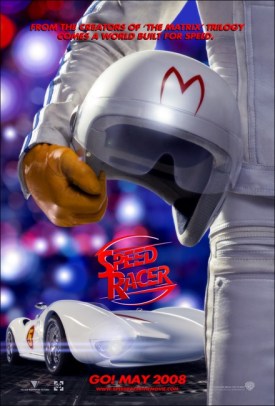
In the dangerous, cut-throat, glamorous world of racing, young Speed Racer (Hirsch) is well on his way to becoming the sport’s newest superstar. But when he refuses to sell-out his family’s independent motor company by signing with a big corporate sponsor, he makes some powerful enemies. Now he’ll have to race as he never has before, not just to win, but to survive!
In the spring of 1999, all eyes were focused on Star Wars: Episode I as the blockbuster of the upcoming summer. Then, at the very end of March, another movie appeared out of nowhere and made off with all that box-office thunder. That film was The Matrix, written and directed by the Wachowski Brothers, and (like the original Star Wars before it) it was followed by two successful sequels. Today, nine years later, as I sat in a theater and watched the latest Wachowski project assault the screen like a computer-generated, LSD-fueled Skittles commercial designed by a first-grader with ADD, I suddenly realized something: The Wachowskis are following the career trajectory of George Lucas, and in less than half the time.
Now, that probably makes it sound like a dismal failure which I hated sitting through. That’s not quite right. When I was a kid, I watched and enjoyed the original Speed Racer cartoons. This genuinely felt like a live-action version of one of those cartoons. Probably the biggest difference was that those cartoons were only half an hour long. This was 135 minutes. That is at least half an hour too long, and I really felt it. Speed Racer drags hopelessly in its quieter moments, futilely trying to develop characters. I can only imagine how painful those scenes were for the younger audience. The showing I was in had more than one small child getting noisy during the downtime, and I was so unengaged by what was going on that I simply didn’t care.
Speaking of that younger audience, Speed Racer is, in fact, rated PG. It’s a pretty beefy PG, but the filmmakers obviously went to a great deal of trouble to keep it that way, even going so far as to literally bleep some profanity. Right about when that happened, it suddenly occurred to me that, although most parents these days will apparently take their kids to see just about anything, a movie like this simply cannot risk alienating the six-year old audience.
Overall, the movie is a mess. It just couldn’t decide what it wanted to be: a special-effects extravaganza, a kid’s movie, a serious thriller or something to watch while you’re high. The lack of consistency kills the experience, but Speed Racer is not without its moments. In particular, the racing sequences are amazing. They are gorgeous and thrilling and simply a lot of fun to watch. If the long portions in-between races were better, the result might have really been something. Be warned, though, the climax of the final race is positively blinding. I think it might have actually burned my retinas, and I felt that if I looked around I might see other members of the audience having seizures on the floor and the projector smoking and shooting sparks. On the basis of that scene alone, this movie should come with one of those warnings to pregnant women and people with heart conditions and weak stomachs.
The cast is actually quite decent (with the possible exception of Spritle and Chim Chim, but they were horrifically annoying in the cartoon, as well) and they are obviously having a good time. I was especially surprised by John Goodman, who is excellent as Pops. He also gets some of the best lines. At one point, the family is attacked by ninjas (Ninjas?!), but these are terrible, terrible ninjas. After they are (easily) defeated, Trixie (Ricci) asks, “Was that a ninja?” Pops replies, “More like a non-ja. It’s ridiculous what passes for a ninja these days.”
The bottom line is, if you ever enjoyed the Speed Racer cartoons, or if you are between the ages of about five and eleven, you might want to give the movie a shot. Otherwise it’s probably best to stay far, far away. Still, for what it’s worth, Speed Racer is better than The Matrix Revolutions.
It’s summertime again, and that means movies with enormous budgets and (the studios hope) even more audience appeal. Steven Spielberg’s Jaws and George Lucas’s Star Wars (in 1975 and 1977, respectively) are generally regarded as the films directly responsible for ushering in the summer blockbuster system. That already stretches back further than my memory goes.
Interestingly, though, I stumbled across a New York Times article from June 3rd, 1917 the other day that described a then-recent change in the theater business (that’s theater as in “the stage”). “There was a time,” the article begins, “when the managers of playhouses dedicated to the spoken drama looked upon the movie as something to be feared, a monster that would devour their profits and drive them out of business.”
(Note: The next part is paraphrased, as I now can’t pull up the article for some reason, and the Google cache version is badly garbled.)
“The movie looks different to the management now. It is no longer a thing to be dreaded, but something to be received with open arms. It is the theatre’s Summer lifesaver; instead of boarding up the approach to the lobby, it is now considered perfectly good form to put the chintzes on the seats, accept $1,000 a week as rent, and fumigate in the Fall when the movie horde has departed. Thus it happens that six of Manhattan’s best play-houses, on whose stages regular plays are presented in season, are invaded by the movies this week.”
So, if I understand correctly, there’s the summer, during which movies attract the big crowds, and then there’s the rest of the year which is reserved for the art-house types who come to see the stage productions, which are presumably considered more “high-brow.” Sound familiar? I thought that was rah-ther interesting.
Anyway, speaking of the upcoming movie season, in anticipation of the new Indiana Jones movie, here’s a really good essay from Aspect Ratio about Spielberg’s approach to film editing (scintillating!).
Next, here’s the new Dark Knight trailer. Definitely looking good.
And, finally, a trailer for Brideshead Revisited starring Emma Thompson, which looks very good. Enjoy.
“I learned something from being in the Girl Guides.”
“We mustn’t despair. Not actually despair. No desperandum!”
“Don’t forget it’s my petrol.”
“That’s alright. I was gonna take the left fork anyway.”
“Nonsense. I can’t leave you out here like a criminal. Come along.”
“What did I do with the belt? I twisted it round her neck and choked the life out of her!”
“Father, don’t you think we ought to ask Mr. Tisdall to dinner?”
–Young and Innocent
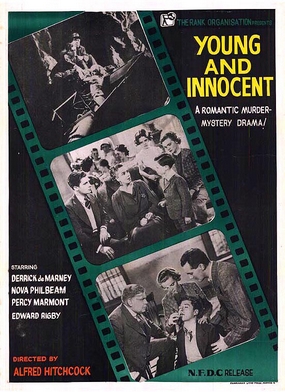
With the dark, brooding Sabotage behind him, and two more pictures left on his Gaumont contract, Hitchcock opted for the opposite extreme with 1937’s extremely light-hearted Young and Innocent . Although the title may chiefly refer to the wrongfully-accused protagonist, there is also a strong undercurrent of high-spirited, youthful innocence bolstering the proceedings. Young and Innocent claims Josephine Tey’s mystery novel A Shilling for Candles as its source, but as usual, the book served as little more than a jumping-off point for Hitch and his team of writers.
The story that made it to the screen is perhaps best described as ” The 39 Steps without spies,” featuring the same basic style and sharing many themes. Young and Innocent is as much a romantic comedy as it is a suspense thriller, and perhaps more. The film has more than a little in common with movies like 1934’s It Happened One Night, with an unlikely couple (in this case a suspected murderer and the chief constable’s daughter) on a journey which they begin as mild antagonists and end as devoted (but chaste) lovers.
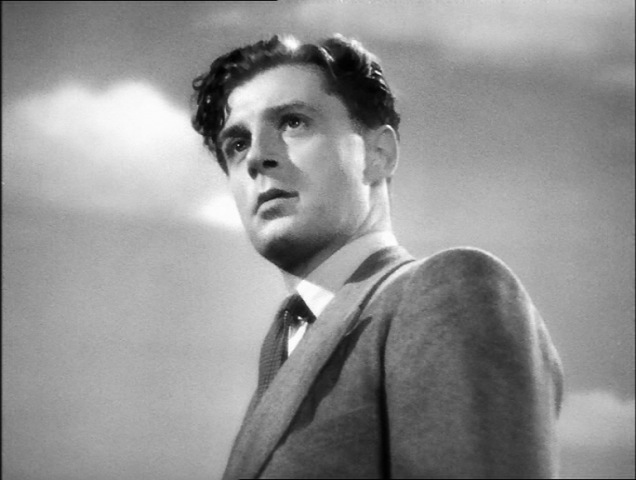
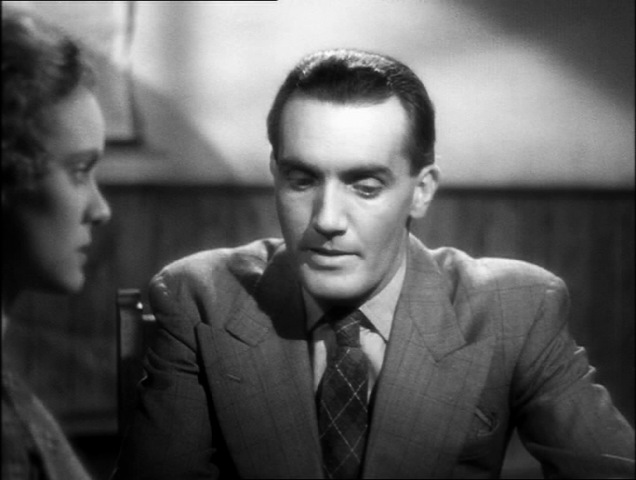
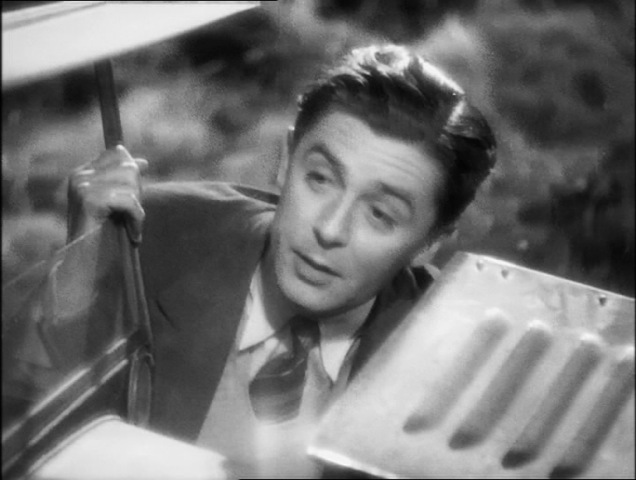
For the role of Erica Burgoyne, the unsinkable constable’s daughter, Hitchcock turned to a young woman who had played a much different part for him just a few short years before. Nova Pilbeam, the child actress who had appeared as the kidnapped daughter in The Man Who Knew Too Much, was now eighteen-years old and had blossomed into a genuine leading lady in her own right. As her first on-screen love interest, unemployed screenwriter Robert Tisdall, Hitchcock had Derrick De Marney, a twenty-eight-year old British actor. George Curzon, who had had a bit part in The Man Who Knew Too Much, plays Guy, the largely-absent villain of the piece (who only actually appears in the first and final scenes).
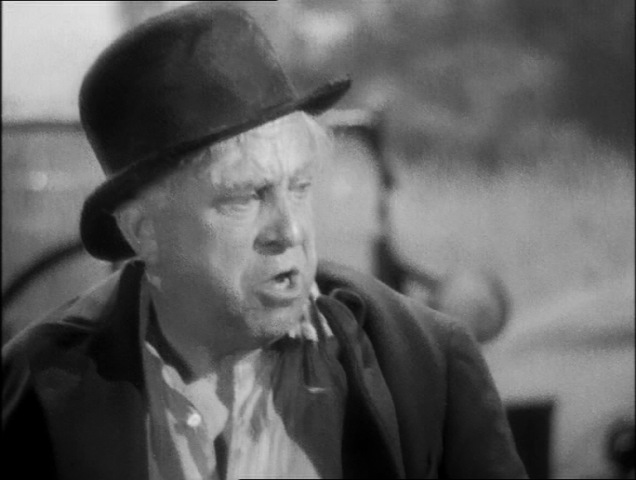
Rounding out the supporting roles are Edward Rigby as Old Will the China Mender, John Longden as Detective Inspector Kent, and Percy Marmont as Erica’s father, Colonel Burgoyne. The latter two were Hitchcock regulars by this time. Longden (here reprising his “type” as a police detective) was the male lead in Blackmail in 1929, one of several appearances in the early talkies. Marmont, of course, had played a stodgy Englishman twice before, as Commander Gordon in Rich and Strange and as the unfortunate Caypor in Secret Agent.
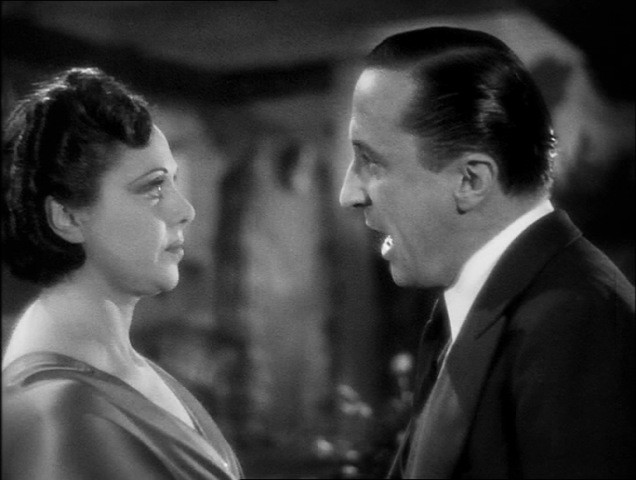
Young and Innocent begins on a dark and stormy night in a house near the beach where a married couple is having a violent quarrel. The wife is an actress, Christine Clay, and her husband, Guy, is furious over her relationships with other men. Guy has a curious nervous tic: his eyes twitch so that he appears to be blinking violently whenever he is upset (which he often is). The scene fades out as he stands out on the porch, looking menacingly inside at his wife with the sea crashing behind him.
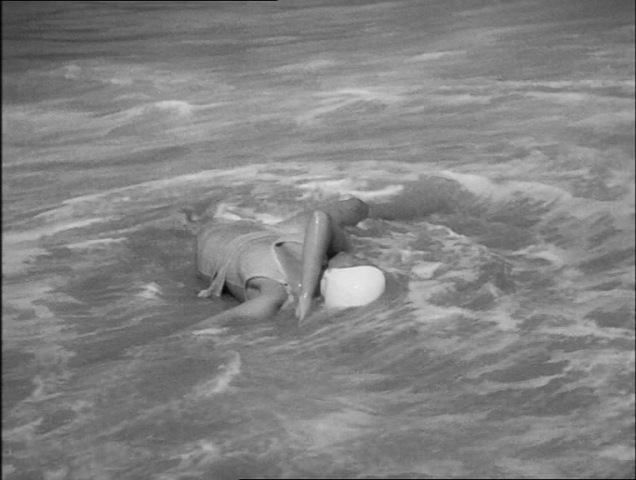
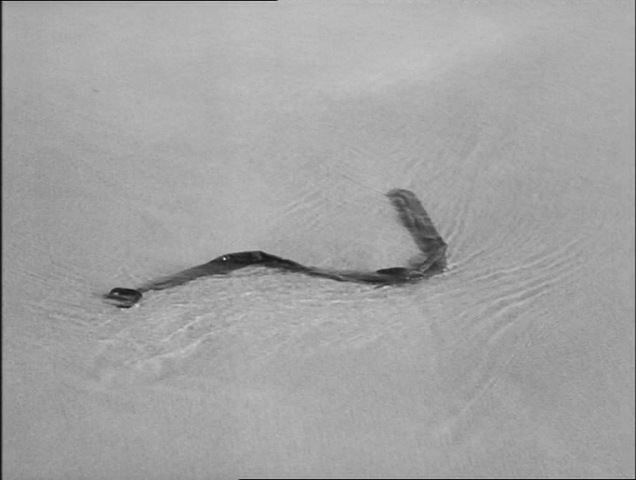
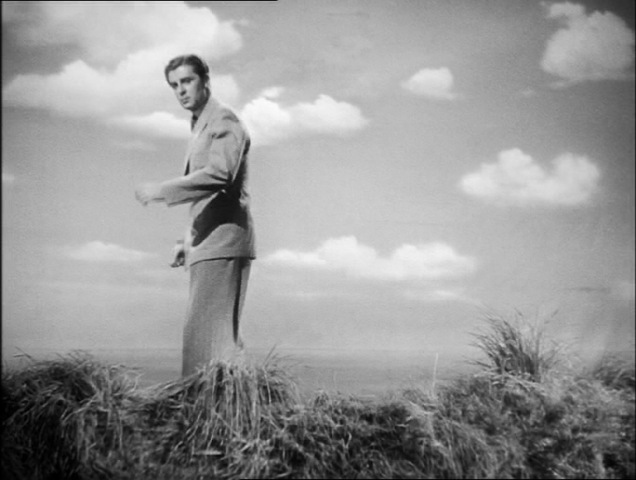
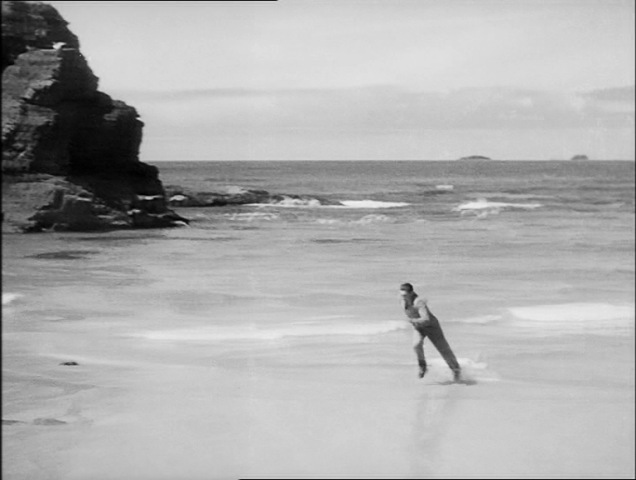
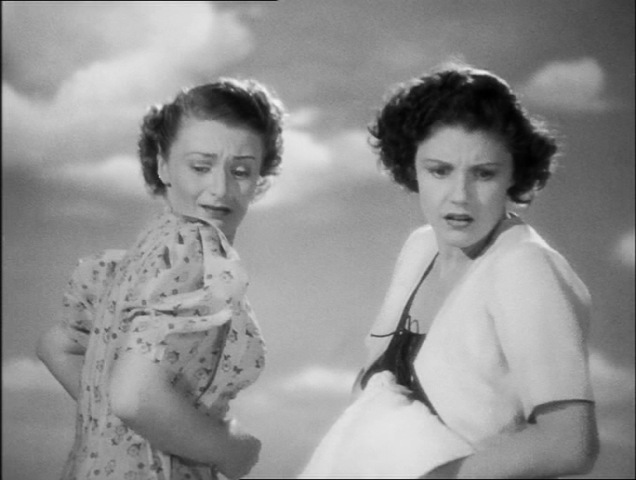
This is followed by what appears to be a much more serene setting: a deserted beach by daylight. The peace is shattered, however, when the body of a woman in a bathing suit is seen washing ashore. The belt of a raincoat drifts ominously nearby. Tisdall, walking along the cliffs overhead, sees the lifeless swimmer and races out to investigate. As soon as he gets close enough to examine the body, he turns and races back up the beach to get help. Unfortunately for him, two women appear from the other direction at that very moment and spy him hurriedly leaving the scene of the crime.
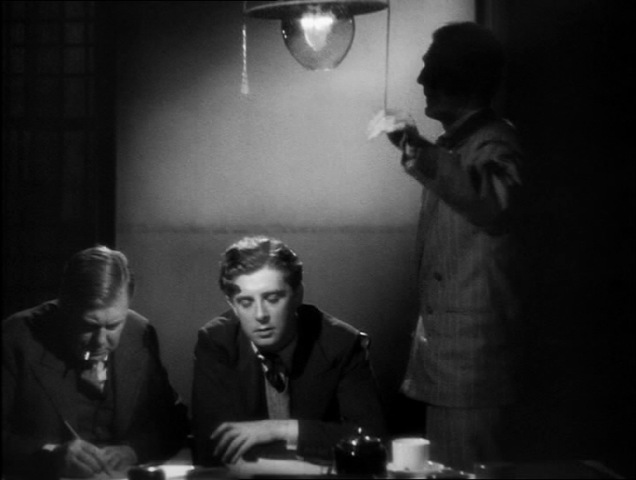
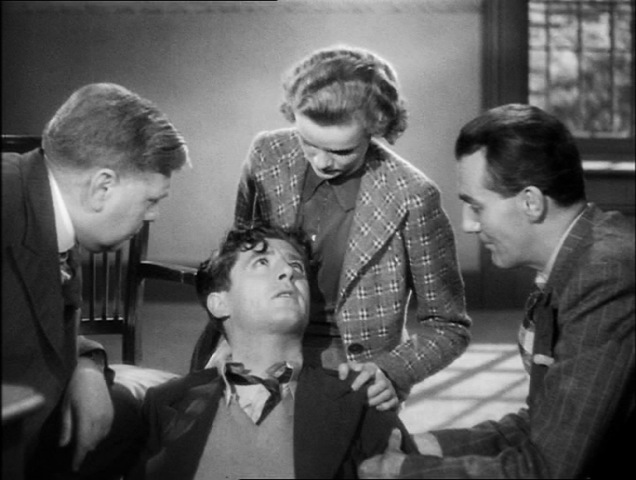
When Tisdall returns with a rather thick constable, the women waste no time in casting suspicion on him and before he knows it he finds himself sitting in an interrogation room. By an unlucky coincidence (or is it?), the murder weapon is the belt of a raincoat, and Tisdall cannot prove that it doesn’t belong to him because his own raincoat was stolen from a roadside stop called “Tom’s Hat” just a few days before. Naturally, the suspicions of the police are aroused, and (realizing the seriousness of his position) Tisdall promptly passes out. He is revived in a very business-like fashion by Erica, the constable’s rather fetching daughter. He is immediately smitten, and the two flirt for a few moments before he is led away to meet with his lawyer.
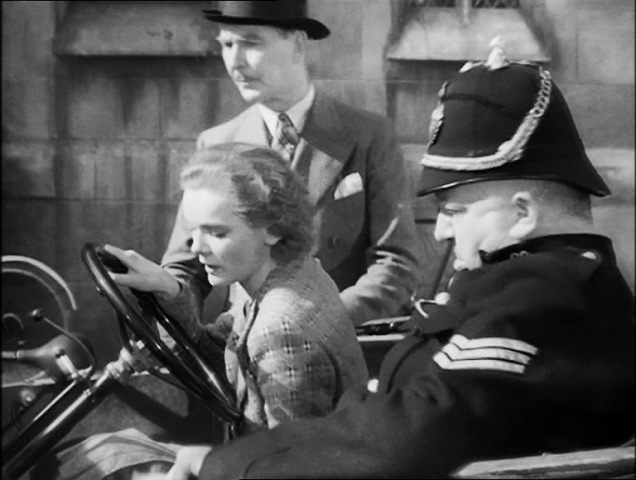
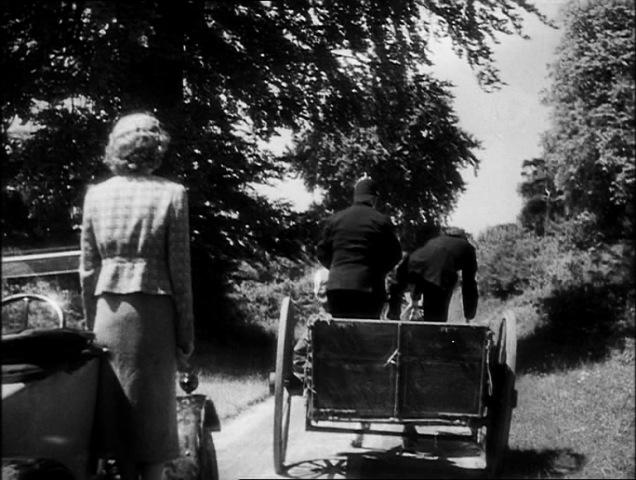
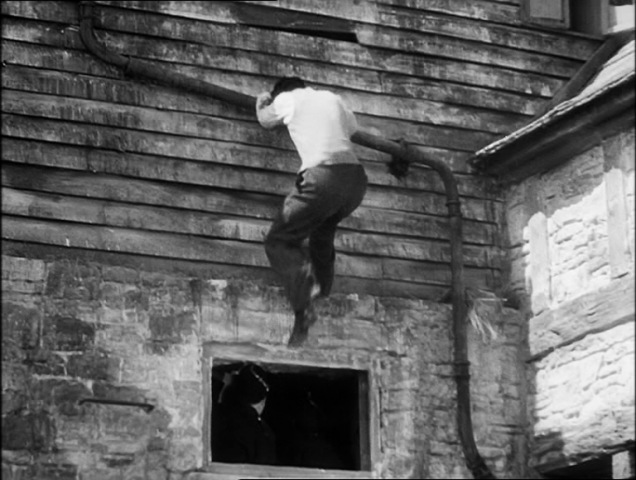
This lawyer, who never seems to have tried a criminal case before, is exceptionally dim-witted and seems as likely as the prosecution to ensure Tisdall’s conviction. All in all, the poor man is feeling that his situation looks rather bleak when he is led into the courtroom, but a sudden commotion lends him an opportunity to escape. Donning his lawyer’s thick spectacles, he slips away and manages to disappear down the street while the hapless police force is still trying to mount their pursuit. It seems that the only vehicle readily available is Erica’s eccentric old car, and she is the only that can make it go. Glad to be of service, she putters out of the station with two officers aboard.
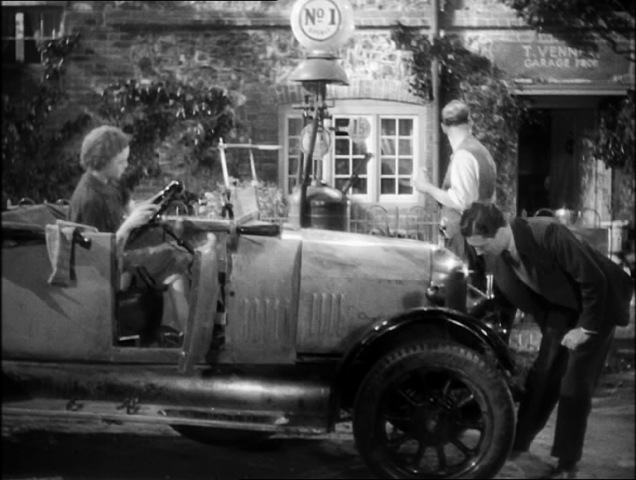
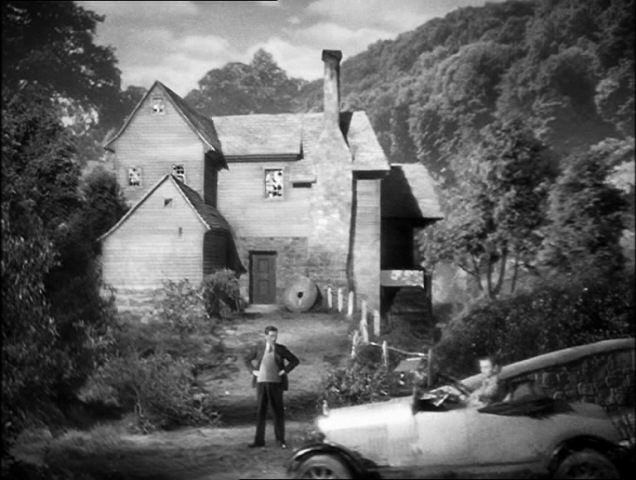
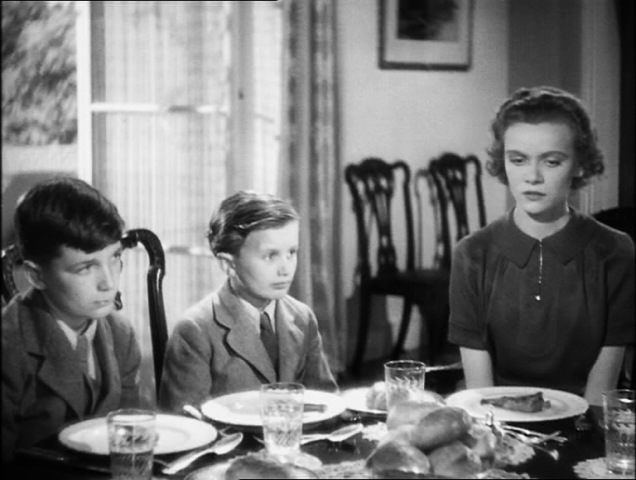
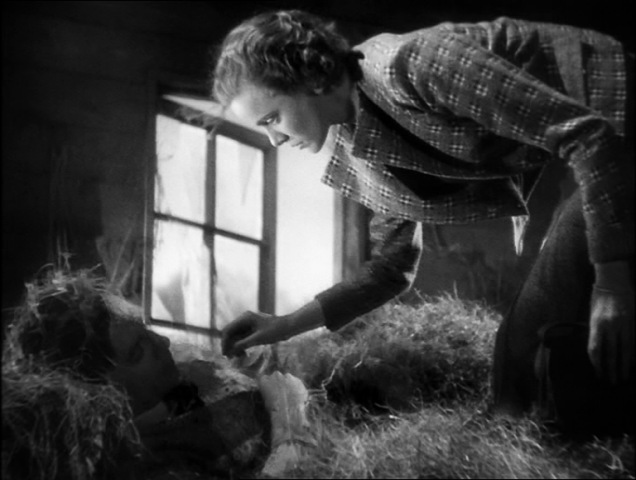
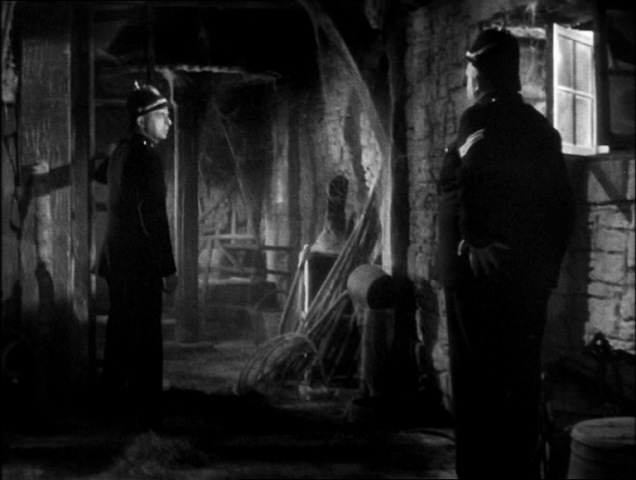
Sometime later, the car runs out of gas in the middle of the countryside and the police continue the chase on a passing pig cart. Erica, left behind with the car, soon runs into Tisdall, who helps her push her car to the nearest petrol station, and uses the last of his cash to fuel it up. Torn between duty and gratitude, Erica chooses not to turn him in, but not to help him either. She drops him off at an old mill, but feels guilty later at dinner with her family as her brothers describe (with great relish) the desperate circumstances faced by the fugitive. Feeling somewhat responsible for him, she returns to the mill with food. However, as they are talking, the same officers who boarded the pig cart arrive, and they are forced to escape together lest Erica be recognized.
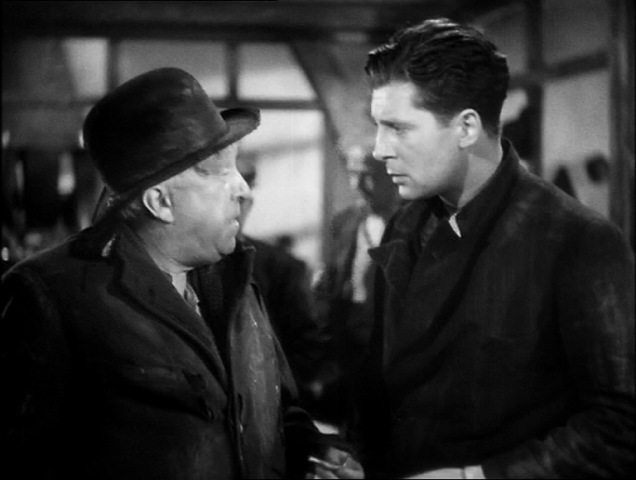
Tisdall has little trouble recruiting her to help him in the search for his missing raincoat, beginning with a trip to Tom’s Hat. The hunt eventually leads the two to a bum named Old Will, who informs the pair that he acquired the coat from a man who “blinked” (as we have suspected all along). The coat was missing the belt before it passed into Will’s possession, and Tisdall soon realizes that he is the owner of the murder weapon. His only hope to clear his name now is to track down the twitching man.
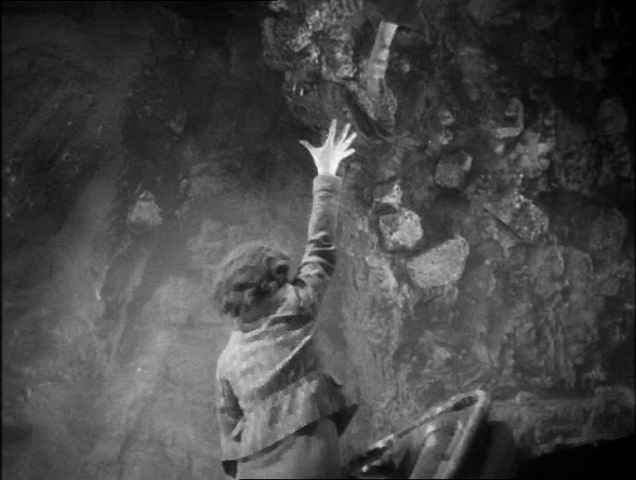
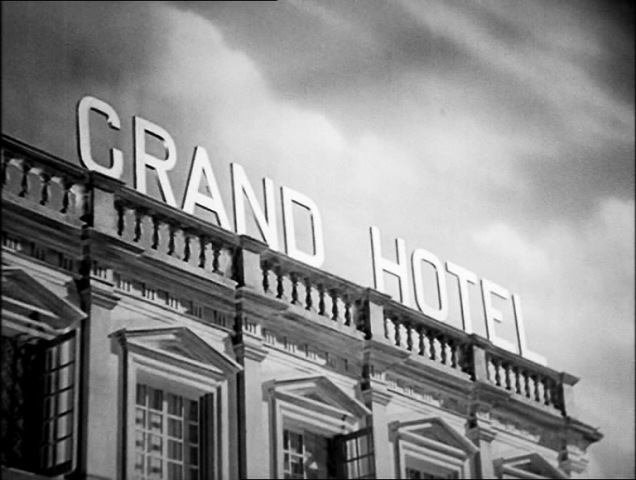
Erica and Tisdall’s adventures include a hilarious stop-over at a child’s birthday party and a thrilling chase into a deserted mine where the ground collapses under the car (one of the film’s only moments of genuine danger). However, they fail to turn up any clues and things look bleak for everyone when the police discover that Erica has been helping the escaped murderer. Erica is miserable, her father feels compelled to resign his position with the force, and Tisdall, hoping to put things to rights, is resolved to turn himself in. Fortuitously, though, one final clue surfaces from the pocket of the raincoat and points the searchers to the Grand Hotel.
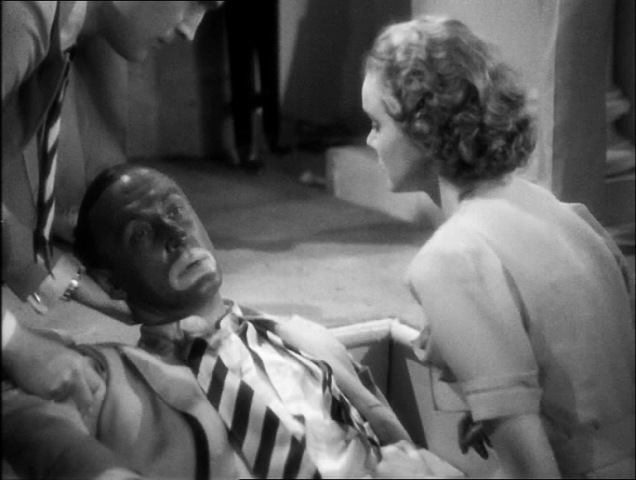
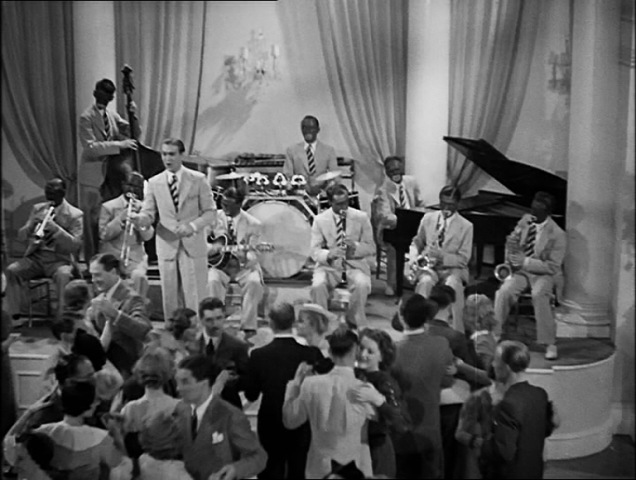
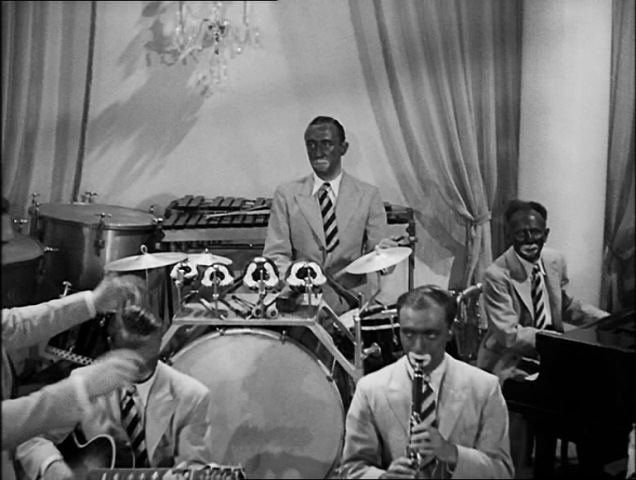
The area is crawling with police, and Tisdall keeps his distance, leaving Erica and Old Will (all dressed up in some fancy new clothes) to search the crowd for a man that blinks. Guy, the murderer, is finally revealed to the audience (but not the other characters) to be the drummer in the band just a few yards away, but they are performing in black-face. Noticing Old Will in the room, Guy grows increasingly nervous, and the pressure becomes more than he can take when the police arrive (although they are actually only their to retrieve Erica).
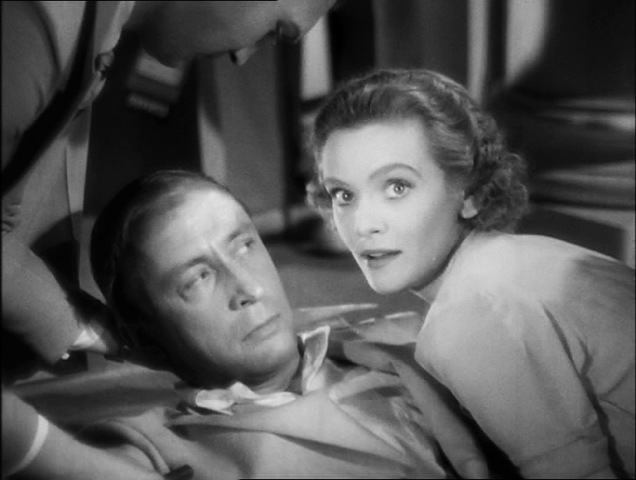
Finally, after losing the beat several times, Guy collapses noisily in the middle of a song as Erica is being led away. Ever the amateur nurse, she rushes to his side and notices his twitch as he comes to. With the black-face wiped away, Old Will confirms the identification, Guy confesses, and Tisdall pops up to be vindicated. Thrilled, Erica trots him over to meet her father and the three leave, arm-in-arm, to go have dinner at home with the family, and, presumably, live happily ever after.
The plot of Young and Innocent does indeed have as many holes as it seems to, but that doesn’t affect the entertainment value nearly as much as one might think. In his 1963 interview with Peter Bogdanovich, Hitchcock said of this film, “It is a bastard form of story-telling. You lay out your story and you put the characters in afterwards. That’s why you don’t get really good characterizations. There isn’t time, and in any case, you know, they may not want to go.” About his British films in general, Hitch observed:
[T]he audience would accept more, the films of the period were full of fantasy, and one didn’t have to worry too much about logic or truth [. . .] One said, “An old lady with a gun, that’d be amusing.” There was more underlying humor, at least for me, and less logic. If the idea appealed to one, however outrageous it was, do it! They wouldn’t go for that in America.
That attitude is certainly the guiding light in this frivolous romp, and it is difficult not to be swept up in the gaiety of events. Nova Pilbeam is infectiously sunny, and De Marney is the archetypal early Hitchcock hero, witty and flippant even in the face of danger. There is an atmosphere, not so much of non-stop laughs, but of general good-humor all around. Young and Innocent‘s darkest moments are mere passing clouds.
Along with its basic plot structure, Young and Innocent shares with The 39 Steps the major theme of false, or hidden, identities and role-playing. Many of the characters disguise themselves for various reasons at one time or another, beginning with Tisdall hiding behind his lawyer’s thick glasses when he escapes from the courtroom. From then on he is only ever really himself when he is alone with Erica. Other disguises include Old Will’s dressing up in fine clothes in order to gain entry into the Grand Hotel and Guy’s heavy make-up before he is unmasked in the final scene.
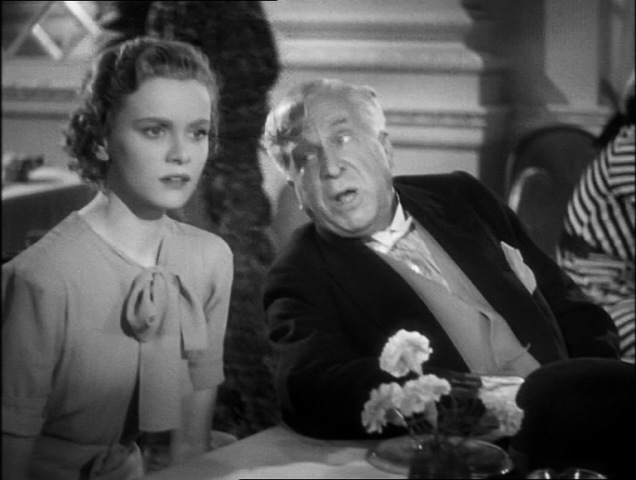
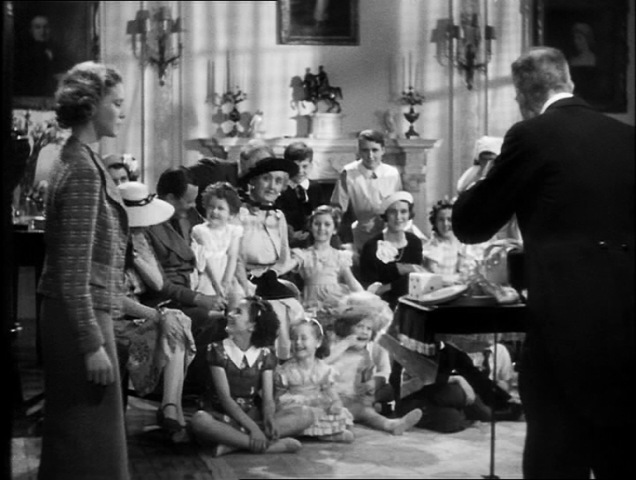
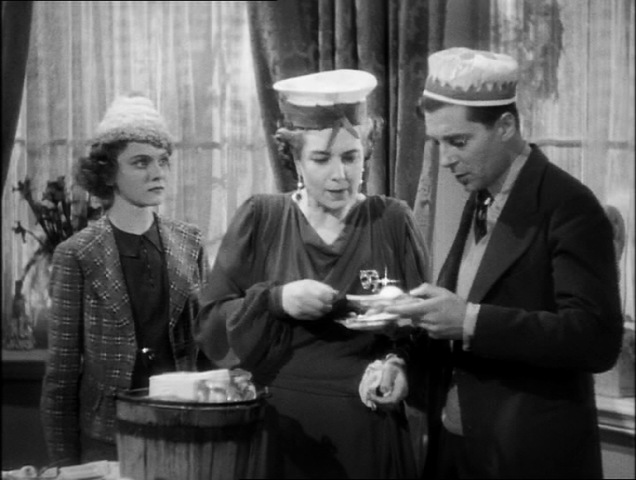
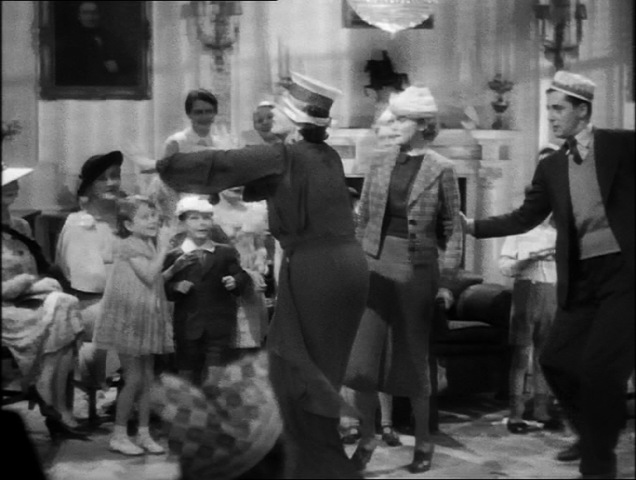
In contrast with these more serious ruses, Tisdall plays a somewhat humorous role, family friend, when he and Erica stop off at the birthday party of her young cousin. The side-trip begins as a convenient excuse for Erica to give to her father for being gone. She promises Tisdall that she will only be inside for a few moments, but she has forgotten that it is Felicity’s 7th birthday. Her Aunt Margaret is thrilled to see her, and immediately puts her to work herding children.
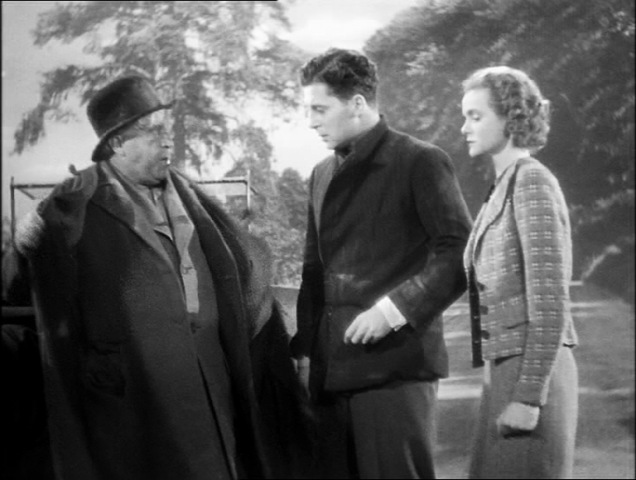
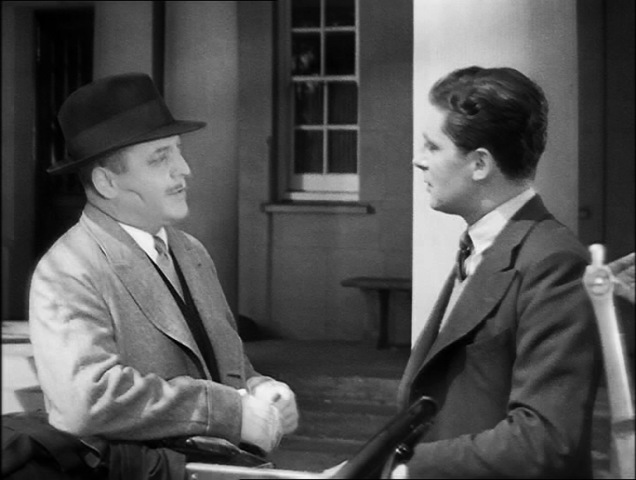
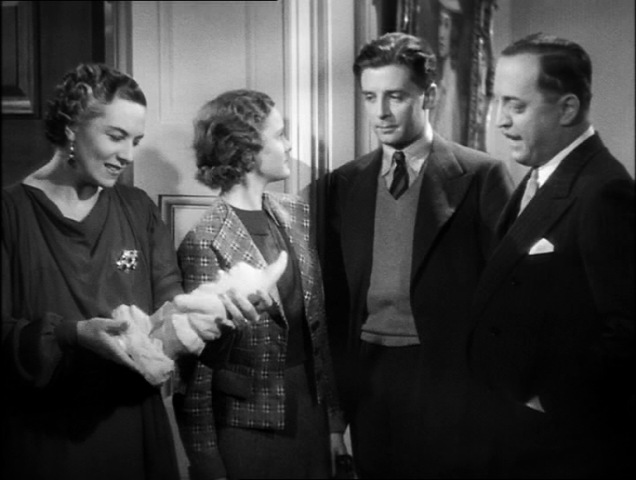
Tisdall, meanwhile, is growing restless outside, and has just resolved to leave Erica a note and go on without her when Erica’s Uncle Basil pulls up. Tisdall explains that he is a friend of Erica’s, and Basil is horrified at her leaving him outside. He insists that Tisdall come in with him, explaining with unwitting accuracy, “I can’t leave you out here like a criminal.” On the way in, Tisdall swipes a small stone garden gnome to pass off as Erica’s birthday gift to Felicity, and Margaret exclaims obliviously that it will fit right in with “the one’s we’ve got” while Basil cocks a knowing eyebrow.
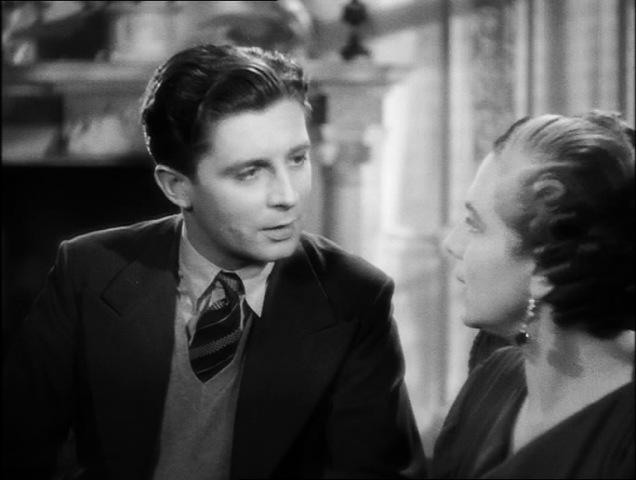
In response to Margaret’s nosy inquisitions, Tisdall gives his name variously (and outrageously) as “Beachcroft Manningtree” and “Beachtree Manningcroft.” He also stumbles badly when Erica claims (out of his hearing) that he works in advertising. Discussing his job with him, Margaret comments that it must be difficult to “hit the right note” and he assumes that she has been told he is a musician.
The two are immediately eager to get away, but every time Erica informs her aunt that “we really must be going,” she agrees brightly and then directs her niece to help serve dessert or organize a game. Before they know it, the would-be fugitives are standing miserably about wearing very silly hats and without hope of escape. They have confounded the police twice, but are powerless to get away from a child’s party.
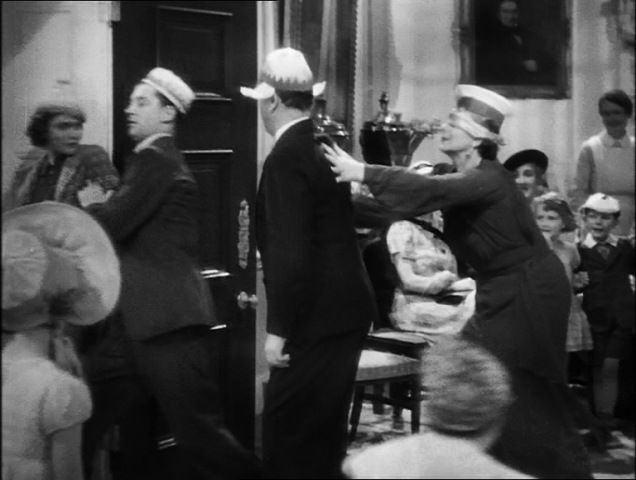
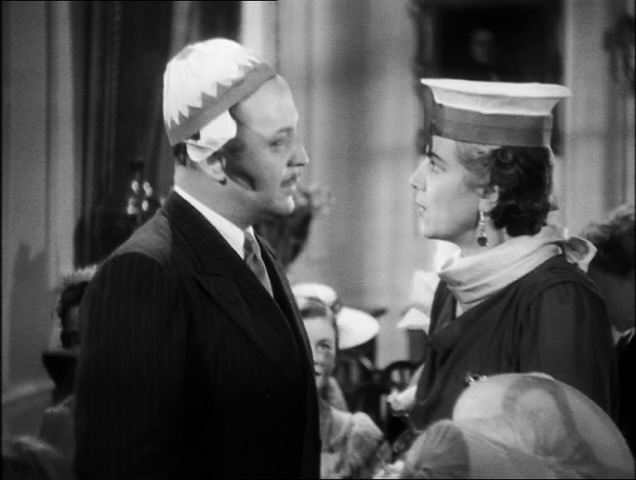
Basil, who is certainly aware of more than he lets on and obviously accustomed to employing subterfuge on his overbearing wife, gives them their opportunity during the game of blindman’s buff. Once Margaret is blindfolded and feeling about, he motions Erica and Tisdall towards the door with a nod. Margaret nearly blunders right into them as they edge around her, until Basil leaps in front of her and gets himself caught. When Margaret realizes the two are gone, of course, she is most put out.
The birthday party is a very funny scene, full of sight gags, one-liners, and a precocious and amusingly-solemn child (Margaret and Basil’s son). Hitchcock later referred to the scene as the key to the whole film, although it was actually cut from the American release. Certainly this scene plays out the film’s larger themes and concerns in miniature. Although it is light and playful in tone, it deals overtly with the idea of false identities on the one hand, and on the other with Young and Innocent ‘s major recurring motif: sight, particularly accurate sight, versus blindness.
From the very beginning, Young and Innocent draws our attention to its characters’ eyes and their faculties of vision (as, indeed, numerous Hitchcock films do). The villain, of course, has the twitch around his eyes, indicating immediately that there is something not quite right or trustworthy about him. When Tisdall discovers the body on the beach and runs for help, the two women who see him immediately misinterpret the scene, setting in motion everything that follows.
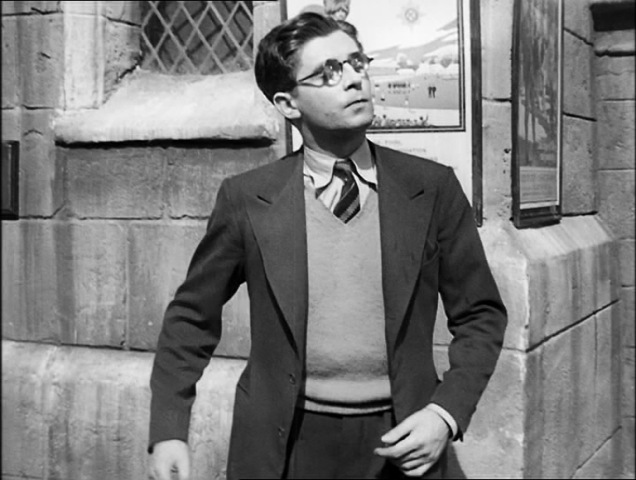
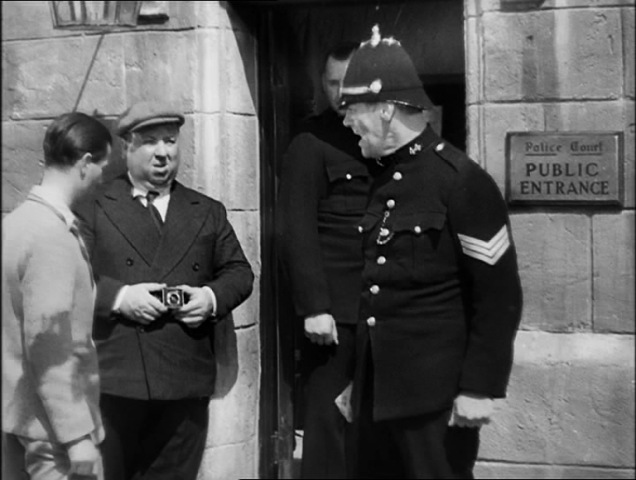
Tisdall’s lawyer, an extraordinarily imperceptive fellow, has poor eyesight to match. And when Tisdall escapes from the courthouse (wearing, of course, his lawyer’s eyeglasses), Hitchcock makes his cameo, standing on the steps outside with a small camera in his hands. He is a photographer prevented by the movement of the crowd from capturing the scene with an objective lens. And, as I noted above, the game of blindman’s buff at the end of the party scene is a part of this as well. Margaret, who cannot suss out the truth despite her suspicions, is the one wearing the blindfold.
The climax, too, is set in motion when the heroes suddenly spot a previously overlooked clue. And, once Erica and Old Will are inside the hotel, everything depends on their ability to visually pick a needle out of the haystack of the crowd around them. Once the murderer has given himself away, Erica must still peel back the layers of his disguise in order to reveal him for what he truly is to those less perceptive than herself.
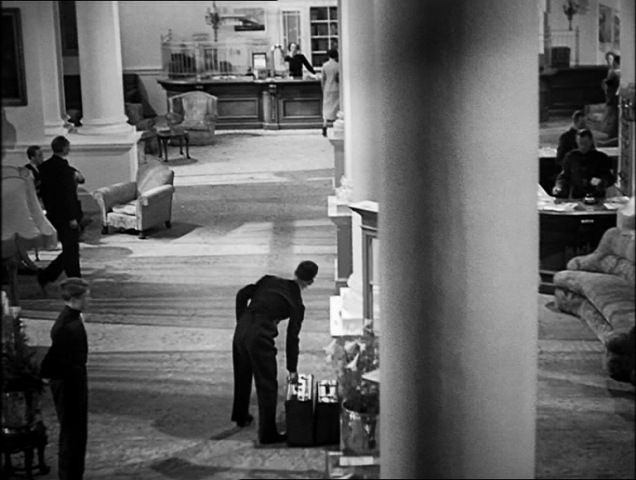
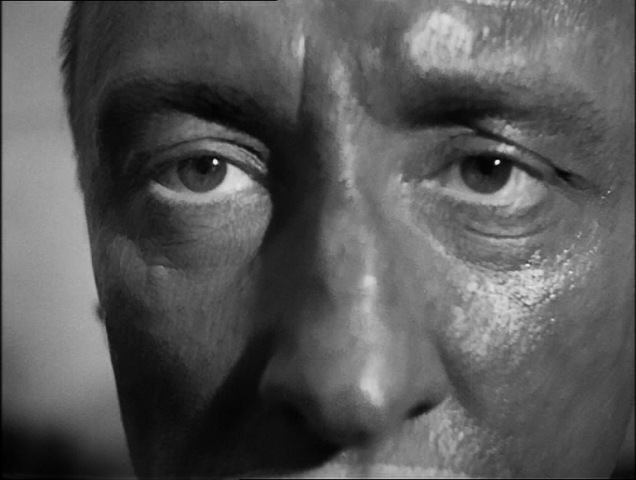
The film’s most memorable and talked-about moment, though, is a magnificent crane shot taken in the hotel after the two searchers have settled down at their table and begun to look around. Hitchcock cuts out to a wide, aerial shot of the hotel lobby and, in a long take, moves the camera across the whole length of the room, passing into the dancer-filled dining room. Without cutting, he slowly zooms the camera in over the heads of the crowd as the band (rather significantly) plays a song called “The Drummer Man” until he has tightened in on an extreme close-up of the drummer’s eyes, which begin to twitch.
Considering the number of people involved (in both the crowded lobby and the dining room), the movement of the camera between rooms, and the accompanying musical number that sets up the scene’s big revelation, it is almost certainly the most impressive technical achievement of the director’s career up to that point. It is truly an awesome display of vision, coordination, and planning that, as always, draws our attention inexorably to the very spot where Hitchcock wants it to be.
Young and Innocent is only rarely discussed beyond a mention of its amazing crane take. Among Hitchcock’s six great British suspense films of the 1930s it is easily the most lightweight, and deliberately so. It represents Hitchcock at his most formulaic, but it is certainly not without its charms. In any case, it’s not difficult to see how the film, despite its obvious appeal, could be eclipsed by Hitchcock’s follow-up. Generally viewed as the peak of his British career, it is a brilliant amalgam of the most successful elements he had discovered as a filmmaker and storyteller up to that point, masterfully assembled into a funny and thrilling film.
Apparently I really went in for realism this spring, or so said my favorites list as I sifted back through the last four months. Between the top ten and the honorable mentions, there are four documentaries, a mockumentary, a satire, one based-on-a-true-story and three historical films. Some of my picks will be no surprise if you’ve been paying attention to what I’ve been talking about, but perhaps others will.
That’s gotta be the best showing for documentaries I’ve had, though, and there are lots more that I enjoyed very much which aren’t on the list. I frequently find myself turning to a much-recommended doc (particularly those with quirky subjects) for light entertainment while I work on something that doesn’t require my full attention. Netflix and their “Watch Instantly” feature are wonderful things. And now, the top ten from the spring:
Behold my annual reminder of the movies you just saw lauded at the Oscar ceremony a few months ago . . . Although this time I picked up more than usual in my fall top ten. And it was a good thing, too. Amidst the multiplex wasteland of the beginning of 2008, I have continued to reap the benefits of last year’s bumper crop of quality cinema, starting with the remainder of the best picture nominees. I did have a chance to see There Will Be Blood before the ceremony, of course, and I was in awe of its scope, its scale, and its lead actor.
Michael Clayton had to wait until a few days after the Oscar buzz had died down so I could rent it, but it totally blew me away. I was enthralled throughout every second of its two-hour length. It was like watching an unpublished Grisham novel written when he was at the top of his game. Really, really impressive work by Clooney, Swinton and Wilkinson. Bravo.
As for the films that got fewer nominations, undoubtedly because there can only be so many in a given category (and, after, only one can win): Just a few days ago I finally saw Into the Wild. I hadn’t thought that a two-and-a-half hour movie about a college grad forsaking civilization would result in something I’d want to sit through, but I was pleasantly surprised. This is an amazing chronicle of a true spiritual journey, and whether the journey is a success or not is just one of the many interesting discussions the film might inspire.
I also saw The Assassination of Jesse James, which I’d been after since I first heard of it. I’ve developed quite a taste for revisionist Westerns during the past few years, and this is one of the best of its kind, and one of the best films period, that I’ve ever seen. On the surface this is an account of the doings of a group of outlaws over the course of a few years in the late 1800s, but just beneath that surface lies a deep, thought-provoking examination of the nature of celebrity and the ways in which we write and remember our history. There are a ridiculous number of good performances in this movie, and the cinematography is some of the most excellent and beautiful you’ll ever encounter.
The Sweet Hereafter is among the most heartbreaking movies I’ve ever seen: the story of what happens in a small town when a school bus carrying virtually the entire child population skids off a road and breaks through the ice to sink into a lake. This is another one with many, many amazing performances, but particularly noteworthy are Sarah Polley and Ian Holm. Fantastic, but so, so sad. Look for a music video from the film at the end of this post that has haunted me for months.
On a much lighter note, there is The TV Set, definitely the funniest entry to my list. Dave Duchovny is a talented screenwriter who has just had a pilot picked up by a major network. Sigourney Weaver is the slimy executive hell-bent on squeezing every ounce of originality and class out of the project. Ioan Gruffudd is the new consultant, a prodigy fresh from British television who finds himself a little out of his league in the ugly world of American TV. Hilarity ensues, but also some rather barbed social and industrial commentary. Be warned, if you watch a lot of network television, particularly sitcoms (and, thank heavens, I don’t), be prepared to hate yourself for boosting the ratings on that garbage by the time this is over. Incidentally, this movie contains the first direct reference to Netflix I have yet run across in feature film. Truly, they have arrived.
I saw Disney’s Hunchback of Notre Dame when it first came out over a decade ago, but I really felt that I had re-discovered something special when I watched it again more recently. I think it might be my personal favorite of their animated features (now that I’ve finally seen nearly all of them). Lake of Fire I cannot recommend enough. It is absolutely the final word on a balanced and level-headed examination of the raging debate over abortion and its brief but tumultuous history.
A very fun, very smart, very small-scale indie mockumentary that you’ve probably never heard of. It follows a small group of teachers through the ups and downs of a year of public school. The performers are all people you’ve never heard of either, but this is all to the good. One could easily watch most or all of this film without cluing in to the fact that it is fictional. As my wife is just wrapping up the long battle of her first year teaching public school, we found this to be of particular interest. Give it a shot.
Watching this movie is an amazing experience: over two-and-a-half hours of footage of peaceful monastery life, most of it with little or no sound of any kind, and certainly no dialogue. Sitting through it in the proper frame of mind is much more an act of spiritual meditation than anything resembling a regular viewing. In fact, a regular viewer is quite unlikely to make it through the whole thing, or even try.
Great, eye-opening documentary on the disastrously inept mis-handling of the opening months of a war that is now dragging into its sixth year. Do yourself a favor and check it out here (the full movie is viewable on Google Video).
The Bourne Identity is a great spy thriller and a pretty good movie, but I disliked the style of its sequel so much (I found the choppy editing to be blinding, pretentious, and incredibly distracting) that I gave the third chapter in the trilogy a miss for several months. I finally caught up to it in March, and wow. Just an great production on every level. I need to see the second one again on DVD to decide whether my opinion of it still holds, but I really feel that the director made the quick-cutting work for him in a big way here that he didn’t really achieve before. The script is nothing to sniff at, either. This might just be the greatest spy thriller ever.
This movie was mixed in amongst a particularly promising batch of best foreign film nominees a few years back. It tells the little-known story of North African troops from French colonies who fought in the French army in World War II, despite overwhelming prejudice and unfair treatment from the native Frenchmen. It is a story that certainly deserves to be told, and it is told well here. Definitely worth a look.
Understand that all original content in Moviegoings is my property under copyright.
"Everyone has the right to the protection of the moral and material interests resulting from any scientific, literary or artistic production of which he is the author." -- Univ. Decl. of Human Rights
Unless otherwise noted, all original content in Moviegoings is licensed under a Creative Commons License.
Comment Policy
Commenting here is a privilege that may be revoked. Visitors to Moviegoings are allowed to post comments only for noncommercial purposes. Unsolicited advertising ("spam") may be altered or deleted at any time. Violation may result in appropriate countermeasures, including but not limited to IP banning, IP publishing, notification of ISPs, and civil and criminal legal action.

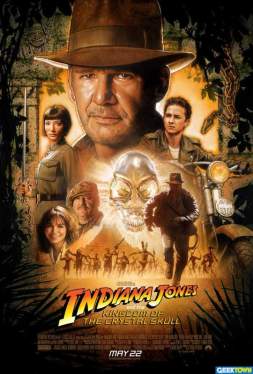 starring Harrison Ford, Cate Blanchett, Karen Allen and Shia LaBeouf
 Even though he’s been dead for nearly 11 years, today would be Jimmy Stewart’s 100th birthday if he were still alive. It seems a date worth commemorating, and when I realized that it was approaching, I cast around a bit to see what I might watch in honor of one of the greatest actors ever. I had several things on hand . . . the heart-warming and hilarious Harvey, edgy, hard-boiled Anatomy of a Murder, the magnificent collaborations with Alfred Hitchcock: Rope, Rear Window, The Man Who Knew Too Much, Vertigo. In the end, though, I turned to Netflix and found a couple of instantly-available choices that I hadn’t actually seen.
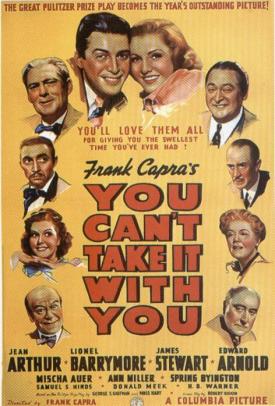 The 11th Annual Academy Awards were the first to have no official host. You Can’t Take It with You was nominated for seven awards: Best Picture, Best Director, Best Adapted Screenplay, Best Editing, Best Supporting Actress (Spring Byington), Best Cinematography and Best Sound. Other important pictures that year included the following:
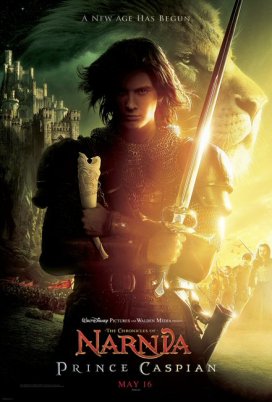 starring Ben Barnes, Georgie Henley and Peter Dinklage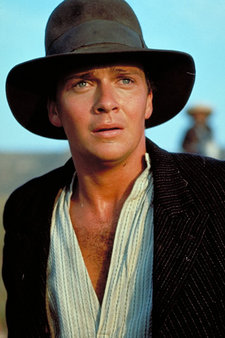
 It’s summertime again, and that means movies with enormous budgets and (the studios hope) even more audience appeal. Steven Spielberg’s Jaws and George Lucas’s Star Wars (in 1975 and 1977, respectively) are generally regarded as the films directly responsible for ushering in the summer blockbuster system. That already stretches back further than my memory goes.
 “I learned something from being in the Girl Guides.”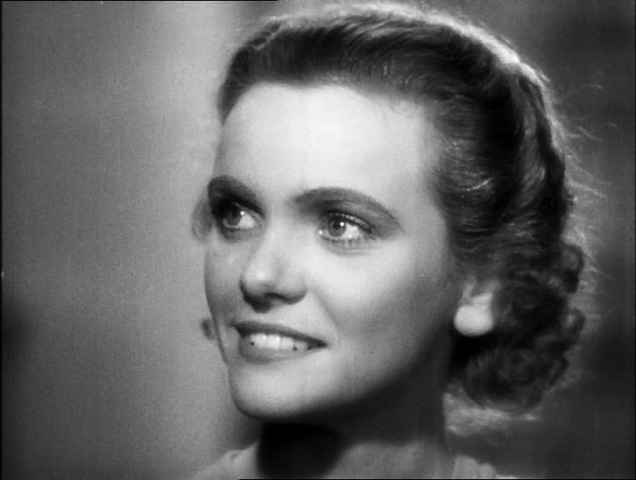








 Moviegoings