Just a few things here to jump me past a busy weekend. First, a trailer for a very entertaining-looking documentary about China’s “English fever” in the lead-up to the ongoing Olympics (you’re watching, right?). The trailer alone is super-entertaining, so I’ll be on the lookout for this one.
Next, here’s a trailer for What Just Happened, a Hollywood satire . . . who can’t use another one of those? Especially when they star the likes of De Niro, Robin Wright Penn, and Bruce Willis (as himself!).
Finally, I’ve added a new link to the sidebar: “Overthinking It,” a blog that does to movies just what the title promises, in a fun and thoughtful way. Here are a few great entries to get you started, both on the Philosophy of the Christopher Nolan Batman movies. Have a look!
D.W. Griffith may have invented Hollywood, but in the early days, Mary Pickford was its face. Even before it was common for actor’s names to be used in advertising, movie exhibitors drew crowds to the latest release featuring “The Girl with the Golden Curls.” One of the original founders (along with Griffith, Charlie Chaplin and future husband Douglas Fairbanks) of the United Artists studio in 1919 and of the Academy of Motion Picture Arts and Sciences (AMPAS) in 1927, Pickford looms large both in front of and behind the cameras of Hollywood in its infancy.
Best known for her spunky, charming girl-next-door quality, by 1917 she was already a household name, America’s first genuine movie star. Pickford was unrivaled in fame and popularity by anyone except perhaps Charlie Chaplin. Still playing child parts, even at the age of 25, her roles that year included the young title characters in The Poor Little Rich Girl, A Little Princess and Rebecca of Sunnybrook Farm. However, just a few months after the United States entered World War I, she also appeared in The Little American, directed by Cecil B. DeMille (another major player in the unfolding drama of Hollywood’s early history).
It features “Mary Pickford in a stirring photoplay of great patriotic appeal.” The story is about an American girl, Angela Moore (whose birthday even falls on the 4th of July), and her romantic involvement with a Frenchman, Count Jules De Destin (Raymond Hatton), and a German, Karl Von Austreim (Jack Holt), on the eve of the Great War. Both men vie heavily for her affections while visiting America, and Karl seems to have captured her attention when the two men are suddenly called home to fight each other in the trenches of France. Angela soon finds an excuse to follow them, when she learns that her aging aunt, who owns an estate in France, is dying, but while crossing the Atlantic her ship is sunk by a German U-boat which refuses to rescue the survivors.
After drifting for awhile, Angela and the few people on her raft are picked up and she arrives safely in France to find that her aunt has died and left her the estate. Of course, she is also just in time to witness the French fall back, leaving her new home full of wounded French soldiers (whom she bravely decides to stay and nurse) and behind German lines. Jules (who has lost an arm in the fighting, and is quite demanding of a neutral civilian woman) also leave a telephone hidden in her chimney and ask her to report the positions of the German guns to them. This all goes swimmingly until Karl’s unit decides to go to town on the nurses at Angela’s estate. Karl, who believes Angela died in the attack on her ship, is with them, and although he refrains from participating in the attempted debauchery once he discovers that she is still alive, he refuses to stand up to his superior officer, either.
Ultimately, it is up to Angela to be the courageous one for both of them until Karl finally grows a spine. When the Germans discover Angela’s espionage activities, they demand an explanation. “I was neutral,” she heatedly proclaims, “till I saw your soldiers destroying women and shooting old men! Then I stopped being “neutral” and became a human being!” They decide to have her shot as a spy. Karl attempts to put a stop to it, and is placed next to her as a traitor, but a well-placed shell from Jules interrupts the execution by killing the firing squad and Angela and Karl escape to safety and bliss in the confusion. The message: Not all Germans are bad, but most of them are. Actually, considering the state of the country at the time, The Little American has a surprisingly even-handed perspective.
DeMille would later be known as a master of spectacle, but in this case he is not overly-ambitious in relating what is a rather simple story. The film is quite short in comparison to Griffith’s famous early silents, but still packs in plenty of action and romance. The propagandistic elements are not subtle, by any means, but they don’t feel forced or drown out the story. It is certainly not a great, must-see film experience, but Pickford is quite good and the result is interesting as a cinematic curiosity from a time when America was shaking loose some of its old isolationism and taking a more active role
in global affairs.
Well, summer has definitely wound down (though try to tell that to Texas weather . . . my poor A/C). I’m suddenly realizing how unfortunate it is to be a movie fiend with a birthday in August. There’s nothing good to go see to celebrate. But one can always find something: Two years ago I watched noir classic Double Indemnity, newly-released on DVD at the time.
However, all that is really neither here nor there. I present to you, trailers for Harry Potter 6, Oliver Stone’s Bush biopic, and a teaser for Disney’s next animated fairy tale feature, The Princess and the Frog. Not sure what to think about the first two yet (Half-Blood Prince is probably my favorite of the series, just above Goblet of Fire, which was butchered almost beyond recognition), but the Disney flick looks like it might be decent.
Oh, and I have one last little tidbit to tack onto the end here: Rumors are circulating that Warner Bros. is interested in Johnny Depp to play the Riddler in the Nolan Batman franchise, and Philip Seymour Hoffman to play the Penguin. Of course, it’s really way too early for casting talk, after all, but those names in those roles are way too exciting not to mention.
An all-star cast struggles to enliven this story of trouble in suburban paradise: When extremely-successful Joanna Eberhart (Nicole Kidman) goes to pieces at work, her emasculated husband (Matthew Broderick) moves them out to the affluent neighborhood of Stepford. The community seems just a little bit too perfect, and Joanna’s investigations reveal a dark plot by the men of Stepford to “reform” their better halves. This remake of a ’70s thriller takes things in a different direction, genre-wise, towards social satire and comedy. The idea is certainly unique and amusing, but the result is rather flat and lifeless. A forgettable effort.
Junebug – 97%
Madeleine, and dealer in “outsider” art from Chicago, journeys to the alien world of North Carolina on a mission to recruit a promising talent and meet her new husband’s family for the first time. This is a magnificent portrait of a Southern family, well-nigh indistinguishable from reality. The actors disappear into their roles, most notably Amy Adams in her Oscar-nominated turn as the pregnant Ashley Johnston, a bubbly former cheerleader who married her high-school sweetheart and now lives with his parents. Junebug is nothing if not sweet and affectionate towards its subject, and the quiet intimacy of the film is magnificent. I have returned to it over and over again as both an entertaining and moving tragi-comedy and a thought-provoking character study.
Manderlay – 70%
Grace’s travels across 1930s America continue in this sequel to Lars von Trier’s minimalist Dogville. This time, Grace finds herself at a plantation in the deep South where slaves are still kept to work the fields. Making use of her father’s thugs, she overthrows the white owners and sets about teaching the former slaves how to be free, but matters are not as simple as she first believed.
Dogville is a great, great movie, so I expected quite a bit from Manderlay. Von Trier has already proved how much he can accomplish working with talented actors on a bare soundstage populated by just a few props and chalk outlines sketching out the set. For this sequel, Bryce Dallas Howard replaced Nicole Kidman as the main character, but this isn’t the main issue. While Dogville could be viewed as a universal indictment of the darker side of human nature, Manderlay is a bald-faced (and rather graphic) allegory of America’s recent involvment in Iraq which doesn’t manage to be interesting, entertaining or enlightening.
The Thin Man – 90%
Former private investigator Nick Charles (William Powell) returns to New York with his wife, Nora (Myrna Loy), and their dog, Asta, only to get sucked immediately into a murder case. Nora, fascinated by the prospect of an investigation, tags along to assist. The mystery itself is totally secondary here. What matters is the sparkling comedic chemistry of Powell and Loy, who were such fun to watch as the bantering married detectives that they returned five more times to the same roles throughout the following decade. I haven’t seen all of the sequels, but I’d like to. These movies are great fun.
Shrek the Third – 64%
In his latest adventure, Shrek sets out on a quest to find the true heir to the throne of Far, Far Away (so he won’t have to step up), while Fiona, who is pregnant with little ogres, rallies her fellow princesses to defend the kingdom from an attack by Prince Charming. The third outing is by far the tiredest of the lot. The idea of the series started out fresh, but by now has grown stale, and is not helped here by a lackluster plot and a bankruptcy of amusing jokes. It may still be a nose ahead of some of the other CG-tripe circling the drain out there, but that doesn’t make it worth seeing.
The 35th Annual Academy Awards were hosted by Frank Sinatra. Lawrence of Arabia was nominated for 10 awards:Best Picture, Best Director, Best Editing, Best Actor (Peter O’Toole), Best Supporting Actor (Omar Sharif), Best Adapted Screenplay, Best Original Score, Best Cinematography, Best Art Direction and Best Sound. The competition (if you can call it that) included heavyweight literary adaptation To Kill a Mockingbird (8 nominations, 3 wins), remake of previous Best Picture winner Mutiny on the Bounty starring Marlon Brando in the Clark Gable role (7 nominations, 0 wins), token musical The Music Man (6 nominations, 1 win for its music), and The Longest Day (5 nominations, 2 wins), a D-day epic starring the likes of John Wayne, Henry Fonda and Sean Connery.
Few could stand before the mighty spectacle of Lawrence and its awe-inspiring 220-minute runtime. It took home seven of its ten nominations. It lost Best Adapted Screenplay (a category which that year also included Vladimir Nabokov’s sole nomination, for the Kubrick-directed adaptation of Lolita) to To Kill a Mockingbird. Best Supporting Actor went to Ed Begley for Sweet Bird of Youth. And, most shocking of all (or perhaps not?), Peter O’Toole lost out to Gregory Peck’s equally-iconic performance as a very different sort of hero: To Kill a Mockingbird‘s Atticus Finch. Few would argue that the award was undeserved, and it was Peck’s last nomination and only win. By contrast, O’Toole’s nomination was his first, but despite seven subsequent nominations he has not won a competitive Oscar to-date.
Lawrence of Arabia opens with the death of the title character in a motorcycle accident, followed by a scene at his funeral where a number of conflicting recollections of the man and his character are raised. The rest of the film is a (very) extended flashback which follows T.E. Lawrence from his days as a military cartographer in Cairo through his enormous success as the organizer and military leader of bands of Arab guerrillas mounting raids on the Turks during World War I. Through it all, Lawrence’s character undergoes a significant change as he struggles (and fails) to help the Arabs create their own nation and rule their own destinies. In addition to the deserving nominations of Peter O’Toole and Omar Sharif (in his first English-speaking role!), there is memorable work by Alec Guinness, who had previously starred in Lean’s Bridge on the River Kwai, Anthony Quinn, and the always fantastic Claude Rains.
Lawrence of Arabia is, in many ways, the Ultimate Movie: a sweeping epic of vast proportions (in length, scope, scale, and every other respect), often imitated but never truly equaled. Lawrence of Arabia‘s contributions to the cinematic lexicon are considerable, most notably its inspiration of filmmakers like George Lucas and Steven Spielberg. One memorable scene piles on top of another, with everything from quiet, private moments of powerful acting to moments of intense suspense to large-scale battle sequences. The action set pieces are marvelous, from the sabotage and looting of the train to the pulse-pounding invasion of Aqaba. Best of all, though, as in all of David Lean’s films, is the way the location is truly an integral part of the movie.
The desert vistas are given their full weight in long, slow takes that watch mounted characters crawling across the enormous distance from screen left to screen right like barely-visible ants on the rim of the world. In one scene, Lawrence and his guide note the approach of someone else out of a distant cloud of dust; the arrival takes nearly two full minutes (an eternity in film terms) as the figure grows from a microscopic speck to a full grown man on a camel. In another scene, Lawrence and his companion (returning to Cairo), stumble out of the desert and are stopped in their tracks at the sight of what appears to be an enormous ship sailing along the dunes. Topping the rise, they discover that they have reached the Suez Canal, and civilization. No one, before or since, has filmed a desert movie like Lean.
Thrilling action and beautiful cinematography aside, the guiding thread of the film is the personal journey of Lawrence himself. When we are first introduced to him, he is a young man, courageous and a bit overconfident. His fellow soldiers think he is rather odd, an opinion which is confirmed when he convinces his commanding officer to allow him to wander off into the desert on a vague, open-ended quest. Once there, he quickly wins the respect and admiration of the Arab people, clashing with the British liaison who is already there by honestly giving his opinion of the wisest course of action for the Arabs to take (rather than what would be best for the British).
Lawrence’s cockiness prompts him to lead a daring and dangerous trek across a nearly uncrossable desert to approach the enemy from behind. His admiring companions signify their acceptance by presenting him with clothing of their own style. In one of the movie’s most disarming moments, Lawrence (mistakenly believing himself to be alone and unobserved) flaunts his new robes and struts across the sand while trying to admire his reflection in a dagger.
Success after success ultimately causes Lawrence to believe himself to be invincible, and the formation of an Arab nation inevitable, but his assumptions eventually lead to disappointment and disillusionment as he fails to live up to his own iconic status and the tenuous tribal alliances he has created fracture and splinter apart. What emerges from all of this is a fascinating and complex portrait of an extraordinary life. It is an astounding story, brought to life by an equally-astounding film.
starring Christian Bale, Heath Ledger and Aaron Eckhart
written by Jonathan and Christopher Nolan & directed by Christopher Nolan
Rated PG-13 for intense sequences of violence and some menace.
96%
Billionaire Bruce Wayne (Bale) in the guise of his vigilante alter-ego, Batman, continues the quest to clean up the streets of Gotham. Assisting him are some old friends and a new ally in the form of Harvey Dent (Eckhart), Gotham’s fearless new DA. But the criminal underworld, driven to desperation, is about to unleash a madman on the city and its inhabitants: an anarchical mass murderer known only as The Joker (Ledger).
After taking their time to lay the groundwork for this character in 2005’s franchise reboot, Batman Begins, the Nolan brothers waste no time in dropping Batman (and us) into the thick of the action. The Dark Knight is a movie that never lets up, gluing the audience breathlessly to their seats for two-and-a-half hours of riveting crime drama packed with emotional depth and chaotic mayhem. It is a deeply exhausting experience, but those who undertake it will be rewarded by what very well may be the best film that the superhero genre has yet offered us.
Everything about this movie demands constant attention. The cast is as amazing as it is loaded with big-name talent (no less than seven stars share top billing). Bale is every bit as excellent as on the previous outing, and that goes double for his supporting players: Michael Caine, Morgan Freeman and especially Gary Oldman. Maggie Gyllenhaal steps in to fill the role of Rachel Dawes (previously played by Katie Holmes), a change which will, no doubt, be universally welcomed. And Aaron Eckhart, as the heroic Dent, a man destined to become (as those who know their Batman lore are aware) the twisted villain Two-Face, provides us with the most fascinating character study of the series to date. Eckhart is well up to the rigorous demands the role presents, as well as the challenge of not being overshadowed by so many great performances.
There can be no doubt whatsoever, though, that this show belongs entirely to Heath Ledger’s Joker. Regardless of anything else that may be worthy of our attention in The Dark Knight, Ledger’s chilling, terrifying, brilliant performance will be what follows us out of the theaters, into our cars, and back to our houses to dog our nightmares. Whether he is on the screen or not, his presence in the film is impossible to ignore. Ledger’s Joker is nothing less than an unstoppable force of nature, laying waste to anything and everything in his path (though never quite how one might expect). There is nothing funny about this character, despite the name. This incarnation of the super-villain revels in cruel (and often subtle) irony, setting up impossible ethical and moral dilemmas to spring on the unsuspecting heroes at every turn.
Despite over 50 years of prior baggage weighing our conceptions of the character down, Ledger and the Nolan brothers have created something we have never seen before (and likely will not again). At some point perhaps halfway through The Dark Knight, I quietly hoped that the Joker would not be killed off, so that the character could return to face off against Batman in future installments. It took me several seconds to remember that, tragically, this cannot be. This film ensures that we will once again feel the sting of losing a great performer in the midst of his prime.
I mention the Nolan brothers as well, of course, because despite the great support of their cast and crew, they are the ones ultimately responsible for the events that transpire on-screen. Their work here certainly lives up to the quality one would expect from the pair who brought us such films as Memento and The Prestige. The Dark Knight is The Godfather of superhero movies: an epic, sprawling tale encompassing a large cast of characters trapped amidst a series of devastating, far-reaching events that will change them forever. It walks the knife’s edge of never allowing the pace to slow without exhausting the audience with wave upon wave of climactic action.
Refreshingly, the action sequences in this movie (of which, admittedly, there are many) do not exist simply to amaze us with large explosions (although there are some) and gorgeous CG effects (which were, to my eyes at least, effectively invisible). Rather, the action is driven relentlessly forward by the sheer tension of suspense as to the outcome of a scene. This film, as its title implies, is a dark and devastating experience. Humor is rare. No character is sacred. The somber tone is obvious from the second the movie begins. In direct contrast to testosterone-fueled superhero movies like Iron Man, The Dark Knight‘s tone is oppressively foreboding.
To be honest, going to see The Dark Knight was like paying to get beaten up, but in a good way. It is emotionally and mentally draining, but somehow also stimulating. But, no matter how intense the experience, I am already sure that I will do it all again simply for the pleasure of watching Heath Ledger’s Joker in action.
As one of the films surrounding the 1,000th movie event I discussed a few weeks ago, I recently watched Ingmar Bergman’s Winter Light. It is the 2nd in what he called the “Silence of God” trilogy. I haven’t seen the other two (Through a Glass Darkly and The Silence), but I was floored by Winter Light. The central character is a pastor who has lost his faith after the death of his wife, but who continues to go through the now-empty motions of leading services for his small congregation.
A few weeks before I watched it, a friend sent me an excellent essay on the film that appeared in the New Yorker last month, and I found myself returning to it after watching the movie. It’s a fascinating contemplation of what the author calls “the power of aesthetics to shape our lives.” I definitely recommend both the film and the essay. After the excerpt are shots of the two paintings referenced in the piece:
So what was on offer that night? Nothing of interest but a Bergman film, “Winter Light,” showing at a local church. I wasn’t a churchgoer, nor was Rob, but neither of us had seen the movie, and, after all, it was Bergman, and free, so we went.
The church was cold. There couldn’t have been more than twenty-five, thirty of us scattered around the pews in our overcoats and scarves. The minister, a rugged-looking man with a Northern accent, stood before the screen and welcomed us, said he looked forward to the discussion that would follow the film. He was direct and plain in his speech, without a trace of the fluty, elevated manner my English friends so loved to parody in their High Church chaplains. Before taking his seat, he bowed his head and asked us to join him in prayer. Rob and I exchanged arch glances: so this wasn’t quite free . . .
– Just a few days ago, I saw Fritz Lang’s silent sci-fi masterpiece Metropolis for the first time. I say “saw” as though I watched the entire thing, though that’s not quite accurate. A full thirty minutes (or 1/5 of the total runtime) has been notoriously missing from the film since its original release in 1927. So it was with great surprise that I saw this story broke on the day after I watched the movie. It seems that, like many German things, an original print of Metropolis made its way to Argentina in the late ’20s, and has been there ever since, safely tucked away in a film museum. Of course, the film is not in the best condition, but it will be cleaned up and restored, and someday (hopefully soon) a complete print of this great movie will finally exist after 80 years. Talk about the Ultimate Director’s Cut.
–Looking Closer and FilmChat both have some cool WALL•E-related ponderings posted. It is, indeed, a message movie, but its not the sort of message that certain conservative nay-sayers have angrily claimed.
From Rod Dreher via Jeffrey Overstreet:
WALL•E says that humans have within themselves the freedom to rebel, to overthrow that which dominates and alienates us from our true selves, and our own nature. But you have to question the prime directive; that is, you have to become conscious of how the way you’re living is destroying your body and killing your soul, and choose to resist. WALL•E contends that real life is hard, real life is struggle, and that we live most meaningfully not by avoiding pain and struggle, but by engaging it creatively, and sharing that struggle in community.
From Peter Chattaway in response to a comment by WALL•E director Andrew Stanton:
So the film is saying that people are like robots that need to rise above their programming to be truly human — to experience love and the “I-Thou” of interpersonal relationships? And all the rampant “consumerism” depicted in the film is not there to make a political statement so much as it is to make an existential statement about our enslavement to our basic, mechanistic, animalistic impulses — our enslavement, in other words, to “the flesh”? (Or to our “passions”, as the Fathers might say?)
Yeah, I can dig that. I can totally dig that.
-In the up-and-coming department, there’s a trailer out for the remake of The Day the Earth Stood Still, which will star (among others) Keanu Reeves. I am extremely underwhelmed.
And, finally, here’s one of those early rave reviews for The Dark Knight you may have heard about. Sounds like it’s going to revolutionize everything we thought we knew about superhero cinema. Expectations . . . Rising . . . Must . . . Resist . . .
Just a few items today, several of which are borrowed (with thanks) from Looking Closer.
First, Evan Derrick from MovieZeal has an awesome two-part post entitled “10 Ways to Become a Better Film Critic.” It’s a pretty good list, with some really great quotes from the pros. Check it out (particularly #4). Part 1, Part 2. On a vaguely-related note, here’s a by-the-numbers look at why movie critics matter. Not sure if this is conclusive, but it’s an interesting read.
You have to see this for yourself. In an upcoming comedy, Sacha Baron Cohen will play legendary fictional detective Sherlock Holmes and Will Ferrell will play his sidekick, Dr. Watson. That casting is either insane or inspired (and who’s to say it can’t be both?). I am simultaneously horrified and fascinated, but the result could be hilarious.
And, last but not least, a very cool little quiz for fans of Amadeus. 10 musical excerpts, some composed by Wolfgang Amadeus Mozart, some by Antonio Salieri. Can you tell the difference? I scored an unimpressive 70%, at least 20% of which I would attribute to pure guesswork (as oppossed to educated guesswork . . . I only really recognized 3 of the excerpts).
The 77th Annual Academy Awards were hosted by Chris Rock. In a decidedly odd year for the Academy, Million Dollar Baby received seven nominations: Best Picture, Best Director, Best Editing, Best Adapted Screenplay, Best Actor (Clint Eastwood, also the film’s director), Best Actress (Hilary Swank) and Best Supporting Actor (Morgan Freeman). Major contenders included Martin Scorsese’s Howard Hughes biopic The Aviator (11 nominations, 5 wins), J.M. Barrie biopic Finding Neverland (7 nominations, 1 win), Ray Charles biopic Ray (6 nominations, 2 wins) and Sideways (5 nominations, 1 win). Despite winning more total Oscars (including Best Editing), The Aviator (a dreadful film) lost the two major awards to Million Dollar Baby: Best Picture and Best Director. Sideways took Best Adapted Screenplay, and Ray took Best Actor (Jamie Foxx in the title role). Swank and Freeman won their respective nominations (her second Oscar, his first).
In the film, Frankie Dunn (Eastwood), an old, gruff boxing trainer, reluctantly agrees to coach a female boxer named Maggie Fitzgerald, a determined waitress who dreams of a better life. Freeman is Eddie Dupris, a former fighter who takes care of Frankie’s gym (and narrates the story). As Frankie navigates Maggie towards success in the ring, their relationship deepens and he confronts long-buried emotions regarding his estrangement from his daughter. Maggie, meanwhile, finds in Frankie someone who cares about her far more than her nasty white-trash family back home. Unlike most conventional boxing films (of which there are a surprising number), and, for that matter, most sports movies, the ending proves to be something of a controversial downer (more on that in a moment).
Of course, the backbone of Million Dollar Baby is Freeman’s excellent narration. Honestly, is there a film out there that couldn’t stand to have the voice-over support of Morgan Freeman? He always brings a touch of class, even to inferior material, and this (decidedly not an inferior effort) is no exception. Boxing films, as a rule, generally fail to interest me. I dislike them even when they are well-made enough to warrant appreciation (as Raging Bull is). The saving grace of this movie is that it is not really about boxing, but about two lonely people who fill a gaping void in each others’ lives.
What makes Million Dollar Baby work above all are Hillary Swank’s strong, gutsy performance and Eastwood’s subtle, gruff one. Their quiet moments together are as touching and meaningful as any on-screen relationship I have seen, and all the more powerful because their relationship is affectionate rather than romantic. The necessary fights and training sessions are mere window dressing to the real heart of the film. Their performances make the necessary intermediate scenes (i.e. where the Eastwood character pretends that he will have nothing to do with training the Swank character, although the audience already knows otherwise) watchable and even enjoyable, despite their predictability.
As I mentioned earlier, the film’s ending (in addition to being different) is a source of some controversy, and certainly sets it apart from the average sports flick (indeed, from the average movie). It seems a pity to divulge the ending for fear of spoiling the film, but now that I have danced around it enough to scare off those who do not wish to be spoiled, I shall at least note that it concerns the issue of euthenasia. It is also worth noting that at least as many viewers might dislike the end of the story because it is less than happy as would object ot it on moral grounds. However right or wrong the decisions of the film’s characters may be, though, their actions at least feel germane to the people we have spent the previous two hours and change getting to know. Artistically, I can ask for nothing more than that, and Million Dollar Baby left me feeling good.
Understand that all original content in Moviegoings is my property under copyright.
"Everyone has the right to the protection of the moral and material interests resulting from any scientific, literary or artistic production of which he is the author." -- Univ. Decl. of Human Rights
Unless otherwise noted, all original content in Moviegoings is licensed under a Creative Commons License.
Comment Policy
Commenting here is a privilege that may be revoked. Visitors to Moviegoings are allowed to post comments only for noncommercial purposes. Unsolicited advertising ("spam") may be altered or deleted at any time. Violation may result in appropriate countermeasures, including but not limited to IP banning, IP publishing, notification of ISPs, and civil and criminal legal action.

 D.W. Griffith may have invented Hollywood, but in the early days, Mary Pickford was its face. Even before it was common for actor’s names to be used in advertising, movie exhibitors drew crowds to the latest release featuring “The Girl with the Golden Curls.” One of the original founders (along with Griffith, Charlie Chaplin and future husband Douglas Fairbanks) of the United Artists studio in 1919 and of the Academy of Motion Picture Arts and Sciences (AMPAS) in 1927, Pickford looms large both in front of and behind the cameras of Hollywood in its infancy.
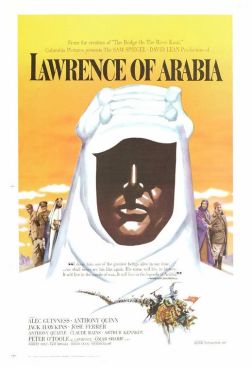 The 35th Annual Academy Awards were hosted by Frank Sinatra. Lawrence of Arabia was nominated for 10 awards:Best Picture, Best Director, Best Editing, Best Actor (Peter O’Toole), Best Supporting Actor (Omar Sharif), Best Adapted Screenplay, Best Original Score, Best Cinematography, Best Art Direction and Best Sound. The competition (if you can call it that) included heavyweight literary adaptation To Kill a Mockingbird (8 nominations, 3 wins), remake of previous Best Picture winner Mutiny on the Bounty starring Marlon Brando in the Clark Gable role (7 nominations, 0 wins), token musical The Music Man (6 nominations, 1 win for its music), and The Longest Day (5 nominations, 2 wins), a D-day epic starring the likes of John Wayne, Henry Fonda and Sean Connery.
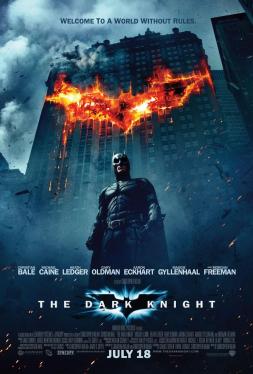 starring Christian Bale, Heath Ledger and Aaron Eckhart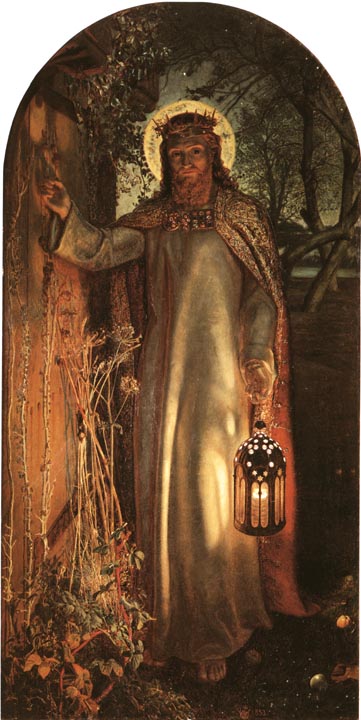

 The 77th Annual Academy Awards were hosted by Chris Rock. In a decidedly odd year for the Academy, Million Dollar Baby received seven nominations: Best Picture, Best Director, Best Editing, Best Adapted Screenplay, Best Actor (Clint Eastwood, also the film’s director), Best Actress (Hilary Swank) and Best Supporting Actor (Morgan Freeman). Major contenders included Martin Scorsese’s Howard Hughes biopic The Aviator (11 nominations, 5 wins), J.M. Barrie biopic Finding Neverland (7 nominations, 1 win), Ray Charles biopic Ray (6 nominations, 2 wins) and Sideways (5 nominations, 1 win). Despite winning more total Oscars (including Best Editing), The Aviator (a dreadful film) lost the two major awards to Million Dollar Baby: Best Picture and Best Director. Sideways took Best Adapted Screenplay, and Ray took Best Actor (Jamie Foxx in the title role). Swank and Freeman won their respective nominations (her second Oscar, his first).


 Moviegoings