
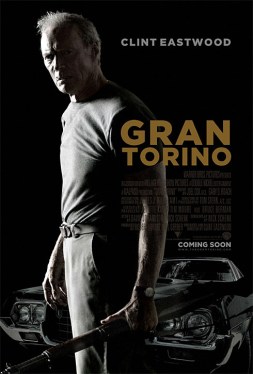
 starring Clint Eastwood and Bee Vang
written by Nick Schenk & directed by Clint Eastwood
Rated R for language throughout, and some violence.
84%
Walt Kowalski (Eastwood) is the last of a dying breed: a retired factory worker, recent widower, and veteran of the Korean War who is the lone white holdout in in a ghetto neighborhood now populated by Hmong immigrants. Walt is a cranky, unapologetic racist who values patriotism, responsibility, self-sufficiency, and an idea of manhood that has been out of fashion for decades. However, much to his disgust, he finds himself reluctantly involved in the lives of Thao (Vang) and Sue (Ahney Her), teenage siblings who live next-door, after Thao attempts to steal his vintage Gran Torino as part of a gang initiation. However, as Walt slowly develops a friendship with the pair and comes to grudgingly acknowledge that (some) non-whites are people too, it becomes clear that drastic measures may be required to convince the other gang members to leave the neighborhood in peace.
Gran Torino has one of the strongest opening acts of any film I have seen in the last year. In establishing its characters and their circumstances, it appears to have something very profound and meaningful to say about the things, large and small, that divide us as human beings and as inhabitants of a nation which claims unity as one of its defining characteristics. Certainly Walt is at times a very thinly-drawn, one-note character (though, for the purposes of the story, this isn’t nearly as significant as you might think), but this goes deeper than the bigotry of the film’s protagonist. Walt talks a big game, but when push comes to shove his personal morality proves to be more than skin deep (more on speech versus action in a moment).
Eastwood’s performance, although it does occasionally seem to rely overmuch on growls and grimaces, is a very good fit here. Vang’s performance is merely competent, but Ahney Her, as his sister, stands out as a strong presence, and more than a match for Walt’s grumpy posturing. Also worth noting is Brian Haley as Walt’s oldest son Mitch, struggles with his father for a number of reasons, but is unwilling to abandon the relationship completely.
What initially sucked me into the fabric of this movie, and ultimately left me deeply disappointed, was not Walt’s racist-with-a-heart-of-gold shtick, but his relationship with his own family. Rarely is the gap between generations illustrated with such heartbreaking bleakness. Walt’s cranky banter may be milked for laughs, but there is nothing funny about the way Walt and Mitch talk past each other even when they are obviously trying their hardest to reach out to one another. Similarly, while Walt’s prejudice towards everyone around him hogs center-stage, the more poignant elephant in the room is the needless division that exists all around him, both between ethnicities, i.e. whites and blacks, blacks and Hispanics, Hispanics and Asians, and within them, as with Thao, his family, and the Hmong teenagers in the local gang.
Unfortunately, this sort of insightful commentary never gets the attention that it should, and all too soon it is shuffled into the background. Meanwhile, the relationship between Walt and Thao drifts from mildly interesting into lazy cliche before settling on boringly predictable and, worst of all, maudlin. It is a criminal misuse of narrative potential and a shocking disservice to characters who deserved better. The dialogue soon suffers from this laziness as well, or perhaps I simply became unwilling to grant it the benefit of the doubt. In either case, it was laughably bad as often as it was intentionally humorous.
The film’s treatment of faith follows the same arc from fascinating to fizzled. One of the few “outside” figures is the local Catholic priest, Father Janovich (Christopher Carley). In fulfillment of a promise to Walt’s recently-deceased wife, Janovich pays regular visits to the house (much to the annoyance of Walt, who calls him “an overeducated 27-year old virgin”). Walt has very little use for God, and even less for the priest’s insistence that he attend confession. Their conversations add a valuable dimension to the story’s development, and once or twice seem to sneak to within a hairsbreadth of something genuinely explosive, but ultimately they come to nothing at all. Father Janovich is completely impotent when it comes to dealing with the problems that Walt and his neighbors face, and he fails to engineer a reconciliation between Walt and his sons, even when he is handed the key.
And this brings me to the question of how to treat Walt himself. Clearly we are meant to sympathize with him and approve of the change as he slowly comes to care for and respect his neighbors as friends and as people. I found myself disturbed, however, by the shallowness of the change and the movie’s apparent attitude towards Walt’s flaws. Even though he becomes friends with Thao and Sue, he never stops referring to them or others with racially-charged language. The slurs merely take on a more affectionate tone, as though he has become someone whose decent actions render his hateful speech irrelevant. This idea of “harmless” or “benign” racism strikes me as both foolish and subversive.
Gran Torino ends conventionally, with an overdone (though not unwelcome or untrue) message about violence that Eastwood delivered with greater artistry and power nearly two decades ago in Unforgiven. Most distressingly, the final scene (in which Eastwood sings a song he wrote himself) is such a spectacular misjudgment that it threatened to evaporate my remaining goodwill. It is not an awful film by any means, but it certainly fails to realize both the potential of that first half-hour, and of Eastwood’s obvious skill as both an actor and a director.

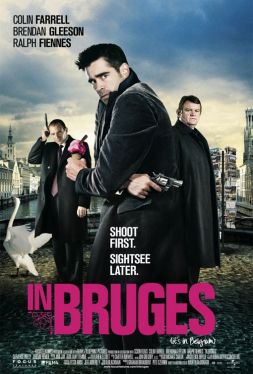 By now I’ve seen this film three times, and I’m sure I’ll see it again. It is simply fantastic. The plot concerns two hitmen from the UK (played by Colin Farrell and Brendan Gleeson) who have been sent to hide out in the backwater town of Bruges after a job gone bad. Farrell’s character, Ray, is a restless, twitchy sort who is instantly bored out of his mind, while Gleeson’s character, Ken, falls in love with the city and settles comfortably into the role of sightseeing tourist. As the two wait for a call from their temperamental boss (Ralph Fiennes), Ray gets involved with a local girl (Clemence Poesy) and runs afoul of a crusty dwarf (Jordan Prentice) who is appearing in a movie dream sequence being filmed nearby. Meanwhile, we learn more about the circumstances that landed the pair in Bruges and find out that all is not as it seems.
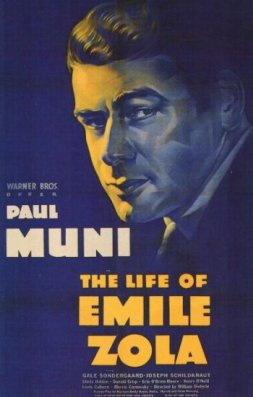 The 10th Annual Academy Awards were hosted by “hillbilly” comedian Bob Burns. The Life of Emile Zola was nominated for 10 Oscars: Best Picture, Best Director, Best Assistant Director, Best Actor (Paul Muni), Best Supporting Actor (Joseph Schildkraut), Best Screenplay, Best Original Story, Best Art Direction, Best Original Score, and Best Sound. The major competition included a screwball comedy, The Awful Truth (6 nominations, 1 win), 2 literary adaptations, Captains Courageous (4 nominations, 1 win) and The Good Earth (5 nominations, 2 wins), and 2 movies about acting, Stage Door (4 nominations, 0 wins) and A Star Is Born (8 nominations, 2 wins).
 starring David Strathairn, Ian Somerhalder, and Daniel Gillies
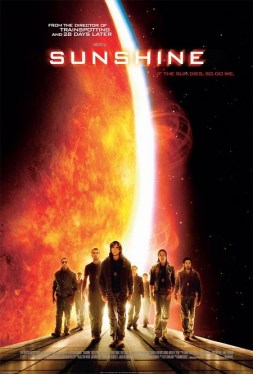 I had a chance over Thanksgiving to watch this film with my brother, who hadn’t seen it. This was the third or fourth sit-through for me, and I found that it held up just as well as the first time I saw it. Sunshine didn’t even register on my radar when it was released theatrically because it sounded like a completely different sort of movie; an Armageddon or The Core, brain-dead sci-fi action about a group of people employing an unlikely solution to save the earth from an even more unlikely disaster. In this case, it’s a group of astronauts traveling towards the sun with a bomb which equals (we are told) the mass of Manhattan Island in an effort to jump-start the sun, which is mysteriously dying. That quest, however, is just window-dressing for a sometimes-tranquil, sometimes-thrilling existential rumination that is startlingly reflective, inspiring, and beautiful.
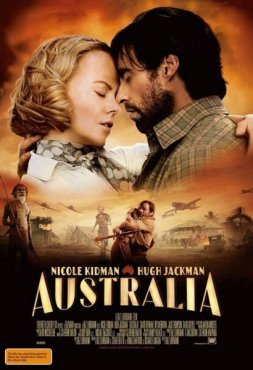 starring Hugh Jackman and Nicole Kidman


 Moviegoings