Trailer break! Here’s a look at some of the latest previews that have caught my eye. Up, of course, I’m rather excited about because of the Pixar brand. I have to admit that I feel a bit uncertain about the material here, but each new trailer introduces something new that gives me hope. At the very least, this looks like it will be very original and fun, even if it isn’t completely coherent.
I’m not a huge Judd Apatow enthusiast, but I did enjoy The 40 Year Old Virgin and Superbad. Funny People, however, looks like a totally new direction for him, and I like what I see. I’ll definitely be keeping an eye on this one.
I am a big Johnny Depp fan, and I’ve been very interested in Public Enemies since I started seeing production shots a few months ago. Now, my interest has jumped to the next level with this trailer. I am particularly intrigued by the choice of music here. I don’t know, of course, whether this is something that will be a part of the actual movie, but I like it.
I’ve also really liked Amy Adams’ movies ever since her Oscar-nominated performance in Junebug (still probably my favorite). She is a good actress, but perhaps more importantly, she has made some excellent career decisions in terms of the roles she selects. I also adored Little Miss Sunshine, and Sunshine Cleaning looks like it will tap into a very similar tragi-comic spirit. I’m looking forward to it.
Last but not least is a trailer for a movie I assume I will see on DVD: Jesus People, an affectionate mockumentary about the Christian music industry based on a hilarious web-series (which I highly recommend). I love ad-libbed hilarity a la Christopher Guest, and if the webisodes are any gauge, this will be hilarious.
starring Billy Crudup, Jackie Earle Haley, and Patrick Wilson
written by David Hayter and Alex Tse & directed by Zack Snyder
Rated R for strong graphic violence, sexuality, nudity and language.
94%
In an alternate 1985, a second generation of masked heroes are forced to hang up their capes when President Nixon, currently serving his fifth term in office, makes their vigilante activities illegal. Each of the former “Watchmen” deals with the return to civilian life differently. Dan Dreiberg (Wilson), formerly “Nite Owl II,” visits the original Nite Owl to reminisce about the old days. Laurie Jupiter (Malin Akerman), “Silk Spectre II,” struggles to understand her mother (Carla Gugino), the original Silk Spectre. Super-genius Adrian Veidt (Matthew Goode), formerly “Ozymandias,” and the god-like Dr. Manhattan (Crudup) work tirelessly to create a powerful new source of alternate energy in the hopes of ending the imminent threat of nuclear apocalypse. Meanwhile, “Rorschach” (Haley), takes his crime-fighting gig underground, unwilling or unable to abandon his alter-ego. It is Rorschach who first suspects trouble when Edward Blake (Jeffrey Dean Morgan), formerly known as “The Comedian,” is thrown from an upper-story window. Rorschach’s investigation leads him to suspect that someone may be hunting former Watchmen for reasons unknown.
Watchmen is a movie that deserves to be seen more than once, but not everyone will be able to sit all the way through a single showing. I have not read the original Watchmen graphic novel, but I can say that this film has duplicated the graphic novel/comic book experience more closely than anything I have ever seen before. Last year, Christopher Nolan’s The Dark Knight brought the superhero genre into the realms of respectable mainstream filmmaking and nearly universal critical acclaim. Now, Zack Snyderhas unapologetically created a superhero movie that refuses to make concessions to the uninitiated and is sure to sharply divide audiences and critics alike. It is both a step back and a step forward for the genre, but its significance should not be underestimated.
With a runtime of 163 minutes, Watchmen has plenty of time to thoroughly develop a diverse cast of characters and wind its way through a labyrinthine system of interlocking subplots, but it is still an incredibly dense movie. There is simply too much to observe and absorb, visually, aurally, and philosophically, for a single viewing. Watchmen blindsided me with a concentrated burst of American cultural history and troubling moral ideology that I am still struggling to process, and I admire it for that.
I love that the music of Bob Dylan and Simon and Garfunkel is important to this vision of an alternate history. I love that Dr. Manhattan single-handedly wins the Vietnam War, striding across the flaming jungle to the strains of Wagner a la Apocalypse Now. I love that the film’s depiction of Henry Kissinger is inspired as much by Dr. Strangelove as by the actual man, and that he plots with Nixon and his gaggle of generals in Strangelove‘s war room. This is American history through the lens of cultural memory, and it is done with subtlety and style.
The performances are solid and compelling, particularly Haley’s Rorschach and Morgan’s Comedian. Dr. Manhattan joins the small pantheon of digitally-rendered characters whose screen presence rivals that of their flesh-and-blood co-stars. Most compelling of all, though, is the way these characters completely deconstruct the superhero genre. Dr. Manhattan is the only character with genuine superpowers (he exists outside of time and can manipulate all matter at will), but he no longer has a stake in humanity and he seems content to sit out the coming nuclear apocalypse on Mars.
Rorschach, on the other hand, is almost too invested, and is guided by an unswerving and disturbingly absolute vision of right and wrong; a vision which seems just a bit unstable and off-base. The Comedian exists at the other end of the spectrum. He is a repellantly amoral character who is apparently tolerated because he works with the good guys rather than against them, and is allowed to get away with murder and worse as a result.
The other three float somewhere in-between these extremes. Ozymandias, one of the only former “masks” to go public, has spun his alter-ego into a profitable franchise of books, toys, and an upcoming movie. Nite Owl and Silk Spectre are heroes because dressing up and beating bad guys lets them forget about their personal issues.
I am oversimplifying a bit here, of course. I would need a few thousand more words to begin to do these characters justice. This is both a strength and a weakness of Watchmen as a film. It spends over two hours of its runtime just exploring these characters and their world in a way that is normally reserved for print or television, where time is far less important. It definitely can be felt to drag at times. There are whole scenes that grind forward at a snail’s pace, heavy with portentous meaning that doesn’t quite seem to materialize. On the other hand, Watchmen is immersive in a way that few other films can be, and I will probably try to experience it again, if only in hopes of discovering how deep the layers go and whether it holds up as well a second time.
D.W. Griffith was “The Man Who Invented Hollywood” and Mary Pickford was “America’s Sweetheart,” but Douglas Fairbanks was the prototypical “American Action Hero,” a clean-cut, virtuous and energetic swashbuckler who took great pride and pleasure in doing all of his own stunts. But Fairbanks, one of the powerful founding members of United Artists (along with Griffith, Pickford, and Charlie Chaplin), whose action-packed costume dramas broke box office records in the early 1920s, almost failed to make it in the movies at all.
After Griffith jumped ship at Biograph in 1914, he went to work with Harry Aitken at Mutual Film, and when Aitken left a short time later to found the Triangle Film Corporation, Griffith followed him. Aitken had the idea, borrowed from Adolph Zukor and his Famous Players-Lasky (later Paramount), of recruiting Broadway stars by offering them exorbitant salaries to bring their stage experience and built-in box office draw to bolster his pictures. The backbone of this plan was that these pictures would be overseen by the expertise of Triangle’s three director/producers: Griffith, Thomas Ince (famous for his westerns), and Mack Sennett (a great director of early comedies).
One of the stage personalities signed by Aitken was Douglas Fairbanks, and he was quickly assigned to work with Griffith. Griffith, however, felt that Fairbanks wasn’t a very good actor. When Fairbanks was given his first leading role, as Gerald in The Lamb, Griffith was displeased with the result. The movie would never have been released if it had not been required at the last minute to fill out an already-booked Triangle theater program. The Lamb was an instant hit with audiences, and Fairbanks went on to be the only star, Broadway or otherwise, whose pictures were making the studio any money. Meanwhile, Aitken continued to lose money on the salaries of his less-popular stars, and this combined with the financial failure of Intolerance finally sank the fledgling enterprise.
Fairbanks, in life as in his films, landed on both feet and was offered a sweet deal by Adolph Zukor which included control of his own company to produce films for Zukor to distribute (Zukor had also given Mary Pickford a similar arrangement). In addition to starring in these features, Fairbanks also helped to write several of them, along with Anita Loos and director John Emerson, who he brought with him out of the rubble of Triangle.
Despite the fact that Fairbanks plays essentially the same character in all of these films, it was a role that never failed to charm his public. He would eventually put his celebrity status to good use in 1917 when, unable to join the military, he toured the country along with Pickford (who he would later marry) and Chaplin, encouraging Americans to buy Liberty Bonds to help finance the war effort.
Wild and Woolly, which was also released in 1917, is typical of Fairbanks’ output during this part of his career: a smart, satiric story wrapped around an action-driven comedy. Fairbanks plays Jeff Hillington, the Wild-West-obsessed son of a wealthy New York railroad magnate who is dispatched by his father to Bitter Creek, Arizona, to evaluate whether the town deserves the railroad spur it is requesting. Catching wind of Jeff’s love of the Old West and anxious to please him, the townspeople wind the clock back a few decades and recreate the town’s frontier days, planning to stage a train heist and an Indian uprising for their guest’s benefit. As an extra precaution, they substitute Jeff’s ammunition with fake bullets and only carry blanks themselves.
Unfortunately, the evil government Indian agent smells opportunity, and uses the situation to incite the local Indians into a real uprising, hoping to make off with the loot from the train in the confusion. Meanwhile, his slimy Mexican sidekick, Pedro, absconds with the beautiful Nell. With the town under siege, it is now up to Jeff to get to his weapons cache and fulfill his wildest fantasies while putting down the Indians, salvaging the payload, and rescuing the girl.
Throughout it all, Fairbanks electrifies the film with a presence that is arguably as powerful as any that has ever graced the screen. He is constantly in motion: waving his six-shooter ecstatically, pumping friendly arms with his firm, manly handshake, and vaulting nearby furniture with graceful ease (walking around would simply not be able to convey the youthful exuberance he exudes). His most impressive feat, when the Indians have him pinned down in the hotel bar underneath his room, is to leap up and grab a beam overhead, using it to swing up and kick a hole through his own floor so that he can climb in and retrieve the live bullets. He’s a real live wire, this one.
Clearly, even by 1917, the western was already well-established enough to be spoofed, and this film gently chides the genre conventions before good-naturedly surrendering to them. It is also odd to think that, when Wild and Woolly was made, Arizona had only been a state for five years, and was in reality not so far removed from its lawless frontier days as a US territory. Woven throughout the story, though, there is definitely a sense of value attached to the “manly” virtues of courage, strength, and heroism embodied by the myths of the Old West.
This much is clear, even from the beginning of the film, where Jeff is largely a naive figure of fun. His bedroom is a veritable shrine, with gun racks lining the walls under dynamic paintings of cowboy life. Jeff himself squats in the corner, reading a western novel in front of a teepee and eating his meals from a pot of beans cooking over a fire. He torments the butler with lasso tricks and feats of sharpshooting, and mocks the sissy easterners who woo his sister with roses (when he meets the right girl, he plans to carry her off in his manly arms). Forced to work in his father’s dreary offices during the week, Jeff lives for Sundays, when he dons his cowboy outfit and rides his trusty horse through Central Park (much to the amusement of the promenading city slickers). Later he will pay a visit to the local movie-house to catch the latest western feature.
When he arrives in Arizona and steps off the train and into the fictional Wild West that has been prepared for his benefit, the townspeople have difficulty maintaining their composure in his presence. Inevitably, as soon as he has stepped out of the room, their solemnity gives way to peals of laughter at Jeff’s enthusiasm for the whole thing. Part of what makes this whole portion of the film so hysterical is that it foreshadows a time when the national infatuation with the mythology of the frontier turned precisely this sort of thing into profitable, tourist-attracting theme-park fodder.
After the town is saved, Jeff has gained a new self-awareness and apologizes for the trouble he has caused for everyone. Then, having stood still for too long, he runs out, leaps on his horse, and gallops out to board the moving train as it departs, waving farewell to his new friends on the platform as the train disappears out of sight. But this can’t be the end, as a title card soon acknowledges; a western romance cannot end without a wedding. One final scene establishes that Jeff and Nell are now married, and living in a large and elegant house. Jeff is not unhappy by these trappings of civilization, however, for right outside the door waits his trusty horse and a whole gang of cowboys ready to accompany him as he rides off into the sunset.
Wild and Woolly appears all the more sophisticated for its time in the way that it seems to acknowledge that the portrait of the Old West that exists in the popular imagination is largely a constructed thing. Ultimately, of course, the joke is on the jokers when they must rely on Jeff and his familiarity with the fictional tropes of the western to save them from the genre bogeymen that they have unleashed. Thus the film gleefully recognizes the artificiality of the western while powerfully affirming western (and therefore American) morality and values. The frontier may never have existed quite as we imagine, but Jeff reminds us that foreign invaders must still be repulsed, evildoers apprehended, and women rescued. Want to buy a Liberty Bond?
It’s never a good sign when the story behind a movie is vastly more entertaining than the movie itself. In fact, I’m vaguely curious as to why no one has made a movie about the making of Manos, perhaps starring someone like Will Ferrel or Steve Carell. I’d love to see it. In 1966, Hal Warren, a fertilizer salesman from El Paso, made a bet that he could shoot a popular horror movie for next to nothing. I suppose, in a way, he eventually won that bet, but at the time it seemed pretty clear that he had only fulfilled the latter condition. Manos is about a vacationing family of three who make a wrong turn and eventually come to a bad end when they stop over for the night at the home of “The Master,” a satanic man who keeps a harem of zombie wives, an evil dog, and a deeply creepy manservant named Torgo.
The movie is bad beyond all imagining. It’s really indescribable. The actors, who worked for free, were assured that on-screen gaffes and poor performances would be “fixed in the editing room.” Instead, Warren only butchered the footage further, and overdubbed all of the movie’s dialogue using only three people. The actor who played Torgo had to wear painful leg prosthetics during filming as part of his costume, which did permanent damage to his knees. He was high on pain medications constantly until he committed suicide before Manos premiered in El Paso theaters. The movie was so bad that many of the people involved snuck out the back as it played, and after it was over Warren was attacked by an audience member.
Manos was eventually resurrected, or perhaps one might say reincarnated, decades later by the crew of Mystery Science Theater 3000, and has enjoyed, if not popularity, then at least notoriety, ever since. I very much doubt that one could find a copy of the movie besides the MST3k version, but it would be inadvisable to do so in any case; a venture akin to tight-rope walking without a safety net or sky-diving without a parachute. Mike, Tom Servo, and Crow may not save the movie, but they’ll save you from it and allow an experience that is not to be missed. If you want to hear more of the story behind Manos, check out this and this for further reading.
Best in Show – 89%
Christopher Guest brings his fans another delightful mockumentary, this one about a national dog show. The film follows five show dogs and their kooky owners, including all of the usual suspects. Guest himself plays Harlan Pepper, a backwoods bloodhound owner. Eugene Levy and Catharine O’Hara are Gerry and Cookie Fleck, an oddly-matched couple who experience friction as they run into an old flame of Cookie’s everytime they turn around. Michael Hitchcock and Parker Posey are Hamilton and Meg Swan, a neurotic pair who bicker constantly over their equally high-strung weimaraner. Hilarity ensues.
I’m not sure where I’d rate this in comparison to Guest’s other work. My favorite is probably A Mighty Wind, but this is a solid contender with Waiting for Guffman. Fred Willard is amazing, as always, and provides many of the best moments in his role as the show’s TV commentator who doesn’t seem to know anything about dogs. Aside from that, it’s just about what you’d expect from Guest’s zany breed of comedy.
Mr. Holland’s Opus – 91%
Glenn Holland (Richard Dreyfuss) is a starving composer who takes a job as a high school music teacher, just to pay the bills, while he works on his masterpiece. Life gets in the way and the years slip by. Teaching takes up more time than Holland expected, and he and his wife have a son. Meanwhile, Holland has become an excellent teacher, inspiring generations of students in music appreciation, drilling the marching band into a well-oiled machine, and mounting much-admired musical productions. Nevertheless, as Holland nears retirement without having ever produced the original composition he always dreamed of writing, he questions whether he has spent his life well.
There are lots of inspirational stories about teachers who make a difference. Most of them are formulaic and manipulative, but this is one of the good ones. Dreyfuss is great in the title role (he was nominated for an Oscar), and there is strong support from Glenne Headly as his wife and Olympia Dukakis and William H. Macy as the school administrators. The movie does well in its portrayal of the passage of time, subtly aging the characters and moving visually through attitudes and styles from the ’60s to the ’90s. While it occasionally devolves into sentimentality, overall this is an entertaining, inspirational, and well-told story.
An Inconvenient Truth – 79%
Al Gore tackles global warming with an eye-opening lecture liberally (ha!) interspersed with the account of his personal journey from first becoming aware of the problem to making it into a sort of personal crusade. I don’t feel that I know enough about the subject to give an informed opinion of the scientific merits of this documentary, but I believe Gore makes the case that we at least ought to be talking about this. What he doesn’t do is produce a particularly artful or compelling documentary film, Oscar or no Oscar. The personal bits of Gore’s story breathe some much-needed life into the otherwise rather dry proceedings, which basically consist of Gore standing in a lecture hall delivering what amounts to a glorified Power Point presentation. Perhaps a punchier style and a larger budget wouldn’t have gotten the message across any better, but it couldn’t have hurt. And as for the film’s theme song, the Oscar-winning “I Need to Wake Up” . . . don’t even get me started.
The Bishop’s Wife – 36%
Bishop Henry Brougham (David Niven) has been working overtime for months, raising funds for a new cathedral. The project is taking up the lion’s share of his professional life, and it has started to consume his personal life as well, much to the chagrin of his wife, Julia (Loretta Young). The bishop prays for guidance, which arrives in the unwelcome form of an angel named Dudley (Cary Grant), a charming fellow instantly beloved by all except Henry. Dudley is there to help, but not with the cathedral, and as Christmas approaches, Henry can’t help but notice uneasily that Dudley seems to be replacing him in his wife’s affections.
Oh, how I hate this movie. It is unbearably and unremittingly dull. It features a moronic, 1940s-mass-market-greeting-card take on angelology that makes Touched by an Angel seem profound by comparison. Every facet and feature of the story is grist for the mill of the worst sort of saccharine pap. But all of this is next to nothing next to this movie’s unforgivable sin: The Bishop’s Wife makes me dislike Cary Grant. He’s so smarmy and perfect, like the self-aware teacher’s pet that you just want to punch in the face. All that to say, Best Picture nominee or no, steer well clear of this awful, shallow disaster.
Remember last year around this time, when Alan Noble at “Christ and Pop Culture” confronted Ted Baehr’s Movieguide about their deplorable approach to faith-based (and politically-motivated) film criticism? Well, it’s time once again for their propagandistic annual “Report to the Industry,” which proves through a magical application of statistics that Americans like the same movies that Ted Baehr likes (and for the same reasons!). This year, the report was actually granted a platform by The Wall Street Journal. Happily, CTMovies was there to pick up the gauntlet.
I was first alerted to the discussion by Jeffrey Overstreet’s post on the subject, and I’ve been following it with great interest (and more than a little quiet fuming) for several days now, but decided to refrain from commenting until after the Oscar hubbub had died down. While I was waiting, things got a bit more interesting with the requisite snotty and high-handed appearance by Tom Snyder, the editor of Movieguide (who later appends “Dr.” to the front of his name, presumably thinking that the title will lend additional gravitas to his argument, or perhaps will cow those of us who are less learned into awed submission). “Dr.” Snyder, who was also quick to arrive at the scene of Noble’s thoughtful comments last year, apparently has nothing better to do than trawl the internet for dissenting opinions that he can mock.
I particularly recommend scanning the comments under the CTMovies piece for Peter Chattaway’s awesome rebuttals to Snyder’s incursions of inanity. For further insightful responses, be sure to check out these posts from Brett McCracken at The Search and Sean Gaffney at Gaffney Journal. They say a lot of what I’m thinking, and probably express better than I could just why Baehr’s approach to this subject is both harmful and offensive. Still, I too have to ask, along with the others who have commented, why we as Christians would want to make a film’s box-office haul the gold standard (so to speak) of its excellence and praise-worthiness? Are there not enough forces already openly and abrasively proclaiming and promoting the values of materialism and naked greed in our culture?
I try to refrain from ranting and name-calling, and I’ve obviously indulged myself a bit here. I don’t feel quite so bad, though, as Snyder himself is rarely respectful of dissent. That’s not really an excuse, but the Movieguide approach (and response to those who disagree) makes me see red (Communism!) precisely because it lowers the entire discourse of Christian film criticism. I happen to believe that Christian critics, like the group associated with CTMovies, are among the best and most thoughtful in the world in their careful, respectful, literate, and redemptive approach to movie criticism. The crude fumblings of Baehr and company are nothing but a shallow mockery of the existing level of excellence, and yet they are obviously seen by many (both Christians and non-Christians) as representative of the state of Christian criticism. This is a terrible, terrible tragedy.
That about does it for 2008. A few surprises, mostly unpleasant, and some really fine moments, but overall this year’s Oscar show was definitely lacking . . . something. Let’s survey the damage:
I never really recovered my good humor after WALL-E lost the screenplay award to the execrable writing of Milk early in the show. Bad turned to worse as the best movie of the year had slight after slight piled on throughout the show, finally creeping out with one measly award, in a category it dominated without half-trying. I feel as though Schindler’s List just won Best Holocaust Film and nothing else (to put this in some kind of perspective). The Dark Knight didn’t do much better, walking off with two awards.
In any case, it was always going to be Slumdog Millionaire‘s night. In addition to Best Picture, Slumdog hauled in eight Oscars, the strongest showing by a film since The Return of the King swept its eleven awards five years ago. By way of comparison, Slumdog now joins an elite group of films including Gone With the Wind and Amadeus, and won more awards than Schindler’s List or Lawrence of Arabia. I liked it, sure, but that feels like a bit more love than it deserved. I suspect that the future backlash against this movie will be pretty extreme. In its favor, though, is the lack of strong alternatives in the category. Time will tell.
Meanwhile, with 13 nominations, The Curious Case of Benjamin Button is tied for 2nd most-nominated film in Oscar history. In the end, though, it only won three rather minor awards, but made out pretty well in comparison to the other Best Picture nominees. Milk won two (which was more than I expected), while The Reader got a single award (a win at last for Kate Winslet) and Frost/Nixon went home completely empty-handed. Finally, The Duchess and Vicky Cristina Barcelona each got one award, and that’s all there was. Slumdog Millionaire really sucked all of the air out of the room.
Let’s take a quick look at how I did with my predictions, then declare this chapter of Oscar history closed. Last year I calculated that 9 of my original predictions were correct out of 16, while I got 12 right when I modified my picks later. This year, I got 8 out of 19 with my original batch, but brought it up to 14 when I reconsidered my picks today. I’m going to call that an improvement, even though it comes out about the same.
The 48th Annual Academy Awards were hosted by Goldie Hawn and Gene Kelly (among others). One Flew Over the Cuckoo’s Nest was nominated for 9 Oscars: Best Picture, Best Director, Best Actor (Jack Nicholson), Best Actress (Louise Fletcher), Best Adapted Screenplay, Best Editing, Best Cinematography, Best Supporting Actor (Brad Dourif), and Best Original Score. Its competition, however, was formidable. The other Best Picture nominees alone included Stanley Kubrick’s Barry Lyndon (7 nominations, 4 wins), Steven Spielberg’s mega-hit Jaws (4 nominations, 3 wins), Sidney Lumet’s true-story bank-heist drama Dog Day Afternoon (6 nominations, 1 win), and Robert Altman’s ensemble masterpiece of American grassroots politics Nashville (5 nominations, 1 win). Meanwhile, Federico Fellini received his 4th and final directing nomination for Amarcord (2 nominations, 0 wins), despite the fact that Amarcord had also been included in the previous Oscar ceremony, in which it won Best Foreign Film. Finally, there was John Huston’s thrilling adventure epic The Man Who Would Be King (4 nominations, 0 wins).
In the end, Jaws won both Best Editing and Best Original Score, while Best Cinematography went to Barry Lyndon. George Burns won Best Supporting Actor for his role in The Sunshine Boys. One Flew Over the Cuckoo’s Nest scooped up the remaining 5 awards, becoming one of only three films (to date) to achieve an “Oscar Grand Slam,” and the first to do so in the 41 years since It Happened One Night was so-honored. The third film, The Silence of the Lambs, came along a mere 16 years later.
In the movie, con-artist and general cut-up R.P. McMurphy (Nicholson) inspires the inmates of an insane asylum to rebel against the soul-crushing regime of Nurse Ratched (Fletcher). McMurphy is not crazy himself, but seems to have gotten himself transferred to the ward from prison on a lark, and possibly with the vague idea that escape would be easier. Once there, however, he becomes invested in shaking up the established order. These antics include efforts to puncture Nurse Ratched’s unflappable serenity, and spontaneous attempts to breathe life into the other ward occupants with everything from hijacking the ward bus to escape for a sailing trip to throwing a wild party with girls and alcohol after hours.
Cuckoo’s Nest has a very notable cast, with Dourif’s stuttering Billy Bibbit as well as Christopher Lloyd and Danny DeVito (who disappears into his role). Nicholson and Fletcher both give good performances as well, of course (Nicholson, in particular, was already long overdue for his first Oscar win by this point). However, I particularly have to mention Will Sampson’s magnificent portrayal of Chief Bromden; it’s a really great role, and Sampson is fantastic in it.
The movie has a number of memorable sequences, perhaps most notably McMurphy’s campaign to see the World Series. Nurse Ratched insists that he secure a majority vote of the members of the ward before she will allow it, but uses systematic loopholes to ensure that he will be unsuccessful. In frustrated retaliation, McMurphy proceeds to give an animated commentary on an imaginary game as he stares at the blank TV screen, prompting the other inmates to gather around him, reveling noisily in their shared dream. There are other stand-out scenes, particularly the surprisingly moving ending, but I would hate to spoil them by revealing more. I had actually never seen the movie, or read the play or novel, before this, so the surprises offered by the plot were totally fresh and unexpected.
What I particularly liked, actually, was the portrayal of Nurse Ratched as the “villain” of the movie. Most commentary on the film that I had previously encountered speaks of her as a horrible monster, and I expected something quite different from the soft-spoken woman on the screen. Nurse Ratched is not some cartoonishly cruel caricature of a person, but rather a chilling illustration of the banality of evil. Her sadistic wickedness is hidden behind a friendly smile, layers and layers of bureaucratic policies and procedures, and a conciliatory condescending approach to conflict.
I have two potential problems with the movie. The first, of course, is that I am always a little nervous of the portrayal of insane or mentally-retarded characters in that they tend to be romanticized, and as a result the severity of these conditions is diminished in the minds of the audience. Other Best Pictures guilty of this include Rain Man and Forrest Gump. I know very little of substance about asylums, either then or now, although I do know they have come a long way since the barbaric use of electro-shock treatments shown here. What was never really clear in the film, however, was precisely how serious the various conditions of the inmates were, and whether either Ratched or McMurphy were a help or a hindrance to any of them.
My second problem is that the film is a bit overlong. It doesn’t drag, per se, but it does seem to repeat a bit. The story progressed in fits and starts and seemed to double back on itself once or twice. I never had a clear idea of why McMurphy had been sent to the asylum in the first place, or what his motives were for behaving as he did, nor was I sure of why he was kept there for so long (or, alternately, why he waited so long to make good his escape). I suppose this isn’t so much a problem of length, after all. There were simply elements of the narrative that could have been smoothed out.
Quibbles aside, One Flew Over the Cuckoo’s Nest is an enjoyable and iconic cinematic experience that I would heartily recommend. It may not have been the best possible choice for the top academy honor, but it is by no means an unworthy selection. I only wish that I had read the material that it was adapted from so that I could comment on the faithfulness of the adaptation.
starring Mickey Rourke, Marisa Tomei, and Evan Rachel Wood
written by Robert D. Siefel & directed by Darren Aronofsky
Rated R for violence, sexuality/nudity, language and some drug use.
93%
Randy “The Ram” Robinson (Rourke) was a giant of professional wrestling in the ’80s, with an arch-nemesis (“The Ayatollah”), an action figure, and even a role in a Nintendo game. Those glory days are long-gone now, and Randy is a washed-up shadow of his former self. He still performs on the independent wrestling circuit on weekends, and maintains a strict regimen of pumping iron and injecting himself with a battery of buff-up drugs. In-between shifts unloading trucks at a grocery store during the week, he burns cash on “Cassidy” (Tomei) in a nearby strip club and tries to keep his landlord from locking him out of his trashy trailer house. Years of wrestling and drugs are finally catching up with him, and Randy must face the possibility that he may have to give up wrestling just weeks before the rematch with his old revival can give him a second shot at the spotlight. Meanwhile, his deteriorating health drives him to try to reconnect with Stephanie (Wood), the daughter he abandoned years ago.
The Wrestler opens up the reality, good and bad, of a world that I was only vaguely aware of before watching it. I’ve never really understood the appeal of professional wrestling, for either the spectators or the participants, but I believe I have an inkling now. With that understanding, though, comes a bit of revulsion towards the fans. The matches may be “fake,” but it’s still about people beating the life out of each other for the amusement of a rowdy, bloodthirsty mob. That said, if you have a weak stomach, you’re likely to spend some time with your eyes scrunched shut during the more gruesome scenes.
In fact, it is no surprise to hear Cassidy referencing Mel Gibson’s The Passion of the Christ after Randy has described the beatings he takes in the ring. Randy is an odd sort of Christ figure, but he is certainly set up as one, even in the film’s poster. Perhaps we are expected to observe the way Randy hobnobs with outcasts and sacrifices himself for the fans who scream for his blood. Then again, maybe this is just a sly dig at the audiences who flocked to see Gibson’s ultra-violent Jesus film.
If there is a symbolic layer to The Wrestler, it can at least be ignored. The movie works best at the level of the hard reality it reveals so strikingly. The best scenes are those that simply follow Randy through his week, as he moves from the barbaric insanity of the wrestling ring to serving old ladies in the deli. This is a character that audiences can cheer for, but he also disappoints us. Rourke makes us genuinely care about his character and hope that he will make good decisions, but often he does not. Wood gives a heartbreaking performance as a girl who wants a father, but is unwilling to give him another chance to hurt her.
The movie follows a fairly predictable pattern, but not in the manner of watching a story unfold so much as watching people act precisely as you would expect them to once you have gotten to know them well. By the end, I still felt that my lack of familiarity with, or appreciation of, the “sport” of professional wrestling (or whatever you choose to call it) left me distanced from the situation. However, The Wrestler is a very good, frequently-moving portrait of its subject, and (I think) worth revisiting down the road.
Since its inception, cinema has been the art form with the closest ties to ongoing technological innovation, the limitations of which are constantly being pressed by the extraordinary creativity and imagination of the minds behind the movies. The most obvious early example of this marriage between artistic vision and technical ingenuity can be found in French filmmaker Georges Méliès. Méliès directed hundreds of films during his 18-year career, which began in 1896, but he is best known today for his 1902 adaptation of a Jules Verne novel, Le voyage dans la Lune (A Trip to the Moon), as a fanciful special-effects extravaganza. Five years later, he adapted another Verne work, 20,000 Leagues Under the Sea, and, just as unable to film under the sea as he had been unable to shoot on the moon, he employed the same abstract and surreal aesthetic.
Although the effects in Méliès films consist largely of camera tricks and an elaborate collection of painted backdrops and imaginative props, the visual magic of the movies grew in sophistication as the movies themselves did. Some of this simply consisted of better trickery and superior integration of fake elements with real ones, but probably the most significant improvements involved the camera: where it could go and what it could do. One such advance was the Williamson tube, a watertight device rigged with mirrors which, for the first time, allowed scenes to be filmed underwater.
In 1914, John Ernest Williamson, developer of the tube, and his brother George, mounted an expedition to the Bahamas, where sunlight reached to a depth of 150 feet, and shot a short picture which they cleverly called Thirty Leagues Under the Sea. The experiment was a smashing success, and the obvious next step was to take the invention to Hollywood and sell them on a full-scale production of the most famous undersea adventure in literature. This they did, and in 1916, the Williamson brothers were back in the Bahamas with director Stuart Paton and a full cast and crew to bring Jules Verne’s book to life in a way never before possible.
I use the word “book” loosely, as the adaptation is actually of two Verne novels: 20,000 Leagues Under the Sea and The Mysterious Island, its sequel. This movie version arranges the two stories to happen concurrently, adds a female character to each, and gives Captain Nemo a back-story. The plot of 20,000 Leagues is fairly well known, and not changed a great deal here (merely shortened considerably). The plot of Mysterious Island is read and adapted far less.
In the 1860s, a famous scientist is asked to join an expedition in search of a monstrous sea creature. When the creature attacks his ship, he is thrown overboard along with the expedition’s harpooner (and, in the movie, his daughter). Floating helpless in the water, they are picked up by the “creature,” which turns out to be a super-advanced submarine captained by a mysterious and driven man. Captain Nemo keeps them on board as his prisoners, but allows them to take part in his amazing adventures as he traverses the world’s oceans. Oddly enough, the scientist’s daughter (although I expected a romantic attachment between her and the harpooner), has no effect or presence in the story whatsoever. She is simply there, and is given neither dialogue nor anything to do.
Meanwhile, a group of Union soldiers escape their Confederate captors by hijacking a hot-air balloon. However, rather than carrying them back across enemy lines, the balloon flies out to sea and deposits them near an uncharted island. Eventually the men discover that the island’s lone inhabitant is a dark-skinned girl who seems to have been there for quite some time. Unbeknown to them, the island is one of Captain Nemo’s land bases, but he takes pity on them and secretly sends them supplies and aid.
Eventually, we learn via flashback that Nemo was once an Indian prince who was betrayed by a British guest. His guest, who desired Nemo’s wife, falsely accused him of fomenting a rebellion. When Nemo is arrested, a rebellion actually begins, and he escapes in the chaos. Returning home, he finds his wife dead and his daughter gone. By the next morning, the authorities have laid waste to Nemo’s kingdom, and he dedicates his life to seeking revenge against the cause of his downfall.
Of course, the girl on the mysterious island is Nemo’s daughter, who has fallen in love with one of the Yankees. In a bizarre turn, the man Nemo is looking for, haunted by the ghost of Nemo’s wife, returns to the island in search of the daughter. After a tense chase and a brief battle, he is killed. Nemo and his daughter are reunited (he tells his story on his deathbed, although by now we have pieced it together well enough), and everyone else ends happily.
The story has its shortcomings (and they are obvious), but it is passable and even highly entertaining in its way. It presumably exists to showcase the underwater photography, which is beautiful and incredible to watch, even now. One can only imagine its effect on audiences 90+ years ago. Furthermore, the underwater scenes do not wear out their welcome, as they might be expected to considering their novelty at the time. There are plenty of them, but they do not overwhelm the rest of the film or become dull from overuse. Just as much attention is paid to the film’s other aspects, in fact.
A full-sized “Nautilus” (which seems to be unable to dive, as an obvious model is used to film it underwater) was constructed, for instance, and many of the island scenes look as though they were filmed on location. Nemo’s extended flashback is staged with an opulence that approaches (but does not rival) Griffith’s Babylon set from Intolerance. The film is so lavish that it is no surprise to learn that its final budget made the expenditures impossible to recover when the film was released, resulting in a moratorium on adaptations of Verne novels for the next decade.
One final note: In a movie that obviously spared no expense in its staging and construction, one scene cannot escape mention. While the submarine is anchored near the island, the prisoners/guests see one of the castaways swim down to the ocean floor and get attacked by an octopus (whose enormous arm seems to operate like a boa constrictor). They alert Nemo and he quickly (ha!) dons his clunky diving suit and drops down to attack the octopus with an axe. Incredible as the whole thing is, the best part is the creature itself, which basically seems to be a black, octopus-shaped balloon with a cartoon face drawn in chalk. Unbelievably, at least according to John Williamson, the audience actually believed the octopus was the real deal.
Williamson cites a contemporary review as saying: “The struggle between the monstrous cephalopod and the pearl diver, ending in the latter’s rescue by the captain, is one of the rarities of the camera. There can be no question of fake or deception. It is all there, and our vision tells us it is all true.” The silly contraption was actually constructed out of canvas, and the tentacles inflated with rubber tubing controlled with bursts of compressed air, all operated by a diver inside the head. Williamson proudly claimed: “To one who did not know its inner secrets, viewing it in action was indeed a hair-raising experience. John Barrymore himself told me that in all his career on the stage and screen he had never been so thrilled, so absolutely frozen – rooted to the spot – as when he watched my octopus scenes.”
I have long believed accounts of early film audiences running from the screen in terror when an actor pointed a gun at the camera, or a train approached the lens head-on, to be foolish exaggeration. Accounts like this, however, certainly lend an air of credibility to the reported credulity of the first moviegoers. In any case, outrageously fake octopus or no, there is nothing primitive or artificial about Williamson’s ocean scenes. No doubt everyone can bring to mind a film, perhaps even a favorite, which involves underwater photography. We have John Williamson to thank for cinema first “getting its feet wet;” just one of a thousand technological innovations made by a thousand forward-thinking men and women whose work continues to enrich the films we enjoy today in ways that we don’t even realize.
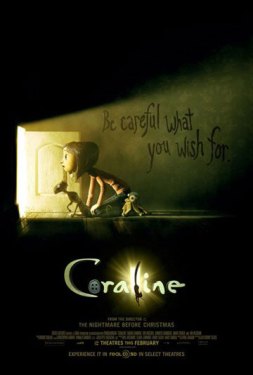
starring Dakota Fanning, Teri Hatcher, and Keith David
written by Neil Gaiman and Henry Selick & directed by Henry Selick
Rated PG for thematic elements, scary images, some language and suggestive humor.
96%
Young Coraline Jones (Fanning) is most displeased. She has just left her friends behind her and moved into a creepy old house that is populated by weird and eccentric residents. To make matters worse, there is nothing to do and her parents have no time to pay attention to her. Stuck inside the house on a rainy day, Coraline stumbles upon a small door in the wall that has been papered over. Soon, she discovers that it leads to a mirror world that is very much like her own, but far better. In this place, her “other” parents pay attention to her and everything seems designed for her entertainment and enjoyment. It is, literally, a world built just for her. All too soon, however, she discovers that this parallel place really is too good to be true, and the beautiful dream turns into a horrifying nightmare that threatens to trap her forever.
Coraline is a glorious and all-too-rare example of what is possible when an animator knows that there are literally no constraints whatsoever on his imagination, and then harnesses that limitless power in order to tell a story. In this case, the combined talents of Neil Gaiman as a storyteller and inventor of fantastical worlds, and Henry Selick as a stop-motion artist of considerable creativity and skill, have brought a dark but enchanting masterpiece to the screen.
There will no doubt be some confusion among audience members who remain convinced that animation is aimed specifically at small children. Allow me to do my small part in dispelling that preconception. Coraline is a strong PG; a horror story for children of all ages (well, older than, say, eight or nine, though I should acknowledge that I am not a parent and all children are different). An atmosphere of creepiness pervades almost every moment, beginning with the unsettling opening sequence of a doll being methodically dismembered and reconstructed, which actually made my skin crawl. The word “freaky” came to mind more than once as I watched. This is an Alice in Wonderland story by way of Pan’s Labyrinth instead of Walt Disney, where the danger is every bit as real as the delight.
It would be a shame to spoil the visual surprises that wait behind every door and around every corner in the movie by talking about them too much. I will say, however, that I haven’t the first notion of how most of what I saw was accomplished, nor did I spend a lot of time wondering about the process (or even aware that a “process” was at work). The special effects (if I even ought to call them that) are superb to the degree that they are invisible rather than flamboyantly demanding admiration and comment. (“Look at me! I was designed to make your eyes pop and your jaw drop!”)
Likewise, the voice acting, although the cast includes a number of well-known performers, does not draw undue attention to itself. The actors’ voices are on loan to the characters whose mouths they speak through, rather than the other way around. Somewhere in the back of my mind I was aware of who was voicing whom, but this information was not something I was really conscious of until it appeared in the credits. Teri Hatcher is particularly noteworthy as the voice of both Mother and Other Mother, a subtle but important difference which she handles exceedingly well.
I particularly enjoyed the ways in which the story borrowed recognizably from different genres and stories while remaining unpredictable. I have already mentioned Alice in Wonderland: Coraline travels to the parallel world by following a rodent through a hole, and is guided on the other side by a mysterious cat and menaced by an evil matriarch. She is given the chance to win her freedom by completing a difficult task; a model found in countless fairy tales. There are even plot elements drawn straight from the horror genre, like the constant foreshadowing of danger that Coraline ignores until it is almost too late.
I definitely should not leave off without some mention of the music in Coraline, which was composed by Bruno Coulais and features The Children’s Choir of Nice. It is quite unlike any soundtrack I’ve ever heard, and it fits the weird wonder of this movie perfectly. I can’t get enough. All that to say: Coraline is a genuine treat and I hope to catch it again (this time in 3D) before it leaves the theater.
Understand that all original content in Moviegoings is my property under copyright.
"Everyone has the right to the protection of the moral and material interests resulting from any scientific, literary or artistic production of which he is the author." -- Univ. Decl. of Human Rights
Unless otherwise noted, all original content in Moviegoings is licensed under a Creative Commons License.
Comment Policy
Commenting here is a privilege that may be revoked. Visitors to Moviegoings are allowed to post comments only for noncommercial purposes. Unsolicited advertising ("spam") may be altered or deleted at any time. Violation may result in appropriate countermeasures, including but not limited to IP banning, IP publishing, notification of ISPs, and civil and criminal legal action.

 starring Billy Crudup, Jackie Earle Haley, and Patrick Wilson
 D.W. Griffith was “The Man Who Invented Hollywood” and Mary Pickford was “America’s Sweetheart,” but Douglas Fairbanks was the prototypical “American Action Hero,” a clean-cut, virtuous and energetic swashbuckler who took great pride and pleasure in doing all of his own stunts. But Fairbanks, one of the powerful founding members of United Artists (along with Griffith, Pickford, and Charlie Chaplin), whose action-packed costume dramas broke box office records in the early 1920s, almost failed to make it in the movies at all.
 The 48th Annual Academy Awards were hosted by Goldie Hawn and Gene Kelly (among others). One Flew Over the Cuckoo’s Nest was nominated for 9 Oscars: Best Picture, Best Director, Best Actor (Jack Nicholson), Best Actress (Louise Fletcher), Best Adapted Screenplay, Best Editing, Best Cinematography, Best Supporting Actor (Brad Dourif), and Best Original Score. Its competition, however, was formidable. The other Best Picture nominees alone included Stanley Kubrick’s Barry Lyndon (7 nominations, 4 wins), Steven Spielberg’s mega-hit Jaws (4 nominations, 3 wins), Sidney Lumet’s true-story bank-heist drama Dog Day Afternoon (6 nominations, 1 win), and Robert Altman’s ensemble masterpiece of American grassroots politics Nashville (5 nominations, 1 win). Meanwhile, Federico Fellini received his 4th and final directing nomination for Amarcord (2 nominations, 0 wins), despite the fact that Amarcord had also been included in the previous Oscar ceremony, in which it won Best Foreign Film. Finally, there was John Huston’s thrilling adventure epic The Man Who Would Be King (4 nominations, 0 wins).
 starring Mickey Rourke, Marisa Tomei, and Evan Rachel Wood
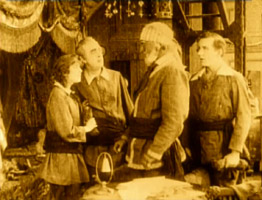 Since its inception, cinema has been the art form with the closest ties to ongoing technological innovation, the limitations of which are constantly being pressed by the extraordinary creativity and imagination of the minds behind the movies. The most obvious early example of this marriage between artistic vision and technical ingenuity can be found in French filmmaker Georges Méliès. Méliès directed hundreds of films during his 18-year career, which began in 1896, but he is best known today for his 1902 adaptation of a Jules Verne novel, Le voyage dans la Lune (A Trip to the Moon), as a fanciful special-effects extravaganza. Five years later, he adapted another Verne work, 20,000 Leagues Under the Sea, and, just as unable to film under the sea as he had been unable to shoot on the moon, he employed the same abstract and surreal aesthetic.
 starring Dakota Fanning, Teri Hatcher, and Keith David


 Moviegoings