Film History Essentials: Rip Van Winkle (1896)

•February 22, 2023 • 1 Comment

Summary:

An adaptation of “Rip Van Winkle” by Washington Irving, in eight parts, this tells the story of a man who takes a drink offered to him by a mysterious group of strangers in the mountains near his home. The drink puts him to sleep for 20 years, and he awakes as an old man in an unfamiliar world.

Essentials:

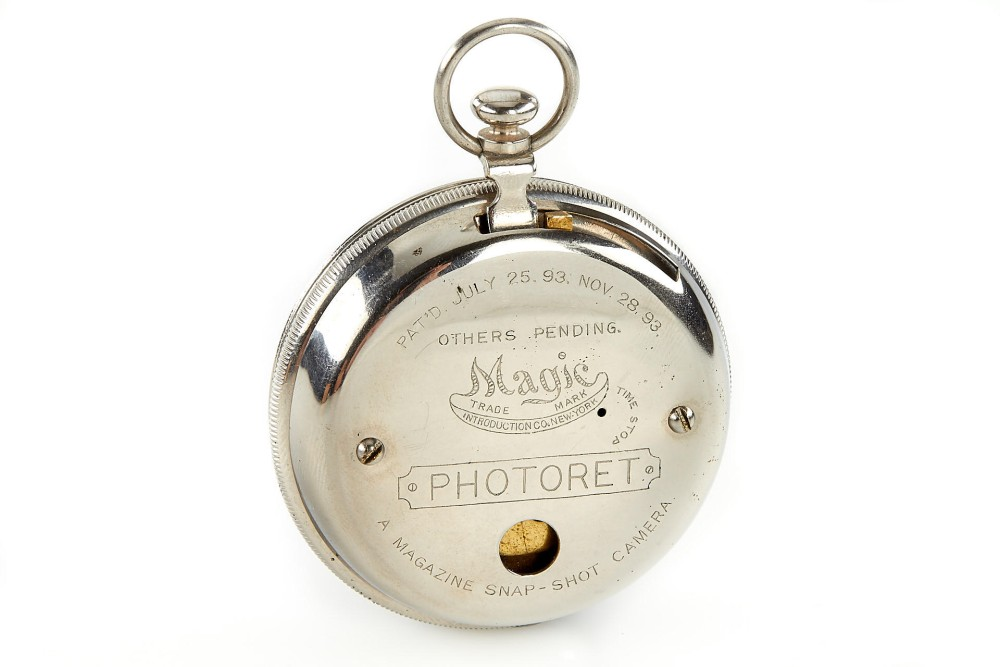
William Dickson had begun secretly advising the Lathams in the development of their camera and projector at the beginning of 1895, while still working for Edison. However, he already had a long-standing relationship with another group of men in much the same role. In 1893, Dickson worked with two other men to invent a pocket-watch-sized camera called the Photoret (see right).

One of those two men was Henry Marvin, a college teacher and engineer Dickson had known since the 1880s. The second was Herman Casler, a talented mechanical engineer Dickson had met a few years earlier while he was working on one of Edison’s mining-related projects. (In fact, this project had actually interrupted Dickson’s early work on the kinetoscope for several months.) The Photoret was manufactured, marketed, and sold by Elias Koopman’s Magic Introduction Company, and the result was apparently profitable enough that the partnership continued.
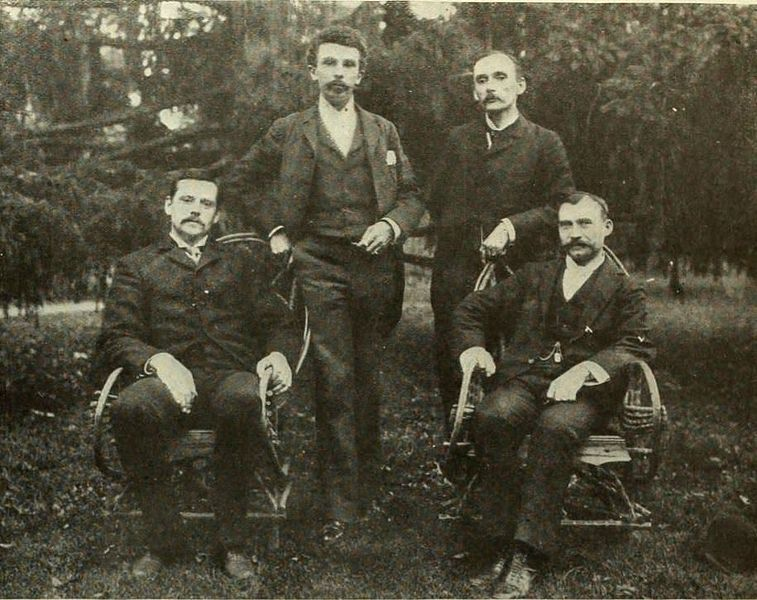
(clockwise from top-left: Dickson, Casler, Koopman, and Marvin)

The group’s next project was an idea Edison had rejected for the kinetoscope. Dickson proposed a circular deck of images that would operate much like a large flipbook, with the viewer operating a crank to power the motion of the reel while watching through a peephole. The other men liked the idea, and together they formed the KMCD Syndicate (for Koopman, Marvin, Casler, and Dickson), and Casler went to work developing Dickson’s idea. Casler patented it as the “Mutoscope” in November of 1894, and then spent several months developing a camera that could produce material for it. The Mutoscope was a simpler and cheaper design than the kinetoscope, and it was quite successful, immediately becoming a source of serious competition for Edison’s kinetoscopes.
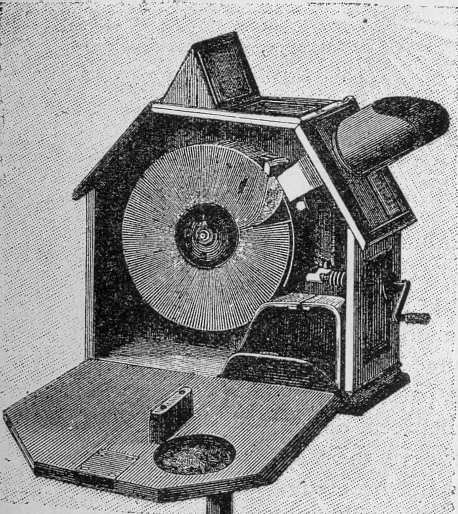
The Mutoscope

By this time, Dickson had left Edison’s employment, officially joined the Lathams’ Lambda Company for the debut of the Eidoloscope, and then left them as well. He finally joined the other members of the syndicate for their first official meeting as a group in September 1895, and they decided to develop a system for projecting motion pictures. On December 30, 1895, they formed the American Mutoscope Company. Edison had debuted the Vitascope before they were ready to introduce their projector, but by the summer of 1896, the “Biograph” was ready to go. Edison had gotten there first, but the Biograph was noticeably superior in several ways, using the same, wider filmstock as Georges Demenÿ, which produced a much larger image (although its chief benefit was that its use didn’t violate any of Edison’s many patents).
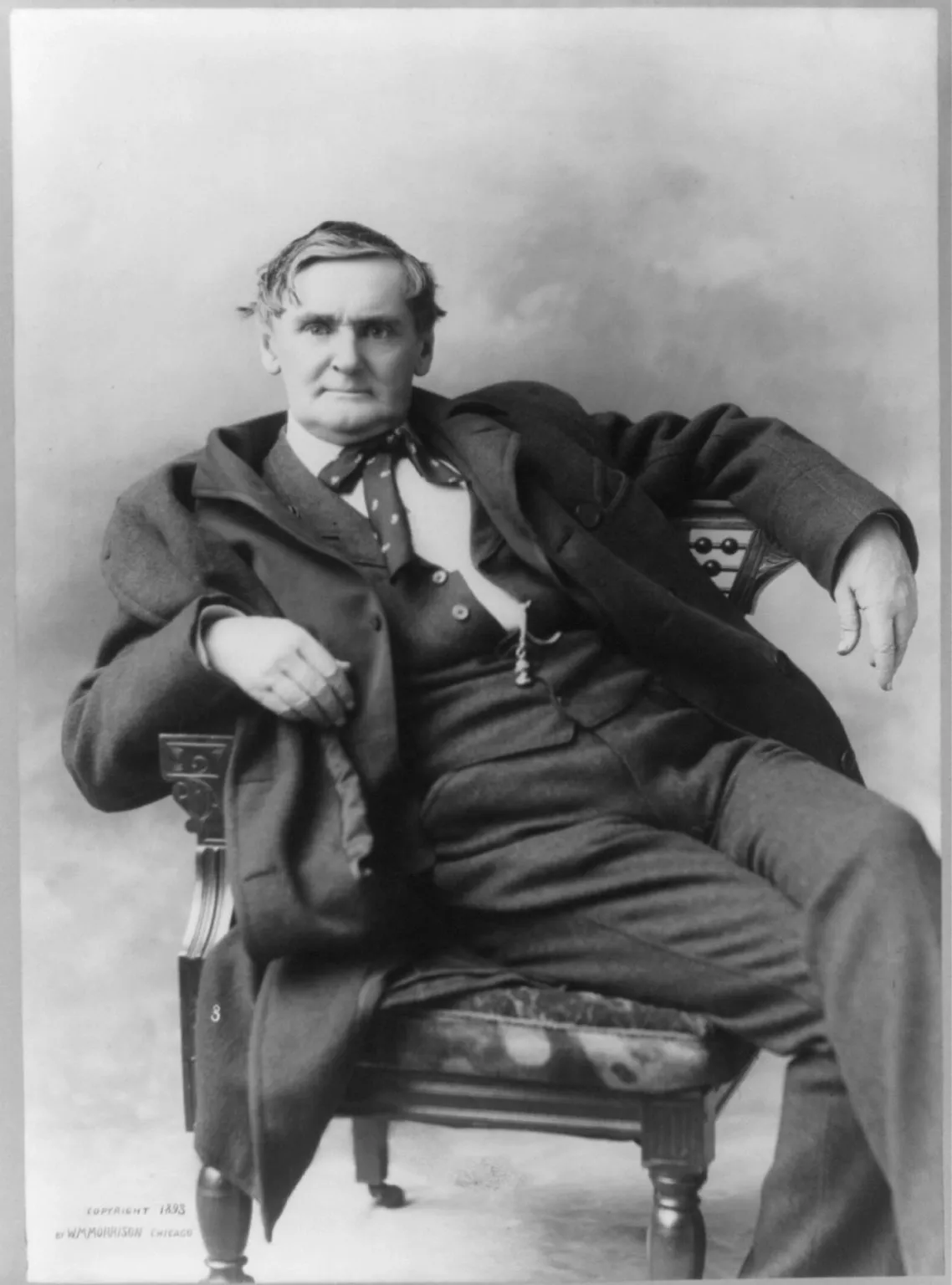
One of the men who invested in this new motion picture enterprise was Joseph Jefferson (see right), one of the most famous actors of the American stage. Jefferson, by then in his mid-60s, was known throughout the country, as well as in Australia and England, for the role of Rip Van Winkle that he had been playing since 1859, and had played virtually exclusively since the mid-1860s. The possibility of leveraging his fame to boost the American Mutoscope Company must have seemed like too good of an opportunity to pass up.

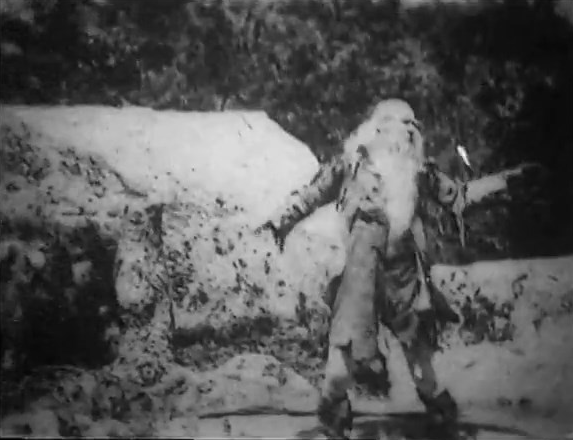
Sometime between the winter of 1895 and the summer of 1896, Dickson collaborated with Jefferson on an adaptation of his stage performance, filmed in eight separately-titled scenes. Played in sequence, they were:

  • Rip’s Toast
  • Rip Meeting the Dwarf
  • Rip and the Dwarf
  • Rip Leaving Sleepy Hollow
  • Rip’s Toast to Hudson and Crew
  • Rip’s Twenty Years’ Sleep
  • Awakening of Rip
  • Rip Passing Over the Mountain

The company had built a new studio in much the same style as the Black Maria (but located atop a building in Manhattan), but these films were shot “on location” at Jefferson’s home in Buzzards Bay, Massachusetts. Scenes 2 & 3, 5 & 6, and 7 & 8 are all actually single scenes divided into two halves, due to the limitations on how much film the camera could hold. Each of these scenes cuts abruptly at the end of the first half, and then picks up in the same camera position almost exactly where the previous one left off. For instance, scene 5 ends just as Rip throws up his hands and starts to lean backwards, and then scene 6 begins with him continuing to fall completely prone.

The films were released for the Mutoscope, but they were also among the first films offered for projection. They were not sold as a complete package. Exhibitors could pick and choose whichever of the eight scenes they wanted, and then show those scenes in any order they chose. At least some of the eight were also featured in the official debut of the Biograph in the fall of 1896. The series proved quite popular; so much so that, in 1903, the company (by then known as the American Mutoscope and Biograph Company) finally edited them all together and re-released them as a single film. The whole series was added to the National Film Registry in 1995.
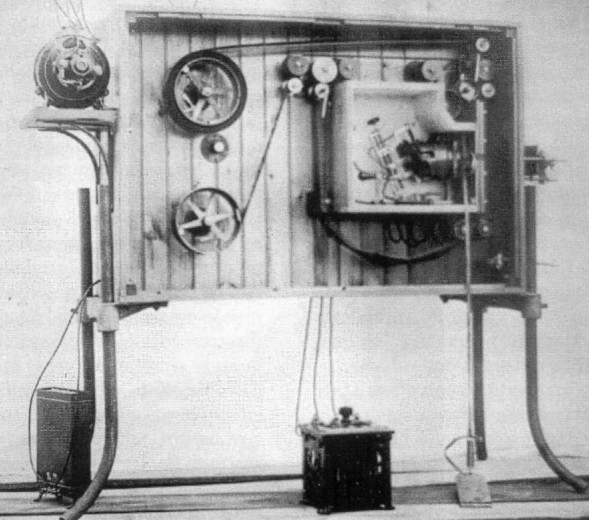
The Biograph

Screening:

The Biograph was noted for its superior picture, but sadly, all that survives of this film are the paper prints registered for copyright purposes, which were duplicated at a much lower quality. Further, there is much that was presumably of interest to a turn-of-the-century audience that doesn’t really translate to us. There’s the novelty of simply seeing a projected motion picture, obviously, but also presumably of seeing a famous actor of the day delivering an excerpt of his most famous performance. Certainly the film assumes a prior familiarity with the story of “Rip Van Winkle,” and it doesn’t actually show us the end of the story.

Although it is an incomplete retelling, it is the oldest surviving literary adaptation to film (by way of a stage adaptation). Born in 1829, Jefferson is also likely the film star with the earliest birth year. More notable, though, is that it represents a significant step forward in the length and sophistication of cinematic storytelling. Despite being cobbled together in pieces because of the technical limitations, this is still a multi-scene, multi-minute film narrative, while also being one of the earliest American films to tackle fiction.

I’ve compiled a playlist of all eight short films, in order, that you can watch and navigate through below:
Film History Essentials: Lancement d’un Navire (1896)

•February 21, 2023 • 1 Comment

(English: Launching of a Ship)

Summary:

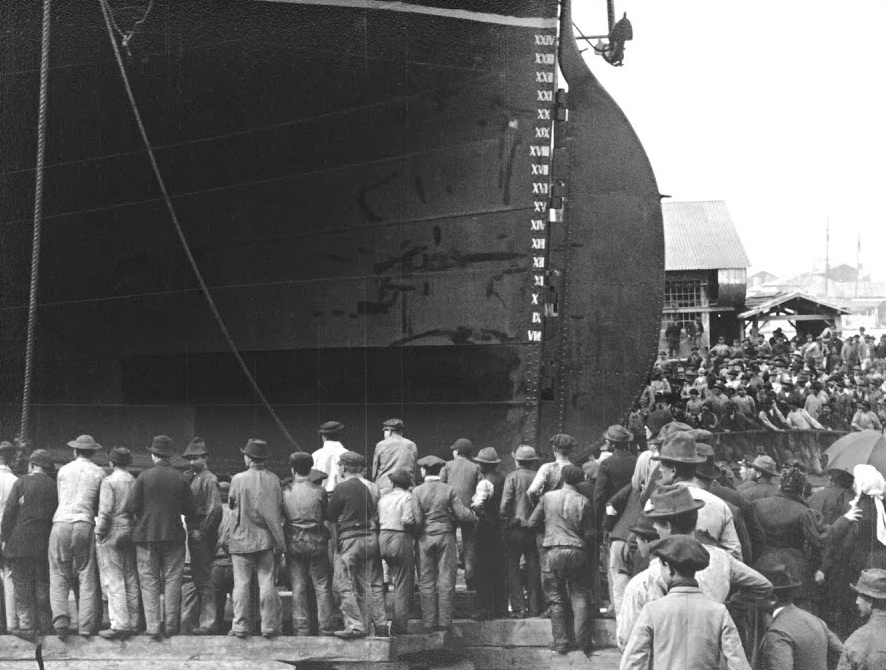
As a crowd of people stand and watch on either side, a large ship is launched from dry dock. At first it slides slowly past, but soon begins to pick up more and more speed, filling the entire frame before passing on and into the water.

Essentials:

Louis Lumière filmed this on March 21, 1896, in La Seyne-sur-Mer on the south coast of France, about 40 miles southeast of Marseille. The ship is the Persévérance, a four-masted steel sailing ship owned by the shipping company Armement Dominique Bordes & Fils. It set sail for the company’s headquarters in Dunkirk, joining a fleet of ships that sailed between France and Chile, mainly to import saltpeter (the primary component of gunpowder) to France. Persévérance was eventually sunk by a German submarine in 1917.

None of those details are important to appreciating the sight of its full 320-foot+ length gliding smoothly past the camera, dwarfing the watching crowds. It is genuinely an incredible sight to behold. That appreciation is heightened by how stunningly well-preserved this film is. That in itself is enough to make it noteworthy. Every detail is crisp, sharp, and clear.

Lumière made an interesting choice of location to set up his camera, though we don’t know what other options he had. Much of the ship lies totally outside the frame, but somehow that makes it seem even larger than if we could see it all at once. The true scale of what we are seeing is revealed slowly by the fact that it takes the ship nearly 30 seconds to go completely past the camera. The “tracking shot” did not exist yet, and there was no panning or zooming in films. However, if not for the crowd being stationary as well, the way this is framed would almost make it feel like the camera is in motion and it is the ship that is standing still.

Screening:

Thanks to the incredible level of detail preserved, we can make out the line of men hauling away on the opposite side to get the ship moving, and we can also spot the skeleton of another ship under construction once the Persévérance has passed by. As is often the case, however, the focus of this “actuality” is as much on the people present as it is on what they are watching. There are certainly women present in the crowd, but the section that we can see best is mostly men and boys. Many of them move about throughout, jockeying for position or running back and forth to get the best possible view.

It may be particularly striking to a modern audience that this gargantuan juggernaut is flying past a group of spectators, loosing massive chains and ropes that break free with alarming jolts only a few feet from some of the people watching. Not only does there not seem to be any sort of safety railing (or even a rope) to keep anyone from toppling forward and being crushed like an ant, but some of the youngest members of the crowd are clambering up and down and around, shoving past each other on the very edge. Notice at about 0:20, when the first chain pops off and drops, that a large number of the crowd flinch, and several jump backward to a safer distance . . . but no one was standing by before that to advise anyone that maybe that wasn’t a great spot to stand. Still, watching this now, I can hardly blame them for wanting to get a good look. It is quite a sight.

Film History Essentials: The Kiss (1896)

•February 20, 2023 • 2 Comments

Summary:

A man and a woman sit cheek-to-cheek, conversing intimately. Then the man smooths his mustache, leans in, and kisses the woman.

Essentials:

The Chap-Book was a Chicago-based literary magazine published during the mid-1890s. Each issue featured a section entitled “Notes” at the end, apparently consisting of letters from readers and/or marginalia by contributors. This is one such contribution, by American painter John Sloan, from the July 15, 1896 issue:

One’s acerbities of temper are not pleasant things to emphasize, and geniality and indulgence are tempting. But the ever-recurring outrages to decency and good taste which I see in books and on the stage force me constantly into the role of Jack the Giant-killer; in common phrase: “I have my hammer out most of the time.”

Now I want to smash The Vitascope. The name of the thing is in itself a horror, but that may pass. Its manifestations are worse. The Vitascope, be it known, is a sort of magic lantern which reproduces movement. Whole scenes are enacted on its screen. Le Loie dances, elevated trains come and go, and the thing is mechanically ingenious, and a pretty toy for that great child, the public. Its managers were not satisfied with this, however, and they bravely set out to eclipse in vlugarity all previous theatrical attempts.

In a recent play called The Widow Jones you may remember a famous kiss which Miss May Irwin bestowed on a certain John C. Rice, and vice versa. Neither participant is physically attractive, and the spectacle of their prolonged pasturing on each other’s lips was hard to bear. When only life-size it was pronouncedly beastly. But that was nothing to the present sight. Magnified to Gargantuan proportions and repeated three times over it is absolutely disgusting. All delicacy or remnant of charm seems gone from Miss Irwin, and the performance comes very near being indecent in its emphasized vulgarity.

Such things call for police interference. Our cities from time to time have spasms of morality, when they arrest people for displaying lithographs of ballet-girls; yet they permit night after night a performance which is infinitely more degrading. The immorality of living pictures and bronze statues is nothing to this. The Irwin kiss is no more than a lyric of the Stock Yards. While we tolerate such things, what avails all the talk of American Puritanism and of the filthiness of imported English and French stage shows?

The Chap-Book, Volumes 5-6, pp. 239-240

This grouch who went to the movies in the summer of 1896 has communicated all of the basic essentials about The Kiss: The film was one of the first to be projected on Edison’s Vitascope. (The device had only debuted at the end of April, and was still new enough that the writer felt it needed explaining.) It was a re-enactment of a famous scene from a Broadway musical that had premiered the previous September, starring the play’s two leads, and its release inspired at least some moral outrage.

The film was recorded in mid-April, just days before the Vitascope’s first show, though it wasn’t included in that premiere. It was shot in the Black Maria, though Edison’s film studio had deteriorated somewhat due to neglect from a much-diminished production schedule following Dickson’s departure from the company the previous year. The Black Maria would continue to be used sporadically for the next few years, though never again as it had been in 1894.

There were several reasons for this. It was a truly unpleasant space to film and perform in, cramped and confining, stifling in the summer and freezing in the winter. It was also increasingly difficult to coax people all the way out to New Jersey from the cultural centers in New York City in order to appear on film. Most importantly, though, Edison’s technicians finally completed a portable film camera in early May of 1896 to replace the original kinetograph. With this, it became possible for cameraman William Heise (who had been Edison’s prime camera operator since the Dickson days) to go directly to the action, as the Lumières and others were increasingly doing already, and it made production costs cheaper, besides.

As for The Kiss, it was primarily a deft piece of cross-promotional advertising for the Vitascope, The Widow Jones, and the New York World newspaper, which published a full-page spread covering the “the kiss” on April 26. Exactly how much real controversy surrounded the on-screen kiss is up for debate, but the campaign did at least succeed at making it a widespread topic of conversation, and the film was a major hit. As the Edison catalog described it: “They get ready to kiss, begin to kiss, and kiss and kiss and kiss in a way that brings down the house every time.” Contemporary accounts suggest that the kiss occasioned more laughter than applause, though again, whether audiences found it genuinely funny or responded with the nervous laughter of discomfort is an open question. In any case, the film got a reaction.

Even some who stood to profit from the publicity were uncertain about it. The play’s producer, Charles Frohman (see below), initially considered recasting his female lead after she appeared in the film, reportedly lamenting, “Why this distinguished actress and pillar of New York society should choose to exhibit herself in this passing fad of moving pictures is beyond my reasoning. She has, undoubtedly, done her career in the legitimate theatre irreparable harm.” He seems to have changed his mind, however, when he saw the crowds who showed up outside the theater each night just to get a look at her in person. Within a week, he was requesting that her role in the play be specifically mentioned in advertisements for the film. May Irwin only appeared in one other film during her career, in 1914. It was produced by Famous Players Film . . . a company co-founded by Charles Frohman.

Famous Players would later merge with another film company to form the studio that eventually became Paramount Pictures, but by then Frohman was dead. He went down on the Lusitania when it was sunk by a German U-boat in 1915, cutting short an extraordinarily successful career that included producing J.M. Barrie’s Peter Pan in 1904. (If you’ve seen 2004’s Finding Neverland, Frohman is played by Dustin Hoffman. Another casualty of the sinking was Herbert Stuart Sloan, founding editor of The Chap-Book.)

As for Irwin, she continued on the stage until 1925, and lived until 1938. According to her grandchildren, she loved to read Sloan’s Chap-Book review of The Kiss aloud to anyone who would listen. It seems to have been among her favorites of the reviews written about her. Funnily enough, another entry from the “Notes” section of the same July 1896 issue seems to speak directly to our experience of reading Sloan’s thoughts:

I have often wondered if future generations would find as much that is curious and amusing in our newspapers and magazines of to-day as we now find in the periodicals of a hundred and more years ago. The outlandish phrasing and quaint conceits of the reporters and advertisers of old time are so wonderfully ingenious that it would be immodest in us to claim equality; yet if the things which are now so humorous to our eyes and ears were but natural to them, it is no more than reason to suppose our tritest manners will fill our descendants with surprising merriment.

The Chap-Book, Volumes 5-6, p. 233

No more than reason, indeed. The Kiss was added to the National Film Registry in 1999. I wonder what John Sloan would say about that.

Screening:

Sloan’s snotty prudishness is easy to mock, but not all of his observations are entirely off-base. “Prolonged pasturing” is a particularly apt turn of phrase, as the couple spends nearly two-thirds of the film’s runtime talking to each other while half their mouths are awkwardly pressed together. Rice’s smoothing of his moustache is a nice flourish, and it looks like an actual, genuine cinematic kiss as they come together again and his hand holds the side of her face if you freeze it right at that moment. But the effect is slightly ruined in the final half-second when, mid-kiss, he starts talking again.

It would be interesting to know exactly how this worked in the play. In particular I’m curious to know how, in the age before on-stage sound amplification, they were able to project their voices for the whole audience while murmuring into each other’s faces. Perhaps the scene was slightly reworked with the close-up of the camera in mind. Sloan is right that this isn’t a kiss that’s going to make anyone’s heart race, but it’s certainly a memorable image.

Film History Essentials: Démolition d’un Mur (1896)

•February 19, 2023 • Leave a Comment

(English: Demolition of a Wall)

Summary:

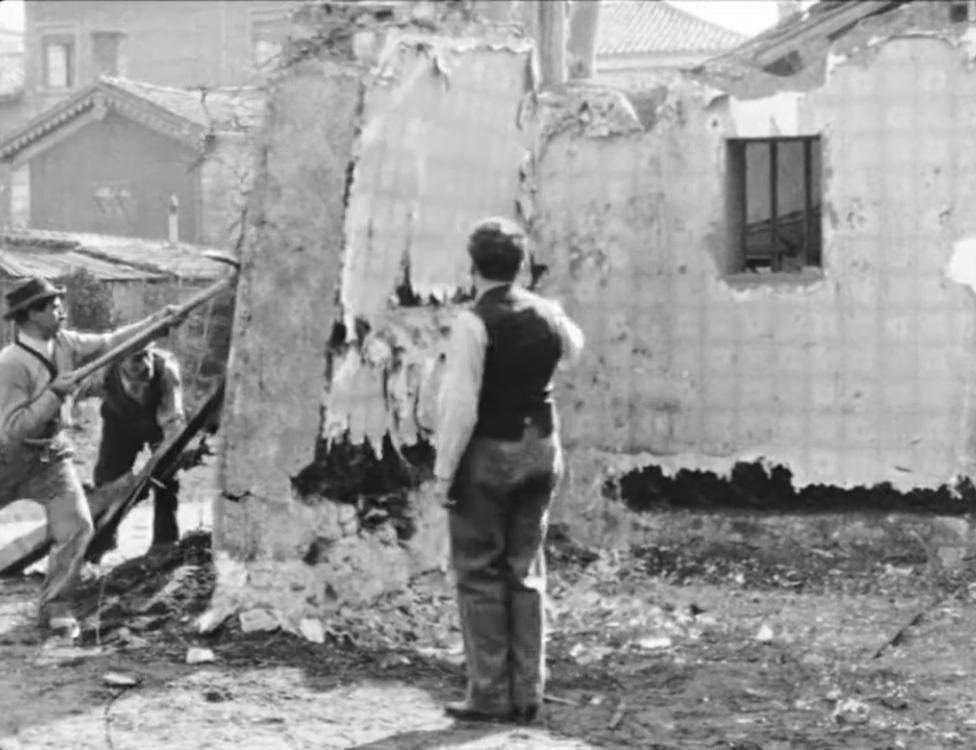
Auguste Lumière supervises workers at the Lumière factory as they knock down and begin clearing away a crumbling brick wall. He then supervises as they use the same tools to repair the wall and lift it back into place.

Essentials:

The idea of the “actuality” genre seems like the simplest kind of film to conceive of and produce. Many early filmmakers seem to have genuinely just walked their camera to the nearest place where people were doing something, even if that something was just walking down the street, and filmed it. But there is truly something of an art to choosing an interesting subject, which may be why Démolition d’un Mur remains one of the Lumière brothers’ best-known early films. They actually made two different versions of it. This one is the second, and more well-known, of the two.

You can find a lot of casual criticism, much if not all of it presumably tongue-in-cheek, on the film’s deep symbolism (the crumbling wall as metaphor for [insert theme here]), and some similar commentary on filmic elements like the way it “builds suspense.” And there’s a little something to the latter, particularly at the moment when the wall sways and seems like it really could potentially topple either way. Ultimately, though, the reason the film still works is that it’s of something that, even now, you would probably actually stop to watch if you were just walking by. That’s its secret, at least in part.

The other part happens halfway through, at about the point when, if you were physically present, you would probably decide you’d seen enough and continue on walking towards your destination. Instead, suddenly, a very strange thing happens. The two men who have just begun to cross the frame from left to right suddenly reverse direction and walk backward out of frame, while the picks wielded by the three workmen to tear chunks away from the fallen wall instead begin to put it back together. Then, just at the moment when the dust cloud seems to be at its thickest, it suddenly contracts into the fallen wall, which leaps back into its original position as the workmen carefully help it settle, fully upright once more. The man with the jackscrew makes sure it’s stable, while the men with the picks begin shoring it up again on the opposite side.

Films shown with early, manually-operated projectors were open to a certain amount of interpretation by the projectionists, who were often the most reliant on the audience’s reaction to a film in order to turn a profit. They could (much like Reynaud with his Théâtre Optique) decide to speed up or slow down the action based on how they ran the film. They could even, as was commonly done with this film, cause time to move backward.

It could be advantageous to do this, not only to spice up some films that might need a little something extra, but also to prolong the program just a bit when you were short on new films and all the ones you had were about 45 seconds long. There are also numerous reports from these early programs of audiences demanding to see a particular film rerun multiple times in a row. An encore is certainly not unheard of in a stage performance, and many art forms have the ability to freeze time in its tracks. But only film can actually force time to turn around and run the other way.

Screening:

It is unironically enjoyable to watch how the workers go about taking down this wall, but it’s also undeniably fascinating to watch everything happen in reverse. It’s a very old movie trick, but (given the right subject) it still just works. Sometimes, cinematic pleasures are very simple ones.

Film History Essentials: La Biche au Bois (1896)

•February 18, 2023 • 1 Comment

(English: The Hind in the Wood)

Summary:

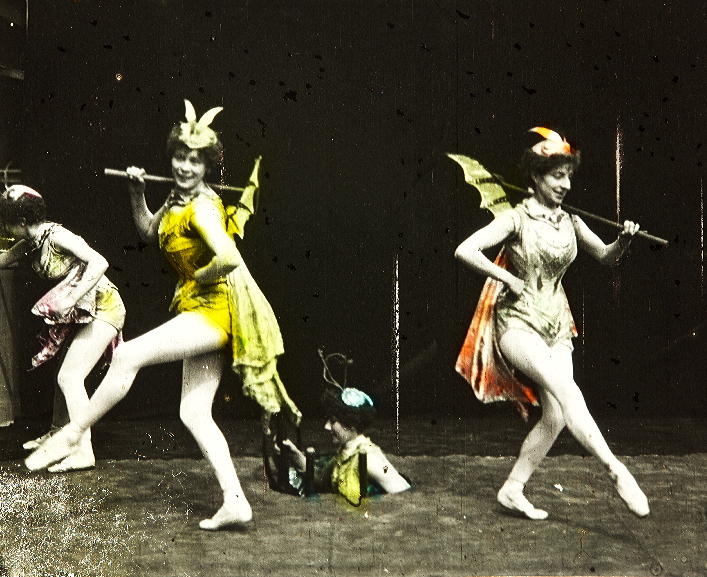
Fairies emerge from a . . . “hole” in the “ground” carrying tools. As more and more come out, they begin to dance and swing their tools. Finally, as the last fairy emerges, there is an eruption of smoke from the hole, putting a stop to their revelry.

Essentials:

After his final break with Marey in 1894, Georges Demenÿ went to work making “scenes” for his phonoscope. The phonoscope was his invention that produced motion pictures using a disc with images placed sequentially around the outside, and then rotated rapidly past a light source. This resulted in scenes of only a few seconds, but they could be viewed by a single person through a peephole or projected for an audience. Demenÿ apparently compensated for the brevity of his productions by making motion pictures of dozens and dozens of “very diverse” subjects.

The following year, he entered into a partnership with Léon Gaumont to manufacture and sell the phonoscope, which was renamed the “Bioscope.” In 1896, they also offered up Demenÿ’s chronophotographic cameras for sale. These cameras used film, but it was unperforated. This made it, if not inferior, then at least out of step with what everyone else was doing. Both products ultimately failed.

Demenÿ continued working with Gaumont long enough to help manufacture a camera that used perforated film, but before long he left motion pictures behind and returned to an old interest in gymnastics. He went on to write a number of highly influential books on physical education, but his influence continued to be felt in the film world as well. Although he hadn’t been able to establish himself commercially, many others who did drew inspiration from work that he had done.

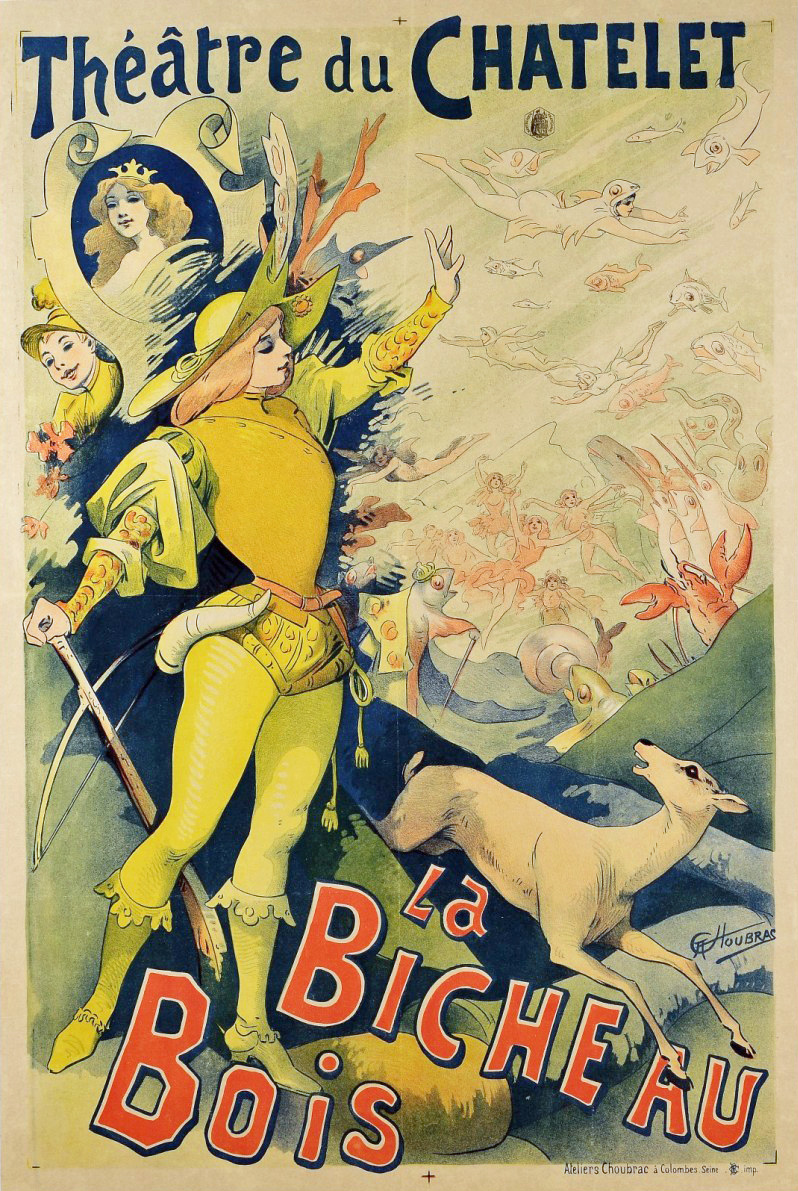
La Biche au Bois is a moderately well-known French fairy tale, full of familiar devices of the genre. A princess is cursed at birth by a fairy the Queen has offended, who promises something terrible will happen should she ever be touched by sunlight before her 15th birthday. Eventually, a brave prince falls in love with the princess’s portrait, and because he can’t wait a few extra months for their wedding, she undertakes a journey to him by closed carriage.

However, the evil fairy and a jealous rival for the prince’s affections conspire to let the sunlight into the carriage, and the princess is transformed into a white doe (or hind) and bounds away into the woods. The prince comes in search of the princess, and ends up relentlessly hunting the white doe that he keeps encountering. Meanwhile, the princess’s lady-in-waiting and a friendly fairy try to protect her, and she returns to her human form each night. Eventually, the prince manages to capture her, learns the truth, breaks the enchantment, happily ever after, etc.

If you’re wondering why none of those plot details are evident in this short clip, it’s not because there’s any footage missing. And in any case, the story I just described would have been an incredibly ambitious undertaking at a time when films were still generally less than a minute long. This film is actually part of a multimedia presentation that was incorporated into a stage performance of La Biche au Bois in Paris in November 1896, one of many commonly-staged féerie or “fairy plays.”

This film, which was also hand-tinted with color, purportedly was part of a scene in the play where a character’s nose grows to enormous size and a group of fairies climb out of his nostril (yes, really) to plague him. That particular episode does not appear in any version of the fairy tale that I’ve read, but féerie, as part of a stage tradition developed over nearly a century, were massive, visually-spectacular productions that might last for several hours, so clearly there was some “elaboration” involved in the adaptation. The existence of this stage tradition helps explain the popularity of fairy stories in early silent film, of which this may be the earliest example.

Incidentally, Demenÿ himself was apparently not directly involved in this production, and (as indicated by the late-1896 date of the production) may even already have parted ways with Gaumont. At this point, Gaumont’s business model included leasing out camera equipment, and people to operate them, for use on projects by whoever wanted to hire them. The company was also still using Demenÿ’s wider filmstock, making for a more rectangular image.

The attachment of Demenÿ’s name to this film speaks to the fluidity of “authorship” in early films. This is one of the ways that we see his influence appear again and again, even though his hopes of personal success in film were never realized. This short glimpse of a 19th-century stage production also helps illuminate the ways it might at first have seemed that the cinema would simply be absorbed into the repertoire of live stage entertainment, rather than continue to develop into a fully-formed, independent art of its own.

Screening:

Perhaps more than with any other film of this era, I can’t even begin to imagine what the experience of seeing this at the time would have been like. For one thing, I can’t wrap my head around the way the scene would have been staged and projected to look like this was taking place on the enlarged nose of an actual actor who was physically present in front of the audience. There are also indications that the film might have been accompanied by a magic lantern projection onto the black background behind the dancing fairies, and that of course is missing entirely. The absence of sound feels more notable, as well, because we know that this scene must have been accompanied by a specifically-composed soundtrack which would have been performed live, and possibly by additional sound effects or dialogue that are simply lost to us. So, I have no idea what this might possibly have looked or sounded like in context, but it’s still fun to speculate.

Be aware that, in the clip below, the relevant scene does not begin until approximately 1:10.

Note on sources: I have drawn several details about this film solely from this review by user “Cineanalyst” on Letterboxd. This is not remotely up to my usual standards of research and independent corroboration of information, but I was able to verify enough that I felt comfortable including it, with this caveat. Cineanalyst cites as a source the book Georges Demenÿ: Pionnier du Cinéma by Laurent Mannoni, who is also the author of Demenÿ’s entry in the Who’s Who of Victorian Cinema. Sadly, the book is apparently only available in French, and the text doesn’t seem to appear online, so I have only their account of its contents to rely on.

Film History Essentials: Escamotage d’une Dame Chez Robert-Houdin (1896)

•February 17, 2023 • 2 Comments

(English: The Vanishing Lady)

Summary:

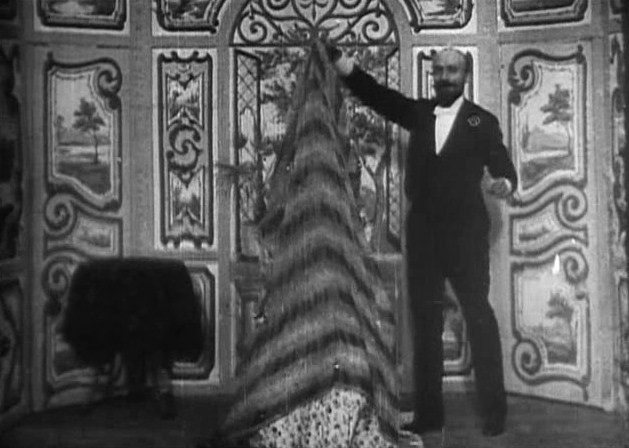
A magician, Georges Méliès, steps onto the stage and introduces his lovely assistant, Jeanne d’Alcy. He sets up a chair for her to sit on, and then covers her completely with a diaphanous piece of cloth. When he removes the cloth, she has vanished completely. He waves his arms, and a skeleton appears in her place in the chair. He covers the skeleton with the cloth, and then removes it, revealing that the lady has returned. The pair take their bows and exit.

Essentials:

Georges Méliès’ father was a wealthy boot-maker in Paris, and he fought for decades to keep young Georges in shoe business instead of show business. He should have seen it was a losing battle all along. After all, Méliès was building puppet theaters when he was 10, and it only got more evident from there that entertaining was his life’s purpose. He developed a lifelong obsession with magic while living in London as a young adult, but at his father’s insistence he continued to work in the family factory upon his return to Paris. Still, he began taking magic lessons on the side.

Finally, in 1888, when Méliès was 26, his father retired and divided the business among his three sons. Méliès immediately sold his share to his older brothers and used the money to buy the Théâtre Robert-Houdin, once the performance space of one of the most celebrated magicians of the 19th century. Méliès worked for years, renovating the theater and updating the illusions, slowly building back an audience.

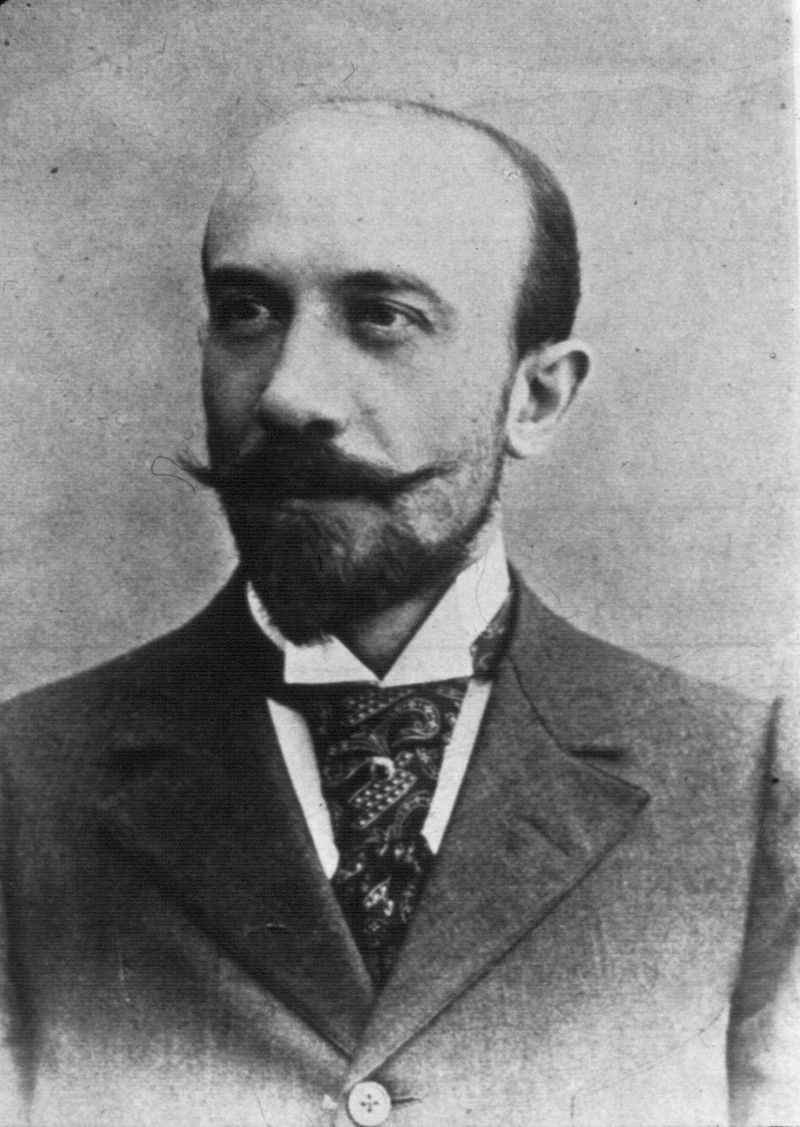
Three weeks after his 34th birthday, Méliès (see right) was a member of the Lumière brothers’ very first film audience, and the experience changed the course of his life. The next day, he offered the Lumières 10,000 francs for a cinematograph, but they turned him down. (His wasn’t even close to the largest offer they refused.) However, within a few months he was able to purchase a Theatrograph from Robert Paul in England, along with a number of films. Soon, he had made modifications to the device so that it could also serve as a camera, and his career as a filmmaker began.

He shot nearly 80 films in 1896 alone, most of which are now lost. His very first attempt was a rip-off of a Lumière film, and he experimented extensively with a huge variety of genres and subjects. Escamotage d’une Dame is his oldest surviving film that employs elements of the signature Méliès subjects and style: The use of camera tricks and editing to produce effects that were both magical and whimsical, all driven by the high-energy showmanship of Méliès himself.

Méliès’s most prolific technique was the “stop trick,” also known as a “substitution splice.” This is the same trick used by Alfred Clark in The Execution of Mary, Queen of Scots in 1895, so Méliès didn’t originate it, but he certainly perfected it. He also claimed to have stumbled upon it independently, and it’s a great story: He was filming an actuality out in the street one day when the camera jammed. He fixed the issue and resumed filming. Later, while watching back the footage, he noticed that at that point, a passing bus appeared to magically transform into a hearse due to the camera’s stopping and restarting. Of course, it’s quite possible that he just saw Clark’s film and worked out how it was done . . . but I’m choosing to print the legend. It’s at least a plausible one.

Screening:

In Escamotage d’une Dame, Méliès uses the stop trick 3 times. The first one, when d’Alcy disappears, is the most obvious because he exposes the edges of her dress when he gathers up the cloth, so you can see her vanish. Possibly (for some contemporary audiences) that just made it appear all the more magical. The second one is the cleanest. The skeleton appears in the chair with virtually no visible shift anywhere else on the screen. The third one shows a magician’s knack for subtlety. You can see where the shift happens as he starts to put the cloth over the skeleton, but some in the audience might not have been looking for it yet, and this would probably be the easiest spot to miss that an edit happened at all.

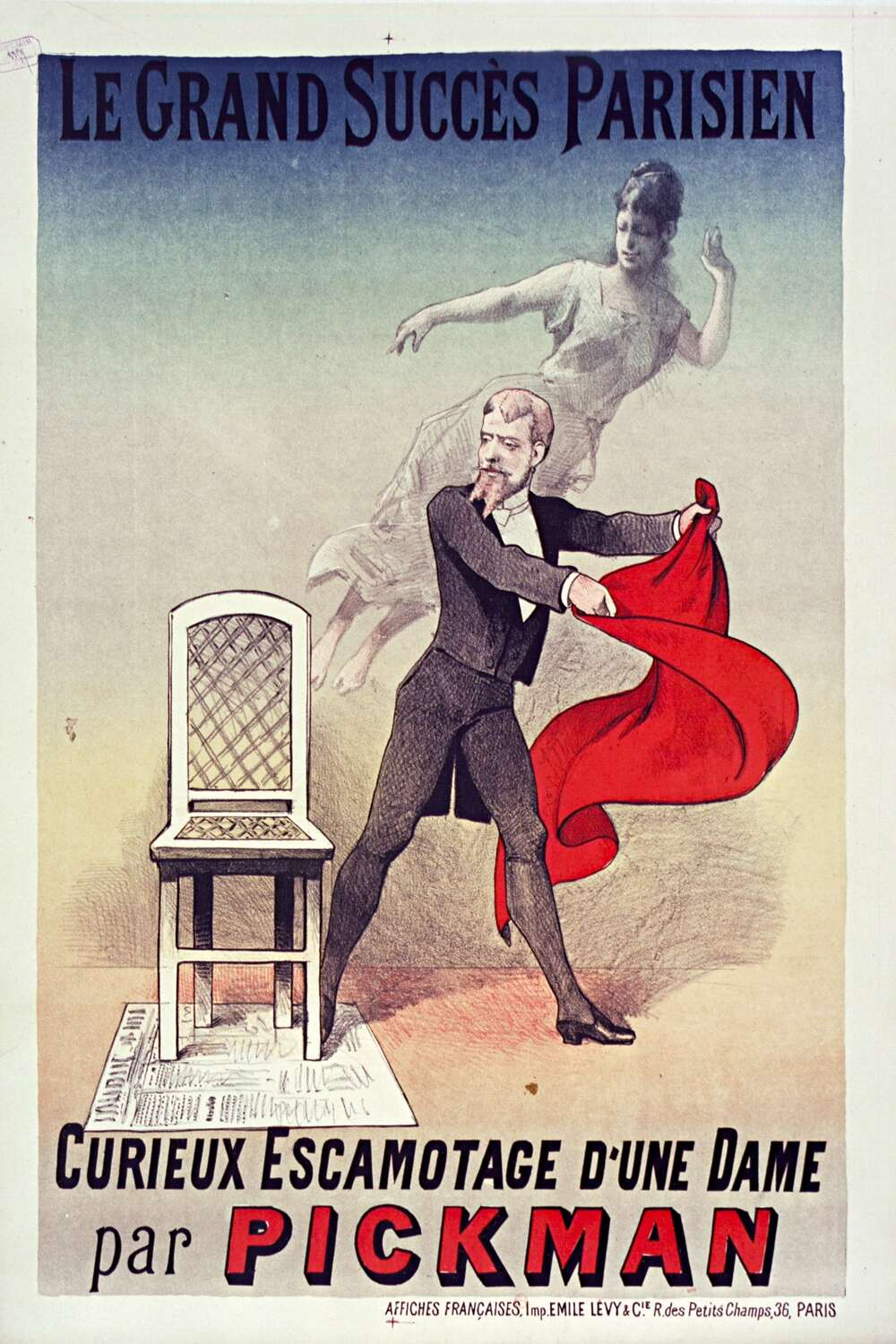
Even more interesting, though, is the way Méliès chose to stage his performance. “The Vanishing Lady” was a well-known trick at the time (see left). You can find a great explanation here of how the stage version worked. But knowing that, it’s evident that Méliès goes out of his way at multiple points to show that he’s not performing the stage version of the trick. In brief, the basic mechanism of the trick was a wire frame that went over the lady’s head to hold up the blanket, a special chair with a seat that dropped forward, and a trapdoor hidden under a fake sheet of rubber newspaper to disguise the fact that it had a flap in the middle (the newspaper was meant to prove that no trapdoor could be used).

In this film, you can see the way Méliès unfolds and flaps the (real) newspaper before spreading it on the floor. He also shows off the chair, seeming to show that it does not have any attached wire frame, and that the seat is solid all the way around. He even uses a semi-transparent cloth so that you can just make out d’Alcy’s figure underneath. After the lady vanishes, he further emphasizes various elements to show this is not the usual trick. The skeleton, naturally, is his own addition specifically for the film, and I love the way he mugs for the camera as though its appearance was unexpected.

Where most of his contemporaries were simply filming performers going through portions of their act as though they were in front of a live audience, Méliès was adapting a stage act for the cinema. Incredible. He is always a delight to watch, and it’s clear that he was born to be an entertainer. The enthusiasm he exudes in every frame is almost childlike, and it’s difficult not to be swept up by the fantastical scenarios that he creates . . . and here he was just getting started.

Film History Essentials: The Execution of Mary, Queen of Scots (1895)

•February 16, 2023 • 1 Comment

Summary:

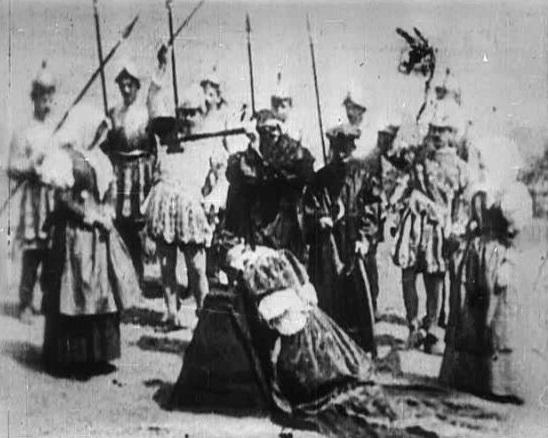
Mary approaches the block and kneels down as the guards, executioner, and others look on. She places her head on the block as the executioner raises the ax. He then brings it down, severing her head. It rolls on the ground, and the executioner retrieves it and holds it aloft.

Essentials:

After Dickson left the company in April, Edison appointed Alfred Clark to replace him in film production. Though Clark only remained for a year before going on to pursue his real interest (recorded sound), during that short time he experimented with films that marked a radical departure from what Dickson had produced. As far as we know, only one of these films has survived: The Execution of Mary, Queen of Scots, filmed in late August of 1895.

This was one of several historical tableau films, most of which appear to have focused on some particularly violent or gruesome event. Other examples included such titles as Indian Scalping Scene and Rescue of Capt. John Smith by Pocahontas. As the lone remaining example of these films, that makes this perhaps the oldest surviving historical dramatization, and also among the earliest films to feature professional actors. The title role is played by Robert Thomae, a male actor playing the female lead, in the common theatrical tradition of the period they’re depicting.

Perhaps more controversially, many have claimed that this is the first horror film. That classification seems at least slightly dubious at first glance. An on-screen beheading alone would not generally be enough to qualify a film as horror. However, it does seem likely that the goal was specifically to shock the audience, and likely many viewers were horrified by the realism of the scene. Although this predates Paris’s famous horror shows staged at the Grand Guignol Theatre, Charles Musser suggests a connection with the displays visitors might see at the Eden Musée’s waxwork Chamber of Horrors, which had opened in 1884. This could probably reasonably be categorized as proto-horror.

Of far greater significance is the filming of the beheading. It isn’t difficult for modern audiences to spot the edit that happens at 0:06, where the actor is replaced by a dummy which is then beheaded. For contemporary audiences, it would have been a different story, simply because nothing like that shot had ever been done before. This is the oldest surviving film with “special effects,” and also the oldest film to use a camera edit. For viewers at the time, the effect must have been incredibly startling.

Screening:

In addition to the innovative use of camera techniques, there is a level of visual sophistication to this scene that is a step above what Dickson had been doing previously. The costumes seem to show a surprising level of attention to detail, but notice also the way the scene is arranged. There is a blank background set up at the very back, as was typical of most films to this point, but it seems to be much further back from the camera than usual. The guards in particular give the scene a sense of increased depth, due to the way they are arranged in rows behind the main action. Notice the way they all take a step forward, craning their necks to see, at the moment of the beheading.

To me, unless you specifically watch for it, the edit is clean enough that it doesn’t draw undue attention to itself. A lot of that depends on precisely what part of the screen you happen to be looking at when it happens, and the dummy definitely sags a bit obviously in some of the wrong places. Still, if you watch the executioner, the slight jump just looks like one of many common jitters that happen onscreen for various reasons in a very old film. The overall effect of the scene works surprisingly well, and points ahead to more exciting developments to come.

Film History Essentials: Charcuterie Mécanique (1895)

•February 15, 2023 • 1 Comment

(English: The Mechanical Butcher)

Summary:

A butcher and his assistants load a pig into a large box and close the lid. Another assistant immediately begins operating machinery that appears to be attached to the back of the box, and the butcher opens up the other side of the box and begins to unload a full complement of pork products.

Essentials:

Charcuterie Mécanique has been widely referred to as the first science fiction film, but it represents much more than that. The term “science fiction” brings something very different to mind than anything we see here, even in 1895. At the time, the genre didn’t yet have its name, but everyone knew of the “science novels” of Jules Verne, and H.G. Wells’ “scientific romances.” Verne in particular was adept at telling stories that featured technology or human achievements that did not yet exist, but in a manner so believable that his stories have survived the actual advent of some of those achievements without feeling badly dated.

The Lumière brothers likely did not intend this to occupy the same genre as a Verne or Wells novel, but nevertheless it does depict the use of technology that did not exist at the time the film was made. And this is a specifically “technological” rather than “magical” device, as denoted by the use of the word “mechanical” in its name, and by the operation of the machinery that is mostly hidden behind the box. You can also see around 0:14 when one of the assistants lifts up a smoking pot and pours it into the top of the machine, which then produces more smoke or steam meant to stem from the operation of the machinery.

What makes this particularly interesting is the way it employs a “trick” as a narrative and visual device to make something appear to happen that isn’t actually happening. This may well have been the first film to do something like that, and this idea opens up a world of possibilities that films still rely on to awe and entertain to this day. But equally noteworthy is that the film accomplishes its effect without the use of anything we would call “special effects.” There is no trick photography, no stopping and starting the camera, etc. Nothing happens in this film that couldn’t have been reproduced live in front of an audience with the same effect.

So, while Charcuterie Mécanique wasn’t particularly influential on the science fiction genre, it had a notable effect on the “trick” film. It was directly ripped-off, imitated, and expanded upon a number of times over the next few years. But it also signals yet another significant step for film, away from any kind of art form that had existed before, and towards becoming its own, totally-unique thing.

Screening:

Most modern audiences are probably a bit more removed than people in 1895 were from the operations that turn a living animal into the meat that we consume, so for some this may seem a bit gruesome to watch. Sure, we know that the “butcher” doesn’t immediately pull out the actual head of the pig that we just saw go into the “machine,” but it’s still an actual pig’s head. If it helps (it probably doesn’t), reportedly this film, and some others like it, were sometimes run backwards instead of forwards. This showed instead the various parts of a butchered pig being loaded into the machine, and then wondrously reconstituted back into a live animal that is pulled out the other side.

There is an innocent whimsy to this film, and no doubt audiences appreciated it in the spirit of humor that its creators apparently intended. Still, it does perhaps foreshadow our present reliance on mechanically processed foods, and the consumer’s lack of connection to, or even knowledge about, where those foods originated or how they were produced. This film was made in a time of increased automation, and less than a decade later, Upton Sinclair would be working undercover while researching his famous exposé on the meat industry. Whether the Lumière brothers were aware of any of these larger issues or not, that connection to a larger conversation more than anything qualifies this as genuine science fiction.

Film History Essentials: Rough Sea at Dover (1895)

•February 14, 2023 • 1 Comment

Summary:

Waves crash and break violently against a sea wall that juts out into the water. Also included in this clip is a second shot, most definitely not of the ocean at Dover. It isn’t known whether this shot was always part of the original film, but it is certainly footage from a different location, possibly the river above Niagara Falls.

Essentials:

By the mid-1890s, the British had a history of nearly inventing the movies. Louis Le Prince successfully made some motion picture films in 1888, but, if he developed a way to project them (as some claimed), no one outside of his immediate circle ever saw it before his mysterious disappearance in 1890. That same year, Wordsworth Donisthorpe and William Carr Crofts filmed at least one motion picture with their “kinesigraph,” but were unable to secure the funding they needed to develop a method of projection.

Meanwhile, throughout 1888-1890 and beyond, the British photographer and inventor William Friese-Greene (see right) was involved in several motion picture camera projects, often with collaborators (he even corresponded with Edison while Dickson was working on the kinetoscope). He produced some films, although all of them are lost and little is known about the device that produced the films we know about. There are also various claims that he demonstrated a motion picture projector, but no records exist that confirm this. By the end of 1895, the Americans, the Germans, and the French had all successfully projected motion pictures for a paying audience, but the British had not. That was about to change.

Before we get to that, it is necessary to back up to 1894 and discuss a little entrepreneurial piracy. In July of 1894, a group of Americans who had originally emigrated from Greece formed the American Kinetoscope Company and gave the first demonstration of an Edison kinetoscope in Paris (which was also the first demonstration in Europe). This demonstration (which continued into the following year) likely provided the inspiration that led the Lumière brothers to develop the cinematograph, but by then the company had also opened a kinetoscope show in London and was looking to expand.

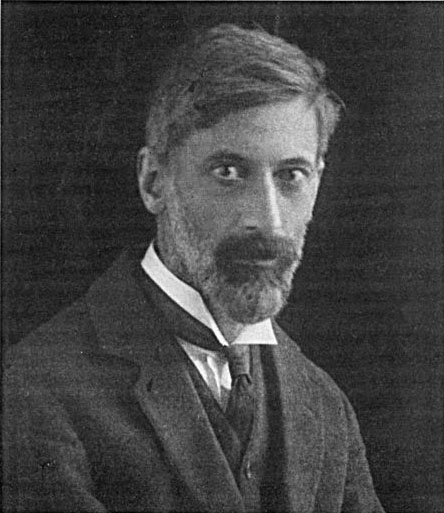
A major problem with this plan was that the American Kinetoscope Company had no official license from Edison to operate in London. Edison had sold the exhibition rights for the entire world excluding the US and Canada to a pair of Americans named Maguire and Baucus, so the company wouldn’t be getting any more official machines. (In fact, they were fending off a legal challenge from the aforementioned pair.) Fortunately, Edison had neglected to patent the kinetoscope in the United Kingdom, so they simply went looking for someone that could duplicate the devices for them. A man named Henry Short introduced them to his friend Robert Paul (see left), a brilliant electrical engineer who soon had not only made several machines for the company, but was also making additional machines for himself.

Of course, the thing about having only knockoff Edison kinetoscopes was that Edison wouldn’t sell them any of his films to play on them. Paul would need to go into film production for himself, which also meant he would need a camera. Enter Henry Short again, with an introduction to Birt Acres (see right), his manager at the photographic materials company where they both worked. Acres possessed the considerable knowledge of cameras and photography that Paul urgently needed to get started. The two met on February 4, 1895, and formed a partnership that at first appeared quite successful. They had a working camera by the following month, and Acres quit his job to travel around making films full time while Paul began working on promotion and distribution.

However, when Acres returned in the middle of the summer, their partnership ended abruptly and rancorously, seemingly over a question of Paul having taken all of the credit for the fruits of their combined labors. Thereafter the two men gave very different accounts of who had actually developed the camera Acres used to produce their films. Regardless, Acres was the one to patent it, and to copyright the films it recorded. For his part, Paul simply developed and built a new camera, though not until April of the following year. By then, he had already developed a projector, which he called the “Theatrograph” (see left), first demonstrated on February 20, and then shown publicly on March 19.

But Acres had gotten there first. He developed his projector by the end of 1895, and gave the first public demonstration of a projected film in the UK less than 2 weeks after the Lumière brothers Paris debut, on January 10, 1896 (though a commercial screening didn’t occur until March 21). The program included Rough Sea at Dover, and it was particularly popular. Meanwhile, the Skladanowsky brothers had their January booking in London cancelled, just as their Paris booking had been. England now had its own, homegrown projection systems.

As for Rough Sea at Dover, it played a significant role in an important event that occurred just a few months later. But the story of that event begins in March 1895, with a partnership formed by inventors Thomas Armat and C. Francis Jenkins to develop film projection. Within 6 months they had a working projector, the “Phantoscope” (see right), that was compatible with kinetoscope films, and they had used it to exhibit at the Cotton States Exposition in Atlanta. Opinions differ as to whether this counts as a “commercial” exhibition or not, but attendees were asked to pay as they left the screening room.

This exhibition didn’t go particularly well, especially after a fire broke out at a booth next-door and damaged their set-up. The two quarreled, and Jenkins took one of the projectors and left for home, where he filed a patent claiming sole credit. He seems to have felt that he didn’t need Armat, and even (rightly or wrongly) that the majority of their accomplishments were due to his work. Fortunately for Armat, a joint patent already existed, and Jenkins was denied.

Still, he continued to claim sole credit, and the pair were tied up in court over the issue for some time. Jenkins eventually went so far as to say he had actually projected a film in his hometown of Richmond, Indiana way back in June 1894. He spun a whole story about tapping into a passing trolley wire for electrical power and showing the film Annabelle Butterfly Dance, which he apparently claimed to have filmed himself, in his own backyard! (That detail, at least, was in accounts published decades later by Indiana newspapers.)

Ultimately, when he couldn’t secure sole patent rights, Jenkins sold his stake to Armat. Armat ended up selling the Phantoscope rights to the Kinetoscope Company. They secured Edison’s blessing of the purchase, and his agreement to manufacture the machines and make films for them, under the condition that it be renamed the “Vitascope” and marketed as an Edison invention. Edison’s own engineers had not yet been able to produce a working projector, and there was growing concern that they would be left behind in the rapidly emerging field of film projection. “EDISON’S GREATEST MARVEL” debuted before the public on April 23, 1896, and one of the films shown was Acres’ Rough Sea at Dover, which once again proved very popular with audiences.

Edison’s people were able to complete their own projector in November, and the Vitascope had successfully filled the gap. Of course, the Eidoloscope had projected films for an audience over a year earlier, but Edison was a publicity juggernaut and had name-recognition that the Lathams couldn’t match. Besides, the entire country was proud of Edison and his accomplishments (and his “accomplishments”), and this was the narrative people wanted. The Vitascope helped cement Edison’s carefully-manufactured reputation as the inventor of motion pictures. As for Paul and Acres . . .

Robert Paul launched completely into filmmaking as a business, and went on to open his country’s first film studio. By the turn of the century, he was the most successful film producer and distributor in the UK. He is remembered as “the father of the British film industry.” Birt Acres, on the other hand, was more high-minded and believed that films had a more serious purpose than mere entertainment. He spent the next few years giving lectures that promoted the possibilities filmmaking offered for science, photography, and education. This turned out to be a poor business plan, and although Acres continued to be responsible for a number of innovations, he was unable to capitalize on them, and his contributions were nearly forgotten for decades. It probably didn’t help that his former partner’s successes gave additional weight to Paul’s biased account of their brief collaboration.

Screening:

Despite its brevity, it really isn’t difficult to see why audiences responded so strongly to Rough Sea at Dover. It’s such a captivating juxtaposition of human ingenuity and resilience in the face of nature’s raw power and beauty. Then, too, Dover as a place has such a strong national association, both for the British people and for Anglophilic Americans. The image of the waves crashing is mesmerizing, and most have been particularly affecting to audiences who were quite distant from the ocean at a time when traveling to the beach was the only way to actually see crashing ocean waves. For some viewers, this was probably their first time to see the sea in motion.

Rough Sea at Dover was, obviously, one of the first films to go out to a distant location to film, rather than film in a studio or a nearby city street. Marey also famously captured images of an ocean wave, but those wouldn’t have been seen by many people outside of the scientific community. Acres, and (to various extents) all the many other people involved in realizing the dream of film projection throughout 1895-96, brought that experience to the masses.

Film History Essentials: Repas de Bébé (1895)

•February 13, 2023 • 2 Comments

(English: Baby’s Meal)

Summary:

A small family sits outside, eating a meal. The father feeds the baby a few scoops, with much of it getting on her face. He then hands her a biscuit, which she tastes and tries to give back. The wind proves distracting, blowing her collar into her face, and the father prepares another spoonful of food for her. Meanwhile, the mother pours and drinks a cup of tea with sugar.

Essentials:

Auguste Lumière is alleged to have said that the cinematograph was merely a “scientific curiosity” that would have “no commercial value” once the brief novelty period had ended. Louis purportedly said that it was “an invention without a future.” If true, this is quite surprising, though not because it is so short-sighted. It’s surprising because the 10-film program the Lumière brothers premiered before audiences in December of 1895 looks very much like a deliberately-chosen blueprint for the future of motion picture commercialization.

True, some of the “actualities” that make up a great deal of the program, the films that simply point a camera at an ordinary scene on a city street or at a factory entrance, represent a genre that had only a brief future in commercial filmmaking (though some might regard them as a sort of “proto-documentary,” or even a precursor to more specific non-fiction subgenres like educational films, travelogues, etc.). But Le Débarquement du Congrès de Photographie à Lyon pointed the way towards filmmaking as journalism, and the films of performers pointed to the possibility of stage entertainment reaching vast audiences who could not attend the live performance. And L’Arroseur Arrosé, of course, was an early example of the narrative fiction films that would soon come to dominate what we now think of when we think of “the movies.”

However, the seventh film on the program, Repas de Bébé, suggests one additional possibility: The ability of film to transport the viewer back to a preserved moment in time by capturing a personal memory that can be relived, again and again, no matter how many years have gone by. This scene was recorded in February or March of 1895. Louis was behind the camera, filming. In front of it are his brother Auguste, Auguste’s wife Marguerite, and their daughter Andrée, only about 9 months old. You don’t have to know any of that to recognize this as a tender scene featuring a loving family, but for the Lumières it is more than that: It is the first home movie. Many people have made this connection somewhat jokingly, but I think it’s absolutely correct.

Tragically, Andrée Lumière died at the age of 24, a victim of the 1918 flu pandemic that claimed tens of millions of lives worldwide. Her parents both lived on for decades, Auguste dying in 1954 and Marguerite in 1963. I don’t know what this, and the few other films that Andrée appeared in during the next few years, might have meant to them, and it would be cheaply sentimental to speculate. But I know what it means to me when I watch videos of my children when they were younger. It’s a gift, one that the Lumière brothers helped give to the world.

Screening:

There are some indications that audiences found this film, out of all of them, particularly affecting. Perhaps it’s the intimacy of the scene, captured at a much closer distance than most of the other films in the program. Certainly the genuine warmth and affection that is visible between Auguste and his family must have played a role in that as well. And little Andrée is thoroughly charming, particularly when, after tasting the biscuit (her father has to show her that it’s something to eat), she holds it out towards the camera, perhaps offering it to her Uncle Louis.

However, there are also some surprising elements of the film that stood out to contemporary audiences. We have records of at least a few viewers who remarked on the sight of the wind blowing through the leaves of the trees, visible above Marguerite’s head. I’ll admit that particular detail wasn’t something I would have noticed, but once you notice the way the wind interacts with the scene, it’s a detail that (if you’ve ever eaten outdoors) almost makes you feel like you’re there, even without color or sound.