Time Marches On

•August 29, 2008 • Leave a Comment

I’m a few days late on declaring the summer over, as the transition has been an unusual one for me. My mind was on other things. This post will probably be ridiculously long because I watched a lot of good films this summer. That was thanks in part to my 1,000th movie celebration perhaps, but mostly I just stumbled across fantastic stuff. I’m surprised to note that no less than three movies I saw theatrically this summer made the big cut, up two from last summer. Anyway, with so many Honorable Mentions to discuss, it’s time to launch right into it. The top ten movies of my summer, in no particular order:

Sunshine

Son of Rambow

Brick

The Dark Knight

The Killing

City Lights

Notorious

Winter Light

WALL•E

Lawrence of Arabia

Some of these I’ve already reviewed, of course: Son of Rambow (thoroughly charming, saw it twice), The Dark Knight (an amazing thrill ride, likewise twice), WALL•E (still my favorite of the year so far, three times going on four). I also mentioned the profound experience of Winter Light in passing, and discussed Lawrence of Arabia as the Ultimate Movie.

Sunshine blew me away. I am not aware of a better cerebral sci-fi experience since 1997’s grossly underrated Gattaca. It is a marvelous revisiting of the themes and ambiance of 2001: A Space Odyssey, but with a good deal more action and suspense to help you stay awake. And speaking of Kubrick, he’s represented on this list. I finally had a chance to see his great mid-50s heist movie, The Killing. Sterling Hayden is awesome, and the storytelling is just very tight and very gripping.

Along similar hard-boiled lines, there is Brick. Made in 2005, this is a throwback to really gritty 1940s film noir set in a modern-day high school. It doesn’t sound likely to work, but it does, squeaking by on a bare minimum of melodrama. Ranging back into the region of established masterpieces, I’ve rounded out the list with Charlie Chaplin’s thoroughly disarming City Lights, and another great romance: Hitchcock’s Notorious. I hadn’t seen it in years before I rewatched it last month, and I fell in love with it all over again. It is truly among his very finest films.

Honorable Mention:

The Fall

An heartbroken stuntman and an immigrant girl with a broken arm wind up in the same hospital in the early days of moviemaking. She is bored, and he needs an unwitting accomplice to steal him some pills, so he spins her an epic tale of adventure and romance populated with people she knows in exchange for her cooperation. Some aspects of this film might not feel quite right to the viewer, but this is truly a cinematic experience that should not be missed. The cinematography, locations, costumes . . . in short, the total visual package undoubtedly rates with the best that I have ever seen.

Things We Lost in the Fire

After Audrey (Halle Berry) loses her husband (David Duchovny), she gets his childhood friend Jerry (Benicio del Toro), a former alcoholic that she never approved of, to move in with the family. Sparks fly and many tears are shed as everyone attempts to put the pieces of their shattered lives back together.

Barton Fink

This early ’90s masterpiece from the Coen Brothers has the title character, a critically-acclaimed playwright played by John Turturro, accept a screenwriting job in 1940s Hollywood. Once there, he is assigned to a wrestling picture and runs up against the most nightmarish case of writer’s block in the history of fiction. The result is simultaneously hilarious, horrifying, and (of course) more than a little ambiguous.

The Visitor

Richard Jenkins is a lonely economics professor whose life is transformed by a chance encounter with a pair of illegal immigrants. The result is a film full of both joy and sorrow, and a hard-hitting statement about the current state of immigration in America.

Great World of Sound

Two regular guys face a moral crisis when they discover that their new job as traveling record producers, signing undiscovered musical talent, is actually just a shallow scam. Thanks to a fantastic performance by the leads and some genuine amateur local talent, this striking independent film feels incredibly real. Powerfully drawing the slight comedy out of the larger tragedy, the result will certainly stick in the memory.

Salesman

Someone filmed a documentary involving traveling Bible salesmen in the late 1960s, and I’d never heard about it? Must watch. Salesman does not disappoint, chronicling a profession that forms an important piece of early and mid-century American culture, particularly in the South. Four characters, the Badger, the Gipper, the Rabbit, and the Bull (named for their styles of salesmanship) criss-cross the country pushing the Word of God to make a living.

In Bruges

Two hit-men (Colin Farrell & Brendan Gleeson) are instructed by their bad-tempered boss (Ralph Fiennes) to hole up in Bruges, a medieval Belgian city. While the heat dies down after their last job in England, they sight-see, fight off boredom, and encounter a host of weird characters and situations. You are unlikely to have ever seen a story quite like this, and Bruges just jumped pretty high on my places-to-visit-in-Europe list.

Primary Colors

John Travolta and Emma Thompson electrify the screen as thinly-disguised portraits of Bill and Hillary Clinton on the campaign trail in 1992. Primary Colors is an election-year epic that captures all of the scandals, the insanity, and the unexplainable magnetism of the candidates and the process in a side-splittingly funny way. I couldn’t get enough . . . too short at 143 minutes.

Downfall

Hitler’s final days in a bunker in Berlin, a subject that is normally a mere footnote in history texts, gets the two-and-a-half hour treatment here from a talented cast and director. Based on the experiences of Traudl Junge, Hitler’s last personal secretary, Downfall provides a fascinating behind-the-scenes glimpse at the death of the 3rd Reich.

The Lady Vanishes

By far Hitchcock’s best British film, The Lady Vanishes is a masterful balance of romantic comedy and spy thriller, replete with fun and eccentric characters and situations and held together by a crackerjack plot. A young woman named Iris, traveling across Europe by train, befriends an elderly governess named Miss Froy (played by the inimitable Dame May Whitty). But, when her friend disappears without a trace somewhere along the way, and the other passengers claim never to have seen the older woman, Iris sets out to get to the bottom of things.

Shadow of a Doubt

Perhaps not as well-known as his later American films, Hitchcock always referred to Shadow of a Doubt as his favorite. One can see why. Charlie Newton (Teresa Wright) is thrilled by a surprise visit from her favorite Uncle Charlie. However, the delight soon turns sour when she begins to suspect that the beloved relative may in fact be the Merry Widow Murderer, and that he will stop at nothing to protect that secret, even if it means offing his namesake. Another delightful blend of comedy and suspense (watch for Charlie’s father and his friend, who spend their evenings coming up with ingenious ways to murder one another) from the master.

Hamlet 2

•August 28, 2008 • Leave a Comment

starring Steve Coogan, Catherine Keener and Joseph Julian Soris
written by Pam Brady and Andrew Fleming & directed by Andrew Fleming
Rated R for language including sexual references, brief nudity and some drug content.
77%

Failed actor Dana Marschz (Coogan) is a struggling, no-talent high-school drama teacher in Tucson who enthusiastically stages painfully-bad adaptations of Hollywood movies like Erin Brockovich featuring his two star (and only) students, flamboyant Rand (Skylar Astin) and chipper Epiphany (Phoebe Strole). The bane of his existence is freshman Noah Sapperstein (Shea Pepe), the drama critic for the school paper, who pans production after production. This year, though, things are different. Dana’s class is suddenly flooded with displaced Hispanic students, and he soon learns that the school’s drama program will be cancelled at the end of the term.

Seeking to inspire the rough bunch in the spirit of his heroes (Robin Williams in Dead Poets Society, Richard Dreyfuss in Mr. Holland’s Opus, and Michelle Pfeiffer in Dangerous Minds), and desperate to save drama, Dana follows his biggest critic’s advice and writes his own original work: a sequel to the greatest play in the English language. Once the principal gets wind of the production’s obscene and sacreligious elements, he sets out to shut it down, drawing the ACLU and the national media into what has become a community-wide controversy.

Mel Brooks famously said, “Tragedy is when I cut my finger. Comedy is when you fall into an open sewer and die.” If that’s your cup of tea, the first three-quarters or so of Hamlet 2 will be right up your alley. It isn’t often that I see a main character’s life treated so sadistically by the writers who created him. Dana is a man who gets no respect from anyone with regards to anything; a man who has to take on a boarder so his alcoholic wife (who seems to stick around for the twisted pleasure of watching his train-wreck of a life) will no longer sell pot; a man who has been reduced to commuting to school on roller skates (really? you can’t even give him a bike?) and is subject to frequent, painful falls. His life is, in his own words, “a parody of a tragedy.” Much of the comedy is of the sort that you (or, at least, I) watch in horror through slits between your fingers.

Incidentally, I have to wonder what Tucson ever did to Brady and Fleming to deserve the treatment it gets here. I have to wonder how the movie is playing (or if it is playing) to audiences there. I suspect that, as it is used in the movie, “Tucson” is simply meant as a convenient metaphor for something else, like artistic stagnation, or the unwanted turns life so often takes. Still, that will be small comfort to the residents of a town that is visually referenced as the place where “dreams go to die.”

Among the few rays of light are the scenes between Dana and the young critic. The character is brilliant, and their exchanges are fresh and hilarious and not at all cringe-worthy. In fact, Hamlet 2 has a number of moments like this scattered sporadically throughout the opening acts, and they provoke just enough guffaws to tide the viewer over into happier territory. A lot of these moments belong to Coogan, who rescues his character from our pity and disgust by finding something in him that we can connect with and root for, even if that something is only his almost-unsinkable exuberance. It is no mean feat.

The movie is split up, play-like, into several acts (I believe five) which are announced via intertitle with quirky subheadings. Intertitles also precede a few (but not nearly all) scene transitions, with no discernible rhyme or reason except possibly because it is funny to see, for instance, “At the Sperm Bank” appear on the screen. A serious, deep-voiced narrator also steps in two or three times at random to move things along, though so unpredictably that the device feels intrusive. The voice of the narrator is not listed anywhere in the credits, but (according to the director) it is Coogan attempting his best impression of Jeremy Irons (and it is good).

In the end, the plot fails to gel in such a way as to suggest that a large number of scenes were left on the cutting-room floor (it’s either that or a severe deficiency in the script). Characters, including most of the students, seem to transform entirely off-screen. This probably has something to do with the fact that there are so many characters, really too many to juggle effectively, but I couldn’t shake the sense that there were a number of important developments that just didn’t work.

Nevertheless, if you can hang on through an hour and change, the presentation of the final production goes a long way towards redeeming everything the movie has put Dana (and us) through. Hamlet 2 (in a way that completely defies what we have been told about it) manages to be funny and campy, but also surprisingly poignant. It even, incredibly, manages to illustrate some of the seemingly-shallow tripe Dana was schilling out earlier about the vitality and transformative power of theater. Whether you believe that a man like Dana Marschz, with the meager resources at his disposal, could actually pull something like this off is more or less irrelevant. The play’s the thing (that we’re here for), and it’s a lot of fun.

American Movie: Stella Maris (1918)

•August 27, 2008 • Leave a Comment

Pickford’s mega-stardom during the ‘teens and ‘twenties rested on much more than her pretty face. She was also a performer of considerable skill, as she proved with her dual role in Stella Maris. In the film, Pickford plays both the beautiful, invalid title character, and plain, orphaned waif Unity Blake. On top of a fabulous make-up job, Pickford assumes a heavy disguise of mannerisms, postures, and expressions that render her unrecognizable. She disappears into character, and without a cast list I would never have picked her out as the same actress.

Stella Maris, like many serious feature films of its day, is a romantic melodrama with undertones of contemporary social commentary. Based on a 1913 novel of the same name. Stella Maris is, of course, Latin for “Star of the Sea,” and is one of the many titles frequently associated with the Virgin Mary. The film’s Stella lives a very sheltered life under the protection of her wealthy aunt and uncle, the Blounts. She has been paralyzed from the waist since birth, and her guardians, wishing only to protect her, have never told her about things like death, poverty, and war (even the ongoing Great War). A sign on her bedroom door reads, “All unhappiness and world wisdom leave outside. Those without smiles need not enter.”

Drawn to her rosy personality is local journalist John Risca, a man unhappily married to Louisa, an abusive alcoholic and drug addict. Louisa, looking for some household help and unable to keep employees, adopts young Unity from the local orphanage. Sometime later, Unity is sent out for groceries, but they are stolen by a gang of roughneck children. The loss sends Louisa into a violent rage, and she beats the poor girl unconscious. Fortunately, concerned neighbors call the police and Louisa is sent to prison. Feeling responsible for the girl, John adopts her and they live together with his maiden aunt, where Unity finally begins to feel accepted for the first time. Meanwhile, Stella’s aunt and uncle have found a surgeon who believes he can operate and restore her ability to walk, in time.

Three years pass. Unity has worked diligently on her education in hopes of impressing John, whom she has grown to love. Stella has learned to walk and her romance with John is flourishing, but this has also taken her outside of her own four walls and exposed her to the evils of the world. It seems that she was not only crippled physically. In the midst of this, Louisa is released from prison, determined to make trouble for our heroes.

As a silent melodrama, Stella Maris certainly feels a bit quaint in spots, but it has held up surprisingly well considering its age. Filmed with great energy and artistry, there is a maturity in the quality of the production; a solid realism in the locations and a sophistication in the camerawork. It is also always a little surprising to see certain themes and issues dealt with in old movies that pre-date the Production Code. For instance, witnessing Louisa’s addiction, including drug paraphernalia, and having a major character commit murder as an integral part of the plot. Both of these are elements that would have effectively disappeared from the screen less than 20 years later, not to return for decades.

The movie’s greatest strength, though, is in the exploration of the dichotomy between the lives of its two main characters. Unity is a sweet, but deeply wounded girl who immediately captures and holds our sympathy. Her subplot is the most compelling, largely because of the incredible strength of Pickford’s performance. The best thing about Stella’s story is its examination of the way our lives are enriched by experiencing sorrow as well as joy, with her paralysis as an extended metaphor of how her guardians’ poor choices are preventing her from living a whole life. Late in the movie, Stella despairingly moans, “I no longer pity the blind! All the ugliness of life is shut away from them.” John quietly replies, “And also its beauty.” How true.

Trailer Break: The Boy in the Striped Pajamas

•August 25, 2008 • 1 Comment

It’s called The Boy in the Striped Pajamas, and it has the guy who played (among other things) Remus Lupin in the Harry Potter movies. Check it out.

Fall Movielogue, 2008

•August 25, 2008 • Leave a Comment

August 25 – January 9

# Title (Production Year) Rating% Date Watched — Review links, if any (*Title* denotes top ten movie of period)

1040 3:10 to Yuma (1957) 68% 8/25/2008
1041 A Decade Under the Influence (2003) 90% 8/26/2008
1042 The Train (1964) 92% 8/28/2008
1043 Hamlet 2 (2008) 77% 8/28/2008 — Post
1044 The French Connection (1971) 95% 8/28/2008 — Post
1045 *I Confess* (1953) 94% 9/3/2008
1046 *Scotland, PA* (2001) 96% 9/5/2008
1047 Broken Blossoms (1919) 94% 9/5/2008 — Post
1048 Nim’s Island (2008) 58% 9/7/2008
1049 Richard III (1955) 73% 9/11/2008
1050 Richard III (1995) 84% 9/11/2008
1051 Burn After Reading (2008) 87% 9/12/2008 — Post
1052 *Shakespeare in Love* (1998) 93% 9/16/2008 — Post
1053 Sophie Scholl: The Final Days (2005) 86% 9/17/2008
1054 *Recount* (2008) 96% 9/17/2008
1055 A Thousand Acres (1997) 49% 9/18/2008
1056 Lakeview Terrace (2008) 45% 9/19/2008 — Post
1057 Ghost Town (2008) 74% 9/19/2008
1058 Midnight Run (1988) 89% 9/20/2008
1059 The Saddest Music in the World (2003) 67% 9/21/2008
1060 The Forbidden Kingdom (2008) 77% 9/24/2008
1061 Stanley Kubrick: A Life in Pictures (2001) 90% 9/24/2008
1062 Smart People (2008) 70% 9/26/2008
1063 Judith of Bethulia (1914) 79% 9/26/2008 — Post
1064 My Cousin Vinny (1992) 82% 9/26/2008
1065 The Yes Men (2003) 72% 9/27/2008
1066 An American in Paris (1951) 80% 9/30/2008 — Post
1067 *Syndromes and a Century* (2006) 97% 10/1/2008
1068 Flight of the Navigator (1986) 81% 10/4/2008
1069 *Ghost World* (2001) 96% 10/4/2008
1070 City of Ember (2008) 85% 10/10/2008 — Post
1071 W. (2008) 39% 10/17/2008 — Post
1072 Star Wars: The Clone Wars (2008) 48% 10/18/2008
1073 The Wrong Man (1956) 90% 10/22/2008
1074 Grave of the Fireflies (1988) 94% 10/29/2008
1075 *Changeling* (2008) 94% 10/31/2008 — Post
1076 Quarantine (2008) 54% 11/2/2008
1077 Carmen (1915) 50% 11/4/2008
1078 The Cheat (1915) 83% 11/4/2008 — Post
1079 Nashville (1975) 94% 11/6/2008
1080 Madagascar: Escape 2 Africa (2008) 74% 11/7/2008 — Post
1081 Citizen Ruth (1996) 76% 11/11/2008
1082 Cats & Dogs (2001) 60% 11/12/2008
1083 The Birds (1963) 89% 11/19/2008
1084 Bolt (2008) 79% 11/21/2008 — Post
1085 Transsiberian (2008) 90% 11/21/2008
1086 Marnie (1964) 93% 11/26/2008
1087 Australia (2008) 62% 11/28/2008 — Post
1088 The Pixar Story (2007) 92% 12/1/2008
1089 Igor (2008) 40% 12/2/2008
1090 Torn Curtain (1966) 82% 12/3/2008
1091 The Life of Emile Zola (1937) 59% 12/4/2008 — Post
1092 Nick and Norah’s Infinite Playlist (2008) 70% 12/9/2008
1093 Topaz (1969) 80% 12/10/2008
1094 Trainspotting (1996) 91% 12/11/2008
1095 The Age of Believing: The Disney Live Action Classics (2008) 81% 12/14/2008
1096 The Apple Dumpling Gang (1975) 88% 12/14/2008
1097 *The Sensation of Sight* (2006) 95% 12/15/2008 — Post
1098 Frenzy (1972) 86% 12/17/2008
1099 Elf (2003) 72% 12/18/2008
1100 The Education of Shelby Knox (2005) 87% 12/20/2008
1101 James and the Giant Peach (1996) 75% 12/21/2008
1102 Nine Months (1995) 24% 12/23/2008
1103 Family Plot (1976) 72% 12/24/2008
1104 The Incredible Hulk (2008) 69% 12/30/2008
1105 The Tale of Despereaux (2008) 61% 1/4/2009
1106 The Hudsucker Proxy (1994) 91% 1/5/2009
1107 *Doubt* (2008) 98% 1/6/2009
1108 Valkyrie (2008) 83% 1/6/2009
1109 Deliverance (1972) 95% 1/6/2009
1110 The Curious Case of Benjamin Button (2008) 92% 1/7/2009
1111 Alien (1979) 90% 1/7/2009
1112 *Aliens* (1986) 95% 1/7/2009
1113 Alien 3 (1992) 42% 1/9/2009
1114 Gran Torino (2008) 84% 1/9/2009 — Post

Ten Failed Taglines

•August 23, 2008 • 2 Comments

Depending on how much you pay attention to movie marketing, you may not have noticed the taglines that appear on movie posters and other related paraphernalia. These hard-working phrases have the thankless job of encapsulating the essence of the movie they are attached to in a single, short, and hopefully pithy stretch of memorable words. They’ve been around for a very long time, pretty much as long as the movies themselves, and there’s probably a fascinating history (or at least brief essay) waiting to be written on the evolution of the tagline.

I am not writing that essay, though. I want to draw attention to a totally different phenomenon. See, while some taglines enter the popular lexicon, becoming nearly as famous as the films that spawned them (i.e. “Just when you thought it was safe to go back in the water . . .” from Jaws 2), for every tagline that makes the cut, literally dozens fall short of the mark. These poor little marketing catchphrases just don’t have what it takes . . . In fact, they don’t even seem to understand that their purpose is to entice us into the theater, not blow the film for us. As an example of what I mean, I now present the Top Ten Failed Taglines (and one more). Oh, and in case I haven’t made it clear, major spoilers ahead.

#10. Apocalypto

Conquistadors to the Rescue.

#9. Children of Men

It’s a girl!

#8. Magnolia

The first feature film since THE TEN COMMANDMENTS to unleash a plague of frogs!

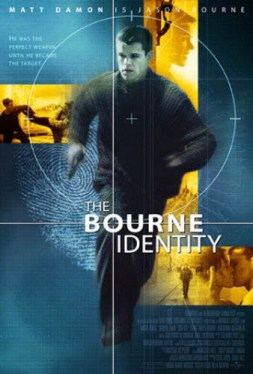
#7. The Bourne Identity

He was a CIA hitman . . . who developed a conscience.

#6. The Shawshank Redemption

The inspirational story of a wrongfully-imprisoned man who hid his tunnel to freedom behind a gorgeous pin-up.

#5. Fight Club

BRAD PITT and EDWARD NORTON are . . . TYLER DURDEN.

#4. The Sixth Sense

Meet Malcolm Crowe. He’s dead, but he doesn’t know it yet.

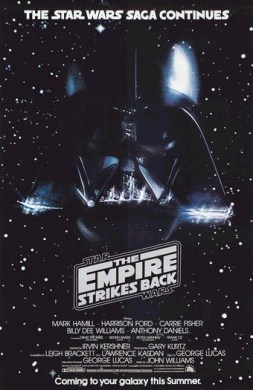
#3. The Empire Strikes Back

“Luke, I am your father.”

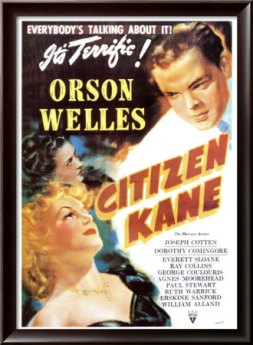
#2. Citizen Kane

The dramatic life story of a man who named his sled “Rosebud.”

#1. Psycho

Now that Mother is dead, Norman Bates is . . . PSYCHO.

Continue reading ‘Ten Failed Taglines’

What I Like About 3:10 to Yuma

•August 21, 2008 • 1 Comment

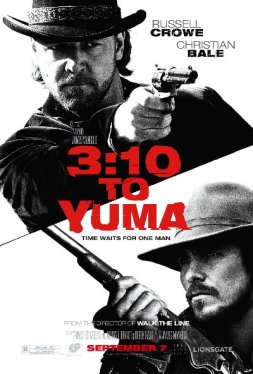
I first saw 3:10 to Yuma last year when it came out in theaters and enjoyed it enough to rewatch it tonight on DVD. A remake of a 1957 Western (which I haven’t seen), it is the story of a poor rancher, Dan Evans (Christian Bale) who signs on with a spontaneously-formed posse to escort wily, ruthless outlaw Ben Wade (Russell Crowe) to the town of Contention in order to put him on a train to Yuma, where he will spend time in prison. The mission is complicated by Wade’s gang, goaded on by half-crazy murderer Charlie Prince (Ben Foster), who is determined to rescue his boss.
There are four things I like about 3:10 to Yuma. First, it has an outstanding ensemble cast, led, of course, by Bale and Crowe. I find it ironically amusing (though, naturally, far from unheard of) that this western, that most quintessentially American of film genres, has two foreign actors, one from Australia and the other from the UK, playing the leading roles. The two are perfect together, matching talented performances that are a pleasure to watch. A hero that is as interesting as the villain can be rare, and Bale accomplishes the task beautifully (as he often has before).

There is great support, as well, not only from the strangely magnetic Foster, but also by Peter Fonda as the gruff, veteran Pinkerton agent who has matched wits with Wade before. Then there is Alan Tudyk as the small-town horse doctor who finds himself in over his head, Gretchen Mol as Evans’ long-suffering wife, and especially Logan Lerman as Evans’ son William, a pivotal character who I’ll discuss more later. There are even some notable small roles, including Luke Wilson in what amounts to little more than a cameo.

Second, the movie is a well-crafted story of action, adventure and suspense that makes full use of the genre conventions rather than seeming limited by them. The guiding idea behind the story is simplicity itself, and the execution of that idea is top-notch. The characters are established quickly and effectively, and there is a rip-roaring stagecoach hold-up sequence early in the film that sets the stage. The journey to Yuma has plenty of quieter moments of character exploration, which is where the heart of the movie is, but they are balanced with some great action, particularly the rescue and chase in the railroad camp. Despite the excitement of the action, though, none of these scenes makes the mistake of outshining the climax.

Third, and best of all, are the ideas that 3:10 to Yuma explores; the “heart of the movie” I mentioned. As a western, the movie is populated by iconic figures, hero and villain, but the two are not as clearly delineated as in more traditional westerns. Shades of gray are hardly something new, even in this genre, but 3:10 to Yuma goes beyond a mere statement that people in real life are often more complex than shallow avatars of good or evil and delves into questions of what drives these two particular men to act as they do.

Wade is a cold-blooded killer who describes himself as “rotten as hell.” He kills a number of men on-screen without thinking twice about it. On the other hand, he shows signs of refinement that are lacking among the members of his gang. When we first see him, he is quietly sketching a picture of a hawk, and he frequently quotes scripture. He is obviously governed by some sort of personal code, though it certainly doesn’t conform to conventional morality in any way. He is an honorable man, even if he is not a good man, and he can be counted on as such.

Evans, on the other hand, seems at first to be the very picture of long-suffering integrity. He is a veteran of the Civil War, during which he fought for the North and somehow had his leg crippled. Now, he scrapes out a threadbare existence with his wife and two sons which is threatened by a debt owed to another local landowner. Evans is not a hero in the sense of opposing evil at all times and in all ways, but he knows what is right and seems to try his best to do it. When he first takes on the job of helping to escort Ben Wade, it seems to be motivated primarily by his crushing need for cash. However, it soon becomes clear that he might have multiple ulterior motives, such as the belief that he has a civic or moral responsibility to see a criminal brought to justice if there is an opportunity to do so.

Matters are complicated by Evans’ son William, as mentioned earlier. William is too young to know much about the ways of the world, and it is obvious early on that he has little respect for his father. Evans knows that, even when the other landowner employs crippling, strong-arm tactics like burning down his barn, in the end he will be reduced to begging for the salvation of his land. William, on the other hand, demands action. He wants to see violence met with violence, and he despises what he views as his father’s weakness and cowardice. It is only natural, then, that William should immediately feel drawn to Wade, a true man of action, seemingly not afraid of anyone or anything.

William is definitely at a crossroads in his life, and he is watching very carefully the interactions between his father, whom he doesn’t respect, and the famous outlaw, whom he can’t help but admire. The battle between good and evil in 3:10 to Yuma, insofar as there is one, is for the soul of Evans’ son, and this adds an extra layer of tension to the already complex relationship between captor and captive.

Fourth, and finally, there is the climactic denoument, which brings the film’s thematic build-up to a head amidst a hail of gunfire. Finally arriving in Contention just ahead of the Wade gang, the small group hunkers down in a hotel room to await the train. The build-up to the finale feels a bit like a quick summation of the great Gary Cooper western, High Noon, as, one by one, the escort begins to crack under the pressure. No matter what motivations or ideals have prompted these men to come along on the journey, none of them seem willing to die for it . . . except Evans.

What is the source of this integrity that seemingly cannot be bought or intimidated? Without giving too much away, in the end it seems that Evans is not only lacking the respect of his family and business associates. He doesn’t respect himself. He wants to be able to look at himself in the mirror and not hate what he sees there, something he seemingly has been unable to do in a very long time. Wade, who has been struggling all along to get inside Evans’ head and figure out what makes him tick, is finally confronted with something he didn’t really expect, and his reaction to it is surprising (though not, to my mind, unbelievable).

I’ve heard many people call the finale of the movie silly and far-fetched, and on some level that’s almost certainly true. For my part, though, I found it both touching and exhilirating, too (thanks in part to an amazing score). On a purely visceral level, I can’t help but say it is my favorite part. In any case, 3:10 to Yuma may not be a Great Western, but it is certainly a very good western, and, having seen it twice, I wouldn’t hesitate to watch it again someday or recommend it to others.

“A good Top Ten list has . . .”

•August 19, 2008 • Leave a Comment

Daily Plastic presents the “Top Ten Loathsome or Laudable Uses of a Zoom Lens,” a list that is brilliantly meta in a way that reminds me of John Barth’s “Lost in the Fun House.” It begins conventionally enough, but soon meanders inexplicably off-track. By the time we get to item 4, it is obvious that something has gone horribly, hilariously wrong. Check it out.

Also, while you’re checking things out, have a look at these three clips from Synecdoche, New York, Charlie Kaufman’s latest and a film I’ve been itching to get a look at since I first read about it quite some time ago. These brief peeks are as . . . interesting as I would have expected.

In other items of interest, Harry Potter and the Half-Blood Prince has had its release moved from late November to the middle of next July. While I was initially inclined to be somewhat dismayed by this turn of events, I now realize that (what with taking on my first year of graduate work) the move gives me a much better chance to both enjoy and “cover” it.

Finally, bloggers, critics and fans across the interwebs are lamenting the death of Star Wars in the wake of the recent release of animated prequel gap-filler The Clone Wars (currently sitting at a frighteningly abysmal 18% on Rotten Tomatoes), which fatefully coincides with The Dark Knight overtaking Star Wars astronomical box office numbers. It is a topic I am naturally very much interested in, but I have decided that I’d rather not discuss it until I have seen The Clone Wars for myself. Since I am very busy just now, and I have not yet decided whether I am ethically and emotionally okay with putting money in this particular plate that Lucas is passing around, that will just have to wait. (On the other hand, it’s still Star Wars . . . Can I stay away?) Just wanted to mention that it’s on my mind.

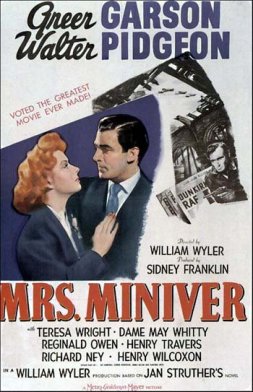
Mrs. Miniver: Best Picture, 1942

•August 17, 2008 • Leave a Comment

The 15th Annual Academy Awards were hosted by Bob Hope. World War II (which the United States had entered just a few months prior to the previous ceremony) was in full swing in Europe and the Pacific, and the nominations reflected the heightened sense of patriotism with entries like Yankee Doodle Dandy (8 nominations, 3 wins), The Pride of the Yankees (11 nominations, 1 win), and Wake Island (4 nominations, 0 wins). Mrs. Miniver was nominated for 12 awards: Best Picture, Best Director, Best Actor (Walter Pidgeon), Best Actress (Greer Garson), Best Supporting Actor (Henry Travers), Best Supporting Actress (Teresa Wright), Best Supporting Actress (Dame May Whitty), Best Adapted Screenplay, Best Cinematography, Best Editing, Best Special Effects, and Best Sound.
Pidgeon lost out to James Cagney’s iconic performance in Yankee Doodle Dandy, and Travers (best remembered today as the angel Clarence from It’s a Wonderful Life) lost to Van Heflin for Johnny Eager. Best Supporting Actress went to Teresa Wright (also nominated as Best Actress for The Pride of the Yankees) over Dame May Whitty. Best Editing, Sound, and Effects were awarded to The Pride of the Yankees, Yankee Doodle Dandy, and Reap the Wild Wind, respectively, leaving Mrs. Miniver to scoop up the rest for a total of 6 Oscars.

This was Director William Wyler’s 5th nomination, and his first win (the other two being for post-WWII weeper The Best Years of Our Lives in 1946 and the much-ballyhooed Ben-Hur in 1959). It is the story of the lives of a middle-class English family and their rural coastal village during the first part of World War II. Alternating skillfully from comedy to tragedy and back, the plot juggles such elements as German bombing raids, the rescue of British troops from Dunkirk, a local rose-gardening contest, young love, a downed enemy pilot, and the continuing erosion of the influence of England’s landed gentry, all the while keeping the focus squarely on the characters themselves.

Mrs. Miniver begins unimpressively, and is soon showing signs of some of the worst excesses of sentimentality common to the time. The initial portrait of village life is a quaint cliche, and the children of the family turn in stilted performances that come off as more revolting than adorable. In short, it seemed that this would turn out to be a tiresome example of feel-good wartime pablum. But a funny thing happened about half an hour in: the characters came alive. I would probably have to watch the film again (and believe me, I will) to pinpoint exactly when this takes place, but well before the halfway point I had become caught up in the ups and downs experienced by the Miniver family. This is truly great stuff, full of wonderful, memorable moments. The Dunkirk rescue sequence, though obviously done with models, is as stirring as it is awe-inspiring, and a scene where Mrs. Miniver and her daughter-in-law creep home during a black-out as German and British planes dogfight overhead is breath-taking. As evidenced by the effects nomination, their is a lot of great technical work to marvel at here.

However, as the record-setting number of acting nominations clearly shows, the performances are really at the heart of things. There are so many that stand out. I would have added supporting nominations for Richard Ney (who married Greer Garson shortly after the film came out) as the grown-up Miniver son, and Henry Wilcoxon for his brief but very powerful performance as the Vicar. The actors and actresses just make you fall in love with their characters, and with this movie. They all stand out.

Released in 1941, Mrs. Miniver was obviously not made in a vacuum. With America having recently entered the global conflict, the filmmakers wanted to produce something that would galvanize the public to support the war effort. Their specific intention in making the film was to show American civilians what their British counterparts were experiencing. The message hit home, and Winston Churchill himself would later comment that Mrs. Miniver was “more powerful to the war effort than the combined work of six military divisions.” President Franklin Roosevelt also openly admired the film, and he had the Vicar’s closing speech (known as the “Wilcoxon speech” after the actor who delivered it) reprinted in widely-circulated American magazines, broadcast over the radio, and even translated and dropped in leaflet form over German-occupied Europe.

The speech stirringly describes the fight against Nazism as a “people’s war,” that is, a war to be fought and won as much by the civilian population as by soldiers on the front lines. The speech is delivered in the ruins of a rustic country church which has been bombed by the Germans, and the scene (and the movie) end as the camera moves up and out through a gaping hole in the ceiling while the congregation sings “Onward, Christian Soldiers” and formations of British planes pass by in waves overhead. It is, perhaps, a rather hokey display of militant patriotism, but it is an undeniably powerful image nonetheless.

Wyler walked the walk, too, joining the army as part of the Signal Corps after finishing the film. On the night of the awards ceremony, he was overseas with nearly 28,000 other members of the film industry and countless other Americans. But, of course, in the view of the Allied leadership, he had already made his greatest contribution to the war effort by then, in the form of this justly-celebrated movie.

Continue reading ‘Mrs. Miniver: Best Picture, 1942′

Tropic Thunder

•August 13, 2008 • Leave a Comment

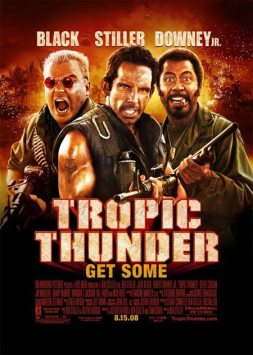
starring Ben Stiller, Jack Black and Robert Downey Jr.
written by Ben Stiller, Justin Theroux and Etan Cohen & directed by Ben Stiller
Rated R for pervasive language including sexual references, violent content and drug material.
83%

Three major actors, an action star, a comedian, and an award-winner, threaten the production of a big-budget Vietnam War movie with their antics. Director Damien Cockburn (Steve Coogan), fed up with them and egged on by technical advisor Four Leaf Tayback (Nick Nolte), drops his troublesome stars in the middle of the jungle under the pretext that he will be filming the movie “guerrilla-style.” In reality, the actors find themselves confronting a host of real jungle dangers, including the heavily-armed members of a drug operation, but mistakenly believe that it’s all just part of the show.

The characters are inspired, introduced by a series of fake ads and previews just before the movie proper begins. First is rapper turned actor Alpa Chino (say it out loud). Chino (Brandon T. Jackson) is something of an entrepreneur in the midst of trying to launch two new products: an energy drink called Booty Sweat and Bust-a-Nut candy bars. Tugg Speedman (Stiller) is an action star who has made his name with the blockbuster Scorcher franchise. But, after a lackluster 6th installment, his star is waning, and his title performance as a retarded man in huge flop Simple Jack didn’t help. Jeff Portnoy (Black) is a portly comedian known for his fart-fueled The Fatties movies (a very thinly-veiled sneer at Eddie Murphy’s The Klumps). Portnoy is addicted to heroin, but his supply on location is severely limited. Finally, there is the serious Australian actor Kirk Lazarus (Downey Jr.), a multiple-Oscar winner who takes his roles so seriously that he won’t break character “until after the DVD commentary.” Lazarus has turned his skin black in order to take on the role of the unit’s African American sergeant.

Downey Jr., who is obviously having a fantastic year, does great comedic work. I would say his character steals the show, and turns in a great performance to boot. The ultimate punchline would be to see him receive some major award nominations. The hilarity is bolstered by support from Coogan and Nolte, along with a number of major and minor celebrity cameos. These are as surprising as they are funny, and it would definitely be considered spoiler material to reveal any of them.

Tropic Thunder dodges quite a few comedy buzz-kill landmines, but not all of them. I suppose the nature of its subject makes it impossible to be funny all of the time. Some elements, like Black’s one-note drug-withdrawal shtick, wear out their welcome a bit (surely they could have come up with a few other things to do with his character?). There are one or two jokes like this which are recycled or drawn-out too much. In the midst of the pyrotechnics-fueled climax, the movie stumbles dangerously close to becoming what it is mocking (a flaw that is as deadly to good parody as a lack of humor), but it recovers before the end.

I have not yet seen Hearts of Darkness, the 1991 documentary which chronicles the insanity surrounding the making of Coppola’s Apocalypse Now, but I can imagine that it plays out a little bit like this. In a recent interview (and I paraphrase), Justin Theroux was asked, “So, is it now okay to make fun of the Vietnam War?” To which he replied, “It’s okay to make fun of actors pretending to be in the Vietnam War.” And that’s what this is. Tropic Thunder is top-notch parody, especially at a time when unfunny, no-talent hacks are permitted to assault the screen with trashy pseudo-parody like Epic Movie and Meet the Spartans. Part of what keeps it (mostly) funny throughout is the broad, layered nature of that parody. On one level, Tropic Thunder is mocking the sub-genre of classic Vietnam War films that first started appearing about 30 years ago (The Deer Hunter, Platoon, etc.). On another, it is mocking big-name stars, both those we take seriously and those we don’t. It is a satire of movie-making, and of the movies themselves. There is something for just about everyone to laugh at here, and even a little bit of room to laugh at ourselves for our part in it all.