Several people in period dress and a troop of guards enter and take up position near a large pyre piled around a stake. Joan of Arc follows behind, leaning on a monk for support. She makes a final plea to the Bishop, who points imperiously to the pyre. She climbs to the top and stands, clutching a crucifix given to her by the monk. The monk descends and kneels, either in prayer or to beg mercy from the Bishop. A man lights the pyre and stands back to watch along with the other spectators.
Essentials:
Georges Hatot began directing films for Lumière in 1896, collaborating frequently with actor Gaston Breteau. In addition, some have credited them with several Gaumont films that are also credited to Alice Guy. Though the Lumière brothers are best known for their actualities, obviously their production company made all sorts of motion pictures during its year of operation. Of the couple dozen films credited to Hatot prior to 1900, what stands out are a series of films about executions and assassinations of figures from French history: the Duke of Guise, French revolutionaries Jean-Paul Marat, Jean-Baptiste Kléber, and Maximilien Robespierre, and (naturally) Joan of Arc.
These films mostly seem to have been tableau vivant inspired by famous works of art depicting the events in question. The primary source of inspiration for Exécution de Jeanne d’Arc was apparently Jules-Eugène Lenepveu’s Joan of Arc at the Stake in Rouen. It is a massive, 15-foot canvas that adorns a wall in the Panthéon, one of a series of paintings showing various scenes from Joan’s life. Lenepveu painted this series between 1886 and 1890, so its completion was relatively recent.
This particular film is also, of course, another example of the less common and painstaking hand-tinting process that added color to a few special films. Strangely, an image from the black-and-white version of the film seems to show that the hand-tinted version (at least as it exists online) has had the sides trimmed in slightly. There should be another guard visible standing to the far right of the frame, and the two spectators on the left side should not be partially cut off. Notice, too, the sign above Joan’s head at the stake. The quality of this version renders it illegible, but it is clear from the surviving black-and-white image that it says “Hérétique Relaps,” or “Relapsed Heretic” (the “crime” for which Joan was executed at the age of 19).
Screening:
This seems to be the only film in Hatot’s “deaths of historical figures” series that does not show the actual event of the title. (Actually, Mort de Robespierre shows Robespierre being shot in the face. The film’s description claims that this shot ended his life, though he was in fact guillotined later that day.) However, all of Hatot’s similar films depict deaths that are much more sudden (mostly stabbings), and easier to simulate quickly with basic stagecraft. Still, it would have been possible to at least produce a lot of smoke, and the tinting could even have included some flames to great effect. On the other hand, the original painting doesn’t include any flames, either.
This one missed opportunity aside, the film makes particularly effective use of its colors. The guards and other onlookers are dressed in an array of brilliant hues, with the executioner who lights the fire in an especially vivid red. Bishop Cauchon’s gold-and-silver raiment stands out as well. All of these various bright colors are a stark contrast to the plain white worn by Joan herself, emphasizing her purity and her innocence among her accusers and executioners. The hand-tinting here is not only visually striking, but conveys meaning and symbolism as well. This is perhaps the earliest example of color being used in this way in a film.
Three dogs pull carts across a narrow plank bridge over a canal. The first, pulled by two dogs, quickly reaches the other side, and the dogs immediately turn and walk down into the water, nearly drawing the cart in as well. The dog pulling the second cart makes its way much more uncertainly, and ends up dumping the cart’s contents into the water just as it reaches the bank.
Essentials:
In 1897, the American Mutoscope Company expanded across the Atlantic, creating the subsidiary British Mutoscope Company. For William Dickson, this was an opportunity to return home to England with his family, and he became the technical manager for the new operation. Of course, as one of the most experienced cameramen in the world, he continued in that role, as well. He arrived back in Britain just in time to film a number of events surrounding Queen Victoria’s Diamond Jubilee.
By this time, Dickson had already made the first film of the Pope, Leo XIII (in office 1878-1903), who blessed the Biograph camera, and the first film of a US President. His experience made him the obvious choice to journey to the Netherlands to film the coronation of Queen Wilhelmina in September 1898. Wilhelmina had been queen since the death of her father in 1890, when she was 10, with her mother serving as regent. However, she was officially crowned one week after her 18th birthday. Dickson made several films that day: of the coronation, the Queen’s arrival at the palace, the Queen greeting her people, etc.
Dickson then remained in the Netherlands for some time after, filming other views around the country, including De Onwillige Trekhond. He also helped establish a new Dutch subsidiary of American Mutoscope, the Nederlandsche Biograaf- en Mutoscope Maatschappij. Though short-lived (it went bankrupt in 1902), it was part of the beginnings of the Dutch film industry.
Meanwhile, Queen Wilhelmina ruled for another half century. She spent World War II leading her country’s government-in-exile from England, returning home to the Netherlands after its liberation in 1945, and finally abdicating in 1948. It was during those post-war years that the Dutch Historical Film Archive was established, building a collection that would eventually fall under the administration of the Eye Filmmuseum. Although the Dutch film industry has never been large, this organization’s efforts in collecting, preserving, and making old films available have yielded some of the most significant early-cinema discoveries of recent years.
Screening:
There are two things about this film that immediately stand out. The first is its incredible, pristine quality. Despite being 125 years old, there are almost no blemishes on the image, and every detail is sharp and clear. It is genuinely a pleasure to behold. It’s difficult to overstate the difference it makes in our ability to appreciate a film when it is this well-preserved, knowing that we are seeing it as it was originally seen by audiences of the time.
The second is that it’s difficult to imagine a more obviously stereotypical Dutch image. There is the canal surrounded by flat, grassy fields. The approaching boat is flying the Dutch flag from the top of the mast. Of course there is a windmill in the background. And the boy and the woman guiding the second cart are even wearing wooden clogs. The use of dog-carts for making deliveries was once commonplace in the lowland countries of Europe (though this film makes them seem like kind of a lot of trouble). The composition of the image must certainly have been deliberately selected to showcase these picturesque elements.
What’s less clear is whether any of the events in the film are staged. If so, the people who appear in it are giving an extremely unselfconscious performance, but if not then it was incredibly fortuitous that Dickson happened to be rolling when this happened. Perhaps Dickson had originally intended to film the approaching boat, which is obviously set to arrive at the bridge within a minute or so of the film’s end. The bridge is clearly meant to be easily removed to allow boat traffic to pass, and the man in white points at it before hurrying across, evidently anticipating its imminent arrival and wanting to be sure the way is clear. As the boat continues to bear down on the sudden pile-up on the bridge, and the man who was walking away drops his sack and hurries back, further complications seem inevitable, but the film ends too soon and the situation is left unresolved.
A man and woman embrace and kiss several times, parting briefly to smile and laugh at each other and the camera, flirting affectionately as they clasp hands.
Essentials:
Films in the 1890s that featured black performers often had titles like Chicken Thieves and Watermelon Contest, or even included racial slurs. Depictions of black life did not always include black performers, either, as film drew on the popular American stage traditions of blackface minstrelsy. If there were any African American filmmakers working in the 19th century, their works have so far not been identified. Oscar Micheaux, generally regarded as the earliest black filmmaker, began his career in motion pictures near the end of the 1910s.
Inevitably, then, almost every known American film from the first few decades of cinema was made by a white filmmaker for a predominantly white audience, who largely regarded black citizens with condescension when not with outright contempt or hostility. It is hardly surprising, then, that even ostensibly “benign” depictions of black characters in film were based almost entirely on stereotypes that played to the prejudices of a white audience. And that’s why Something Good — Negro Kiss is such an incredible discovery.
In 2014, Dino Everett, a film archivist at the University of Southern California, purchased some old nitrate films from a Louisiana collector. Nearly three years later, as he looked through them, he discovered one that prompted him to contact Dr. Allyson Nadia Field, a film scholar at the University of Chicago. It was, as he told her, “unlike anything [he’d] seen before.” She concurred, describing how the film was made in a “period when all moving picture images of African Americans were through a white lens and are distortions, misrepresentations, or pseudo anthropological. And this is none of that” (as quoted by Tambay Obenson for IndieWire, 2021).
As Field would later document extensively in an article for Film History, what followed was the painstaking process of identifying the film and the performers who appeared in it. The discovery, believed to be the earliest film of its kind, created something of a sensation when it was announced, even outside of the world of film scholarship. A popular version (that is quite lovely) incorporated the track “Agape” from the soundtrack of If Beale Street Could Talk. The film was nominated to the National Film Registry soon after the discovery was announced, and was added in 2018.
Something Good — Negro Kiss was produced by Chicago-based filmmaker William Selig (see right), and stars Chicago vaudevillians Saint Suttle and Gertie Brown. It was likely intended as a good-natured parody of Edison’s 1896 The Kiss, which was among the most famous and widely-seen films of its time, and would still have been in circulation even two years later. However, in 2021, a longer and somewhat different alternative version, that had been misidentified as a Lumière film, was discovered in Norway. The confusion was a result of the distinctive perforations on the side of the film, which were the same as those found on Lumière films. That particular perforation pattern happened to be used by this American film for an interesting reason.
William Selig, like Georges Méliès, was performing as a magician before he encountered motion pictures for the first time. After seeing a kinetoscope demonstration at the Texas State Fair, he returned to Chicago and, in search of an apparatus that wouldn’t fall afoul of Edison’s patented technology, happened to find someone who had built a spare Lumière cinematographe for one of the brothers’ traveling camera operators. The man was able to use the same plans to make Selig a camera and projector, which he named the “Polyscope.” That was why Selig’s films resembled a European rather than an American product. This was the clue that ultimately led Field to identify the film, as well.
Screening:
The alternative version of Something Good — Negro Kiss is about twice as long as this version, and is shot so that the couple’s full bodies appear in the frame. The negative is also reversed, though whether intentionally or accidentally is unclear. In that version, the woman repeatedly rejects the man’s advances before finally succumbing to his embrace. The result feels much more like a stage performance. In contrast, this version has such a feeling of natural intimacy and chemistry between the two that Everett initially believed it might be a proto-“home movie” rather than something filmed for exhibition.
Saint Sutton and Gertie Brown (born Gilberta Gertrude Chevalier, which is a fantastic name) were two members of “The Rag-Time Four” alongside John and Maud Brewster (see left). Sutton was a composer as well as an entertainer, and the four were a dancing and singing group, best known for their version of the cakewalk. This dance has a fascinating history, originating before the end of slavery. Some accounts suggest that the dance began as an exaggerated parody of the more formal dances that were popular among white slaveholders of the time. Based on old footage of these dances, the theory is at least plausible.
Brown remained in the Chicago theater scene until her marriage in 1915 to comedian Tim Moore. The couple toured extensively for many years before finding some success on Broadway in the late 1920s. Brown died of pneumonia in 1932, aged 54, and Sutton, whose career in the interim is not as well documented, passed away two years later.
Their 1898 film together notwithstanding, of course both frequently participated in the kinds of stereotypical acts and roles that were expected from every black performer who wanted to maintain a career in show business. Moore later went on to national fame playing the immensely popular character of The Kingfish, a scheming, small-time grifter, in the early-1950s television sitcom adaptation of Amos ‘n’ Andy, one of the most successful radio shows of the 1930s and ’40s. (And one which, incidentally, had previously featured an all-white cast voicing the all-black roster of characters.)
In any case, almost nothing seems to be known about the circumstances that led to the making of Something Good — Negro Kiss. Perhaps Sutton and Brown were originally there to film a cakewalk, and that film is now lost, or perhaps a new version of The Kiss was always the plan. However it came to be, white audiences likely viewed it purely as comedy, as with virtually all films that included black people. Nevertheless, the result feels like a tantalizing, all-too-brief glimpse into an alternate world of black entertainment that we are otherwise forced to imagine and reconstruct from less vivid sources.
As with many early filmmakers, nearly 95% of Selig’s 20+ years of films are considered lost. The possibility that more motion pictures like this may have once existed (and certainly could have existed) is a loss that feels all the more keen when all of the other surviving depictions of African Americans appear through such a warped racial lens. Whenever any 19th-century film suddenly surfaces from an unexpected source, it is an incredible find. This, an anomaly that is perhaps the most charming and beautiful pre-1900 American film we have, is a gift.
The camera view, filmed from the front of a train, travels across a bridge and then enters a tunnel. Emerging into the light on the other side, the journey continues on to the station.
Essentials:
Passage d’un Tunnel en Chemin de Fer is a sort of hybrid of two of the Lumières’ most iconic and important films: L’arrivée d’un Train à La Ciotat and Panorama du Grand Canal Pris d’un Bateau. The first famously features the arrival of a train at a station, filmed from the perspective of someone standing on the platform. The second helped invent the tracking shot by mounting a camera on a moving boat in the canals of Venice. Panoramas shot from a moving vehicle (boats, trains, carriages, etc.) quickly became a regular feature of the Lumière repertoire. But by the time they placed a camera operator on the front of a locomotive to film Passage d’un Tunnel in 1898, these sorts of shots had already become quite common in America.
Edison released some stationary films of trains passing by in 1896 that were effectively advertisements for particular rail lines, like The Empire State Express. However, purportedly drawing inspiration from Panorama du Grand Canal, William Heise and James White also made some films from a moving train during their trip to Niagara Falls in the summer of 1896. These, particularly their shots of the rushing rapids in Niagara Gorge, proved extremely popular. The company was soon filming similar views, mostly of natural features taken from the rear of a moving train.
Alexandre Promio, who had filmed the Venice canal view, also shot a film from a moving train as he was leaving Jerusalem in 1897 (Départ de Jérusalem en Chemin de Fer), and it was quite successful. That same year, the American Mutoscope Company put a cameraman on the front of the train for The Haverstraw Tunnel. This was the first of what became known as the “phantom ride” genre, so named for the illusion of traveling aboard an invisible transport, as the means of locomotion does not appear within the frame. Although these films began simply, they became increasingly sophisticated during the decade or so of their greatest popularity.
The first “phantom rides” generally consisted of short, single-take shots, filmed locally. Before long, however, cameras were filming journeys in more exotic locations, and were combining multiple shots to create longer sequences. In 1899, a British company filmed a 12-minute train ride from Dalmeny, a few miles west of Edinburgh, north across the Firth of Forth to Dunfermline, a journey noted for its picturesque beauty.
Several years later, the genre reached its logical apotheosis with “Hale’s Tours of the World.” These attractions featured screenings of phantom rides exhibited inside a fake railway car, and included sound effects and benches that moved. Film audiences began to lose interest in the genre by the end of the decade, but as an attraction, it formed the basis of the many 4D rides that exist in amusement parks today.
Screening:
Passage d’un Tunnel, filmed near the Lumière hometown of Lyon, is a fairly typical example of early phantom ride films. It features a stretch of track that is rendered unique by the local geography. The Rhône passes right through Lyon on its 500-mile journey to the Mediterranean. Originating in Lake Geneva in Switzerland, it winds down through the Alps and across southern France. One of its tributaries, the Saône, flows into it in Lyon, as well, and a section of the city lies between the two rivers. The commune of Caluire-et-Cuire is on a hill just to the north of Lyon, also between the Saône and the Rhône, and the track that passes beneath it is a key connection on the Paris-to-Marseilles and Lyon-to-Geneva rail lines.
The film begins with a particularly striking shot crossing a metal truss bridge over the Saône. The way the light and shadow play across the surfaces creates a very unique visual texture that feels almost like the viewer is passing through some sort of portal. The train then immediately curves left to enter another portal: the Caluire Rail Tunnel. The shot is soon shrouded in darkness.
At this point, the camera operator paused filming, as the shot is only in darkness for some five seconds before the tunnel exit appears. There is also a brief flicker about halfway through the darkened portion of the film that likely marks this transition. The Caluire Rail Tunnel, which burrows under the hill on which Caluire-et-Cuire sits, is approximately 1.5 miles (2400 meters) long, and so would have taken well over a minute to traverse.
The light at the end of the tunnel appears suddenly as an indistinct blob that quickly grows to encompass the entire frame, a perfect mirror to how the darkness enveloped it moments before. Only after the train has fully emerged into the light does the scene resolve so that the track and its surroundings are once again visible. The ground slopes upward to either side, and the view passes through one more sort of “portal,” in the form of a bridge over the tracks, to emerge into the flat, open space surrounding the station. This series of naturally-occuring “frames” that each lead to a distinct new environment or “scene” makes this particular phantom ride stand out, showcasing the ways this genre prefigured the birth of temporal and spatial editing.
A group of soldiers approach a house from behind the enemy sentry and kill him. As other soldiers begin to emerge from the house, they open fire. They retreat as the soldiers in the house take aim with a cannon. The defenders’ officer directs them to bring a wagon over for additional cover, and some soldiers take shelter behind it as they continue to return fire on the attackers.
Essentials:
In March 1895, the Lumière brothers invited Léon Gaumont (see right) and his 21-year old secretary Alice Guy to their first-ever film screening, nine months before they debuted it for the public. At the time, Gaumont was an employee of a camera manufacturing company owned by Max Richards, but within a few months, he was running it. Max lost a court case brought by his brother Jules that forced him out of the business, and Gaumont lined up some partners, bought him out, and formed the new “L. Gaumont & Cie.” The president of the new board of directors was Gustav Eiffel, though his name was kept off the company as he had recently been convicted of misappropriation of funds in connection with his work for a French company that claimed to be building a canal across Panama (before it suddenly folded, with a great deal of money unaccounted for).
Alice Guy continued on in the same role, becoming responsible for much of the day-to-day administration of the business, and point of contact for its most important clients when Gaumont was absent. During this same period, Georges Demenÿ partnered with Gaumont to manufacture his motion picture cameras. After they failed to catch on, Demenÿ left the business in 1896, and Gaumont retained his patents and continued to develop them. Guy described what happened next:
Gaumont, like Lumière, was especially interested in solving mechanical problems. It was one more camera to put at the disposition of his clients. The educational and entertainment values of motion pictures seemed not to have caught his attention. Nevertheless, there had been created, in the ruelle des Sonnieres, a little laboratory for the development and printing of short “shots”: parades, railroad stations, portraits of the laboratory personnel, which served as demonstration films but were both brief and repetitious.
Daughter of an editor, I had read a good deal and retained quite a bit. I had done a little amateur theatricals and I thought that one might do better than these demonstration films. Gathering my courage, I timidly proposed to Gaumont that I might write one or two little scenes and have a few friends perform in them. If the future development of motion pictures had been foreseen at this time, I should never have obtained his consent.
My youth, my inexperience, my sex, all conspired against me.
I did receive permission, however, on the express condition that this would not interfere with my secretarial duties. […] I ended by agreeing. I was already bitten by the demon of the cinema.
The Memoirs of Alice Guy Blaché, pp. 26-27
And that was how Alice Guy (see left) became the first woman film director. Surprise d’une Maison au Petit Jour is one of the films she is said to have directed. Some important caveats are necessary here. Although Guy worked as a director for nearly 25 years, around 90% of her films are now lost, and her significance went almost entirely unacknowledged by early film historians. Guy herself sought to correct the record during her lifetime. One such effort was the writing of her memoirs during the 1940s. However, the book was not published until 1976, several years after her death. It was first translated into English in 1986.
She was the subject of a short documentary in 1995, and a well-received biography in 2002. But it was not until 2018, with the release of the documentary Be Natural: The Untold Story of Alice Guy-Blaché, that her accomplishments began to gain widespread attention outside of academia, which prompted further efforts to restore her surviving films and make them available. Meanwhile, the long gap between her career and much of the scholarship about it has resulted in a number of academic controversies, particularly surrounding whether many films that have been attributed to her are attributed correctly. It doesn’t help that her memoirs (which, after all, were composed half a century after she got her start in the film industry) contain a number of obvious lapses in her memory about specific events.
That said, some of those supposed “lapses” are contested as well. For instance, Guy claims to have directed her very first film, La Fée aux Choux (The Cabbage-Patch Fairy), in 1896, and notes that it was one of the first narrative fiction films, and that the Cinémathèque Française holds the negative. Guy’s The Cabbage-Patch Fairy is, in fact, widely available to watch online. The problem is, that film has been dated to no earlier than 1900. This suggests the extent to which some of the details in her recollection may be confused. However, there were at least two different versions of The Cabbage-Patch Fairy (possibly 1900 and 1902), and there is some evidence that there may have been a third, lost version from 1896.
La Fée aux Choux (ca. 1900)
There are several reasonable explanations for the discrepancy. It’s quite possible that Guy simply didn’t know which version of her film was held by the archive, or that she confused the 1900 and 1896 versions. In any case, some scholars claim that no films have been positively identified as having been directed by Guy prior to 1902. For any of the many films from the years 1896 to 1901 that are commonly attributed to her, there is someone pointing to an alternative attribution or piece of evidence indicating that work was made by someone else.
I do not have the resources or the expertise to assess this evidence, but it seems significant to me that, in claiming to expose some of this misattribution, film scholar Maurice Gianati has a lecture titled “Alice Guy a-t-elle existé?” (“Did Alice Guy exist?”). This smacks of a troubling lack of objectivity, and of the sort of attitude that saw her forgotten from film history to begin with. Both sides of this debate are forced to engage in a great deal of guesswork. A lot of the contention seems to come down to whether or not a given person accepts Guy’s recollections as presented in good faith, with inconsistencies that can be logically explained by the imperfections of human memory and other factors. It is important to note that the concept of “directorship” was an extraordinarily fluid one in early cinema, and there is a good chance that Guy had at least some involvement in most or all of these films.
We know this because (as if her other achievements weren’t enough), from 1897 to 1907, she was the first head of film production at Gaumont, the oldest still-existing film company in the world. It’s also worth pointing out that a number of the 19th-century films that she is said to have made are obviously inspired by, if not directly copied from, other films of the time. This was a standard procedure throughout this period. In fact, it was one of the (relatively) more honest practices of the time. Many distributors simply stole films, relabeled them, and exhibited them as their own.
During these years, there were four major film companies operating in France: Gaumont, Lumière, Georges Méliès’s Star Film, and Pathé (which also still exists today). All four of these companies produced films that were virtually identical to films produced by their competitors. This film is a case in point, as a film with the same title and scenario was released by Lumière later that same year. There were also filmmakers who basically worked as independent contractors, making films for various studios. At least one such team seems to have made a film for Lumière, and then made essentially the same film (using the same set) for Gaumont (although the Gaumont version is another film that is often attributed to Alice Guy).
All that to say, whether Surprise d’une Maison au Petit Jour was “directed” by Alice Guy or by the independent team of Gaston Breteau and Georges Hatot (as some suggest), she would have been involved with it at some level. Still, it’s true that, in whatever ways she was developing her knowledge and skills during these years, her greatest achievements in the nascent film industry still lay ahead of her by the turn of the century. With her 150th birthday just a few months away, those achievements are certainly worth revisiting.
Screening:
Many of Gaumont’s (often derivative) early films still show a certain originality of composition, but even among these Surprise is striking, both for its positioning of the camera and the actors, and for the naturalism of its performances. This has none of the stagy artificiality of some Méliès reenactments, for example. There are well over a dozen actors on the screen, and they are choreographed in a way that makes it seem like there are more. All are in full uniforms, and wielding weapons that let out impressive bursts of smoke (as does the cannon!).
The choice of angle seems obvious at first, but after the first 12-15 seconds, the scene becomes confusing because some of the most important action seems to be happening outside of the frame. The attackers stand and fire a volley at the house, but then they disappear to the right. Some defenders seem to be giving chase, but then they reappear with a wagon that is apparently intended for cover (though some of them climb on top of it, which seems counterintuitive). Several of the soldiers aim off to the right, as though the attackers are some distance away, but then a few of the attackers, including the enemy officer, charge suddenly into the frame and are killed. The ambush does not seem to be going well.
Watching the main action taking place in the foreground of the shot, it’s not immediately obvious where all of the defending soldiers come from. Two emerge from the first doorway, and it seems like that is the main exit from the house, but watch closely. No one else comes out that door. A third soldier emerges from a crouch behind the stairs to fire the cannon. Most of the soldiers come pouring out of the doorway in the center of the frame, behind the cannon, but two more climb down from a sort of loft just to the right. Then one of the shutters falls off of the window next to the first doorway, and three more soldiers leap out there.
A few sources suggest this scene is meant to be set during the Franco-Prussian War of 1870, (the most recent European war involving France at this time). Nothing about the scene necessitates that it be tied to any particular conflict, and it doesn’t appear to be a reenactment of a significant event. But the flag hanging above the house could be the French flag, though it’s difficult to tell. It certainly isn’t the Prussian flag. That suggests that this is a patriotic film, in which the sneaky, underhanded Prussians (or whomever) stage a cowardly attack, only to be repulsed by brave French troops. Whatever the case, those signifiers would no doubt have been clearer to a contemporary audience.
Filming from a small boat on the river, Robert Paul captures views of the crowds gathered to see the launch of the H.M.S. Albion. He gets a distant shot of the ship sliding out into the Thames, followed by a confusing scene of smaller boats crowded together to pull people from the water.
Essentials:
21 June 1898 was a bright, clear day at Blackwall, London. Some 30,000 people had gathered for the launch of the battleship HMS Albion, just completed by the Thames Ironworks and Shipbuilding Company. The ship, which had been under construction for a year and a half, was the yard’s first project for the Royal Navy since the 1880s. At over 420 feet in length, with a displacement of over 13,000 tons, she would be the largest warship ever launched in the Thames. The atmosphere was festive. The Duke and Duchess of York (the future rulers, and grandparents of Elizabeth II, see right) were in attendance. Local schools were closed, although it was a Tuesday, to allow children to witness the event.
Three film crews were present to capture the scene: Robert Paul and Birt Acres, once partners and now somewhat bitter rivals, were set up close to the action, on boats out in the river. E.P. Prestwich, an associate of William Friese-Greene, had chosen a position high up, across the river, were he could capture a sweeping shot and the crowds choking the banks of the Thames and crammed into boats clogging the waterway to the ship’s starboard side. The size of the crowd far exceeded the available space for the best views, prompting some spectators to look for additional space.
One such spot was a small, rickety bridge crossing a little creek that ran in from the river, separating two different areas of the yard. Described as “flimsy” and “makeshift,” the bridge was certainly not meant to accommodate the 200-300 people who crowded onto it. In fact, the bridge had been marked off as dangerous, but reportedly many of the people who had decided it was a choice vantage point, mostly dock workers and their families, jeered at the few police present when they were warned to get off.
Meanwhile, the Duchess of York at last stepped forward to christen the ship, taking three swings before the champagne bottle broke. As the Albion slid back into the water, a large wave rushed back in its wake and swept over the overloaded bridge, causing it to partially collapse, and washing most of the occupants into the filthy water of the Thames at a depth of 10-12 feet.
This was the moment when the noise of the cheering crowd was the loudest, and all eyes were on the ship itself. As a result, even people standing nearby didn’t immediately notice what had happened. The cries of the people in the water were overwhelmed by all of the other noise. Many of the upper-class people in attendance, including the Duke and Duchess, departed without having heard of the commotion at all.
As those nearest began to take notice and some idea of what was going on rippled outward, a belated rescue effort began. Bystanders who could swim dove in to haul out anyone they could. Small boats that were nearby (including those carrying both Paul and Acres) rushed to help pull people from the water. The scene was horrific and chaotic, and those who dove into the water risked their lives repeatedly to do so. With so many struggling people, most of whom couldn’t swim, some rescuers reported nearly being pulled under, and the water was full of hazardous debris, from the bridge and from other detritus carried along by the wave.
In the end, thirty-eight people were drowned: 12 children (the youngest only three months old), and the rest mostly women, likely due to their heavier and more restrictive clothing. We have a glimpse of what the rescue efforts looked like, thanks to Paul’s camera, which continued running as those on his boat provided aid. Acres had plenty to say about that in the press, indirectly criticizing his rival by noting that he had not been able to film the tragedy because he was too busy helping with the rescue. He also suppressed his footage of the launch, presumably believing it was in poor taste to exhibit it.
Paul seems to have had no such reservations. However, he did claim that his camera had continued to film automatically while he, too, aided in the rescue, and that the earnings from exhibitions of his film were going to charity. The two men had just prompted one of the first debates on the ethics of cinema journalism. No one seems to have taken issue with Prestwich’s footage, but he neither captured any part of the tragedy, nor was he in a position to help. His view of the launch can be seen here.
Finally, although this was a terrible tragedy, meriting a tone of somber gravity, I would be remiss if I did not note that the event was also commemorated in verse by the Scottish poet William McGonagall (see right), the worst poet in British history. His 17-stanza poem is actually full of a lot of specific and detailed description, but . . . Well, it rather defies description, so here’s an excerpt:
’Twas in the year of 1898, and on the 21st of June, The launching of the Battleship Albion caused a great gloom, Amongst the relatives of many persons who were drowned in the River Thames, Which their relatives will remember while life remains. […] Oh! little did the Duchess of York think that day That so many lives would be taken away At the launching of the good ship Albion, But when she heard of the catastrophe she felt woebegone. […] Part of them were the wives and daughters of the dockyard hands, And as they gazed upon them they in amazement stands; And several bodies were hauled up quite dead. Which filled the onlookers’ hearts with pity and dread. […] There’s one brave man in particular I must mention, And I’m sure he’s worthy of the people’s attention. His name is Thomas Cooke, of No. 6 Percy Road, Canning Town, Who’s name ought to be to posterity handed down, Because he leapt into the River Thames and heroically did behave, And rescued five persons from a watery grave. […] Her Majesty has sent a message of sympathy to the bereaved ones in distress, And the Duke and Duchess of York have sent 25 guineas I must confess. And £1000 from the Directors of the Thames Ironworks and Shipbuilding Company. Which I hope will help to fill the bereaved one’s hearts with glee.
And in conclusion I will venture to say, That accidents will happen by night and by day; And I will say without any fear, Because to me it appears quite clear, That the stronger we our houses do build, The less chance we have of being killed.
The Launch of H.M.S. Albion is nearly two minutes long, but only about 20 seconds of it shows the actual launch (0:56-1:16), and you almost have to know what you’re looking at to recognize it for what it is. The film begins with what seems to be a traveling shot of the Albion already in the water, presumably taken after all the excitement had died down. The next 35 seconds are views of the crowds lining the banks, and the other boats in the water, as Paul’s boat approached the site of the launch. The woman standing in front of the camera at the beginning of this shot (who moves aside, apparently by direction of the cameraman) is Paul’s wife, Ellen (see left).
There’s something really raw and dynamic about all of this footage, but particularly that of the launch and the rescue efforts. Part of this is just that the camera is constantly in motion. But also, the launch itself is filmed through a crowd of people, giving it a feeling of presence and immediacy, like you’re standing among them. There is a great depth of field to the shot, as well.
Finally, the last shot is just an incredible glimpse of a moment of crisis. The “rescue” portion of the recovery effort seems to be mostly over, and the men are gravely scouring the water for casualties. My eye is drawn to a woman near the center of the frame from about 1:21-1:34. She is sitting down, and she may be soaked, but it’s difficult to tell. She seems to be staring blankly and rocking slowly back and forth. A man seems to comfort her, or perhaps he is steadying them both as he steps around her. Had she just been pulled from the water, or is she mourning some terrible loss? Both? The passage of time lends an emotional distance to accounts of tragedies like this, but the power of a moving image can give it an immediacy that it is hard to ignore.
A steam locomotive races through the British countryside alongside a camera on an adjacent train. Rather than stopping to refill, the train “takes up water” from a trough in the center of the tracks while continuing to travel at high speed.
Essentials:
In 1800, the Acts of Union created the United Kingdom of Great Britain and Ireland, forming a merged parliament that would legislate for the entirety of England, Ireland, Scotland, and Wales. This formation of a shared government intensified the need for improved lines of communication between Dublin and London. Passage by stagecoach from the Welsh town of Holyhead (the nearest port to Dublin across the Irish Sea) to London could take up to two days. Improvements to the roads and harbors cut this time significantly, but it would still take over a day for mail to pass between the two cities.
The situation was transformed by the arrival of steam locomotive transportation and public railways in the 1830s. A connection from London to Liverpool was completed in 1838, and most of the mail began to pass through there. However, Liverpool was over twice as far as Holyhead from Dublin by sea, without being a great deal closer to London by land.
In 1850, the appropriately-named Chester & Holyhead Railway Company completed a rail line between those two points. At Chester, the train could connect with the main rail lines down to London, cutting transit time to under 12 hours. The C&HR was absorbed several years later by the London & North Western Railway, which now took charge of the all-important (and lucrative) Irish Mail service.
L&NWR almost immediately began considering ways that they could cut the delivery time even further. The most significant delay was in the trains’ need to stop to refill their water tanks. Steam-powered locomotion obviously requires a great deal of water. Locomotives at the time could hold, at most, about 2000 gallons of water, but the 85-mile journey between Holyhead and Chester alone could require as much as 2400 gallons.
To tackle this problem, the company turned to their chief engineer, John Ramsbottom. Ramsbottom’s solution was to set up water troughs about a quarter of a mile long (though some were as long as 0.4 miles), and narrow and shallow enough to lie between the rails so the train could pass over the top of them. While traveling at speed, the train’s fireman would lower a “scoop,” and the forward momentum could force 1000+ gallons up a chute and into the water tanks (see right).
Rather than require the scoop to be dropped with precision just as the train reached the trough, it was designed to sit a bit too high when lowered. Then, the rails on either side of the trough were lowered slightly so that the whole train would drop enough to dip the scoop into the water, then raised up again on the other side. The scoop was also made so that, if it were to catch on anything, it would tear away easily and cleanly without damaging the rest of the train.
A whole network of these troughs was eventually put into operation, although designing and maintaining them involved some interesting challenges. They could only be placed on long stretches of relatively straight and level track. The water in them had to be replenished after each use, which took some time. And the troughs would freeze over in the winter, requiring them to be heated by steam pipes at regular intervals.
The ultimate payoff, though, was that by the 1880s, the complete run from London to Holyhead, over 260 miles, could be completed in 5-6 hours. In favorable weather, the crossing by steamer to Dublin could be done in another 3-4 hours. With these systems in place, mail could be sent from London to Dublin in the morning, and have a reply in return by the following morning. It was quite a change from the round-trip of several days just a few generations earlier.
Screening:
The locomotive Teutonic (1889-1905), first of its class
John Ramsbottom retired from L&NWR in 1871. His successor was Francis Webb, who designed all of the company’s locomotives from then until 1903. Based on the details and number visible in this film, the locomotive seen here appears to be the Jeanie Deans, the fourth of Webb’s “Teutonic class” design, built in 1890 and scrapped in 1906. (It’s just possible to make out part of the name as the train passes by the camera about a minute in.)
Jeanie Deans was the only locomotive of the ten Teutonics not to be named for a ship from the White Star Line (eventual operators of the RMS Titanic). It was named, instead, for the protagonist of the Walter Scott novel The Heart of Midlothian, a hugely-popular character. Representing 19th-century ideals of dedication and integrity, Jeanie Deans served as a namesake for everything from pubs to paddle steamers to hospital units to an Australian potato.
The film begins as the train passes through a station, and there is a wealth of signage and detail visible. Signposts to either side of the main station building reveal this to be Bushey, a small town just to the northwest of London. The train is presumably outward bound from London, and is filling its water tank in preparation for the next leg of the journey. The next water trough would have been at Wolverton, nearly 40 miles further on. Moments after leaving Bushey behind, the mail train passes a freight train coming from the opposite direction.
After the other train has gone by, it’s possible to see the water trough that’s located on the track it just vacated. Seconds later, the mail train reaches the water trough it will use to refill. Several workmen (a few of whom may have been specifically tasked with monitoring and maintaining the troughs) stand alongside the tracks observing as the train takes up water. It’s possible to tell exactly when the scoop meets the water, as a great deal comes spraying out the side at ground-level, followed shortly by a cascade gushing out over the top and sides just in front of the first train car.
According to records, the Bushey water troughs were 505 yards long. Based on the approximate length of time it takes the train to pass the trough, it is traveling at around 50 miles per hour (likely not its “full speed,” despite what the title says). As it completes the operation, the train carrying the camera slows and allows it to pass, revealing that the mail train is pulling six cars behind it. Some of these were likely carrying passengers, who could take advantage of this express train in order to expedite their travel to Ireland or various destinations in Scotland and the north of England.
There’s something genuinely thrilling about this unique tracking shot of a 19th-century train in action, showcasing the culmination of several decades of engineering ingenuity in speed and efficiency. The torrents of water spewing out make for a truly spectacular sight, perfectly framed by the expert camerawork of (who else) William Dickson. Though, of course, whoever is operating the train that he is riding on certainly deserves a great deal of credit for their skill as they match the speed of the mail train and then gradually slow down at just the right moment to let it go by.
An elderly couple sit on a bench eating lunch together. Soon, they notice a few people entering a nearby art exhibit, and decide to enter as well. Once inside, the husband becomes transfixed by a nude statue of Venus, prompting his wife to drag him away by his coattails.
Essentials:
In 1898, British film pioneer Robert Paul bought four acres of land along Sydney Road in Muswell Hill, about seven miles north of the heart of London, and only a mile from Alexandra Palace. On this site, he built his “Animatograph Works,” England’s first film studio (and an adjacent laboratory for processing film). That summer, he reportedly made 80 films at the new studio, though only one of these survives, and that not in its entirety.
The (partially) surviving film is Come Along, Do!, a brief comedic sketch based on a popular song of a few decades before. The central gag that the song is based on may have originated in a humorous painting, but regardless the song, in turn, inspired several additional derivative works, including this film, a stereoscopic slide, and various cartoons. The “joke” of a lecherous husband whose desires are foiled by his dour wife is an old and well-worn cliché, although this is a distinctly Victorian iteration. Here is an excerpt of the lyrics:
To Dr. Kahn’s Museum I took her, one day, To study the classical nude; She thought that Venus and Jupiter were Underdressed and decidedly rude. The beauties of Venus I tried to point out, When into a temper she flew, “She’s worse than Mazeppa, it’s awful, she said, I’m ashamed, sir, so come along do.” CHORUS.—Come along do, come along do; What are you staring at? come along do; Come along do, come along do, You ought to know better — so come along do.
attrib. Fred French, excerpted from The Book of Comic Songs and Recitations (1874), p. 43
The reference in the first line is to “Dr.” Kahn’s Anatomical and Pathological Museum, which contained displays focusing on various parts and systems of the human body, as well as a number of more salacious exhibits purporting to educate patrons about venereal disease. The museum was open from 1851 until it was forced to close in 1873, thanks in part to a campaign by the Society for the Suppression of Vice. “Mazeppa” is a reference to an 1819 poem by Lord Byron, dramatizing an apocryphal event from the life of a 16th-century Ukrainian leader in which, as a young man, he was supposedly strapped naked to the back of a wild horse which was then turned loose, as punishment for carrying on an affair with the wife of a nobleman.
The film version of this is somewhat more simplistic. So much so, in fact, that most of the film is devoted to a prelude to the scene from the song. The elaboration of the opening scene, in which the couple sit and eat outside of the art exhibit, was perhaps the only way to pad this one-off gag out to the full minute in length that was standard for a film of the time. This consideration may be responsible for what makes Come Along, Do! so unique: It is the first known instance of a film with multiple scenes edited together in a way that shows that they are sequentially linked. In other words, this is the birth (as far as we know), of film continuity, one of the essential building blocks of film narrative.
Unfortunately, the second scene (believed to be about twenty seconds long) is lost except for a few film stills that survived thanks to a set of images that Paul presented to a museum in 1913. The sequence of events depicted in the scene is simple enough that it’s not hard to get the gist (in fact, other versions of the joke are conveyed in a single image). Nevertheless, this is a sad loss, particularly alongside the other 79 films that Paul is said to have made during his first months of operation in the first British film studio.
Paul’s years at Muswell Hill are sometimes referred to as the era of “Hollywood on the Hill,” though of course this is a bit of an anachronism. No films would be made in Hollywood until years after Paul had closed his studio. He continued making films at the Animatograph Works for just over a decade before finally deciding to leave the film business behind and employ his considerable talents as an engineer in other endeavors. However, he left behind a legacy of helping to popularize British-made films, both at home and abroad, developing accessible filmmaking equipment, and training many of the next generation of British filmmakers to follow in his footsteps.
Screening:
It’s kind of amazing that a 60-second film could feel “padded,” and yet here we are. The opening scene is just such obvious filler that it hardly even counts as set-up. However, the song would likely have been played or sung for contemporary audiences while the film ran, and they would immediately have been in on the joke. Seen from that perspective, the first scene isn’t so much set-up as it is build-up. And there’s a sort of in-joke here as well: The old married couple are played by Robert Paul and his wife Ellen, married for less than a year at this point. Ellen was a dancer, and is known to have performed in at least a few of Paul’s other films, though not as frequently or as recognizably as George Albert Smith’s wife, Laura Bayley, or Georges Méliès’s (second) wife, Jeanne d’Alcy. Ellen did, however, play a significant role in the running of the studio behind the scenes, and has begun to be recognized as one of the women pioneers of early film.
British film scholar Ian Christie has done a great deal of work to unearth details and educate the public about Paul’s years in film. One of his projects has been an attempt to restore Come Along, Do! to, as near as possible, the way audiences would have experienced it in 1898. To that end, he has posted a version here that is accompanied by an original musical score reminiscent of the tone of the original song, is color-tinted as he notes many of Paul’s films of this period were, and features a preliminary restoration of the second scene, “animated” after a fashion using the existing film stills. It is definitely worth a look.
A group of African American soldiers, newly-arrived in Tampa, Florida in preparation for deployment to Cuba, carefully make their way to shore.
Essentials:
William C. Paley was an English immigrant to the United States who was making a living exhibiting x-rays until the machine began to cause issues with his health. Naturally, he turned to film as an adjacent endeavor, and by the spring of 1898, he had contracted with Edison’s company to cover the brewing Spanish-American conflict (war would not be declared until late April). The American Mutoscope Company, Edison’s chief competitors, were already on the scene, and it was imperative he not be left behind for the first American war to be captured on film.
Paley traveled to Key West and spent late March and early April filming views, including the funeral for the crew of the Maine, fleet maneuvers, and scenes around Havana Harbor. After completing his trip, he arrived back in New York to find such a demand that he returned to Florida only a few days later. This time, he stayed in Tampa (where ground troops were arriving as the United States prepared to invade) filming scenes of everyday military life while waiting to join the assault on Cuba.
Colored Troops Disembarking was filmed at the beginning of May, and this is how the Edison Catalog described it:
The steamer ‘Mascotte’ has reached her dock at Port Tampa, and the 2nd Battalion of Colored Infantry is going ashore. Tide is very high, and the gang plank is extra steep; and it is laughable to see the extreme caution displayed by the soldiers clambering down. The commanding officer struts on the wharf, urging them to hurry. Two boat stewards in glistening white duck coats, are interested watchers looking for ‘tips’ perhaps. The picture is full of fine light and shadow effects.
The Mascotte (see right) had run a regular route from Tampa to Havana for over 20 years, but was apparently diverted to carry troops in this instance (what with the state of war between the endpoints of its usual run). The “2nd Battalion of Colored Infantry” doesn’t seem to correspond to any available unit listings. It’s possible they were a group from a specific state. The 6th Virginia Volunteer Infantry had two battalions, for example, but they weren’t mustered until later, and were never stationed in Florida.
There were also ten volunteer infantry regiments formed in Southern states. Known as the “Immunes,” these regiments were composed of men who had already had yellow fever, in the hopes that they would be strengthened against the tropical diseases any force invading Cuba could expect to face. Four of the regiments, the 7th through the 10th, were made up of exclusively African Americans. It was widely believed at the time that black people possessed an innate immunity to many of these tropical diseases, as well as a natural affinity for the region’s climate (a holdover, obviously, from the not-too-distant era of slavery).
Buffalo soldiers of the 24th, on the march in Cuba
Because this was filmed soon after the declaration of war, the soldiers that appear in this film were most likely members of the Regular Army. Four black-only regiments, established after the Civil War, served in the US Army at this time (the United States’ military would not be integrated for another half-century). The members of these four regiments were the only African American troops to participate in the fighting in Cuba (and thus the only black troops likely to have been stationed in Florida in early May). Two of the regiments were cavalry (the 9th and 10th), but the other two were the 24th and 25th Infantry. Collectively, these troops were commonly known as “buffalo soldiers,” a nickname that originated during their service in the American Indian Wars of previous decades.
What stands out in the catalog description, though, is the phrase, “it is laughable to see the extreme caution displayed by the soldiers.” The tone of mocking disrespect is surprising at a time when jingoism was particularly prevalent throughout the nation. First of all, it’s difficult to see what’s laughable. The description has already pointed out that the ship is docked at high tide, causing the ramp to be unusually steep. The soldiers are carrying their weapons, along with fully-loaded packs (which are not light). There are multiple points where one of the soldiers slides a few inches as they make their way down, indicating how treacherous their footing is. “Extreme caution” was the only sensible approach.
But of course, it’s not really about what makes sense. It’s about the very rigid constraints that surrounded socially-acceptable ways to include African Americans in cultural products consumed by European Americans. They could conform to a number of pre-existing characters based on broad stereotypes. They could be entertainers (dancers, singers, etc.). Failing anything else, they could be reduced to comic figures, to be ridiculed and laughed at, and definitely not taken seriously.
On a purely-conscious, surface level, any film that strayed outside of prescribed norms in its depiction of African Americans on-screen risked locking itself out of exhibition in an entire region of the country. The restrictions imposed by a need to coddle (white) Southern audiences continued to influence what films got made and where those films could be shown until within the living memory of an average adult. However, on a deeper, perhaps even subconscious level, these constraints existed not only because of regional prejudices, but because of fear—fear of what it would mean to acknowledge African Americans as capable, or intelligent, as contributing members of society, or even as fellow human beings, and above all, as equals.
Members of the 24th at San Juan Hill
In real life, African Americans consistently failed to remain inside of white peoples’ comfort zones or perform down to their low expectations. An Edison copywriter could manufacture any number of reasons to mock black people, but no one was laughing when (to cite just a few noteworthy occurrences) the 10th Cavalry rescued Teddy Roosevelt’s Rough Riders from certain destruction after they recklessly charged into an ambush, or when members of the 10th were the first to reach the crest of San Juan Hill a few days later (the Rough Riders’ famous charge notwithstanding). It wasn’t a joke when the 24th Infantry captured the Spanish positions guarding the approach to Santiago, or when they went to help at an army hospital that was overwhelmed with cases of yellow fever, dysentery, malaria, and typhoid, after eight other units had refused.
Many of their white comrades, having benefited from their bravery, were quick to state their appreciation. Teddy Roosevelt was among those who were effusive in their praise of the black troops’ actions. However, perhaps stung when the story of his unit’s rescue by the 10th Cavalry began to circulate, Roosevelt later tempered his praise with accusations that black troops lacked initiative and were of very little value without white officers to lead them.
This flew in the face of many firsthand accounts of their actions in battle, but they were typical of most white Americans’ dogged refusal to give black Americans their due. While the 9th and 10th Cavalry and the 24th Infantry were charging up San Juan Hill, the 25th Infantry was fighting the lesser-known Battle of El Caney. Leading the charge here, as well, a member of the 25th captured the Spanish flag at the top of the hill, but he was ordered to hand the flag over to an officer of the 12th Infantry, who proceeded to claim credit for the capture. And so it went.
Screening:
One of the great difficulties of navigating film history, particularly from this period, is the need to balance two important objectives that are often in conflict. On the one hand, it is incredibly important that there be real acknowledgement of the tremendous prevalence (in early films) of the overt racism that infected nearly every facet of American culture. To skirt past the most egregious examples is to risk minimizing them, and perhaps even give a false impression that these ideas were less common and less normalized than they actually were. It could even result in people being completely ignorant of the reality of that time, as (in fact) many people already are.
On the other hand, in emphasizing their significance, perhaps by labeling them as “essential” or suggesting that they are films that people “should” see, it is important that we not seem to be celebrating or promoting them. At the same time, the existence of racism in American society is not some long-ago memory, so far back in the past that its causes, effects, and symptoms no longer influence our lives. It is an unhealed wound, and as we draw attention to it, we have to be intentional about avoiding further inflammation. Films have a power to return history to life in a way that few other things can. We must therefore be cautious about what we choose to resurrect, and how.
The reality of black history is that African Americans have never been merely passive victims of prejudice and oppression. There have always been those who fought, in a thousand different ways, for full equality before the law and in society. Although many of these figures are household names, most are totally unknown. Their contributions are visible from the effects they collectively achieved through a long and bitter struggle.
We don’t know the names of the black soldiers who appear in this film. The description makes it clear that they were subject to ridicule, and we know from history that they faced far worse even as they prepared to put their lives on the line. However, like the dancers from “The Passing Show,” their accomplishments transcend their characterization by others. Colored Troops Disembarking shines a light on racism in 19th-century America, and on the prejudice experienced by black troops, while inadvertently highlighting their quiet determination to press onward despite their circumstances.
Several floats from that year’s Rex Parade, a long-standing and famous New Orleans Mardi Gras event, pass by the camera as large crowds enjoy the spectacle.
Essentials:
On 22 February 1898, the American Mutoscope Company had a camera set up at Gallier Hall, directly across from Lafayette Square in the heart of New Orleans. Rolling down St Charles Avenue between these two landmarks was the Rex Parade, part of one of the city’s oldest and most celebrated traditions: Mardi Gras during Carnival. Although Mardi Gras revelry had been a part of New Orleans culture since the city’s founding, Rex was one of several Carnival “Krewes” formed throughout the mid-1800s in an effort to bring some order and planning to the formerly chaotic Carnival celebrations.
The Grand Duke (right) poses with General Custer (left) after a buffalo hunt organized by Buffalo Bill in January 1872
The oldest of these organizations, the Mistick Krewe of Comus, was founded in 1856, but they had typically organized a nighttime parade. Rex was founded in 1872 in order to plan a daytime parade. The direct impetus for this was supposedly an impending visit by Grand Duke Alexei Alexandrovich of Russia (see right), who was nearing the end of a three-month goodwill tour of the United States on behalf of his father, Emperor Alexander II. However, foremost in the minds of the founders, most of whom were local businessmen, was to create an attraction that would fuel tourism and commerce, and help boost the city’s post-Civil War economic recovery.
Many of the Rex traditions were established in 1872, but in 1873 the parade evolved even further to include a guiding theme and a series of elaborate floats supporting that theme. Many of these traditions now have 150 years of history behind them. However, in 1898 it was only the silver anniversary of the Rex Parade (the event had existed for 26 years, but it was the 25th parade, as the 1875 parade was cancelled due to political unrest). The theme that year was “Harvest Queens,” and each float is dedicated to an agricultural product. The floats are preceded by a person holding a sign shaped like a silver bell with the title for each float. Based on the outline of the parade published in the Carnival Edition of The Picayune (see below), the footage seems to have been edited together out of order.
Regarding editing: Notice that there are several points where the footage appears to “jump.” This is not due to anything missing from the film. Rather, early cameras were often operated by manually turning a crank that pulled the film past the shutter. If nothing “film-worthy” was taking place (in this case, the large, empty gaps between the slowly-moving parade floats), the cameraman would simply stop cranking, beginning again when there was something worth capturing. In addition, part of the film was apparently spliced together incorrectly at some point, as it begins near the end of the parade, then about halfway through it jumps back to the parade’s beginning.
The first float that appears is float 14 in the official parade order. It is the cherry float, and is decorated with birds and large baskets of the red fruit. A long gap follows this float, and a time jump brings float 15 to the center of the screen. This float features a boat-like vessel with a team of what appear to be peacocks drawing it, and it is devoted to pineapples. Further back, float 16 is just visible. From the program, we know this is the tomato float, but here the footage skips ahead again.
Floats 17 and 18 are decorated to represent coffee and tea, respectively, and the bell-shaped sign preceding the tea float is the only one that is really legible. These two floats are also clearly meant to represent the specific cultures associated with those exports: Arabian culture for coffee, Chinese culture for tea. Both cultures are represented via very broad stereotypes. These two floats suggests that some of the earlier floats may also have been meant to depict certain cultures as well, though what those are is a bit more obscure. The final float in the parade, featuring strawberries, is just visible behind the “tea” float.
At this point, the film cuts to the very beginning of the parade, which is led by “Le Boeuf Gras” or “the fatted ox” atop a float of its own. Boeuf gras is a very old Mardi Gras tradition, representing the last meat that will be consumed before the beginning of Lent on Ash Wednesday, the following day. This was actually one of the last times that a live ox was featured in the Rex Parade. A proclamation was issued in 1900 declaring that a live ox would no longer be a part of the parade, suggesting that its inclusion was out of step with modern sensibilities and aesthetics. In 1959, le boeuf gras returned to the parade in papier-mâché form, and this tradition has continued through today.
After this comes the first official float of the parade, bearing that year’s Rex, the King of the Carnival. Rex is chosen in secret each year, and then publicly announced the day before Mardi Gras. It is considered an enormous honor, and comes with a variety of ceremonial duties throughout the day, culminating in presiding over a carnival ball that night. In 1898, the chosen Rex was Charles A. Farwell II (see right), owner of one of the wealthiest sugar plantations in the southern United States, and head of one of the largest sugar companies in the state. Just coming into view as the film ends is the parade’s second float, titled “Silver Anniversary of Rex.”
Mardi Gras Carnival was one of the first subjects filmed by Frederick S. Armitage, though he would go on to film hundreds more. Thanks to American Mutoscope Company records, the existence of the film was known, but the footage itself was believed lost for many years by Rex and Carnival historians anxious to locate it. Then, in 2022, a print was discovered in the holdings of the Eye Filmmuseum, a Dutch film archive that is notable for its film preservation and restoration work, and particularly for an ongoing project to make much of its collection freely available online. The film was immediately nominated for the National Film Registry, and was added to the list with that year’s group of inductees a few months later.
Screening:
Audiences familiar with modern-day Mardi Gras festivities will immediately notice how quiet and orderly the watching crowds are. They’re just observing the parade pass by, and no one seems to be moving or even cheering. No police presence is required to hold the crowds back. Most of the people involved in the parade are wearing uniforms or costumes, and many are masked, but the crowds appear to be dressed in ordinary street clothing. It’s both a marked contrast and a fascinating document of what a celebration that still happens annually was like some 125 years ago.
But even more important is how the film stands as a reminder of a stark historical reality that is hidden in plain sight within it. Whatever the appearances of any individuals in the parade might suggest, everyone participating in it is definitely white. Like every other 19th-century New Orleans Carnival Krewe, Rex’s membership was restricted to people of European ancestry. Rex was closely associated with The Boston Club, a segregated gentleman’s club founded in 1841, and the King of Carnival was typically selected from among the club’s members.
The White League clasps hands with the KKK over an image of a terrorized black family (Harper’s Weekly, October 1874)
The Boston Club’s elite private clubhouse was the site of an 1874 meeting by leadership of the White League, a white supremacist organization that emerged in Louisiana after the suppression of the Ku Klux Klan by the federal government. The purpose of the meeting was to plan a takeover of the state and city governments, then led by a democratically-elected coalition of Republicans, both white and black. The White League’s stated goals were as follows:
[H]aving solely in view the maintenance of our hereditary civilization and Christianity menaced by a stupid Africanization, we appeal to men of our race […] to unite with us against that supreme danger. A league of whites is the inevitable result of that formidable, oath-bound, and blindly obedient league of the blacks, which, under the command of the most cunning and unscrupulous negroes in the State, may at any moment plunge us into a war of races. […] It is with some hope that a timely and proclaimed union of the whites as a race, and their efficient preparation for any emergency, may arrest the threatened horrors of social war, and teach the blacks to beware of further insolence and aggression, that we call upon the men of our race to leave in abeyance all lesser considerations; to forget all differences of opinions and all race prejudices of the past, and with no object in view but the common good of both races, to unite with us in an earnest effort to re-establish a white man’s government in the city and the State.
Louisiana White League Platform (1874)
On the afternoon of 14 September, a force of over 8000 white men attacked a much smaller force composed of black members of the state militia and the integrated Metropolitan Police. The militia and police were commanded by ex-Confederate general James Longstreet, and the brief clash came to be known as the Battle of Liberty Place. The larger force soon prevailed and took control of much of the downtown area, including the city hall building that was located directly behind Armitage when he filmed Mardi Gras Carnival a few decades later. If you look to the extreme left of the frame, you can nearly make out where the parade route crosses Poydras Street less than a block down. In 1874, the forces of the White League constructed a barricade there out of streetcars, extending it for the few blocks down to the Mississippi River, and hunkered down to await a response to their appeal for recognition from President Grant.
Columbia, wielding a sword of Constitutional Law, protects a black man from a mob of White League ex-Confederates. (Note the caption at the bottom of the image.)
Grant did not look kindly upon this insurrection, and Federal troops arrived three days later to restore the lawfully-elected government and disperse the rebels, who nevertheless faced no further consequences for their actions. This, incidentally, was the “political unrest” that resulted in the cancellation of the 1875 Rex Parade. This victory of justice and the rule of law was relatively short-lived. The hotly-contested presidential election of 1876 was resolved with the Compromise of 1877, in which Republican Rutherford B. Hayes won the presidency in exchange for his promise to withdraw the last Federal troops from the Southern states, ending Reconstruction.
The white supremacists, in New Orleans and across the South, swept African Americans and their political allies from elected office, marking the beginning of nearly a century of disenfranchisement and worse for the Southern black population and other minorities. In 1891, veterans of the White League uprising led an angry mob in a mass lynching of 11 Italian immigrants who had been acquitted of murdering the New Orleans chief of police. The enthusiasm surrounding this renewed surge of racial fervor boosted long-dormant plans to erect a monument commemorating the Battle of Liberty Place with a 35-foot white obelisk in the median on Canal Street, a quarter of a mile back down St. Charles Avenue from where the parade was filmed in 1898.
Among all of the participants passing by in the parade, as well as the crowds lining both sides of the street, there is one identifiable black face in Mardi Gras Carnival. An African American man is visible from about the chest up in the very bottom left corner of the frame. His hat, stylishly tilted to the left, makes the right side of his face easily visible to the camera. He is there for the entirety of the parade, quietly watching alongside the white spectators. His age isn’t clear, though he could be quite young. Is he a resident, or simply a visitor? What does he think of what he sees? What does he remember, or what has he heard, about the recent history of this city and this state?
Whatever he knows of this past, and of the ongoing racial violence continuing across the region, he could not yet know that less than nine months after this parade, white supremacists would carry out a coup in Wilmington, North Carolina. They would overthrow one of the last bi-racial Republican governments that still existed in the South, murdering perhaps as many as 300 African Americans and chasing out thousands more from the formerly black-majority city. The victims’ appeals to Republican President McKinley for help would fall on deaf ears. He would reply that he could not respond without a request for help from the state’s governor, who of course would make no such request.
Local newspapers reported the event as a race riot caused by the black population. The true message reached the entire region loud and clear: White supremacy could once again stand uncontested as the guiding force of Southern law for generations to come. In 1932, the following inscription was added to the Liberty Place Monument (see left):
McEnery and Penn having been elected governor and lieutenant-governor by the white people, were duly installed by this overthrow of carpetbag government, ousting the usurpers, Governor Kellogg (white) and Lieutenant-Governor Antoine (colored).
United States troops took over the state government and reinstated the usurpers but the national election of November 1876 recognized white supremacy in the South and gave us our state.
Sociologist and historian James Loewen called it “the most overt monument to white supremacy in the United States,” and although it was briefly removed in 1989, it was put up again in a less prominent location in the city, where it remained for many more years. It was finally removed permanently, amid great controversy, in 2017.
In 1991, New Orleans passed an ordinance requiring Carnival Krewes to prove they were not segregated in order to obtain a license to parade in the city. Of the major “old line” 19th-century Krewes, the Mistick Crewe of Comus, the Knights of Momus, and the Krewe of Proteus all withdrew from parading rather than comply. Only Rex chose to meet the conditions of the ordinance and continue, although it ended many of its traditional associations with The Boston Club in order to do so. The ordinance was later ruled unconstitutional, and Proteus returned to parading in 2000. The other old line Krewes have not paraded since. As of 2023, the Boston Club is still a segregated organization.
Understand that all original content in Moviegoings is my property under copyright.
"Everyone has the right to the protection of the moral and material interests resulting from any scientific, literary or artistic production of which he is the author." -- Univ. Decl. of Human Rights
Unless otherwise noted, all original content in Moviegoings is licensed under a Creative Commons License.
Comment Policy
Commenting here is a privilege that may be revoked. Visitors to Moviegoings are allowed to post comments only for noncommercial purposes. Unsolicited advertising ("spam") may be altered or deleted at any time. Violation may result in appropriate countermeasures, including but not limited to IP banning, IP publishing, notification of ISPs, and civil and criminal legal action.



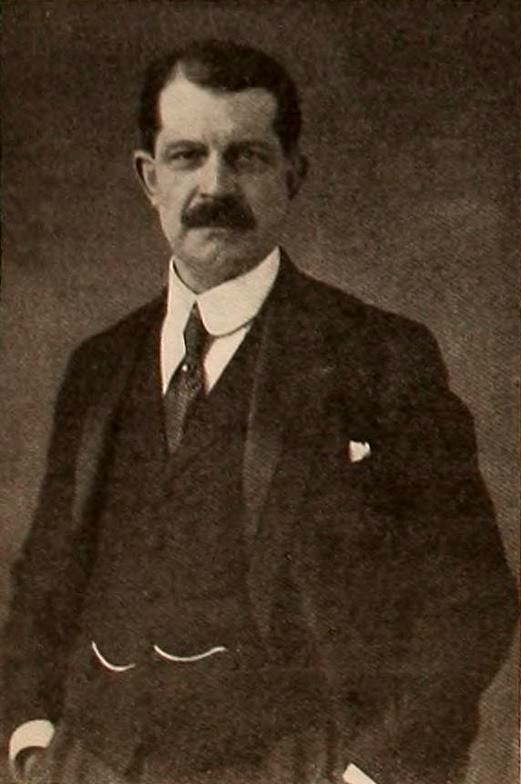


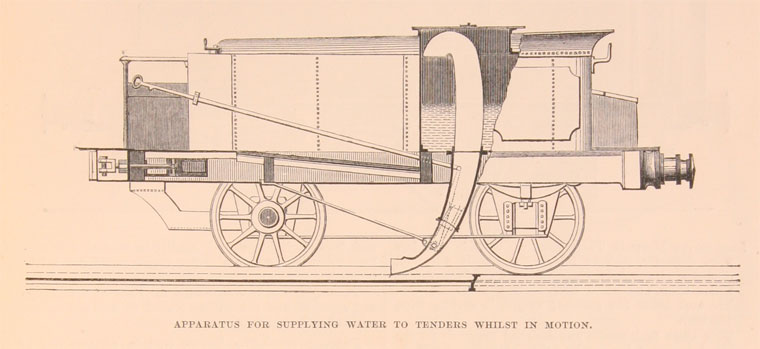


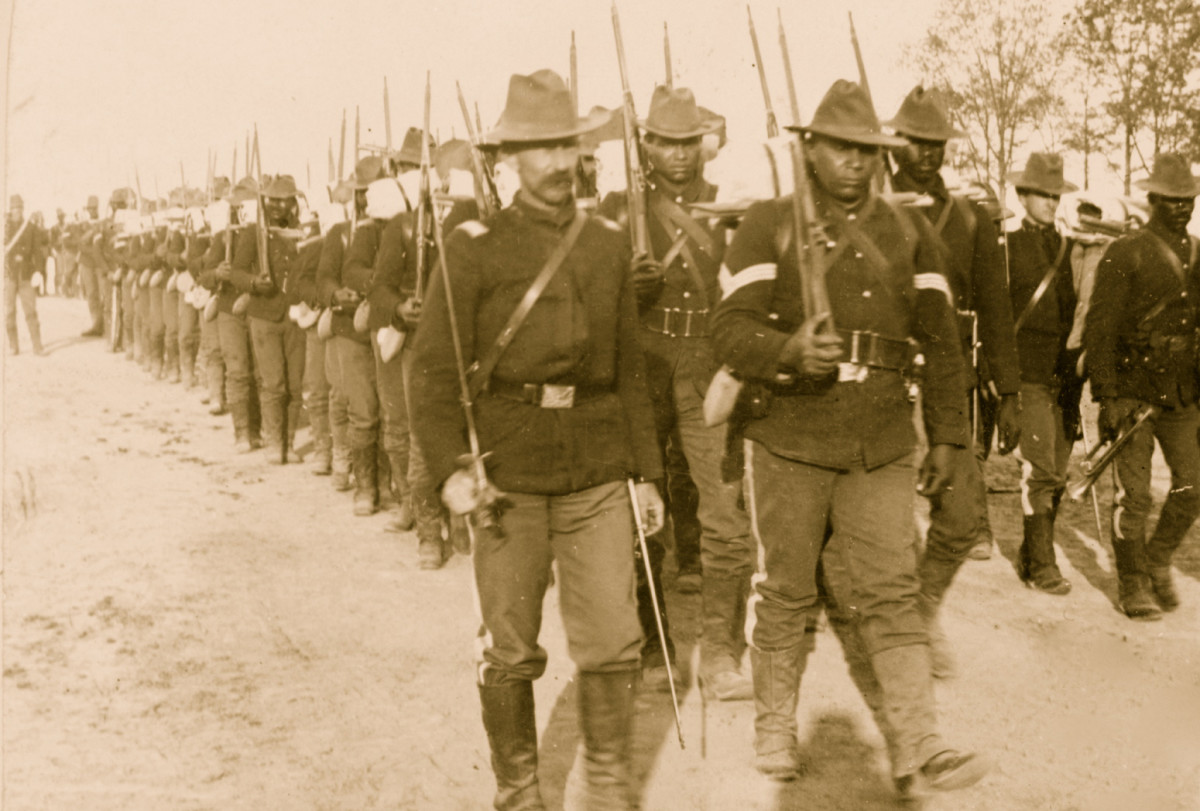


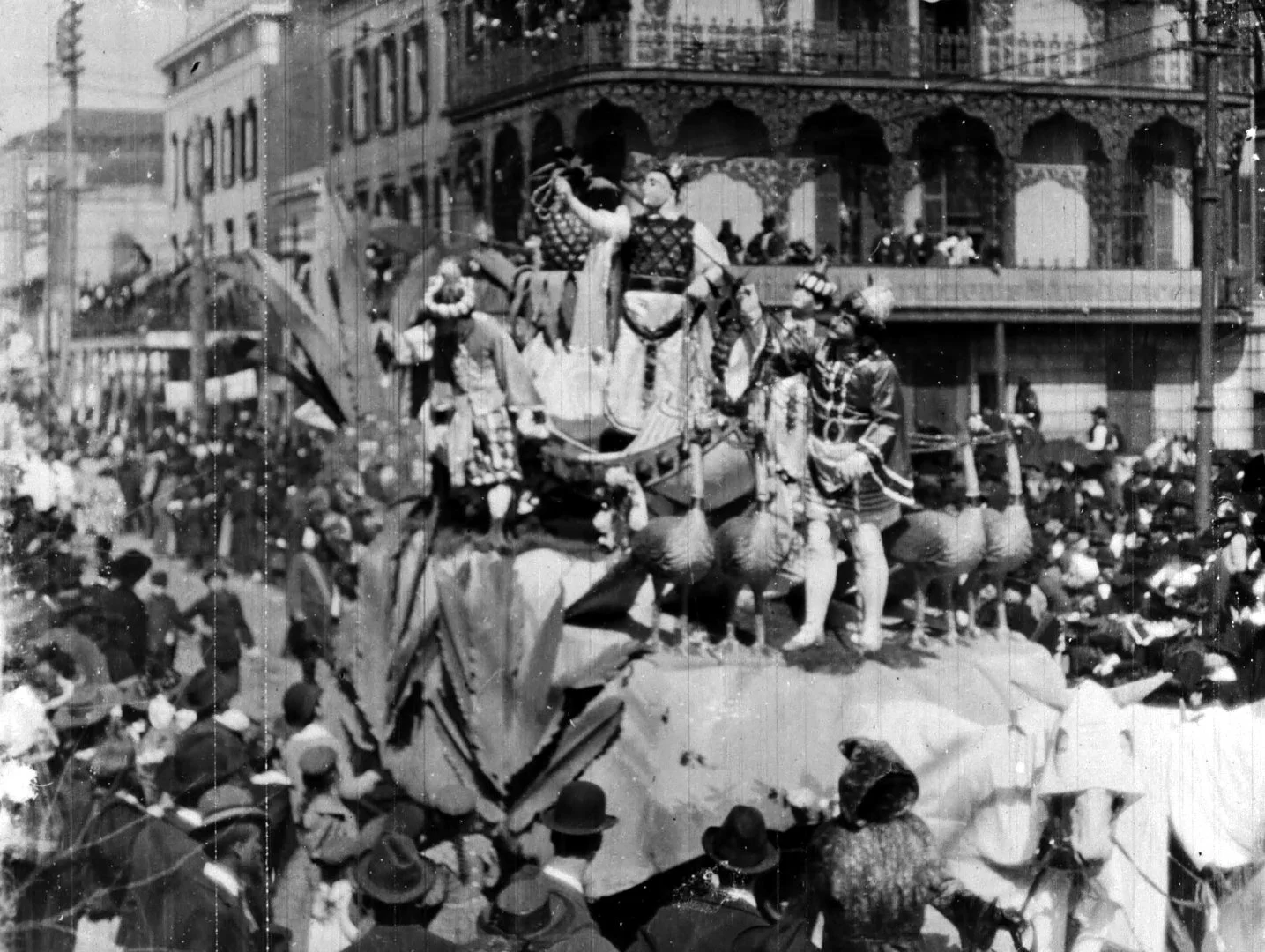
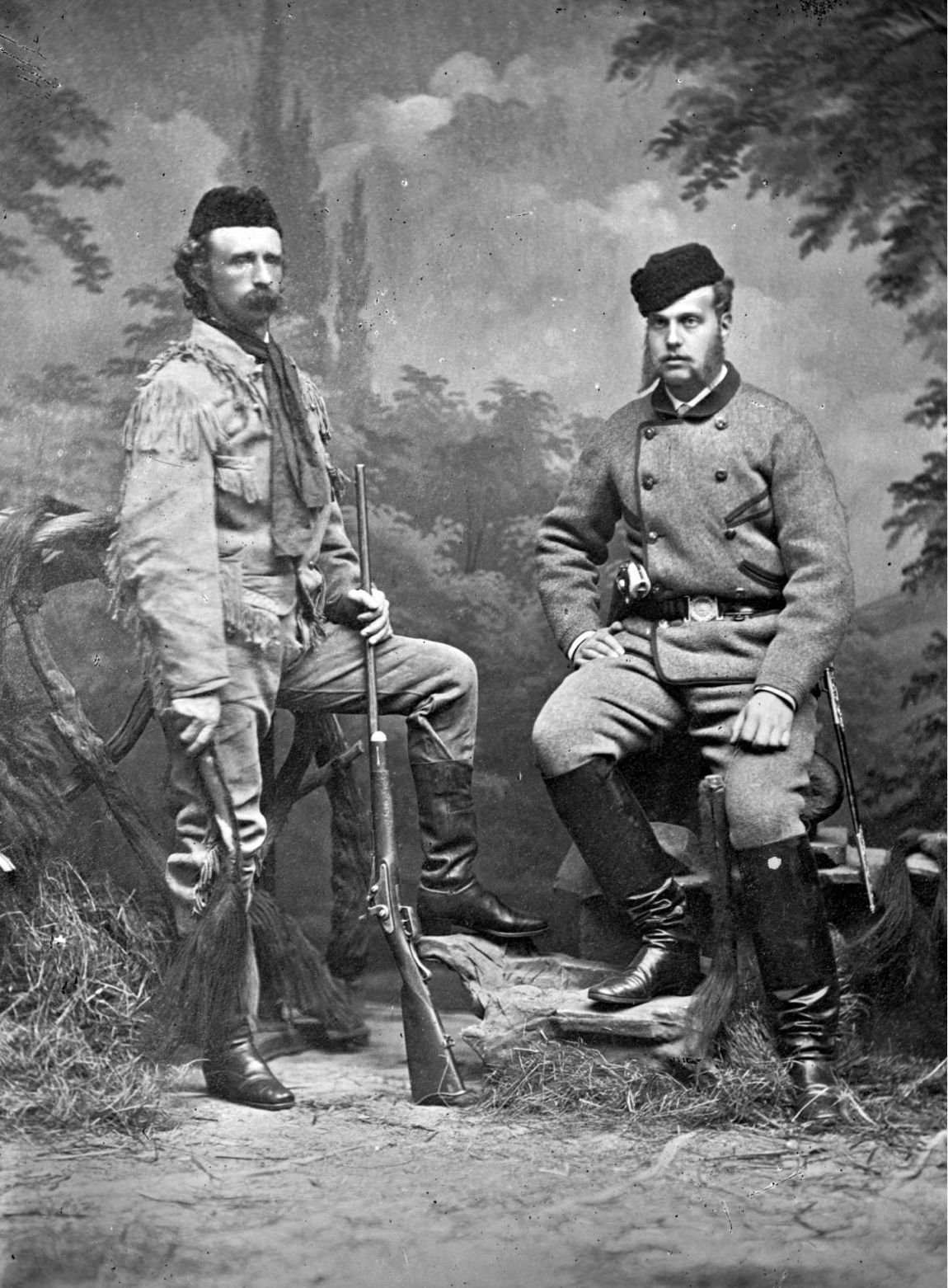
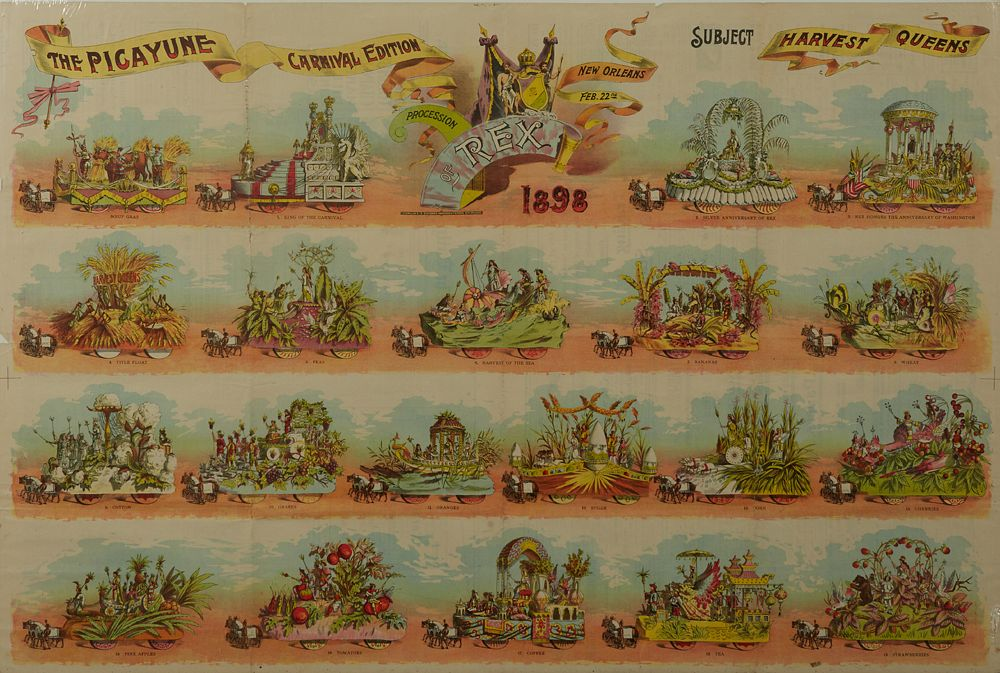
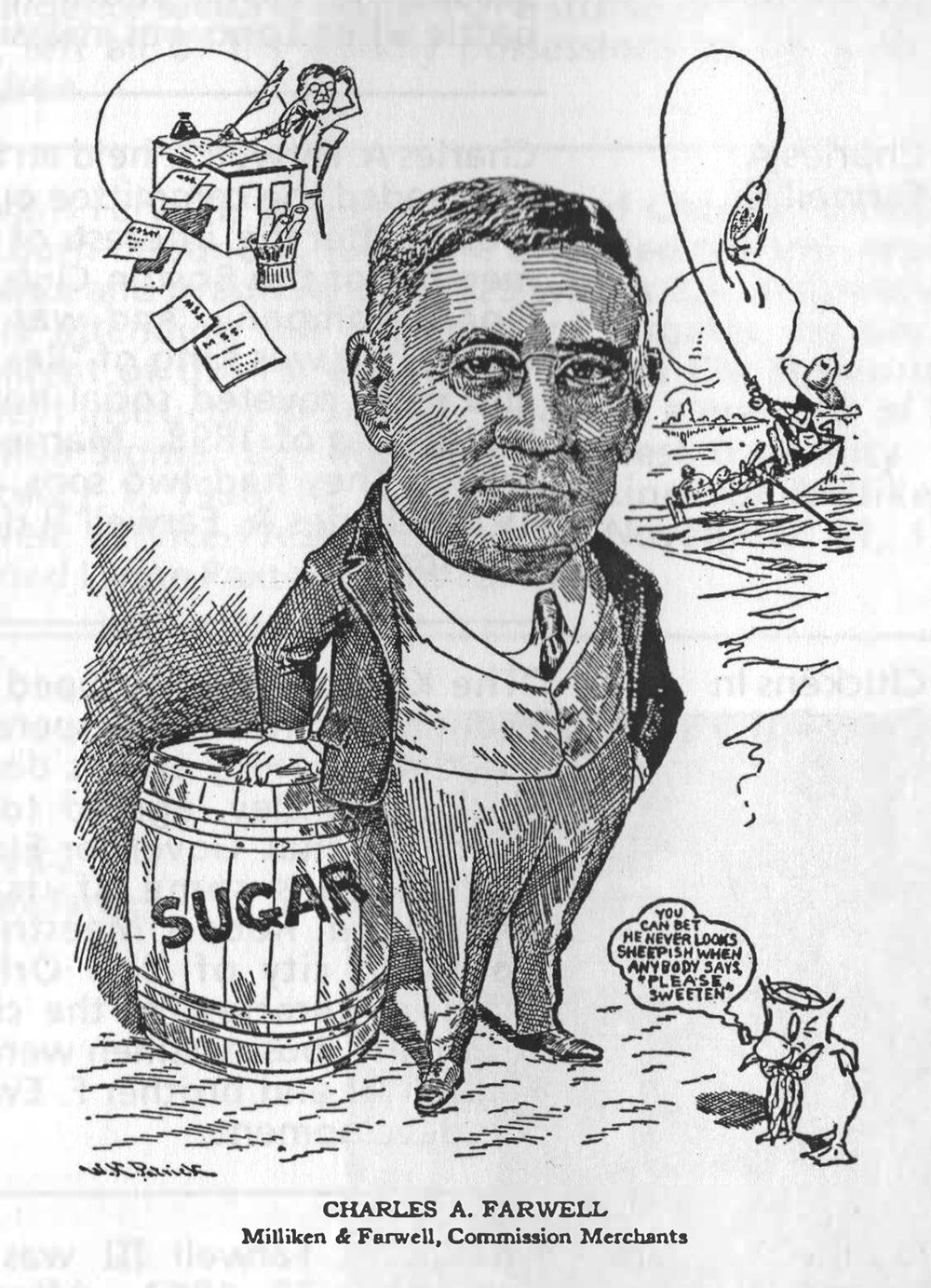
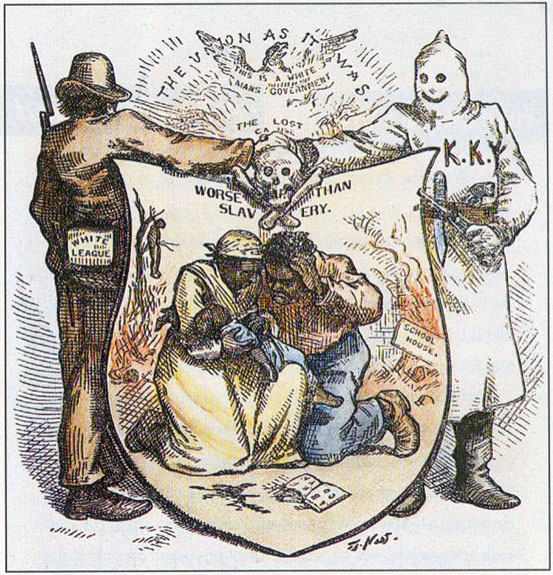

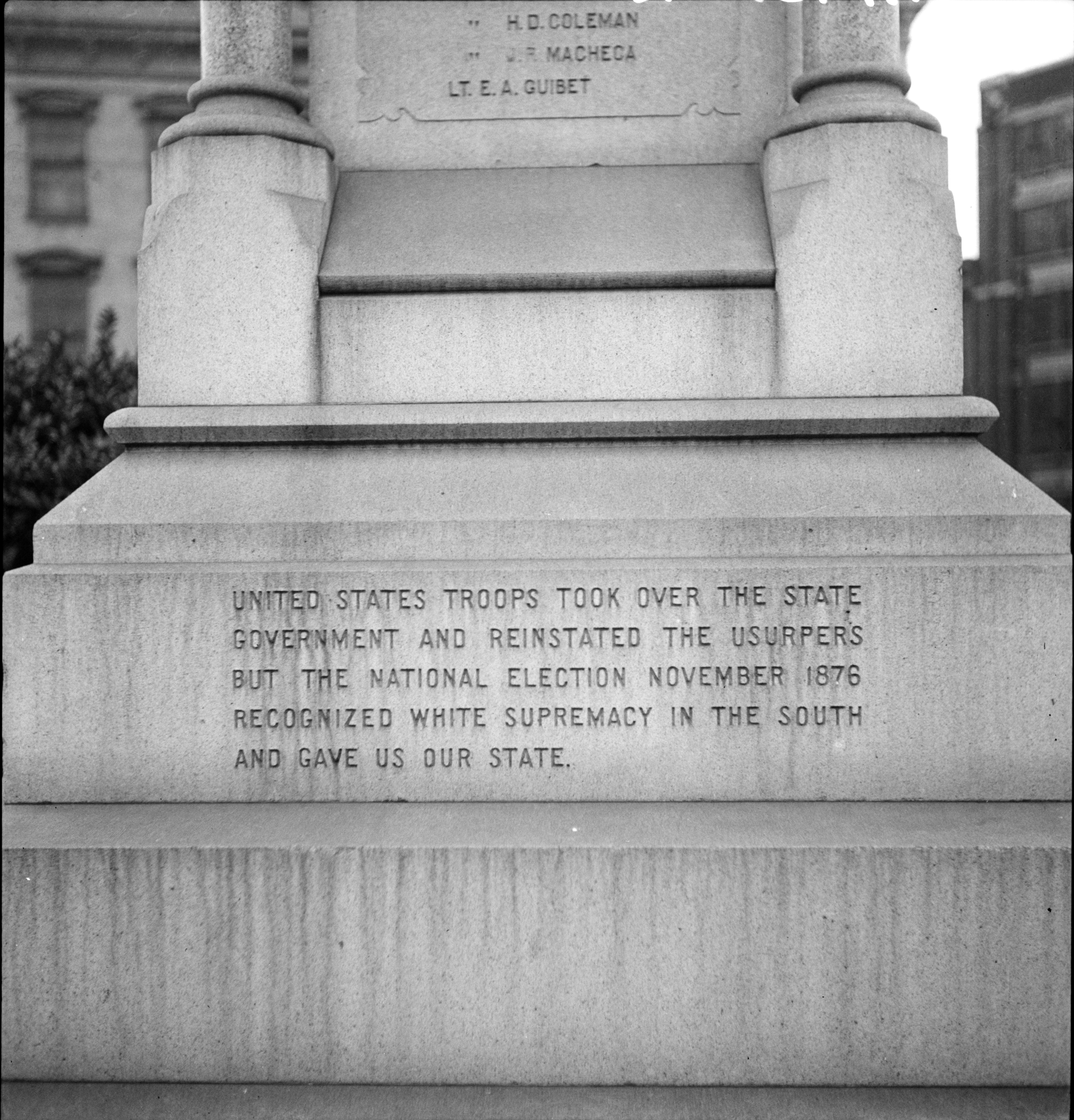


 Moviegoings