A group of African men, dressed in tribal costumes, stand in a line and chant, stamp their feet, and shake weapons and shields. A young boy stands, mostly at attention, in front of them. After a moment, there is some movement at the back and a few in the front line glance around. A white man hurries into frame and brusquely motions a group in different tribal outfits to the front.
Essentials:
On 19 April 1899, a ship arrived in England from South Africa. On board was a large contingent of people and animals bound for the Greater Britain Exhibition that was set to open in Earl’s Court, London, the following month. This was the fourth in a series of annual exhibitions put on to showcase and celebrate the accomplishments of the British Empire and its colonial holdings across the globe (previous years had featured exhibits from India and Southeast Asia).
The ship-board contingent was organized and led by Frank Fillis (see right), a London-born showman and entrepreneur who operated a successful South African circus. With him were lions, tigers, elephants, a group of Boer families (Dutch-descended South African settlers), and nearly 200 men (along with a few women and children) from various Bantu tribes, including: Zulu, Swazi, Matabele (Northern Ndebele), and Basuto (Sotho). A number of these tribesmen had reportedly been told that they had been given jobs at the Kimberley diamond mine. Instead, they found themselves transported to London to spend the next several months on display as part of an exhibit titled “Savage South Africa.”
The advertised goal of the exhibit was to give Londoners an “authentic” look at African life. The Africans were housed in a specially-constructed “kraal” or village, consisting of mud huts in front of a painted backdrop of a South African landscape. According to the exhibition guide, the inhabitants were to “live and occupy themselves just as they do in the Bush, or on the veldt of their own native wilds.” The reality, of course, was that the entire display was carefully managed and staged to conform to the expectations of paying attendees.
For centuries, European interest in the African continent was confined to its coast, where passing ships could put in for resupply, or connect with profitable sources of trade in gold, ivory, and slaves. With the dawn of industrialization, and development of treatments for the deadliest tropical diseases, European encroachment into Africa exploded in the last quarter of the 19th century. In what became known as the “Scramble for Africa,” European powers carved up the land between them, taking control of nearly 90% of the continent within a roughly 40-year period.
The process was far from peaceful. The British Army engaged in several conflicts with African tribes, including most of those represented in the “Savage South Africa” exhibition. The British annexed Zululand after the Anglo-Zulu War in 1879. They fought the Ndebele in the First and Second Matabele Wars (in 1893-94 and 1896-97, respectively). The latter conflict ended with Matabeleland being folded into the new colony of Rhodesia in 1898 (now Zambia and Zimbabwe).
The Defence of Rorke’s Drift (Lady Elizabeth Butler, 1880)
The Sotho, too, fought the British occasionally (and were successful more than once). However, after a series of wars with the Boers in the 1860s, the Sotho were forced to ask for British assistance or be overrun, and Basutoland became a British protectorate. The Swazi tried a different tack, aiding the British in various conflicts against other tribes, and granting them numerous concessions of land and mining rights throughout the 1870s and 1880s. The end result was that Swaziland still ended up as a British protectorate in 1894, without the Swazi being consulted about it.
Saving the Queen’s Colours (Alphonse de Neuville, 1881)
Cultural depictions of these conflicts throughout the period emphasized the individual heroism and sacrifice of often-outnumbered British troops against a “savage” horde of anonymous natives. “Savage South Africa” brought together defeated enemies and subordinated allies to give ordinary British citizens a taste of the glory and adventure of the military expeditions in Africa. In fact, lest anyone be confused about this purpose, performative defeat was also part of the program.
In shows twice a day, at 3:30 and 8pm, after a horseback riding act, the nearly-200 Africans would re-enact events from the Matabele Wars, staging battles with around 20 “British” soldiers (played by the Boers in the troupe who, ironically, would soon be at war with England themselves). These performances are reminiscent of similar staged reenactments between Native Americans and US Cavalry that were part of Buffalo Bill’s Wild West. As with Buffalo Bill’s show, a few of Fillis’s fake battles were also captured on film: Savage South Africa – Savage Attack and Repulse and Major Wilson’s Last Stand (both 1899).
To the Memory of Brave Men (Allan Stewart, 1897)
The latter film focused on a famous and celebrated episode (see above) from the First Matabele War. At the end of 1893, the Shangani Patrol, a group of 36 soldiers led by Major Allan Wilson in pursuit of King Lobengula, were ambushed by a force of about 3,000 warriors. Three of the patrol were able to escape and ride for reinforcements, but were unable to return in time. The remaining members of the patrol fought until they ran out of ammunition, reportedly killing several hundred of the enemy, but were then overwhelmed and killed. Lobengula died of smallpox the following month, and the Matabele surrendered soon after.
Here, again, the battle and the propaganda surrounding it calls to mind conflicts between the United States and Native American tribes, notably “Custer’s Last Stand” at the Battle of the Little Bighorn in 1876. Much as Chief Sitting Bull, a participant in that battle, later joined Buffalo Bill’s show, “Savage South Africa” claimed a similar connection. While Frank Fillis himself played Major Wilson, the role of King Lobengula was played by one Peter Kushana Loben, who claimed to be Prince Lobengula, the king’s son (see left). It isn’t clear whether this claim was true or not, but it was accepted during his lifetime.
Although a hit with audiences, “Savage South Africa” was immediately a source of controversy in both the British and colonial governments. Officials expressed concerns about the treatment of the African members of the troupe, and raised questions about whether they had been lured to London under false pretenses, about the supposed educational value of the exhibition, and about the risks posed by having a large number of African tribesmen housed in the middle of London. This last issue led to the largest controversy of all, when Prince Lobengula was involved in a massive scandal a few months after the show opened.
In August, reports emerged that Prince Lobengula was engaged to an Englishwoman, Florence Kate “Kitty” Jewell. The real story of how their relationship started and developed is difficult to extract from the sensationalized accounts that proliferated in the press. It caused such a stir that the minister who had agreed to marry them backed out at the last moment, and their marriage license was revoked.
The couple was able to quietly marry the following year, but the union was apparently a tumultuous one. They divorced early in 1902, with Kitty alleging adultery and physical abuse. Not long after, Peter married Lily Magowan, an Irishwoman, and they settled in Salford, near Manchester. Peter worked a series of jobs and eventually became a coal miner. The couple had five children.
In 1913, Peter was in the news again when he appeared in court, claiming that he was entitled to vote in local elections. The court ruled in his favor, but he was by then suffering from tuberculosis and he died soon after. Within just a few years, Lily and four of his children were dead, as well, though one of the family lived on until 1977.
In the meantime, the interracial relationship was an international story when it broke in 1899, and the entire affair was soon distorted by journalists with a racial axe to grind. A newspaper in Galveston, Texas, reported that “fashionable women” who attended were engaging in “the vilest orgies” in the huts at the exhibit. In response to the controversy, the company in charge of the exhibition ordered that women no longer be admitted to the kraal.
The entire business (including, eventually, the end of Peter and Kitty’s marriage a few years later) was seen as a confirmation of white fear about the the safety and virtue of European women spending time around African men. There are some claims that the scandal ultimately brought an end to the show’s run entirely. However, it isn’t clear whether “Savage South Africa” actually concluded before the rest of the Greater Britain Exhibition.
In any case, the damage must not have been permanent, as the show went on tour around the country the following year. “Savage South Africa” was able to capitalize on increased national interest in the region created by the beginning of the Second Boer War in October 1899. A glowing review from its opening in Sheffield in April 1900 reveals that Peter was still a part of the show over a month after successfully marrying Kitty, and continued to be popular with audiences.
It isn’t clear what became of all the African members of “Savage South Africa” after the conclusion of the tour. At least one, a 19-year old Basuto man named Pasha Liffey, stayed behind and settled in Scotland, where he made a living as a boxer and circus performer. In 1905, he was hanged for the rape and murder of 63-year old Mary Jane Welsh.
As for the rest, if any settled in the United Kingdom they must have lived quieter lives. Some probably returned home, but some certainly must have stayed on with Frank Fillis. He went on to operate a Boer War Exhibit at the 1904 St. Louis World’s Fair which also included battle re-enactments and tribal villages populated by African people for visitors to gawk at.
Screening:
The Landing of Savage South Africa at Southampton, like the exhibition itself, is almost as significant for what it doesn’t show as for what it does. There’s no indication here that the men on the screen spoke several languages, both European and African. The film shows them in their exhibition costumes, but not what they wore when they weren’t performing for a crowd. It doesn’t show what’s happening off-screen, where several of the men keep glancing hesitantly as they stamp and chant.
Of course, once the white man in the top hat strides into view, it’s possible to guess where the men had been looking. This figure is, of course, Frank Fillis, and in just five seconds he gives a very firm impression of what it must have been like to work for him (at least for these men). He appears impatient, terse, and dismissive here. Above all, it’s clear he is a man with a very particular vision of how this display should look, and he demands that it look exactly that way.
His intrusion into the scene reveals the artifice of the entire enterprise. Ultimately this is a vision of blackness and Africanness that is designed by a white man for consumption by other white men. Both here and in his later show in the United States, Fillis was responsible for shaping thousands of peoples’ impressions of Africa and Africans through their first (and perhaps only) direct interaction with its people. And that impression was not arrived at by accident.
A view of Union Square in New York City shows people going about their business amid near-record snowfall. Streetcars and carriages mingle with foot traffic, and a man pacing back and forth with a shovel attests to the tremendous amount of work required to create the large piles of snow that have been cleared out of the road.
Essentials:
The Great Arctic Outbreak of 1899 brought on weeks of cold temperatures that culminated in blizzard conditions across much of the southern, central, and eastern United States during the week of Valentine’s Day. 12 states experienced record cold temperatures, and snow fell all along the Gulf Coast from Louisiana to Florida. Ice flowed out of the Mississippi River into the Gulf, and river traffic was disrupted by freeze conditions all along its length. The Rex parade was delayed in New Orleans in the face of the coldest-ever temperatures on Mardi Gras.
Several East Coast cities, including Washington D.C., Philadelphia, and Baltimore, also experienced a record snowfall during the Great Blizzard of 1899, at levels that would not be rivaled for nearly a century. Many of these areas saw 2-3 feet of snow. New York City received 1-2 feet of snowfall, which (while not an all-time record) was enough to bring the city briefly to a halt while municipal workers cleared roadways and de-iced streetcar lines.
As regular traffic began to resume, the American Mutoscope Company sent a cameraman out to the corner of 14th and Broadway. This was the notorious “Dead Man’s Curve,” which had been (and would continue to be) “New York’s Most Dangerous Crossing.” It was the site of many grisly accidents between streetcars and pedestrians during these years. Eventually, the intersection’s deadly reputation seems to have accomplished what other efforts hadn’t, and the number of accidents began to diminish in the 1910s.
This Lincoln statue, visible in the background of the film at 0:27, was also relocated in 1930.
In 1930, the area was redesigned to accommodate subway construction, and the prime shopping district had migrated several blocks north, leading to a significant reduction of traffic in the area. However, in 1899 it was still a significant hub, and the cameraman captured a view that no longer exists today (and, in fact, hasn’t existed for nearly 100 years). The American Mutoscope film catalog attests that this shot was recorded “during the busiest time of the day.”
During the less than two minutes of footage seen here, no less than 10 streetcars are seen coming and going, and most appear full of passengers. Around two dozen horse-drawn vehicles are also visible, heading in all directions. Most appear to be hauling goods rather than people, though there are certainly several carriages as well. And, of course, there are several dozen people visible in and along the streets, as well as disappearing into the background of Union Square Park across the way.
Incidentally, the catalog listing (which is from 1902) states that this footage was taken “during the great March blizzard of 1899,” which would seem to be off by at least a couple of weeks. Had temperatures remained cold enough, it’s possible that this could have been taken later while there was still a great deal of snow on the ground, but weather records show a string of days with temperatures in the 40s and even 50s during late February, and no days in March had a high that was below freezing in the city. It seems, then, that this must simply be a catalog error.
Screening:
It’s not immediately obvious because there’s a great deal of lateral movement happening within the frame, but eventually it’s impossible to ignore that the camera is panning. Based on the jerky, halting motion of the pan, the camera probably was not designed to rotate. Likely the cameraman was holding it as he turned, which would have been difficult to do while also turning the handle to draw the film past the lens.
It may be impossible to say for certain whether this is the first pan in cinema history (it most likely isn’t). Still, it must certainly be among the first, as evidenced by the primitive method. (The first rotating camera wasn’t patented until 1904.) First or not, it’s hard to overstate the significance of the evolution from entirely static shots to shots where the camera is maneuvered to capture the action.
Traveling shots had been a popular novelty for a few years already, but cinema hadn’t really made the leap from putting the camera on a moving vehicle to simply rotating it. It would be several more years before films really began to move beyond the norm of relying almost entirely on static, medium shots. Any film that deviates from that standard, as this one does, always stands out as unique.
It isn’t obvious, but In the Grip of the Blizzard also has a main character. Partway through, there is a man holding a snow shovel who is pacing and swinging it in front of the large pile of snow in the middle of the triangle of traffic passing by all around. It’s easy to miss, but this man has actually been in the film the whole time. He first appears at the far left side of the frame after the first street car goes by, standing on the corner waiting for an opportunity to cross. Someone passes him, walking their dog, and another dog that is following along behind bumps into him on its way by. He reaches down and either pets it or gently moves it out of the way.
The man with the shovel then seems to back out of the way to let a cart pass, but he suddenly slips across the street in front of it instead and continues to the left. From this point on, he almost seems to be deliberately staying within the camera’s view. The quality of the film makes it difficult to tell whether he is looking at the camera or not, but he definitely seems to pause frequently for no obvious reason. At the one minute mark, a streetcar has just passed in front and he is walking back to the right, but at the last moment he suddenly changes directions again and continues to the left where he is easiest to spot by that pile of snow. He does not, however, seem to appear in the next shot.
A devil dances around a large pan on a pile of wood, waving a smoking torch. He lights the fire and then fans the flames with a large bellows until a woman dressed in a flowing white dress rises amidst the smoke. The woman begins to perform a serpentine dance, and as it reaches a crescendo, the dance changes and the flame effects intensify. Finally, the woman transforms entirely and flutters up out of sight with the rising smoke.
Essentials:
The oldest surviving film with color was produced in 1895. In the years following, the process of coloring films became a thriving sub-industry to the burgeoning film industry. The practice of coloring photographs had already existed for decades, but even short films required an unprecedented amount of work to hand-color in comparison. Color played a major role in motion pictures almost from the beginning, but colored prints are more susceptible to degradation from improper storage and poor preservation. As a result, many colorized films survive only in their black-and-white form, and silent films are often thought of as having been without color as well as without sound.
La Danse du Feu was colored in the workshop of Élisabeth and Berthe Thuillier, a mother-daughter operation that did all of the coloring for Méliès for 15 years, until he began to have financial difficulties in 1912-13. The Thuilliers also colored films for Pathé, though those commissions diminished after Pathé developed a more efficient, in-house coloring process involving stenciling in 1903.
By the time they began coloring films for Méliès, Berthe was 30 years old, and Élisabeth had been a colorist for over 20 years. Élisabeth was a widowed single mother in the mid-1870s, with Berthe her third and only surviving child, when she first began applying color to photographs. She must have been quite good at it. By the time she and Berthe were overseeing the tinting of Méliès’s films, they employed 220 women. Élisabeth (and later Berthe, after her mother’s death in 1907) would select and sample the colors, and then give instructions for the colorists to follow.
Each person working on a film would apply only one color, using brushes as fine as a single hair, and some films used up to 20 different colors. And, of course, the process would need to be repeated for each additional print that the producer wanted colorized. Berthe later reported that they made an average of 60 copies of each colorized film. A one-minute film like this could have cost anywhere from a few hundred to a few thousand francs per copy, so the process could cost a production the equivalent of tens to hundreds of thousands of dollars in today’s money. Colorized films must have played very well with audiences to be worth the additional cost.
Although there were a few women like Alice Guy who were pioneers in roles like directing, writing scenarios, etc., applying color was an area dominated almost entirely by women. It was regarded as a very gender-specific job at that time, requiring a level of precision and an attunement to colors that were thought to be primarily feminine skills. The work, like many industrial-era jobs, was exacting and tedious, as the women bent over a workstation, peering carefully through a large magnifying glass for many hours a day.
Pathé’s coloring workshop, circa 1912
However, there was much to recommend it in comparison with other jobs available to working-class women, and it seems to have created real economic opportunities for some. Although no one working at the time would have suspected it, their efforts left an incredible and glorious legacy within early cinema that audiences still enjoy and appreciate today. They opened up an entire world of colors in silent film that would develop into a cinematic language of its own during the rest of the silent era.
Screening:
La Danse du Feu is a film that makes it clear why Georges Méliès emerged as the definitive filmmaker of his time. His films are so distinctly and recognizably his own. In many cases he is playing with special effects and narrative ideas that few others are attempting, except in imitation of him. He also often tells types of stories that most other 19th- and early 20th-century filmmakers aren’t, inventing entire genres of cinema in the process.
Here, though, he is filming what is effectively a serpentine dance. There is nothing new or original about that idea at all. Many other filmmakers and production companies had filmed their own versions (and sometimes multiple versions) of this popular dance. Colorizing a serpentine dance was not a new idea, either. But virtually nothing sets those other dance films apart from each other. They are, for the most part, effectively indistinguishable.
And yet, it’s difficult to imagine anyone familiar with Méliès watching La Danse du Feu and mistaking it for the work of any other filmmaker. He takes all of the signature moves of the serpentine, along with the shifting color palette that had been done before, and gives them a narrative framework. There are a few potential interpretations of these visuals. It’s possible, for example, to see the dancer as an angelic figure, whose arrival banishes the devil from the scene. Although the devil doesn’t seem particularly surprised or upset by her arrival, and she seems to proceed with the work of stoking the flames that he began. But in the US and Britain, this film was originally released as Haggard’s “She”—The Pillar of Fire.
She, first published in 1887, is one of H. Rider Haggard’s most popular novels. The title character is the novel’s main antagonist, a powerful, immortal sorceress known as “She-who-must-be-obeyed,” or simply “She.” In the book’s climax, “She” leads the main character, Leo, whom she believes to be her reincarnated lover, into the center of a volcano, and commands him to bathe in the lava in order to become immortal. However, when She demonstrates this process, the fires consume her own magical immortality, and then her as well.
This is the first of many adaptations of She, and the only one to predate Haggard’s sequel novels. Obviously, its connection to the plot of the novel is tenuous at best. This scene is clearly not inside a volcano, and there is no counterpart to the dancing devil character in Haggard’s story. Probably the title was conceived retroactively in order to help market the film to an English-speaking audience familiar with the novel. The dancer seems more to represent a sort of “spirit of fire” who has been ritualistically summoned by a standard Méliès devil-figure. (The dancer and the devil are played, as usual, by Jeanne d’Alcy and Méliès himself, respectively.) She acts out each phase of the rising flame, and then is finally consumed by it.
A nude woman reclines on an animal skin rug. Another woman, who is topless, kneels on a stack of cushions, fanning her. After a moment, the reclining woman rolls over and stands, stretching luxuriantly with her back towards the camera. The other woman retrieves a sarong and wraps it around her waist before the two walk out together.
Essentials:
The first erotic films featured only implied or simulated nudity. The first genuine nudity on screen appeared later, under the guise of art and respectability. The first Jesus films claimed legitimacy by explicitly referencing (or even filming) established stage productions, and thus placed the responsibility for any potential sacrilege outside of the film and its producers. In much the same way, the first films to feature nudity did so in direct imitation of other established art forms. Although many films from this period were inspired by art, the catalog listings for these films were particularly careful to list their sources:
The catalog summaries make constant reference to art, literature, mythology, and famous iconic nude figures in a lyrical literary style, with sophisticated adjectives, elaborated grammar, and a touch of poetry quelling any suspicion of vulgarity. [… C]atalogs seldom cited the pictorial sources of the pictures they described—except for films displaying naked figures. In this risqué realm, reference goes hand in hand with prudence. Framing the film as a copy of a work of art shifts the responsibility for its undressed staging to the artist, and at the same time it justifies nudity as part of an artistic tradition, far from gratuitous and reprehensible exhibitionism.
Valentine Robert, “Nudity in Early Cinema; or, the Pictorial Transgression” from Corporeality in Early Cinema, pp. 158-159
However, the live re-enactment of sculpted or painted works of art was actually a stage tradition first. The popular tableaux vivants (or “living pictures”) of the 19th century were staged for decades before cinema first appeared. This, as Robert explains, was “the means by which, historically, the naked body got on stage. And the same story occurred on screen […] Motion pictures became the direct heir of living pictures.” Both on the stage and the screen, these living pictures benefited by offering a certain eroticism under the guise of more legitimate art.
Censorship standards allowed nude or semi-nude performers on stage as long as they didn’t move, granting a deferment to art that resulted in an obvious loophole for purveyors of sex. Nevertheless, the intended audience (at least in the case of films) was never in question, regardless of how genuine the artistic merits may have been. Pathé’s French catalog, for example, included a warning that these films were not suitable for children. In England, the series was specifically advertised as “Scenes for Smoking Concerts,” these being performances attended exclusively by a male audience. Many of Biograph’s “living picture” scenes were produced specifically for solitary viewing on the Mutoscope, and at least one business in Wales chose to locate its Mutoscopes in the men’s bathroom in 1899!
Many living pictures based on artistic works that included nudity depicted only simulated or partial nudity. Biograph, in particular, generally clothed their “nude” models entirely in a flesh-colored bodysuit. Some French productions did this as well, though the material was sometimes too sheer to really obscure the body anywhere except around the pelvic region, in the front (if it even covered anywhere else).
Examples of this include 1899’s La Naissance de Vénus (see above), based on the famous painting by Botticelli. Notice that the actress’s nudity is partially obscured by an oversaturation of light (possibly deliberate), as well as by a flesh-colored garment at her waist. Le Jugement de Phryné (1899), likely based on Jean-Léon Gérôme’s 1861 painting Phryne Before the Areopagus, is probably another example, though it is believed lost. There are only a few surviving 19th-century films where the performer appears fully nude.
One such film is Flagrant Délit d’Adultère (Flagrant Adultery), based on Jules Arsène Garnier’s 1876 painting Le Constat d’Adultère (The Exposure of Adultery). Another is Le Rêveil de Chrysis, believed to have been partially inspired by Ferdinand Roybet’s Odalisque (La Sultane) (see left). (“Odalisque,” a French term, from the Turkish odalık, refers to a harem slave or concubine. Among the many subjects common to the 19th-century Orientalism trend in Western art, harems and their occupants held a particular fascination for artists and art lovers alike.) Both of these films were produced by Pathé in 1899, and they seem to be the oldest extant examples of full nudity in cinema.
Le Rêveil de Chrysis stands out among these few examples because its main source seems to have been a popular and somewhat lascivious novel, rather than a painting. While there are obviously visual elements that could have been drawn from Roybet’s painting, the film’s title makes it clear that some of the inspiration comes from a different reference entirely: Aphrodite: Mœurs Antiques (Aphrodite: Ancient Morals) by Pierre Louÿs, first published in 1896. Louÿs was friends with Oscar Wilde, and like Wilde, he was a part of the late-19th-century Aesthetic movement. The style and ideas in this, his first novel, are typical of aestheticism.
Le Miroir by Joseph Carlier (1900), depicts Chrysis and Djala
The story follows Chrysis (after “Chryse,” a name associated with Aphrodite), a beautiful courtesan, and Démétrios, a handsome aesthete, pursuing and pursued by each other in Greek-controlled Alexandria during some vaguely-defined ancient period. Chrysis also has a “Hindu slave” named “Djalantachtchandratchapalâ.” I initially believed this to be a made-up mish-mash of syllables, but thanks to the sharp-eyed and knowledgeable commenter below, I’ve since learned that it is Louÿs’s transliteration (from Sanskrit) of the phrase “shimmers-like-the-image-of-the-moon-on-the-water.” (Chrysis, “too lazy” to say her full name, calls her merely “Djala.”) It’s particularly interesting that a book that was itself somewhat scandalous would have been adapted into a film featuring nude performers, seemingly abandoning the fig leaf of legitimacy that a more “respectable” work of art would have offered.
Screening:
Aphrodite: Mœurs Antiques opens with a scene that is at least suggestive of what we see in Le Rêveil de Chrysis:
Lying on her chest, elbows forward, legs apart and cheek in hand, she poked little symmetrical holes in a green linen pillow with a long gold pin.
Ever since she had woken up, two hours after midday, and tired of having overslept, she had remained alone on the messy bed, covered only on one side by a vast flood of hair.
This hair was radiant and deep, soft as fur, longer than a wing, supple, innumerable, lively, full of warmth. It covered half her back, extended below her bare stomach, still shone near her knees, in a thick, rounded curl. The young woman was wrapped in this precious fleece, whose bronze reflections were almost metallic and had caused her to be named Chrysis by the courtesans of Alexandria.
[…She lived] in a little white house with a terrace and small columns […] with her bronze mirror, carpets, new cushions, and a beautiful Hindu slave who knew how to do courtesans’ hair. […] She rolled onto her back and twisted her fingers over each other. […] She dropped one leg to the mat and stretched until she stood up. Djala had gently left.
She walked very slowly through the room, her hands crossed around her neck, feeling the pleasure of her bare feet on the flagstones where the sweat was freezing. Then she went into her bath.
from Project Gutenberg, via Google Translate
Illustrations from the first chapter in a 1926 edition of Aphrodite
Between an extended account of her backstory and some dialogue with Djala, it takes about half of the first chapter for her to get up and walk away, corresponding with the end of the film. Incidentally, the first chapter alone references lesbian sex, interracial sex, oral sex, masturbation, and describes Chrysis as having been sexually-active from the age of 12. (She is 19 as the story begins.) It’s quite a range of topics to find in a 19th-century novel, and underlines how surprising it is that this film adaptation exists, and by one of the major French studios of the time, no less.
Essentially everything that happens in the film, and every element of the scenery, feels like it could have been drawn from either Aphrodite or Odalisque, except for one element. At the beginning of the scene, Djala picks up a cigarette from the table and lights it in the brazier. She hands it to Chrysis, who puffs on it a few times before handing it back. (Djala disposes of it just out of frame, while glancing hesitantly at the camera.) This is a notable anachronism, as there would have been no cigarettes prior to the 1800s, and no tobacco outside of the Americas prior to European colonization.
Note, too, that Chrysis walks out “very slowly” and with “her hands crossed around her neck,” precisely as described in the novel (though on the page, she is alone in the room by that point). By contrast, the film’s one nod to a certain restraint is to carefully cover her so that at no point is she fully facing the camera while bottomless. Similarly, in Flagrant Délit d’Adultère, the woman is never fully facing the camera while standing up, even though she is in the original painting. These two examples, plus the way the “Venus” is shot and covered in Pathé’s La Naissance de Vénus suggests exactly where the line of decency (or, at least, acceptability) was for a film that was being exhibited publicly, even for an exclusively adult, male audience.
A traveling shot aboard a boat captures a view of life along the Ganges River in India. People bathe, wash clothes, and engage in other activities in boats and on the shore.
Essentials:
Panorama of Calcutta is the oldest surviving film of India currently known to exist, but there is a great deal of uncertainty about who filmed it. It has frequently been credited to John “Mad Jack” Benett-Stanford (see right), whose official description in the Who’s Who of Victorian Cinema is: “Rogue, fox-hunter, war cameraman and archetypal English squire.” Benett-Stanford only made films from about 1898 to 1900. He captured the only images of British forces at the Battle of Omdurman in Sudan in September 1898. (This battle was famously depicted in the climax of the 1939 film The Four Feathers.) He was also the first person to arrive in South Africa with a movie camera after the outbreak of the Second Boer War in October 1899, and he shot a number of films there in the following months.
If Benett-Sanford was responsible for this film, his journey to India would have had to take place between his time in Sudan and South Africa, but there doesn’t seem to be any evidence that he made such a trip in 1899. He did spend time in India, beginning his military career there a decade earlier, and he was a well-known cameraman for the Warwick Trading Company (the distributors of this film). Those two facts may have led to his being credited, seemingly incorrectly. According to Colonial Film, some sources credit an “unknown foreign cameraman” instead. This suggests that the film could be the work of Hiralal Sen, one of the first Indian filmmakers.
Sen (see left) made his first film in 1898, with a camera borrowed from a traveling film show. He then bought a camera from the Warwick Trading Company, and formed the Royal Bioscope Company with his brother (likely the first film production company in India). The company existed for about 15 years, and Sen made newsreels, actualities, filmed stage performances, and created some of India’s first filmed advertisements. His 1903 film Ali Baba and the Forty Thieves was the first Indian feature film. Tragically, shortly before his death in 1917, a fire destroyed all of his films, and no films definitively attributed to him are known to have survived.
However, he did have a business connection with the Warwick Trading Company during this time. Sen also operated out of Kolkata (formerly Calcutta), where he grew up, making it seem plausible that he could have filmed Panorama of Calcutta. There’s just one problem: This film was not shot in Kolkata at all. It was actually filmed in Varanasi (formerly Benares), the “spiritual capital of India,” over 400 miles to the northwest.
The mislabeling of the film dates to its original catalogue listing by Warwick, though whether this was accidental (due to the film’s inclusion in a batch of films depicting Kolkata), or deliberate (to provide the film’s British audience with a more familiar frame of reference) is unknown. As for the identity of the cameraman, perhaps it was filmed by an associate of Sen’s from the Royal Bioscope Company. It may also have been filmed using the camera Sen borrowed in 1898 (owned by a “Professor” Stevenson), as the traveling film show continued on through India.
In any case, despite not being as well-known to Western audiences of the time, Varanasi is actually an appropriate location to appear in India’s oldest film. It is the oldest continually-inhabited city in India, with a history dating back over 3000 years. Sometimes called the “City of Temples” due to the thousands of temples located there, it is a destination for tens of thousands of pilgrims every year.
The true heart of the city’s spiritual practice lies along the ghats that line the shores of the Ganges as it flows past the city’s eastern edge. These ghats, the steps leading down to the water’s edge, are clearly visible throughout Panorama of Calcutta. These distinctive structures facilitate activities that can be either mundane (bathing and laundry) or religious (ritual ablutions, cremations, etc.).
Screening:
This film is a constant experience of tantalizing glimpses that are gone from the frame too soon. There is so much going on in every moment of the shot that it would be difficult to take it all in even if the camera were stationary. Because the image is in constant motion, no one person is visible for more than about five seconds, which is barely long enough to form even the simplest impression of what they may be doing. Several people seem to pause and take notice of the camera, as well.
The architecture of the ghats along this section of the river are the true highlight of the film. They are beautiful and ornate, but also functional, and there’s an incredible variety of form and purpose in evidence. Note, too, the ubiquity of the large umbrella-like shades that are set up all around. Between those and the various boats that come between the camera and the shore, there’s a great deal blocking the camera’s view of the people on shore. Overall, the effect is of a scene teeming with life and activity.
Finally, just past the halfway point, the boat (getting out of the way of an oncoming craft) turns away from the shore and then turns back parallel in a way that makes the camera seem to pan right and then left. This creates a very unique effect for its time (cameras did not yet “pan” by themselves), particularly as the camera is turned back to the left. It seems to follow the passing boat, creating a momentary illusion that the boat the camera is on has reversed directions. These maneuvers also provide a much wider shot of the shoreline, showing the ghats continuing on out of sight far ahead.
Films like this, whether from India or other locations around the world, frequently advertised the extreme contrast they showed between scenes of far-off places and the familiarity of more domestic scenes. It’s interesting to consider how a British, Colonial-Era audience would have viewed this as an exotic glimpse of a subject state that most of them would never have a chance to see firsthand. Meanwhile, for a modern audience, a film of ordinary life in 19th-century England is equally exotic. The past is no less foreign to us than the other side of the world was to early cinema audiences.
The life of Christ is depicted from infancy to resurrection in 13 brief scenes, focused mainly on the events commemorated during the Christian Holy Week.
Essentials:
In 1633, central Europe was right in the midst of the long conflict that would eventually be known as the Thirty Years’ War. One of the war’s costliest aspects was the famine and disease that followed in its wake. As Swedish forces fought a campaign across Bavaria, the bubonic plague came to the small town of Oberammergau, 50 miles south of Munich, and about 10 miles from the present-day Austrian border. As the plague ravaged the town, its desperate citizens made a vow: If God would spare them from further suffering, they would show their gratitude by dedicating one year out of every decade to the production of a passion play.
According to local lore, no more of the townspeople died of plague, and the people of Oberammergau have put on a passion play once every ten years since, beginning in 1634. Starting in 1680, they began staging their performances at the dawn of each decade (with the exception of the 300th anniversary in 1934, and the 350th in 1984). They have only rarely cancelled or postponed the show (for example, during the Franco-Prussian War in 1870, World War II in 1940, and the COVID-19 pandemic in 2020). Beginning in the mid-19th century, with a revived interest in medieval passion plays, Oberammergau began attracting the attention of the rest of Christendom with its production.
It’s important to acknowledge that, historically, passion plays have an association with blood libel and other acts of violent antisemitism. In the case of the Oberammergau play, which has its roots in medieval European traditions, and which celebrated its 300th anniversary with a visit from Adolf Hitler amidst the rise of the Nazi Party, that reputation of overt antisemitism is justified. Only in its most recent performances has the Passion Play of Oberammergau taken real steps to address decades of criticism and centuries of prejudice in its depiction of Jews.
Strangely enough, it was a Jewish entrepreneur, Salmi Morse (see right), who set off a chain of events that would lead the Oberammergau show to intersect with early film history. Accounts of Morse’s life are rife with conflicting details, thanks in part to the fantastical stories he constructed of his own exploits as a supposed war hero, learned scholar, and globetrotting adventurer. Even though many of the experiences he claimed to have had seem never to have happened, he was an outsized figure who lived an unusually colorful and varied life.
He was born “Samuel Moss” to German-Jewish parents in 1826 (possibly in England, or possibly in Germany, moving to England soon after). He achieved financial success managing a hotel in the midst of the Australian gold rush of 1851. Eventually, he ended up in San Francisco in the mid-1870s, where he had an idea, perhaps inspired by his conversion to Christianity, that would ultimately lead to his downfall. He wrote “The Passion: A Miracle Play in Ten Acts,” and set out to realize what was apparently the first-ever depiction of Jesus by an actor on an American stage.
Morse had a vision of producing a true work of art that could be performed regularly, in the tradition of Oberammergau. He presented his script to the Archbishop of San Francisco, revised it based on the critiques he received, then marketed the play as approved by the Catholic church. Morse and his partners prepared a large and elaborate production, starring James O’Neill (father of playwright Eugene) as Jesus, and featuring a cast of hundreds. It was to premiere on 3 March 1879.
Local Protestant leaders (somewhat predictably) believed that staging the story in a secular theater, and turning a profit no less, was profane. And the approval of the Archdiocese didn’t help at all. They got the city to propose an ordinance (not repealed until 1938) banning all commercial, theatrical depictions of Christ. However, it wasn’t enacted in time to stop the opening performances, and the production was regarded as extremely successful, both in quality and reverential treatment of its subject, by those who went to see it. Local rabbis opposed the ordinance, and the closing of the play, as acts of censorship.
Nevertheless, after the ordinance was passed, the play closed down voluntarily for a few weeks, but then reopened two days after Easter. At the end of that performance, an officer of the San Francisco police went backstage and arrested O’Neill for impersonating Jesus Christ. All legal efforts to continue the play’s run went nowhere, and Morse had no choice but to close the show at a tremendous financial loss.
But Morse was not beaten yet. He decided to try again on the opposite side of the country. He found a new backer for “The Passion” in New York City, the center of American theater, and prepared to open on 7 December 1880. In response, seemingly the entire city united against him. Not only political and religious leaders, but also the media and many in the theatrical world. His backer was forced to withdraw the play before even one performance.
Morse spent the next three years unsuccessfully fighting the legal injunctions against the opening of his play. He tried to pass off performances of the play as “private dress rehearsals,” attempted to open in other cities, and converted a church into the “Temple Theater” in an effort to stage it himself, all to no avail. In 1884, he was found floating in the Hudson River, dead of an apparent suicide. According to Charles Musser: “The fiasco was indelibly imprinted on the memory of every amusement entrepreneur.”
The audience at Oberammergau, 1880
Curiously, only four days after Morse’s cancelled premiere, famed photographer and lecturer John L. Stoddard gave a presentation in New York entitled “Ober-Ammergau’s Passion Play.” He included several dozen stereopticon slides that he had taken of the village’s 1880 show. Reportedly attended by many of the same people who had condemned Morse’s play, Stoddard’s lecture received rave reviews. Ten years later, when the Passion Play of Oberammergau was again performed, a number of traveling lecturers successfully followed Stoddard’s lead. Again, Musser: “The possibilities of using motion pictures to present a similar program were obvious to everyone.”
The first filmmaker to adapt a story from the Bible was the sometimes-pornographer Albert Kirchner (pseudonym “Léar”). Commissioned by the French Catholic church, he filmed a 12-scene Passion du Christ in early 1897. Soon, filmmakers in America began to consider the possibilities of Bible films. Still, no one had forgotten Salmi Morse and his ill-fated passion play. The first American productions decided it would be safest to follow in the footsteps of Stoddard, as well. Or, at least, to appear to do so:
Catalogues published at the turn of the twentieth century by film production companies show that references to Oberammergau are practically constant in the marketing materials for Passion Play films, particularly in the case of American films. […] What better way for a film producer to play Pontius Pilate and wash his hands of this problem of the representation of Christ using animated pictures than to film, or to pretend to have filmed (the situation is the same either way), a Passion Play performance? […] What better way for the agent responsible for the production of a filmic Passion Play to be cleared of all responsibility than to take on only the framing of the event, something that is the work of the camera operator […], thereby leaving the responsibility for staging the show to another agent external to the film and not part of the world of film production […]?
André Gaudreault, “The Passion of Christ: A Form, a Genre, a Discourse,” translated by Timothy Barnard in The Silents of Jesus in the Cinema (1897-1927)
The Oberammergau play was already well-known and accepted by the American public, but there was a timing problem: The last performance, in 1890, happened while motion picture technology was still being developed, and the next was still a few years away. One possible solution presented itself when Charles Smith Hurd, the Lumière brothers’ American representative, discovered a passion play in Bohemia that had been put on since 1816 by the villagers of Horitz, a community 65 miles northeast of Prague (present-day Hořice, Czechia).
Scene from the 1908 performance in Horitz
Charmed by the “simplicity” and “sincerity” of the local production, Hurd made a deal with the Horitz players, and got financial backing from New York producers Marc Klaw and Abraham Lincoln Erlanger. (Although Hurd had an association with the Lumières, and footage was filmed with a cinematograph, they had no involvement with the production or exhibition.) The Horitz Passion Play premiered in Philadelphia on 22 November 1897.
Although the project included over 20 minutes of footage, the show was far more than simply a motion-picture. The Horitz Passion Play was a 90-minute multimedia extravaganza that also featured lantern-slides, an accompanying lecture, and live religious music, both played and sung. The choice of a Philadelphia premiere by the show’s New York backers was deliberate, as well. After a little more than a month, the show moved to Boston, then opened in Baltimore, and finally appeared in Rochester before arriving in New York City in the midst of Lent.
The idea, obviously, was to sail the program in on a wave of positive press, but in the meantime, someone else had landed an even bolder stroke. Richard Hollaman, president of the Eden Musee in New York City, had wanted the film rights to the Horitz production, but had lost out to Klaw and Erlanger. After visiting the show’s Philadelphia premiere, he decided to one-up the competition. By February, a full month before The Horitz Passion Play was due in New York City, the Eden Musee was screening their own production: The Passion Play of Oberammergau.
Hollaman was intentionally vague about the connection between his production and the real Oberammergau. As Musser points out: “Just as putting on a boxing match was illegal but showing films of such a match was fine, the discovery that an actor was playing Christ for money might have created a public outcry even though the exhibition of such films would not.” Hollaman had the film shot in secret on the roof of the Grand Central Palace in New York, but anyone who didn’t know better could certainly have gotten the impression that it was filmed in Bavaria.
Scene from the 1898 Hollaman film
To those who did know better, Hollaman implied that his film was effectively a re-enactment of the actual Oberammergau passion play. In reality, he used Salmi Morse’s “The Passion” script, and even acquired the old costumes from Morse’s play that had sat in storage for over a decade. Not everyone was fooled, but it didn’t matter. The show was such a success that Hollaman sent it out on tour. Much like The Horitz Passion Play, these shows featured about 20 minutes of film footage supplemented by an hour or more of spoken lecture and slides.
Around this time, Kirchner’s Passion du Christ also made its way to America as part of a lecture by the Reverend Thomas Dixon (author of The Clansman, which would later be adapted into The Birth of a Nation). In addition, Philadelphia-based Sigmund Lubin, notorious for producing knock-offs of (or flat-out pirating) his competitors’ films, started circulating his own version of The Passion Play of Oberammergau, shot in his backyard. Into the midst of this sudden ubiquity of passion films came Thomas Edison, wielding the results of a legal victory he had been after for over six years.
On 31 August 1897, Edison was finally issued the broad patent for the kinetograph that he had sought ever since he first filed on 24 August 1891. This potentially granted him significant proprietary rights over motion pictures in the United States, or at least a basis on which to file legal action. Anyone who wished to contest his claims would face years of complex court proceedings against an opponent with deep pockets and widespread fame and credibility. Among Edison’s first targets were Hollaman, Klaw, and Erlanger, though Lubin seems to have temporarily escaped by virtue of being located outside of the immediate area of New York.
Hollaman folded almost immediately and became one of Edison’s licensees, and the others surrendered soon after. This meant, among other things, that none of the men retained exclusive exhibition rights to their films:
Although the Horitz and Eden Musee passion-play films were initially offered to exhibitors only in complete sets, they were soon sold on a scene-by-scene basis so that exhibitors could purchase and then organize individual scenes into any combination that they desired. In some cases, an exhibitor used films made by more than one producer, purchasing the scenes he liked best or adding to his collection when finances permitted. Many exhibitors showed passion-play films, but no two programs were exactly alike.
Charles Musser, The Emergence of Cinema: The American Screen to 1907, p. 219
Sadly, none of the films mentioned above are known to have survived outside of a few fragments. The oldest existing Bible film is the Lumières’ La Vie et la Passion de Jésus-Christ, which premiered in Lyon on Christmas Day, 1898. It was directed by Louis Lumière and Georges Hatot, and starred Hatot’s frequent collaborator, Gaston Breteau. Alexandre Promio, who had returned permanently to Lyon after two years of traveling the globe with a cinematograph, operated the camera.
The Lumière scenes seem very much in the same style as descriptions of the earlier films. Specifically, this has the feel of a filmed play. Just like similar films in America, the scenes from Passion de Jésus-Christ were sold as individual titles, from which exhibitors could choose to buy all or only some, and then show them in whatever order they felt best suited their audience and program. Religious films like this one played a significant role in expanding the audiences for motion pictures, but they also offered another important commercial benefit: Theaters could show Bible films on Sundays, a day on which many venues would otherwise have been forced to remain closed.
Screening:
The “stage play” aesthetic of La Vie et la Passion de Jésus-Christ is particularly noticeable from the sets, which are not only visibly unrealistic, but are also frequently rearranged and repurposed for different scenes. The final four scenes (showing the crucifixion, death, burial, and resurrection) all take place in exactly the same place. There are a few minor changes between the death and burial scenes, but it is clearly the same set. (This is also a set that appears in at least one other Lumière film, Combat sur la Voie Ferrée, from 1897, which depicts a battle from the Franco-Prussian War.)
The tree in the center of the frame is reused in several locations
In addition, one of the “buildings” where Jesus enters Jerusalem is clearly used again as part of the background when Jesus raises Lazarus from the dead. After Jesus is arrested in the Garden of Gethsemane, he is tried, and then returns to the exact same garden set to receive the crown of thorns and the cross (the scene is lit differently, probably due to being shot at a different time of day, but is obviously identical otherwise). Actually, the distinctive large “tree” that is the centerpiece of the garden set appears in five different scenes, only two of which seem intended to represent the same location.
The film consists of the following scenes:
#
French Title
English Title
Length
I
L’Adoration des Mages
The Adoration of the Magi
0:54
II
La Fuite en Égypte
The Flight into Egypt
0:53
III
L’Arrivée à Jérusalem
Arrival in Jerusalem
???
IV
Trahison de Judas
Judas’s Betrayal
0:54
V
Résurrection de Lazare
Resurrection of Lazarus
0:54
VI
La Cène
The Last Supper
0:53
VII
L’Arrestation de Jésus Christ
The Arrest of Jesus Christ
0:53
VIII
La Flagellation
The Flogging
0:53
IX
Le Couronnement d’Épines
The Crowning with Thorns
0:49
X
La Mise en Croix
The Cross
0:52
XI
Le Calvaire
Calvary
0:54
XII
La Mise au Tombeau
The Burial
0:53
XIII
La Résurrection
The Resurrection
0:49
All of these sound like very familiar scenes, although the choices of which to include (and the order of some of them) raises questions. For example, the film depicts the Holy Family’s flight into Egypt, and then jumps all the way to Jesus’s triumphal entry into Jerusalem (a scene which, incidentally, is missing from all of the online versions of the film that are available). It’s also a bit odd to insert the resurrection of Lazarus between that scene and the Last Supper.
Upon watching individual scenes, though, some of these questions only grow. It’s important to remember that a 19th-century French Catholic filmmaker might have a very different take on a lot of things than, say, a 21st-century American evangelical audience. Also, modern audiences likely aren’t even aware how much their expectations of cinematic depictions of Jesus are informed at least as much by how those depictions have evolved over the past 125 years as they are by anything in the biblical text.
Lumière and Hatot are operating without any of that history. They’re drawing on an entirely different body of cultural texts. It’s clear, for example, that some visual and storytelling elements are inspired by medieval and/or artistic traditions that are not as widely-known as they once were. However, even accounting for all of that, some of the choices here seem to show an interesting, almost casual disregard for the details of the Gospel accounts.
One scene that is obviously drawn from extra-Biblical sources is La Fuite en Égypte. This scene features the most visually-arresting of the various sets, dominated by a large reproduction of the Sphinx. The top half is clearly painted onto the back wall, but the bottom half extends out, creating a space for Mary to climb up and settle in with the baby while Joseph tends to the donkey. There is an element of the backdrop that seems meant to simulate a halo-like glow surrounding mother and child once they’ve taken up their position, but of course it’s painted on and already visible as they enter the frame. The look of the scene seems to have come from Luc Olivier Merson’s 1879 painting, Rest on the Flight into Egypt (see left).
As the family prepares to rest, a group of Roman soldiers race up. Joseph places himself between them and his family, but the soldiers immediately fall to the ground. The source of this episode, if there is one, is unclear. However, it does resemble some accounts from the apocryphal infancy gospels. For instance, in the Gospel of Pseudo-Matthew, the Holy Family takes refuge in an Egyptian temple, and all of the false gods fall on their faces before the baby Jesus and are shattered. The local ruler gathers an army and comes to the temple, but when they arrive, they all fall down and worship Jesus, as well.
Résurrection de Lazare is a scene that hews very closely to the biblical account, but a different biblical account. When Jesus raised Lazarus from the dead (as described in the Gospel of John, Chapter 11), he accompanied a group, including Lazarus’s sisters, to the tomb where Lazarus had already been laid to rest for four days. He tells them to move the stone away, which they reluctantly do, and then he commands Lazarus to come out, and he walks out, still wrapped for burial. That is nothing like what happens in this scene.
Consider instead this account from the Gospel of Luke, Chapter 7: Jesus is approaching the town of Nain, and he arrives at the gate just as a funeral procession is coming out. The deceased is the only son of a widowed woman, and Jesus takes pity on her. He approaches the bier on which the body is laid and commands the dead man to arise. The man sits up and begins talking. This is almost exactly how the scene is acted out in the film, even though the title of the scene identifies the dead man as Lazarus. Further, what seems to be the original catalogue description of the scene bafflingly describes the woman mourning as his wife (which is not accurate to either story, but could perhaps have resulted from some confusion about the woman in the latter story being a widow).
This sort of deviation is fairly typical of the film, which is full of details that are rearranged or recontextualized for reasons that aren’t always clear. In La Cène, the disciples have gathered at the table when Jesus appears suddenly in their midst, to their great surprise. Of course, this was how Jesus appeared to the disciples after his resurrection in the biblical account. Judas also kisses Jesus during the Last Supper scene, which leads him to announce that someone will betray him. This prompts another disciple, to his left, to kiss him as well. When Judas betrays Jesus in the garden in the next scene, he just points him out to the guards.
A particularly notable aspect of this adaptation, though, is the absence of any Jewish religious leaders from the film. King Herod is the primary antagonist throughout. He watches jealously as Jesus rides a donkey into Jerusalem. Judas comes to him to betray Jesus and receive his payment. Jesus is tried and flogged before him, and he is identified repeatedly as the person sending soldiers to arrest Jesus and to carry out the sentence. This has the effect of considerably simplifying a story that is being told in vignettes less than a minute long with no sound or intertitles. That may have been the primary purpose of these changes, but another consequence is that the forces responsible for Jesus’s torture and death are not visibly Jewish. King Herod and his Roman troops are behind everything.
It is not clear how many people would have seen this film in its entirety, with every scene in the order the producers apparently intended. Likely most would not have experienced it this way, and may even have watched scenes from this film mixed in with scenes from other Jesus films of the time. In fact, immediately after completing this film, Georges Hatot and Gaston Breteau are said to have made La Vie du Christ (also 1898) for Gaumont. (Some have claimed this film was made by Alice Guy, who also made a film entitled La Vie du Christ in 1906.) Though the 1898 Gaumont film seems to be lost now as well, its scenes could certainly have joined the pool available from the six Jesus films made in 1897-98.
However, for any audience that did experience all of La Vie et la Passion de Jésus-Christ in this order, the structure is clear and straightforward. The first two scenes show Christ as someone who inspires worship by both the high-born and the low, and who is protected by divine favor from birth. We then see his growing influence among the people of Jerusalem, which sows the seeds of hatred and distrust with the king. We see him display his power in a foreshadowing of his ultimate resurrection, followed by the most familiar scenes commemorated on Maundy Thursday, Good Friday, Holy Saturday, and Easter Sunday. Its departures from a strict depiction of the biblical text do not seem to have been controversial, and raise tantalizing questions about how the five lost films may have handled the same material.
Two children eagerly wait by the hearth for Santa Claus to arrive before they are shooed into bed. After lights out, Santa appears on the rooftop above, bearing presents and a Christmas tree. He makes his way down the chimney and into the children’s room. He stuffs toys into their stockings at the end of the bed, and then disappears as the children awake excitedly.
Essentials:
In September of 1898, George Albert Smith produced what is likely the first-ever Christmas movie (in plenty of time for exhibitors to have it for the holiday season). There is no record of who played the role of Santa Claus (a character who also makes his film debut here), but perhaps it was Smith himself. Certainly the rest of the film was a decidedly family affair. The maid was played by Laura Bayley, Smith’s wife (and an actress in a number of his films), and the boy and girl were their children, Harold (9) and Dorothy (7). It’s the perfect behind-the-scenes detail for a charming and sentimental holiday movie, but that’s not what makes this film special.
Santa Claus represents an obvious leap forward in the use of special effects and other techniques to tell a uniquely cinematic story. There are several notable innovations on display here, starting with the title. Notice that it actually appears on the screen at the beginning of the movie. It actually isn’t clear whether this title card was originally a part of the film or not, but if so, it would be one of the first. Title cards and intertitles would not become common until the following decade.
Incidentally, it may seem curious to a modern viewer that this British film is called “Santa Claus,” and not “Father Christmas.” The figure of Father Christmas had been a traditional English folk character for centuries by this point, but he was not simply an Anglicized version of St. Nicholas. He also lacked many of the characteristics that have come to be associated with Santa Claus, such as bringing gifts to children. Santa Claus first appeared in England by way of America in the 1850s. (Americans had adapted him out of the traditions of Dutch settlers in New York in the 1820s.) Although Santa Claus and Father Christmas began to slowly merge in the British public consciousness, they were still sometimes depicted as distinct figures in England even into the very early 20th-century.
In any case, the film’s most noteworthy feature is not the name of its personification of Christmas, but its use of the earliest known example of parallel action in cinema. There is a little fun ambiguity to the film’s use of double-exposure. Does the inset of Santa’s arrival at the house show what’s actually happening at that moment, as the children sleep below? Or is this a vision of the children’s Christmas Eve dream? After all, Santa does vanish at the very moment they wake up. The beauty of this simple but effective Christmas vignette is that it works just as well either way.
Screening:
The first actual special effect in the film is a use of the stop trick that is so sophisticated, it may not be immediately evident that it’s a stop trick. When the maid reaches up to turn out the light, there is a cut and the entire backdrop is replaced or covered by some black material. The effect is so seamless that at first it just looks like part of the set got darker. The desired visual of a darkened room (where you can still see what’s important) is flawlessly realized here. At the end of the film, there is one additional (more conventional) use of the stop trick employed to make Santa and his Christmas tree disappear. (It’s not entirely clear why he’s carrying that around if he didn’t intend to leave it.)
Regardless, the black backdrop effect is actually the key to the centerpiece of the film: the use of a double-exposure to show Santa up on the roof as an inset within the room itself, before he appears in the room “in person.” Smith used double-exposures in several films around this time, and even patented his process. Although the use of this technique in film may have been pioneered by Georges Méliès the previous year, this is the earliest example that survives. The two filmmakers were correspondents, and the exact origin of this particular innovation isn’t certain. (Besides which, the concept had been well-known to still photographers for decades.)
Meanwhile, the screen that was seen before the hearth earlier in the film makes the perfect barrier so that Santa can appear to emerge from the fireplace without crawling awkwardly out on his hands and knees. The awkwardness comes a few moments later, when one of the toys he places in a stocking immediately and visibly tumbles out onto the floor and he just leaves it. These shots ran on a tight schedule, and second takes were complex and expensive enough (or perhaps it was thought that audiences simply wouldn’t care) that these sorts of small errors are quite common in early films.
A man has just entered a basement barber shop and he settles in to have his shoes shined. Another man is about to get a shave, while a third reads a newspaper. Two women pause at the top of the stairs above the doorway, and begin to show off their legs up to the knee, sending the men below into hysterics.
Essentials:
In 1894, William Heise filmed The Barbershop, one of the very first commercially-available films. Four years later, he revisited the same setting for this updated version. What Demoralized the Barber Shop is a snapshot of how cinema had developed in the interim. (The title, incidentally, is an archaic usage of the word “demoralized.” Today, this movie might be retitled What Corrupted the Barber Shop.)
The Barbershop was notably elaborate for 1894, with a cast of four and a full complement of props to set the scene. However, it was very clearly still filmed within the confines of the Black Maria, and looks as though the titular barber and his customers are inhabiting a featureless void. Here, the joke hinges on there being a particular set layout, and the scene is both more elaborate and more fully realized. (In The Barbershop, of course, there was no “joke,” or even a plot, just a brief glimpse, less than half the length of this film, of some men together in a “barbershop.”)
It is a bit ambiguous whether or not the women are aware of the men below. Is the “demoralization” of the title deliberate, or unintentional? Film historian Charles Musser refers to the women as “presumably prostitutes” in Before the Nickelodeon, but perhaps they are simply oblivious. In a way, the point (as far as the men in the film are concerned) is that it doesn’t actually matter whether the women want to be looked at or not. It shouldn’t be lost on anyone that the title implies that the men are “demoralized” by something completely external, so they aren’t really responsible for their reactions. Wittingly or unwittingly, the women are assumed to be at fault for the outcome.
Heise (left) relaxes on the set
This principle extends to the (presumably male) audience of the film, as well. The term “male gaze” was coined in the 1970s, but the concept that it named had existed in art long before the beginnings of film. Certainly also by this point there had already been many, many examples of depictions of women on film from a male perspective for the pleasure of a male audience. Many of these were shot by Heise himself, including any number of “dance” films (i.e., Carmencita and Fatima’s Coochee-Coochee Dance) and films like Seminary Girls, but also plenty of others, such as Après le Bal and Duel to the Death.
What Demoralized the Barber Shop exists at one remove from those films, and is more akin to something like Come Along, Do! Rather than simply allowing the male viewer to be the voyeur, enjoying a view of the female form, these films offer the same experience while making male voyeurism the joke. The audience can laugh at the absurd behavior of the man or men who are trying to get a good look, while enjoying the same view themselves. As Musser puts it, this “suggests the superiority of cinematic voyeurism: film spectators can look from the unhumiliating comfort of their seats. In the darkened theater, they can see but not be seen.”
Screening:
This film is basically a single joke, repeated and drawn out well beyond the point where everyone watching would “get it.” But within that thematic structure, there are several individual gags, probably including a few that are not decipherable without some restoration. The quality of the film as it is available currently makes it impossible to read the two signs that are on the wall flanking the stairs, though we know from The Barbershop that these may have been a source of some additional humor.
The performers in the film definitely do not seem to be on the same page regarding the size of their performances. The shoeshiner and the man reading the paper are giving visible but relatively-restrained reactions, while the man getting his shoes shined, and particularly the barber are far more histrionic. The man in the barber’s chair never seems to be afforded any opportunity to see what’s going on. He is just a passive victim of the barber’s laughable (?) lack of self-control.
Note the way the man in the shoeshine chair randomly kicks the man shining his shoes over for no apparent reason. He makes as though to get up, as if he was trying to quickly get the other man out of the way so that he could see better, but then doesn’t move. Moments later, he deliberately throws himself sideways out of the chair. Again, this is ostensibly accidental as he cranes for a better view, but the performer completely fails to sell it.
The barber, though his performance is outrageously broad, is a bit more successful. He squashes and pulls the head of the poor man in the chair as he tries to keep doing his job while still craning his neck for a better view. But pay particular attention to the razor he pulls out to shave the customer with: It is enormous, hilariously so. The entire thing, blade and handle, is almost the size of his arm when unfolded, and it genuinely looks like he’s going to take the customer’s head off with it. In addition to being funnier, a giant, gag razor was probably easier to employ here than the real thing. It allows the barber to be completely unrestrained as he gives the most unhinged performance in the scene.
(English: Panorama during the Ascent of the Eiffel Tower)
Summary:
A camera operator films while ascending in the Eiffel Tower’s elevators, capturing a view of the Seine and the bridge leading across to the Palais du Trocadéro.
Essentials:
The 1889 Exposition Universelle in Paris brought together several pioneers of cinema and pre-cinema, and may have been the key event that changed the course of William Dickson’s development of the technology back in New Jersey. Meanwhile, no one in 1889 would have guessed at the lasting and iconic legacy of the Exposition’s centerpiece: the thousand-plus-foot, wrought-iron Eiffel Tower, which stood as the tallest structure in the world for over 40 years and became the globally-recognized symbol of the city of Paris. Although many Parisians initially opposed its construction, decried it as an eyesore, and petitioned for its demolition, the city and the nation ultimately embraced it as the monument to French achievement that it was always intended to be, and it has proved enduringly popular as an international attraction. It was originally set to be torn down after 20 years, but it has endured now for over 130.
While the tower itself, completed in only two years, was obviously an incredible feat of construction and engineering, some other, equally-impressive aspects of its creation are less well-known. One of the most significant challenges in preparing the “Tour de 300 Mètres” (as it was originally called) for the Exposition was the design and construction of an elevator system that would enable visiting crowds to ascend to the top. Passenger elevators were, after all, still a relatively recent innovation.
The first safety features that would prevent the car from plummeting down the shaft if a cable broke were developed in the early-1850s. This led to the gradual introduction of passenger elevators in a few buildings, though the first office building to include elevators wasn’t completed until 1870. Major innovations and developments were happening in elevator design throughout the rest of the century.
Installing elevators in the tower posed two challenges: First, because most buildings that included elevators were only a few stories tall, no one had ever designed an elevator system that could ascend such a height. Second, the shafts to reach the first two levels of the tower, before the four legs converged into a single structure, could not follow a vertical path. They would have to curve with the tower’s legs. Elevators for ascending the tower were divided between three different systems, and the Exposition commission began accepting bids for their design and installation.
The first system was the most straightforward. Lifts were to be installed in the east and west legs of the tower to take passengers only to the first platform, which Eiffel anticipated would handle the most traffic. The legs were large enough, and straight enough (though diagonal), that they could accommodate a track for the large cars that would ferry people up and down. This system, which could carry up to 100 passengers per car, was designed by the French company Roux, Combaluzier & Lepape (see right). The system was functional, but the result was apparently not ideal:
The machinery […] was novel in every respect, but it was a product of misguided ingenuity and set no precedent. The system, never duplicated, was conceived, born, lived a brief and not overly creditable life, and died, entirely within the Tower. […] The system’s shortcomings could hardly be more evident. Friction resulting from the more than 320 joints in the flexible pistons, each carrying two rollers, plus that from the pitch chains must have been immense. The noise created by such multiplicity of parts can only be imagined.
Elevator Systems of the Eiffel Tower, 1889, Robert M. Vogel, pp. 28, 30
Likewise the third system, though more daunting, was relatively straightforward: elevators that could carry people up the 525 feet of the tower’s final, vertical rise. This system was supplied by Léon Edoux, who had by that point over 20 years of experience in designing elevators. He divided the distance in half, with one elevator servicing each ~262-foot section, and passengers changing cars at an intermediate platform in the middle (see left).
The second system was by far the most difficult. It would be installed in the north and south legs of the tower, and carry passengers all the way to the second level, passing along the entire curve of the leg until reaching the vertical section. No French company would put forward a bid to attempt the project, even after the deadline was extended. As a result, the committee was finally forced to accept a proposal by the Otis Elevator Company, of Yonkers, New York, even though the charter required that the tower project be 100% domestic.
The story of the Otis company’s development of these special hydraulic elevators is dramatic, but highly technical. Suffice to say that this project alone took as long to complete as the construction of the entire tower itself, but the results were notable:
The installation must have had immense promotional value for Otis Brothers, particularly in its contrast to the somewhat anomalous French system. This contrast evidently was visible to the technically unsophisticated as well as to visiting engineers. Several newspapers reported that the Otis elevators were one of the best American exhibits at the fair.
Vogel, p. 28
Cutaway view of the Otis car
The Otis elevator carried 40-50 passengers, all seated, from the ground to the second platform in a little over a minute. It accomplished its task well and safely (the #1 requirement and concern of the Exposition committee), and it traveled twice as fast as the French system, with significantly less noise. The French elevators on the east and west legs were eventually replaced by a superior French system (extending all the way to the second level) for the 1900 Exposition Universelle, and the Otis elevator in the tower’s south leg was also replaced with a large staircase leading to the first platform. The remaining Otis elevator was finally replaced in 1912, with a much smaller electric elevator that had the advantage of being able to continue running when freezing winter temperatures shut down the hydraulic lifts.
One of the Otis cars “parked” at the second platform
The impressive edifice that is distantly visible in Panorama pendant l’Ascension de la Tour Eiffel is the Palais du Trocadéro, originally built for the 1878 Exposition Universelle. It incorporates elements inspired by Muslim and Byzantine architecture (note especially the minarets that flank the main structure). This building stood for nearly 60 years before it was partially demolished and replaced with the Palais de Chaillot for yet another Exposition Universelle in 1937. This Lumière film thus preserves a view that no longer exists, taken from inside an elevator that has long-since been replaced.
Screening:
View of the lower Edoux elevator car
The first 15 seconds of Panorama pendant l’Ascension de la Tour Eiffel appears to have been filmed from the Otis elevator in the tower’s north leg, between the first and second platforms. This section of the ascent, ending 377 feet above the ground, would have lasted about 30 seconds in all. There is a cut at this point in the film, and it resumes from the lower Edoux car just as the top of the second platform descends out of view below the bottom of the frame. The footage continues for another 30 seconds of the ascent, concluding before the cameraman would have changed cars at a height of about 640 feet to continue the rest of the way to the top.
Horizontal motion was by now reasonably common for a traveling shot, but this film adds another axis to the possible directions a camera could move. The dark silhouette of the complex latticework is sharply defined in the foreground of the shot, forming a stark contrast to the softer, more rounded architecture half a mile away. The traffic moving about below on foot, by carriage, and even on a passing boat, are barely visible, completely dwarfed by the immensity and magnificence of the structures and the landscaping around them.
Two women armed with large knives strip off their outer garments and then begin to circle one another, each looking for an opening to stab the other. They grapple fiercely until one manages to plunge her knife into the other. The killer watches, horror-stricken, as the other woman sinks to the ground.
Essentials:
Picturesque landscapes, coronations, and other such decent and high-minded films were not William Dickson’s only work for the new British Mutoscope Company. From the beginning, exploitation formed a not-insubstantial side of the motion picture business. In fact, the Mutoscope itself was uniquely fitted for the exhibition of such films, and was used for that purpose from its inception. Unlike the communal experience of projected motion pictures, the Mutoscope offered a more-voyeuristic, private peep show for the viewer.
Within a few years, these machines, which were often stocked with more titillating fare (at least suggestive, if not outright erotic, see right for some later examples), became widely known in England as “What the Butler Saw” machines. The name came from the immense popularity of a Mutoscope reel in which the viewer was placed in the point-of-view of the titular butler, watching his mistress undress through a keyhole. This title, in turn, came from the huge scandal surrounding a well-known 1886 divorce trial. The husband’s accusation of infidelity depended upon whether the jury agreed that their butler could have seen (as he claimed) the wife in a compromising position with another man through a particular keyhole.
Although Duel to the Death doesn’t seem to have been a Mutoscope reel specifically, clearly both Dickson and British Mutoscope were no strangers to exploitative material. Certainly this film isn’t even pretending to be anything else, beginning (as it does) with two women literally ripping their outer garments off, and then engaging in a vicious struggle that is devoid of even a hint of grace or delicacy (and which causes their looser undergarments to slip and move quite suggestively). It’s like a penny dreadful come to life.
For Dickson, it was a chance to return to his roots, filming a pair of performers in a studio, staging the act for which they were best known. Actually, this wasn’t even the first time Dickson had filmed a similar scene. The year before, while still in America, he made An Affair of Honor, based on the 1884 painting by Emile Antoine Bayard (see left), featuring two women dueling with swords. The women in that film are fully-clothed, although the original painting depicts them stripped to the waist.
Duel to the Death is supposed to have been a reenactment of a climactic scene from a Drury Lane melodrama called Women and Wine. The film stars Beatrice Homer and Edith Blanche, the actresses from the play, reprising their roles. It may also have been released under the title To the Death, or this may have been a second version of the same film (as was commonly done when an especially popular film wore out).
Homer and Blanche did not have particularly distinguished careers, though both enjoyed steady work in London’s West End. After performing at Drury Lane, Homer was at the Adelphi Theatre for the 1899-1900 season, appearing in 21 performances of “Drink,” an adaptation of Emil Zola’s L’Assommoir. Edith seems to have come from a family of actors, which included both her mother and her sister Ada, a far better-known actress with a career that spanned several decades.
The plot of Women and Wine is a fairly typical one. A law student, Dick Seymour, falls in with a bad crowd and turns to gambling, drink, and questionable female companionship, nearly destroying his life in the process. Marcel Rigadout (Homer), the woman who lured Dick down the wrong path, is eventually killed in a knife fight (as seen here) by “La Colombe” (Blanche), a jealous rival for the affections of another man Marcel “stole” from her.
Meanwhile, Dick is nearby, drunk into unconsciousness, and when he wakes up, he believes that he is responsible for the murder. He is arrested and put on trial, but La Colombe finally comes forward with a dramatic, 11th-hour confession in court, and Dick is tearfully reunited with his faithful girlfriend, who stood by him all along. It’s pretty clear from this summary which scene is (without context) the most cinematic (and marketable), though a full, feature-length adaptation (The Model) was eventually produced by Vitagraph in 1915.
Screening:
Dickson had come a long way since his days filming these kinds of scenes in the Black Maria. Instead of a black backdrop, there is painted scenery effectively combined with real plants to create an actual setting. The framing doesn’t feel as confining as it generally did for similar acts in the Black Maria. The women have plenty of room to maneuver without ever looking like they are constrained by the space.
The choreography and costumes are also very effective in conveying the action. It would be easy for such a close struggle to devolve into confusion, but it is always clear which character is which and exactly what each one is doing. (It seems odd but notable that both women fight with the knife in their left hands.) The death scene is a bit much (and inadvertently reveals the total lack of any wound), but it’s brief and not nearly as over-the-top as it could be. Best of all is the rare glimpse of what an actual 19th-century stage production would have looked like in one of its most sensational moments.
Understand that all original content in Moviegoings is my property under copyright.
"Everyone has the right to the protection of the moral and material interests resulting from any scientific, literary or artistic production of which he is the author." -- Univ. Decl. of Human Rights
Unless otherwise noted, all original content in Moviegoings is licensed under a Creative Commons License.
Comment Policy
Commenting here is a privilege that may be revoked. Visitors to Moviegoings are allowed to post comments only for noncommercial purposes. Unsolicited advertising ("spam") may be altered or deleted at any time. Violation may result in appropriate countermeasures, including but not limited to IP banning, IP publishing, notification of ISPs, and civil and criminal legal action.



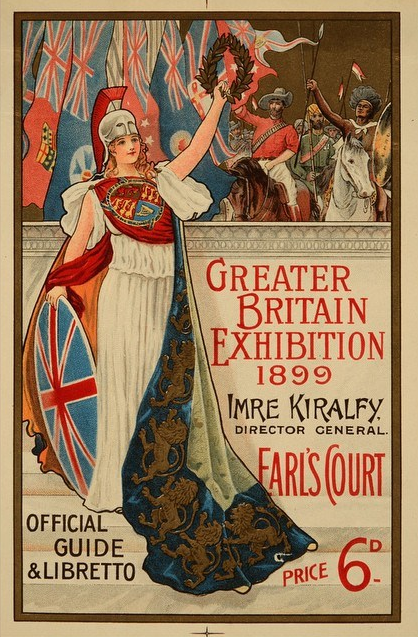


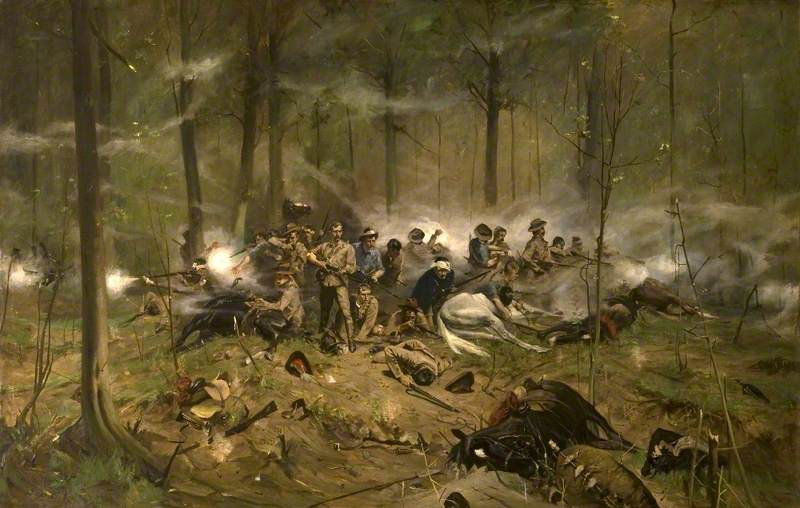
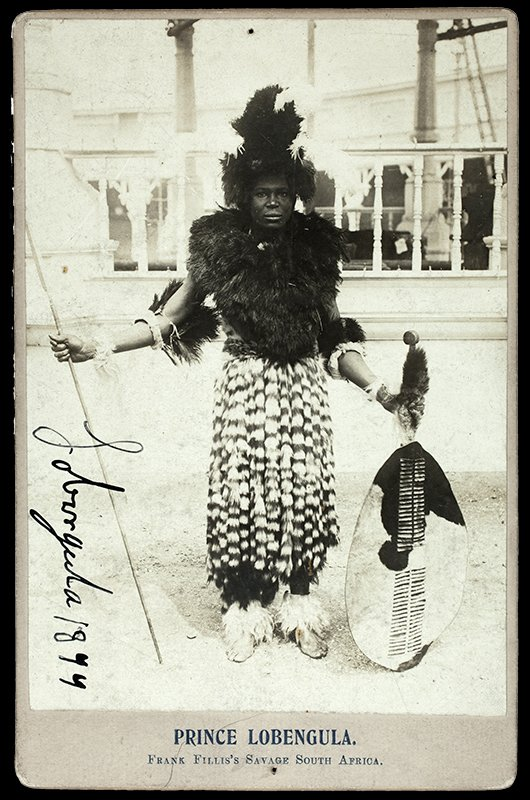
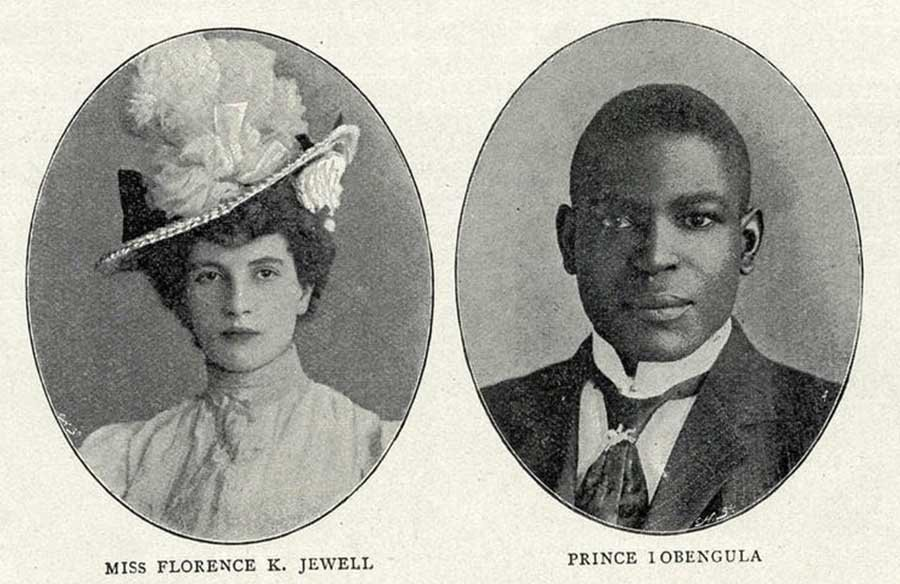

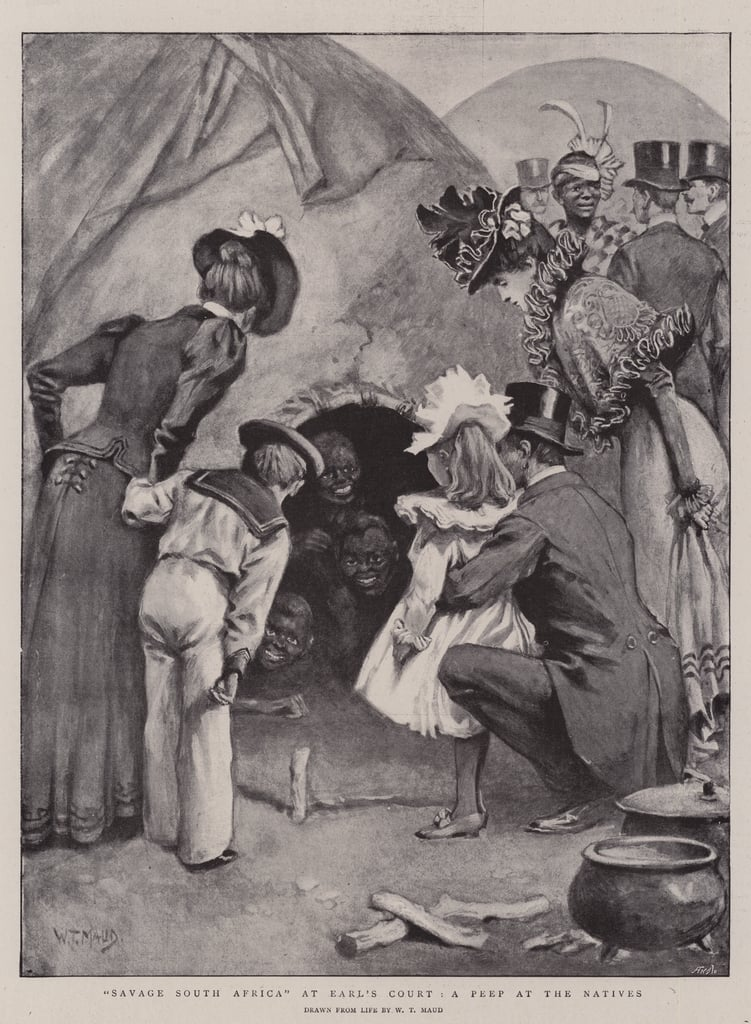


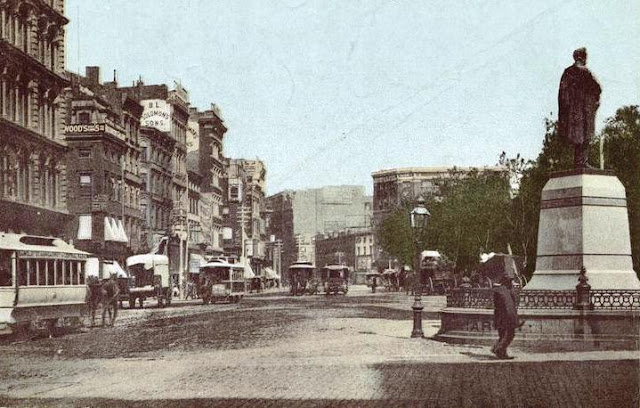


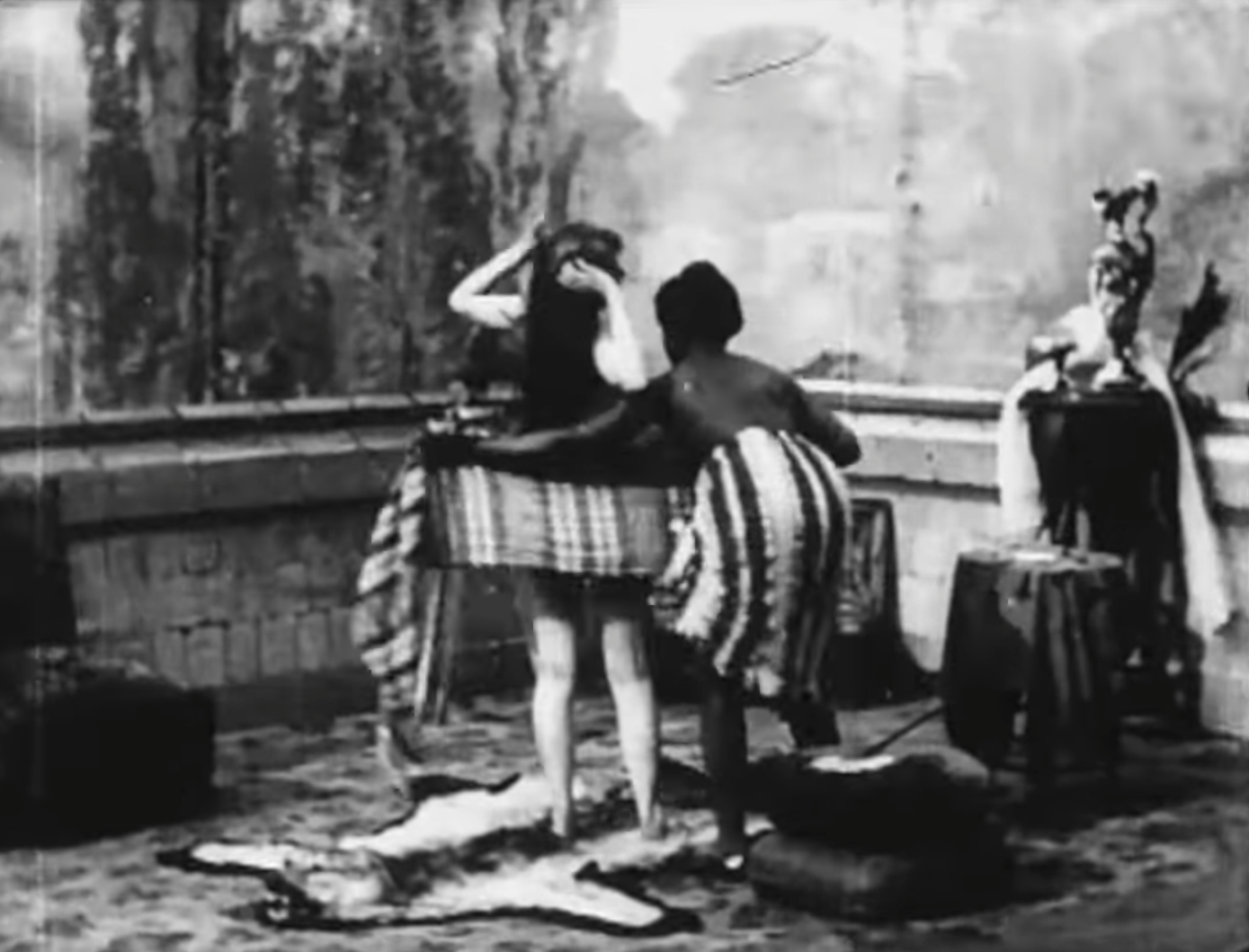
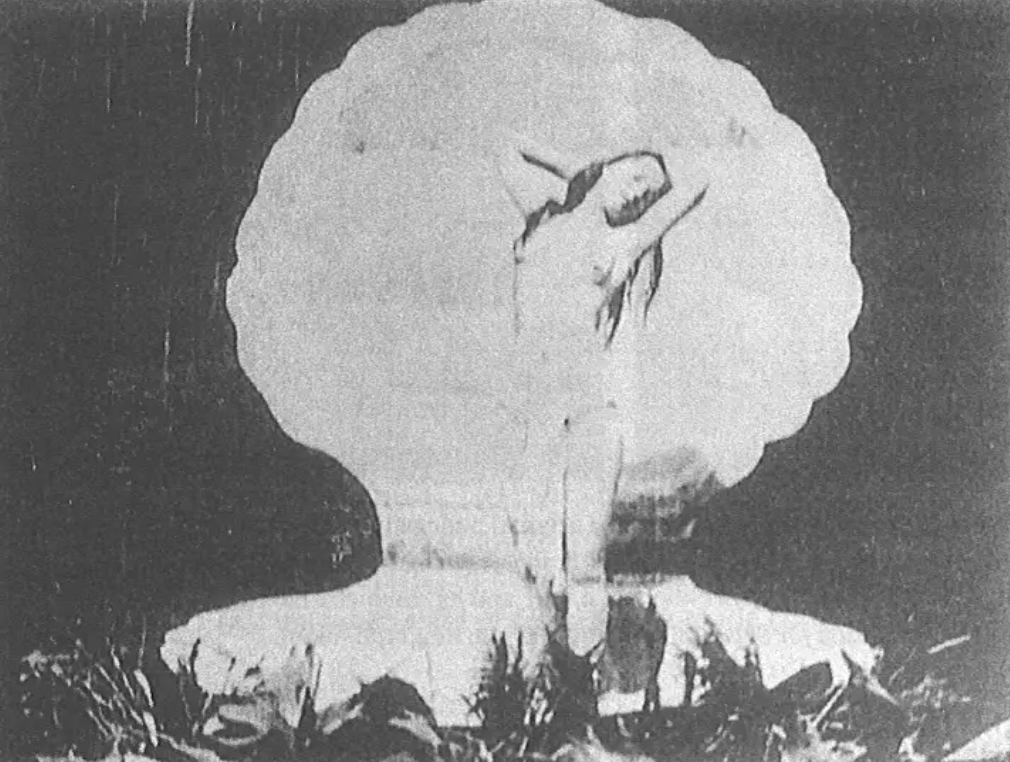
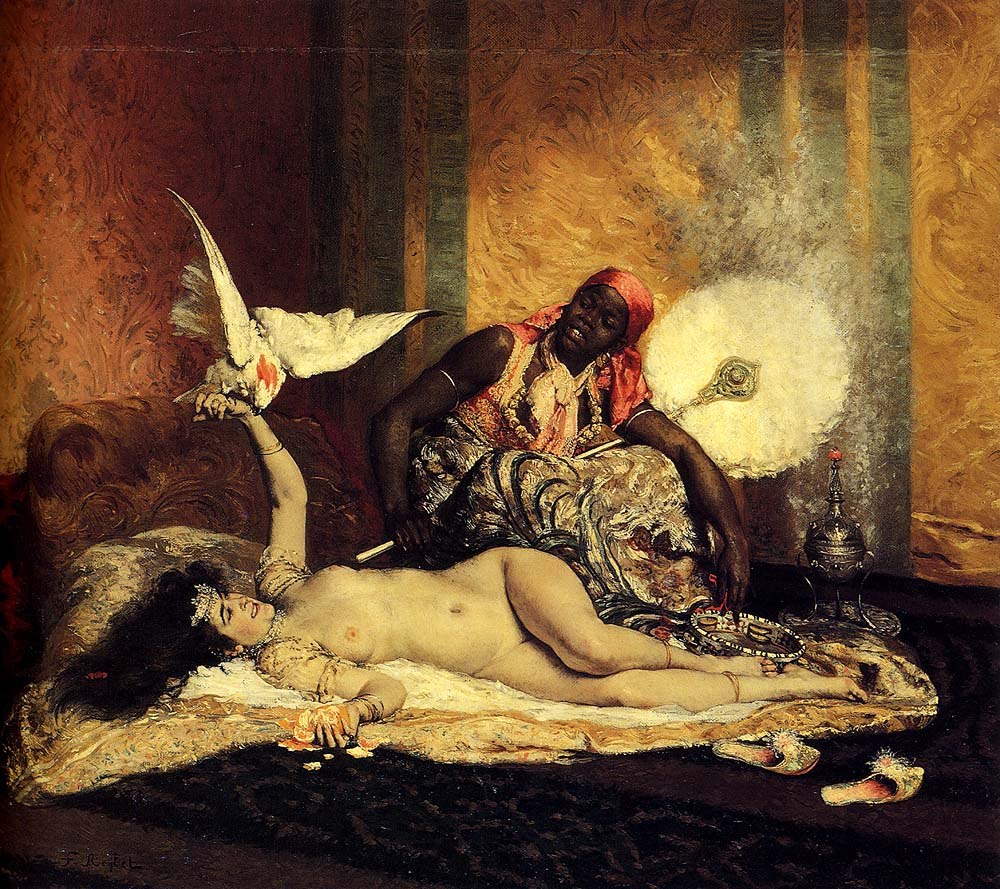
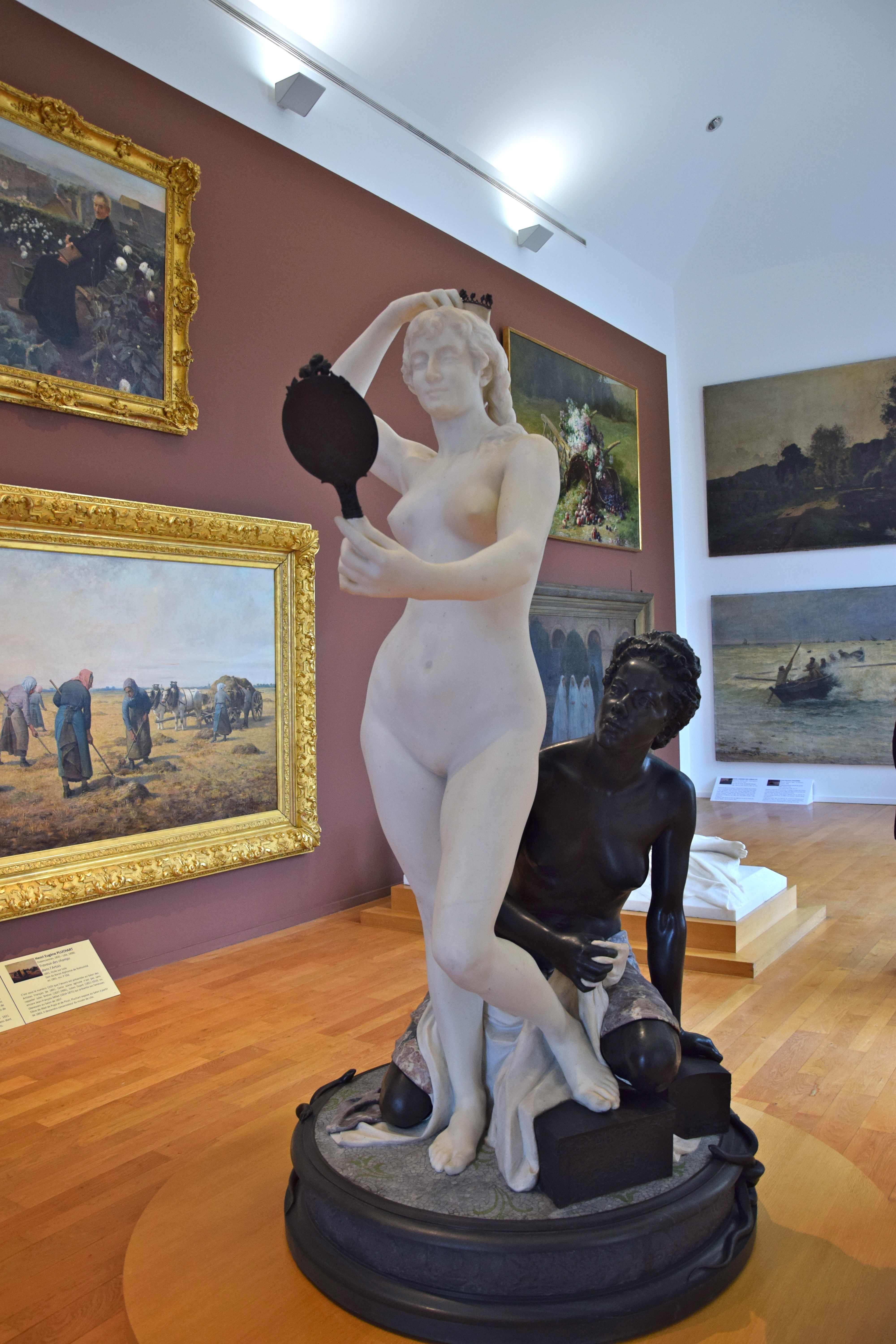

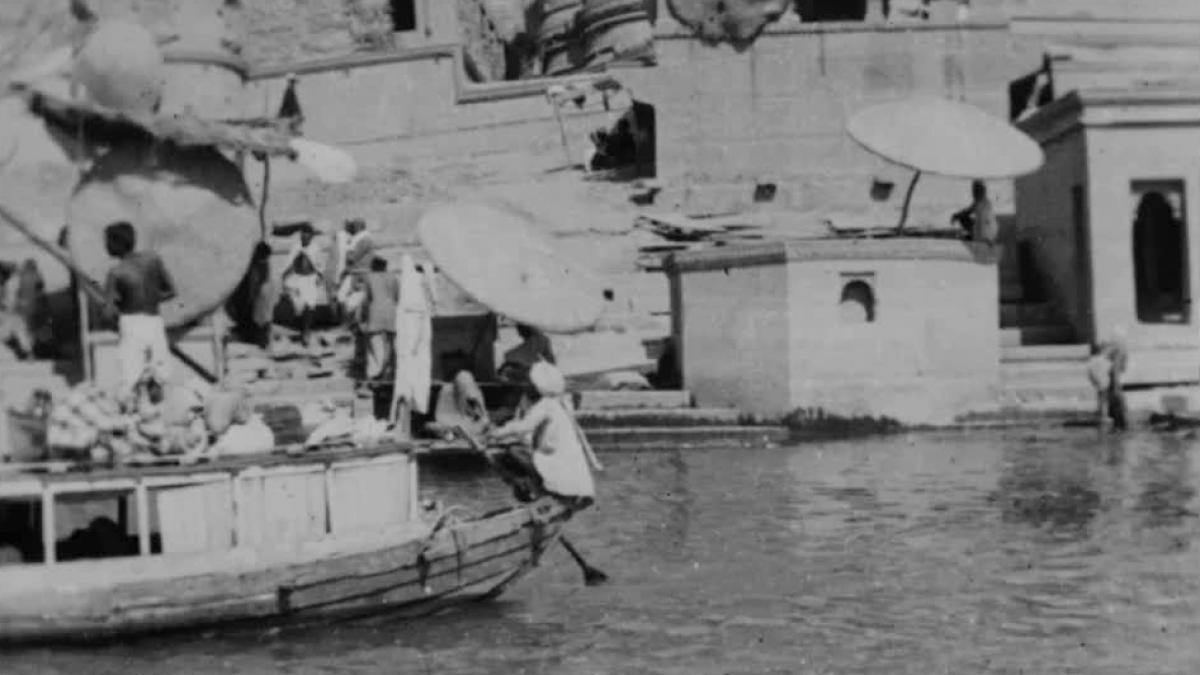

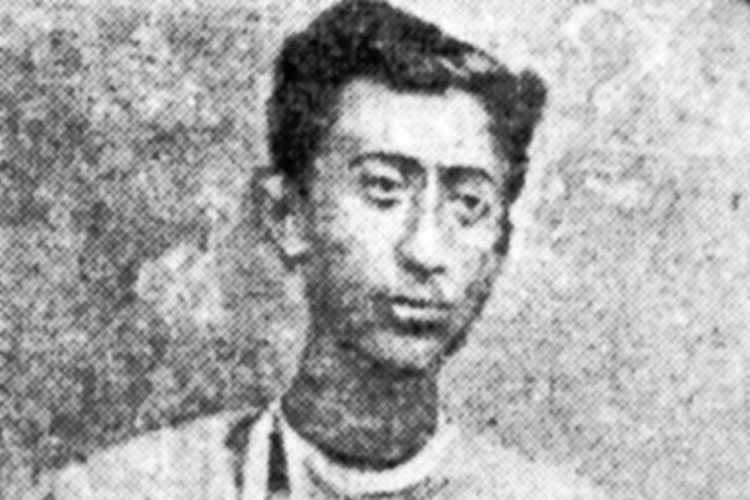
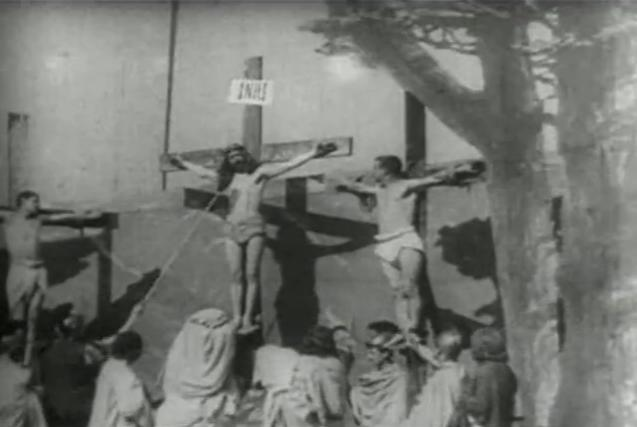


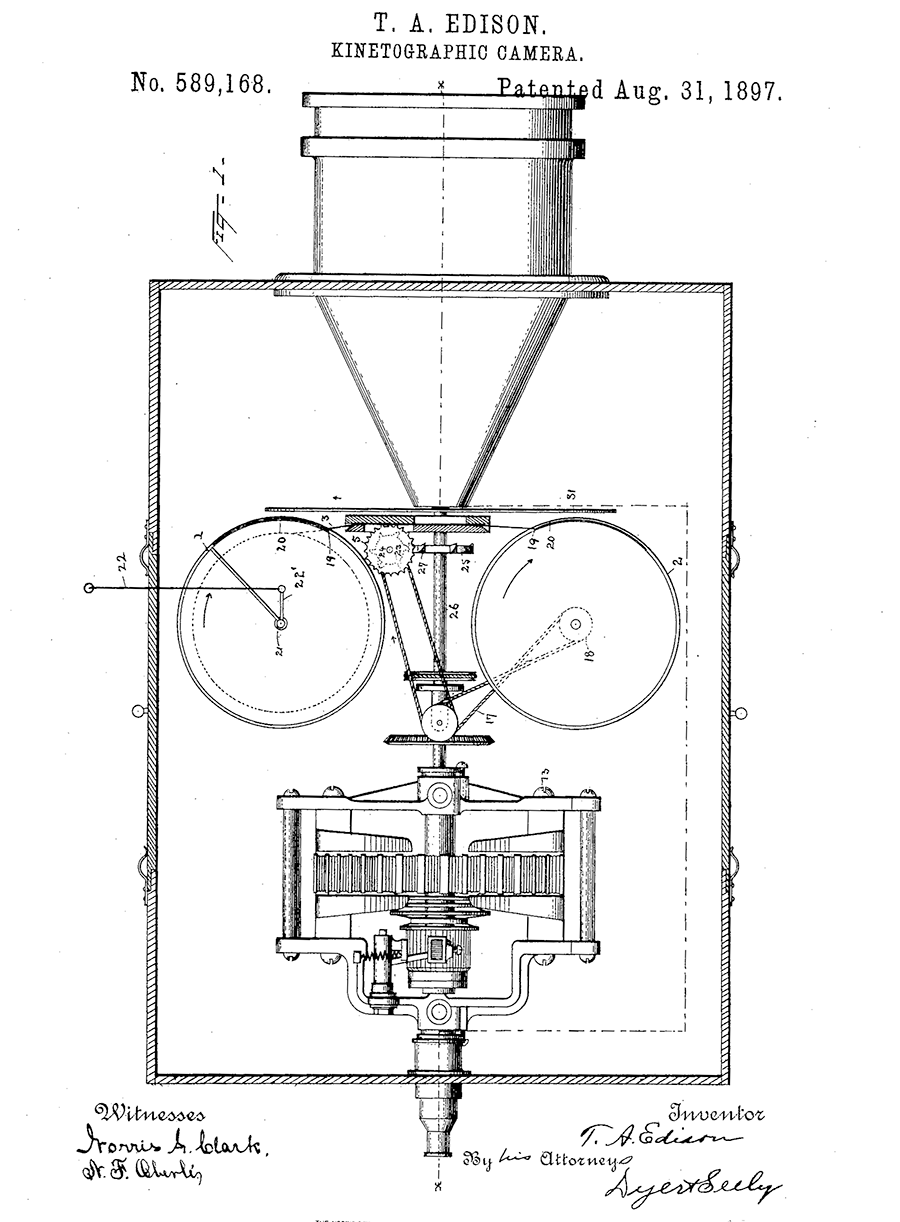


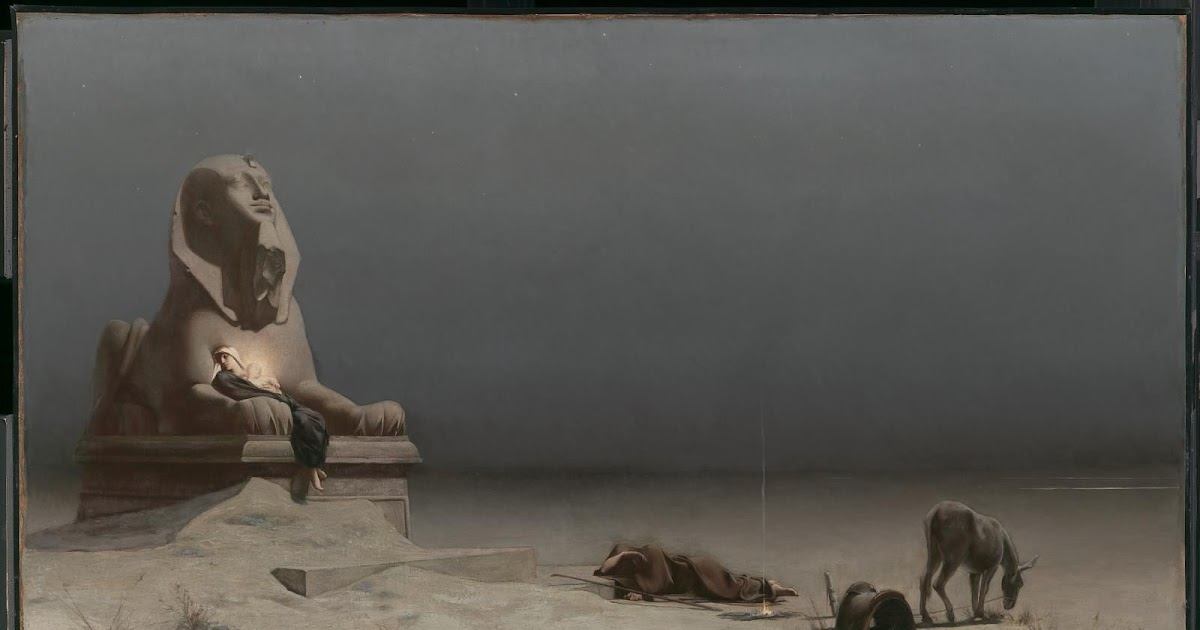
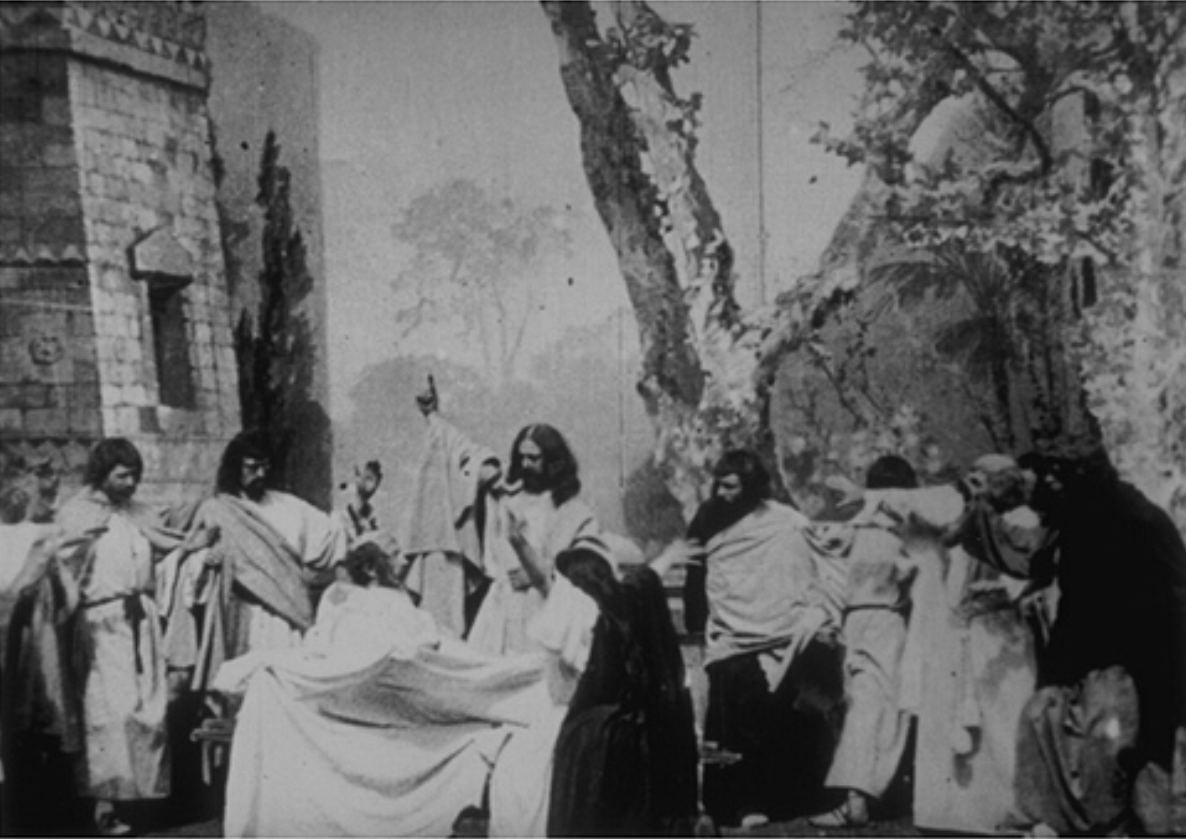

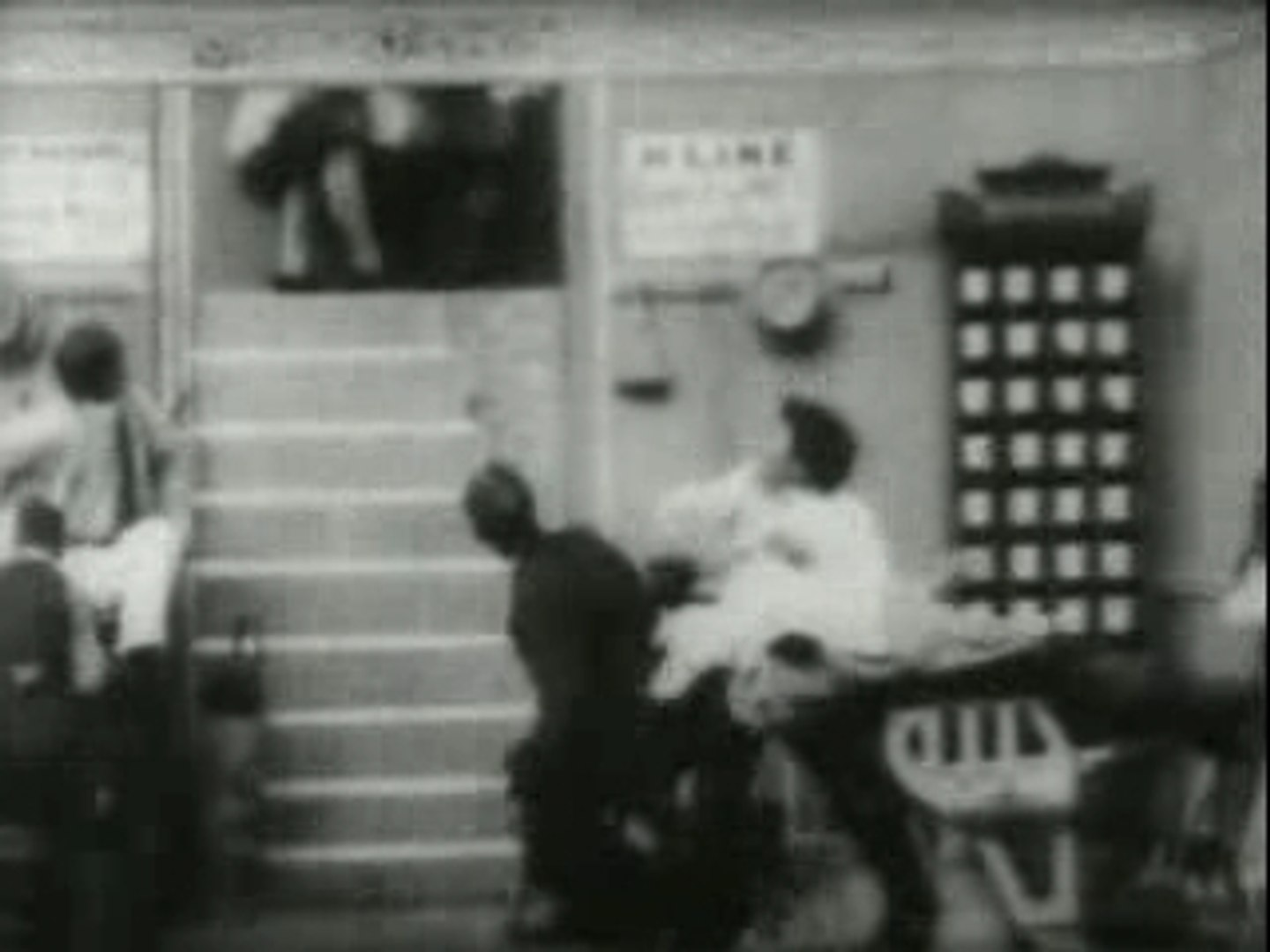


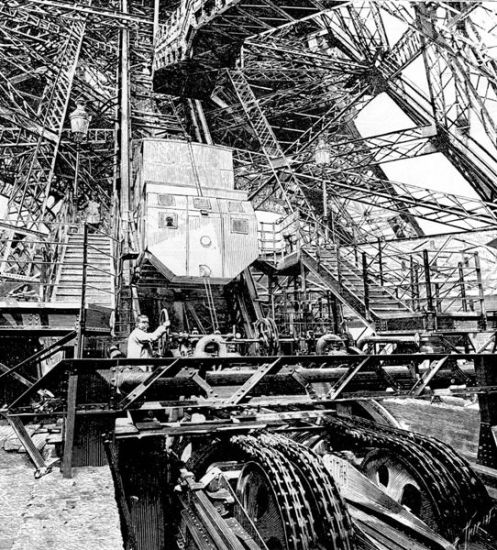
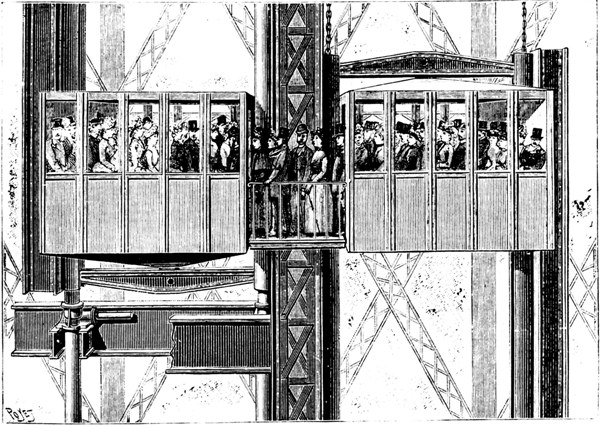
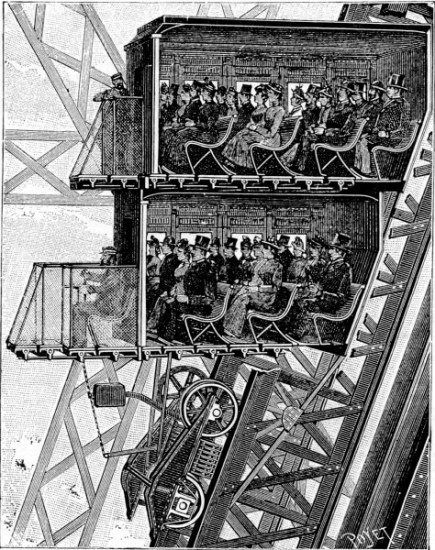
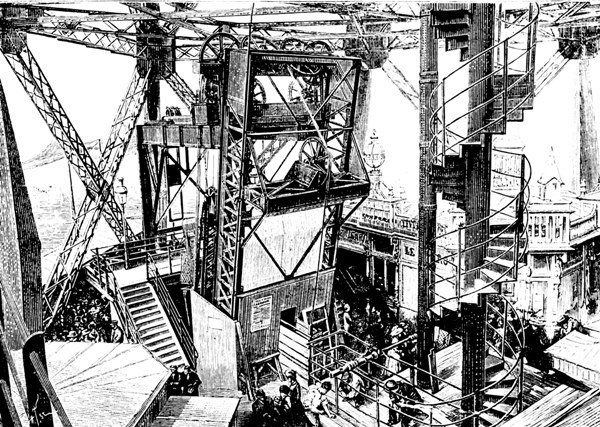

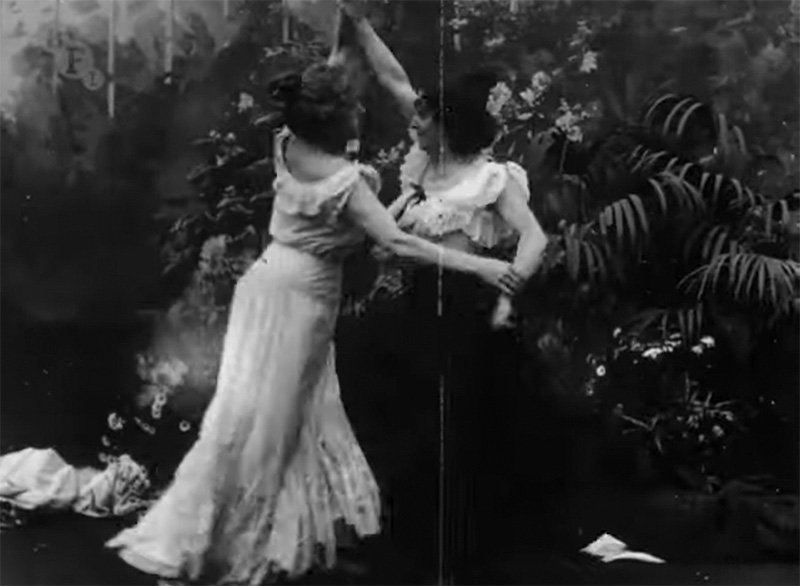


 Moviegoings