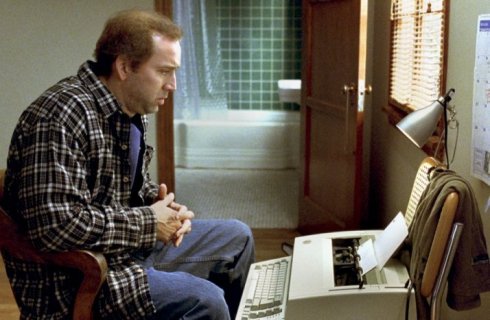
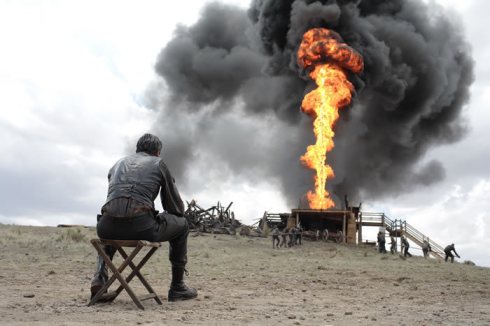
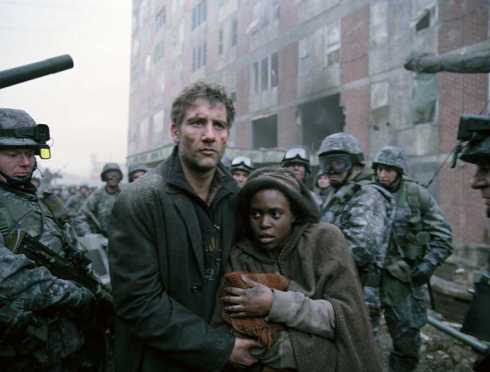
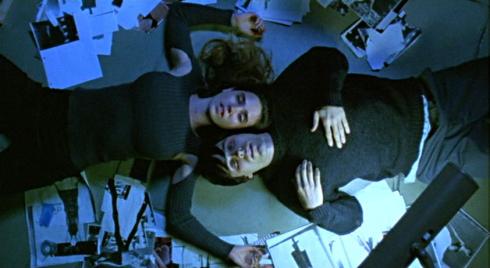
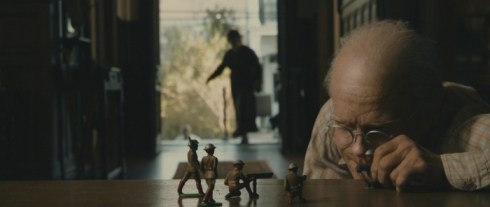
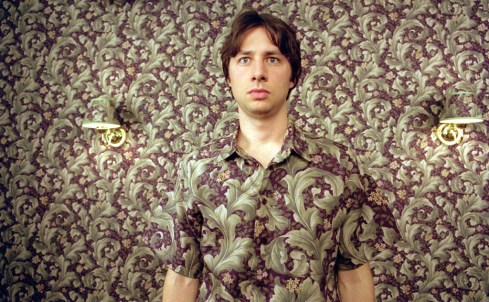
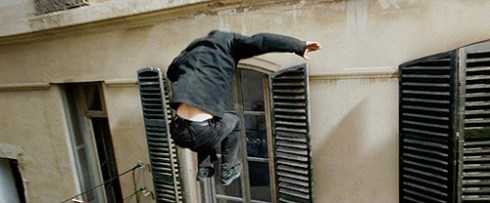
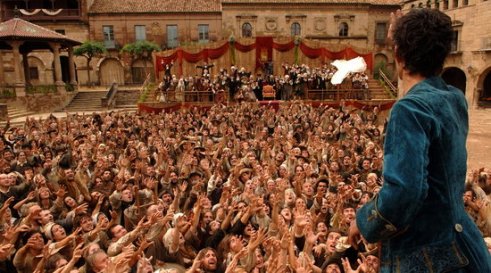
Testing the Images: Rethinking Christian Responses to Film Violence

•June 1, 2010 • Leave a Comment

In Vision and Virtue and The Peaceable Kingdom, Stanley Hauerwas defines Christian ethics as, “the disciplined activity which analyzes and imaginatively tests the images most appropriate to orchestrate the Christian life in accordance with the central conviction that the world has been redeemed by the work of Jesus Christ.” Furthermore, he explains, “the nature of Christian ethics is determined by the fact that Christian convictions take the form of a story, or perhaps better, a set of stories that constitutes a tradition” (qtd. in Hays 262).

This definition of Christian ethics, based on storytelling and on testing images, resonates strongly with the growing body of theologically-based film criticism advocated and developed by Robert K. Johnston and others in works such as Reframing Theology and Film. [1] However, one surprising difference between the established discipline of Christian ethics and the emerging discipline of theology/film criticism is the latter’s seeming lack of attention to film violence.

Although Reframing Theology and Film deals with a wide-ranging variety of topics of interest to its subject, filmic violence is only briefly discussed. In his chapter “Theology and Film: Interreligious Dialogue and Theology,” John Lyden argues that “it is not the case that all violent films encourage or approve of violence […] We need to realize that there are many meanings that can come from a film, and be sensitive to them, in order to give a more sophisticated analysis of how films function for audiences” (216-17).

This realization is certainly a necessary first step, but what seems to be missing, both from the book and from the broader theology/film conversation, is any sort of systematic, categorical way of approaching film violence which would promote “a more sophisticated analysis,” or even a significant number of examples of this sort of analysis of violence in film. This apparent disconnect is particularly worthy of comment because media violence is considered a significant topic, not only by Christian ethicists,[2] but by mainstream film and cultural theorists.[3] The discussion in those fields is ongoing, and has been for some time. However, the directions taken by these conversations only serve to highlight the necessity for a fresh approach.

Continue reading ‘Testing the Images: Rethinking Christian Responses to Film Violence’

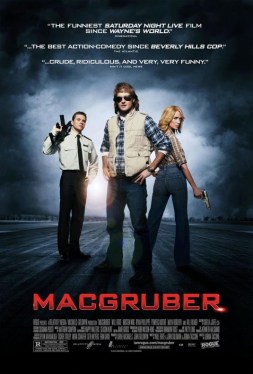
MacGruber

•May 21, 2010 • 1 Comment

starring Will Forte, Kristen Wiig, Ryan Phillippe, and Val Kilmer
written by Will Forte, John Solomon, and Jorma Taccone & directed by Jorma Taccone
Rated R for strong crude and sexual content, violence, language and some nudity.
54%

10 years ago, American hero MacGruber (Forte) disappeared into anonymous retirement after a personal tragedy led everyone to believe him dead. Now, his old nemesis (Kilmer) has stolen a nuclear warhead, and MacGruber is the only man who can find a pair of sidekicks (Phillippe, Wiig) with the skills to survive his incredible ineptitude long enough to stop the villain.

“Saturday Night Live” has a long history as a stepping-stone on the path to comic super-stardom, and a sordid history as a stepping stone on the path to turning short sketches into painfully-unfunny feature-length films. The couple dozen “MacGruber” skits that have aired over the past few years all rely on a single recurring gag: a MacGyver-like character and his companions are trapped in a room, trying to disable a bomb with the “household materials” that happen to be lying around. Inevitably, MacGruber becomes distracted during the process, and the bomb goes off, presumably killing them all. A typical MacGruber “episode” will last about a minute, counting the theme song, which sounds like a recipe for a very painful 99-minute movie. And it is, though not for the reasons that I would have expected.

MacGruber starts off on an odd foot by not even trying to land a joke during the pre-credits-set-up-sequence, playing things completely straight. I have often observed that genre parodies have a tendency to become indistinguishable from the genre they are mocking as they move towards a climax, but I don’t think I’ve ever seen one that went the other direction. This is the only respect in which MacGruber is breaking new ground. The hero is a raging incompetent who stumbles towards success thanks largely to the efforts of others, basically a Don Adams character (Get Smart, Inspector Gadget), only not likable. The humor is in the vein of Hot Shots! or Team America: World Police, but less inspired.

Given that the source material basically consists of a single, infinitely-recycled joke, it should come as no surprise that every attempt at humor in this movie is going to crop up again, probably several times. This shows up in two forms: 1) a gag is repeatedly foreshadowed by the characters before it finally arrives, and 2) a gag is simply repeated. Thus we are treated to multiple scenes of someone prancing naked with a stalk of celery protruding from their anus in order to distract the bad guys, and to MacGruber reduced to begging for another chance with loud and prolonged offers of various sexual favors (just to name a few). The experience is twice as painful, because in each case you know you’re going to have to see this again, and then when it comes back around, it is accompanied by a terrible sinking feeling of apprehension: “Oh, no, not this!”

Even when something kind of works once, it isn’t guaranteed to work a second time. In the inevitable scene where the hero beds the heroine, although it is a bit excessive (the only comedic mode this movie really understands), there is a funny commentary on the way movie sex scenes titillate the audience with crafty editing and music that obscures the “ick factor” of actually watching two people have intercourse. However, the joke is immediately (and bizarrely) repeated in the very next scene when MacGruber has sex with the ghost of his dead wife. I suppose, in a way, this too is an ironic commentary on the movie’s tendency to prolong a joke long beyond the point of death, but I’d prefer not to dwell on that.

Actually, I’m fairly certain the only genuine laughs in the film come, not from Forte, but from his SNL co-star Kristen Wiig. They certainly aren’t coming from the movie’s other stars. Ryan Phillippe performs the doubly thankless task of playing straight man to an inordinate number of lame jokes, and virtually all of the humor attached to Val Kilmer revolves around his character’s name, which is spelled one letter off of an obscenity, and pronounced much the same. Because that’s definitely never been done before. I actually started to keep a tally of the number of laughs the movie attempted to milk out of this gag, but I got bored and gave up. In any case, Wiig is extremely funny, and manages to salvage enough audience goodwill to make the experience bearable.

I should definitely be clear that this is far from the worst comedy I’ve ever seen (or even seen this year), but I dwell on the most belabored and unfunny aspects of it because, in the end, they are what stands out the most. When MacGruber fields a joke that doesn’t assault the audience with a low-brow vulgarism, it feels like an anomaly. And, certainly, vulgarity can be humorous, but it is not inherently funny to be vulgar. It seems odd that professional comedians don’t understand this very simple principle, but since their audiences seem to laugh anyway, I guess they don’t have to.

Summer Movielogue, 2010

•May 13, 2010 • Leave a Comment

May 13 – ?

# Title (Production Year) Rating% Date Watched — Review links, if any (*Title* denotes top ten movie of period)

1498 Iron Man 2 (2010) 86% 5/20/2010
1499 MacGruber (2010) 54% 5/21/2010 — Post
1500 A Clockwork Orange (1971) 97% 5/23/2010
1501 Leap Year (2010) 63% 5/28/2010
1502 Whip It (2009) 70% 5/29/2010
1503 Moliere (2007) 96% 5/30/2010
1504 Mongol (2007) 75% 5/31/2010
1505 Shrek Forever After (2010) 62% 5/31/2010
1506 Holiday (1938) 77% 5/31/2010
1507 The Rape of Europa (2006) 63% 5/31/2010
1508 Metropolitan (1990) 33% 6/1/2010
1509 Stranded: I’ve Come from a Plane That Crashed on the Mountains (2007) 76% 6/3/2010
1510 The Imaginarium of Doctor Parnassus (2009) 94% 6/3/2010
1511 Splice (2010) 84% 6/4/2010 — Post
1512 Gone With the Wind (1939) 90% 6/5/2010
1513 Band of Angels (1957) 51% 6/6/2010
1514 Cube (1997) 84% 6/7/2010
1515 The Man from Snowy River (1982) 77% 6/8/2010
1516 The Littlest Rebel (1935) 74% 6/9/2010
1517 The Little Colonel (1935) 61% 6/11/2010
1518 Men in Black (1997) 89% 6/11/2010
1519 Alive (1993) 85% 6/14/2010
1520 Please Vote for Me (2007) 87% 6/16/2010
1521 Toy Story 3 (2010) 97% 6/18/2010
1522 The Last Airbender (2010) 24% 7/3/2010 — Post
1523 The Mists of Avalon (2001) 53% 7/5/2010
1524 Knight and Day (2010) 75% 7/6/2010
1525 Date Night (2010) 81% 7/6/2010
1526 In the Electric Mist (2009) 80% 7/6/2010
1527 Cheaper by the Dozen (1950) 79% 7/7/2010
1528 Despicable Me (2010) 86% 7/9/2010
1529 Inception (2010) 98% 7/16/2010
1530 Following (1998) 86% 7/18/2010
1531 Tideland (2005) 69% 7/20/2010
1532 I Am a Fugitive from a Chain Gang (2010) 80% 7/21/2010
1533 Jackie Brown (1997) 96% 7/21/2010
1534 A Town Called Panic (2009) 95% 7/21/2010
1535 The Damned United (2009) 90% 7/22/2010
1536 Walker (1987) 89% 7/24/2010
1537 Fury (1936) 85% 7/24/2010

The Top Films of the Decade: Honorable Mentions

•April 4, 2010 • 1 Comment

Narrowing the films of the decade down to 101 of the best was a long and difficult process. Inevitably the list was not long enough, but it had to stop somewhere. Still, there were lots that didn’t make the cut, ranging from titles that really deserved inclusion to just good movies that I would have loved a chance to recommend. And so, I bring you the Honorable Mentions: an addendum of 99 titles that didn’t make the cut, separated into three tiers and ordered alphabetically. That’s a nice, round 200 total films: a pretty good number for the first decade of the 2000s.
Tier 1: The Great Regrets

Oh, how I wish I could have included these! Most of them appeared on the list at one point, but for one reason or another they were eventually supplanted. If I were to redraft it tomorrow, any one of them could make the cut as easily as something currently there. In any case, like the top 101, they are all must-see films.
4 Months, 3 Weeks and 2 Days (Cristian Mungiu, 2007)

Babel (Alejandro González Iñárritu, 2006)

Black Hawk Down (Ridley Scott, 2001)

Blame it on Fidel! (Julie Gavras, 2006)

Cast Away (Robert Zemeckis, 2000)

Changeling (Clint Eastwood, 2008)

Doubt (John Patrick Shanley, 2008)

The Fall (Tarsem Singh, 2006)

The Fog of War (Errol Morris, 2003)

Frozen River (Courtney Hunt, 2008)

Ghost World (Terry Zwigoff, 2001)
Good Night, and Good Luck. (George Clooney, 2005)

House of Sand and Fog (Vadim Perelman, 2003)

I’m Not There (Todd Haynes, 2007)

Into the Wild (Sean Penn, 2007)

Juno (Jason Reitman, 2007)

The Lives of Others (Florian Henckel von Donnersmarck, 2006)

Michael Clayton (Tony Gilroy, 2007)

Notes on a Scandal (Richard Eyre, 2006)

The Passion of the Christ (Mel Gibson, 2004)

The Queen (Stephen Frears, 2006)

The Reader (Stephen Daldry, 2008)
Shotgun Stories (Jeff Nichols, 2007)

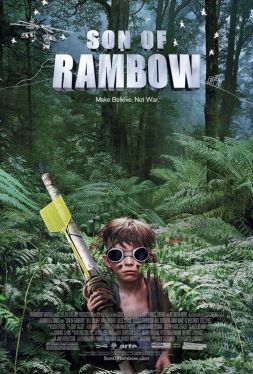
Son of Rambow (Garth Jennings, 2007)

Spellbound (Jeffrey Blitz, 2002)

Spider-Man 2 (Sam Raimi, 2004)

Star Trek (J.J. Abrams, 2009)

Tristram Shandy: A Cock and Bull Story (Michael Winterbottom, 2005)

Tsotsi (Gavin Hood, 2005)

Up in the Air (Jason Reitman, 2009)

Water (Deepa Mehta, 2005)

Wonder Boys (Curtis Hanson, 2000)

Yi Yi (Edward Yang, 2000)

______________________________
Tier 2: The Good Ones

Depending how the wind was blowing that day, any of these might show up on the top list, but probably not. That doesn’t mean they aren’t great, stand-out films, though. They’re all rock-solid and deserve to be seen.
Amelie (Jean-Pierre Jeunet, 2001)

Best in Show (Christopher Guest, 2000)

Born into Brothels: Calcutta’s Red Light Kids (Zana Briski & Ross Kauffman, 2004)

Brick (Rian Johnson, 2005)

Collateral (Michael Mann, 2004)

Control Room (Jehane Noujaim, 2004)

An Education (Lone Scherfig, 2009)

Erin Brockovich (Steven Soderbergh, 2000)

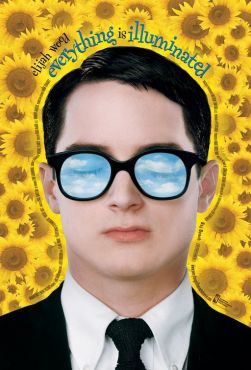
Everything Is Illuminated (Liev Schreiber, 2005)

Friday Night Lights (Peter Berg & Josh Pate, 2004)

Gangs of New York (Martin Scorsese, 2002)
Good Bye Lenin! (Wolfgang Becker, 2003)

Gosford Park (Robert Altman, 2001)

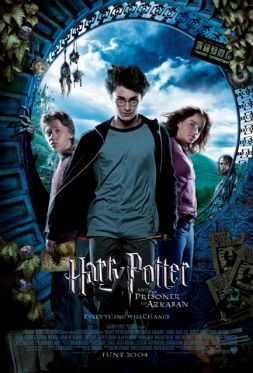
Harry Potter and the Prisoner of Azkaban (Alfonso Cuarón, 2004)

In the Bedroom (Todd Field, 2001)

Inside Man (Spike Lee, 2006)

Into Great Silence (Philip Gröning, 2005)

Invictus (Clint Eastwood, 2009)

Lust, Caution (Ang Lee, 2007)

Moon (Duncan Jones, 2009)

Nobody Knows (Hirokazu Koreeda, 2004)

Once (John Carney, 2006)
Punch-Drunk Love (Paul Thomas Anderson, 2002)

Scotland, Pa. (Billy Morrissette, 2001)

Seraphim Falls (David Von Ancken, 2006)

Syndromes and a Century (Apichatpong Weerasethakul, 2006)

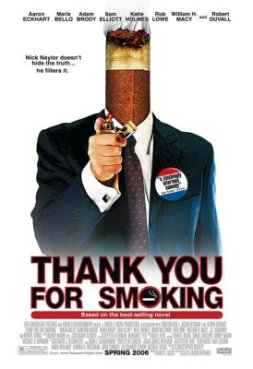
Thank You for Smoking (Jason Reitman, 2005)

Ushpizin (Giddi Dar, 2004)

Vanilla Sky (Cameron Crowe, 2001)

Vicky Cristina Barcelona (Woody Allen, 2008)

White Oleander (Peter Kosminsky, 2002)

The Wrestler (Darren Aronofsky, 2008)

X2 (Bryan Singer, 2003)

______________________________

Tier 3: The Recommendations

You wouldn’t find any of these on my short-list of greatest films of the decade, but I’d happily sit down to watch them with you anytime. They’re all excellent entertainment (according to the conventions of their respective genres), and well worth a look.
Black Book (Paul Verhoeven, 2006)

Burn After Reading (Joel & Ethan Coen, 2008)

Charlie Wilson’s War (Mike Nichols, 2007)

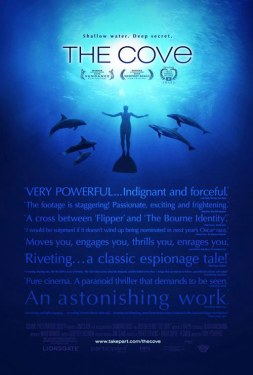
The Cove (Louie Psihoyos, 2009)

Death at a Funeral (Frank Oz, 2007)

The Duchess (Saul Dibb, 2008)

Enemy at the Gates (Jean-Jacques Annaud, 2001)

Gran Torino (Clint Eastwood, 2008)

Hard Candy (David Slade, 2005)

The History Boys (Nicholas Hytner, 2006)

Idiocracy (Mike Judge, 2006)
Insomnia (Christopher Nolan, 2002)

Iron Man (Jon Favreau, 2008)

The Last King of Scotland (Kevin Macdonald, 2006)

Match Point (Woody Allen, 2005)

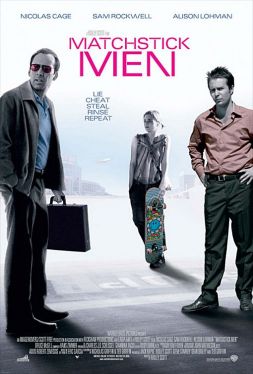
Matchstick Men (Ridley Scott, 2003)

Miss Pettigrew Lives for a Day (Bharat Nalluri, 2008)

The Mist (Frank Darabont, 2007)

Monster Camp (Cullen Hoback, 2007)

Once Upon a Time in Mexico (Robert Rodriguez, 2003)

Orange County (Jake Kasdan, 2002)

Rent (Christ Columbus, 2005)
Revenge of the Sith (George Lucas, 2005)

Secondhand Lions (Tim McCanlies, 2003)

Sin City (Frank Miller & Robert Rodriguez, 2005)

Snatch. (Guy Ritchie, 2000)

Spider-Man (Sam Raimi, 2002)

Stranger Than Fiction (Marc Forster, 2006)

This Film Is Not Yet Rated (Kirby Dick, 2006)

Tropic Thunder (Ben Stiller, 2008)

The TV Set (Jake Kasdan, 2006)

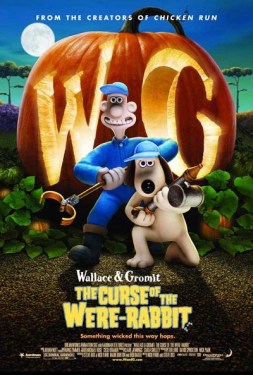
Wallace & Gromit in The Curse of the Were-Rabbit (Steve Box & Nick Park, 2005)

Zombieland (Ruben Fleischer, 2009)

______________________________

The Top 25 Films of the Decade

•March 29, 2010 • 1 Comment

Click here for 101-76, here for 75-51, and here for 50-26.

Thanks to everyone who has followed along with this countdown. I had a great time putting it together, and I hope that it has provoked many nods of agreement, cries of outrage, and trips to your Netflix queue. Evaluations of the significance of years, decades, and eras of film history, and of the quality of films they produced, are always hot topics among both amateur and professional film scholars.

In the larger narrative of American film history, the 1970s are widely regarded as an exceptional and critical decade. Those years saw a number of exciting cinematic developments from talented auteurs who experienced unprecedented creative freedom. The 1970s also introduced the “blockbuster;” a phenomenon which has largely charted the course of the industry ever since.

As rapidly-developing technological advances continue to make our blockbusters bigger, brighter, and louder (though not always better), it is also becoming easier than ever for small filmmakers to realize their personal vision without the input of of a major studio marketing department. Meanwhile, new technologies have opened up more opportunities for people to find and enjoy these alternatives to big-budget Hollywood spectacles and to share those experiences with others.

Perhaps when historians look back on the 00s, they will see it as a small turning point from the market-driven ’80s and ’90s. And while it may never take on the glow of a decade like the 1970s, I think we can all agree that film remains vibrant and innovative, and that the last 10 years have been very kind to moviegoers.

25. Inglourious Basterds (Quentin Tarantino, 2009)

Marketed as the ultimate revenge fantasy, Tarantino’s homage to the Dirty Dozen subgenre of World  War II films is so much more than that. It is a (somewhat ambiguous) critique of cinema violence and how audiences respond to it. It is an apologetic for the power of cinema to rewrite (and perhaps even to redeem) history. Above all, though, it is a demonstration of Tarantino’s ability to create and sustain a nearly unbearable level of dramatic tension while characters converse casually and lives hang in the balance.

______________________________

24. Downfall (Oliver Hirschbiegel, 2004)

This is a compulsively watchable, German-made account of Hitler’s final days in his bunker in Berlin, told primarily from the perspective of his private secretary, Traudl Junge (who died in 2002). It does not attempt to explain Nazism or to impose any obvious message onto the events, merely depicting the madness and chaos of the Third Reich and its leader in their death throes.

______________________________

23. Master and Commander: The Far Side of the World (Peter Weir, 2003)

Master and Commander is a killer naval drama based on an awesome book series. The duo of Captain Jack Aubrey and ship’s surgeon (and spy) Stephen Maturin, here played perfectly by Russell Crowe and Paul Bettany, are among the greatest literary characters ever created, and their adventures together during the Napoleonic Wars definitely live up that potential.

______________________________

22. Little Children (Todd Field, 2006)

It may seem like just another “suburban malaise” movie, but its top-notch execution, powerful performances, and complex thematic qualities indicate otherwise. The title refers both to the literal kids who inspire the culture-shaping cry of “for the children!” and to the decidedly juvenile behavior of the adults who produced them. Everything is covered with a layer of irony (thanks in part to the voice-over narration, which strikes the perfect tone), but not so thick as to transform the characters into caricatures.

______________________________

21. Junebug (Phil Morrison, 2005)

This film understands the life and culture of the American South in a genuinely profound and respectful way that I have seldom (if ever) seen in a movie, and it does so by resisting the almost universal cinematic urge to regard Southerners as the Other. Among its charming features is an Oscar-nominated performance by Amy Adams, and a moving look at the bonds of family, the gaps between American cultures, and the difficulties of communication.

______________________________

20. The Three Burials of Melquiades Estrada (Tommy Lee Jones, 2005)

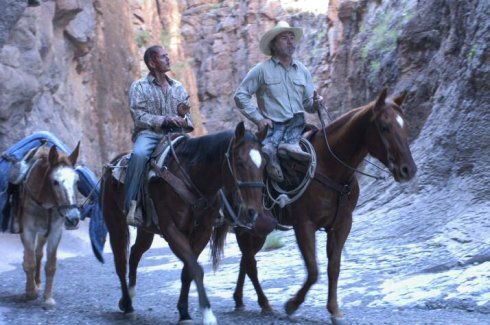
After a gung-ho border patrolman accidentally guns down an illegal immigrant, a local rancher kidnaps the killer and forces him to dig up the body and take it back to Mexico. Every time I re-watch Tommy Lee Jones’ directorial debut, I appreciate it a little bit more. Transplanting the sensibilities of a Flannery O’Connor story to the Texas/Mexico border, Jones populates his film with weird characters, darkly-humorous situations, beautiful scenery, and a strong undercurrent of redemption.

______________________________

19. Adaptation (Spike Jonze, 2002)

In 1997, Charlie Kaufman was hired to adapt The Orchid Thief into a screenplay. After reading the novel, he promptly developed a severe case of writer’s block, and ended up writing a screenplay about his struggle to translate the novel into a film instead. The result is surreal, as you are literally watching a movie that is about its own creation, but also funny, masterful, and (Kaufman’s hallmark) unlike anything you’ve ever seen.

______________________________

18. The Royal Tenenbaums (Wes Anderson, 2001)

Royal Tenenbaum, the absentee patriarch of a family of prodigies, learns that he is terminally ill and returns home in an attempt to reconnect with his now-grown children (who seem to want nothing to do with him). Wes Anderson’s movies tend to be variations on the same themes, and thus have a lot in common with each other. This is the perfection of his formula, and it remains probably his best film to date, with a wonderfully quirky script and an amazing cast.

______________________________

17. The Assassination of Jesse James by the Coward Robert Ford (Andrew Dominik, 2007)

The title says a lot, but doesn’t say it all. This is the ultimate revisionist western, and its aim is nothing less than to interrogate the intimate relationship between history, myth, and reality. The lyrical, contemplative pacing is complemented by Roger Deakins’ artful cinematography, and Brad Pitt and Casey Affleck are perfect as the title characters: celebrated outlaw and desperate wanna-be.

______________________________

16. Lost in Translation (Sofia Coppola, 2003)

This is an incredibly funny, incredibly sad, and shockingly good film about two very different people who experience a profound connection through their mutual feelings of alienation during a visit to Japan. Bob is a well-respected actor, somewhat past his prime, who is shooting a commercial. Charlotte is a neglected newlywed whose photographer husband is busy on assignment. Bill Murray and Scarlett Johansson have never been better.

______________________________

15. Waltz with Bashir (Ari Folman, 2008)

Former Israeli soldier Ari Folman (the filmmaker as protagonist) finds that he remembers nothing of his role in the Lebanon War two decades before, and sets out to interview other soldiers about their experiences in an effort to revive his own memories. This film’s striking animation style flows smoothly between the highly naturalistic and the semi-surreal dreamscape, illustrating a statement about the terrible nature of war as powerful as anything since All Quiet on the Western Front (1930).

______________________________

14. City of God (Fernando Meirelles & Katia Lund, 2002)

This Brazilian film presents an intricate, absorbing account of the rise of organized crime in the “Cidade de Deus” slum of Rio de Janeiro. The story takes place across several years during which the main character grows up to become a photographer, while most of his friends become gangsters. It is a chilling, but very human, depiction of the vicious cycle formed by corruption and poverty in the Third World.

______________________________

13. Finding Nemo (Andrew Stanton & Lee Unkrich, 2003)

Marlin, a somewhat neurotic clownfish, sets out across the ocean to find his son Nemo, taken by divers for a dentist’s aquarium. Along the way he is befriended by forgetful Dory and meets a host of weird and wonderful creatures. Colorful characters (in every sense of the term) abound in Pixar’s enchanting undersea adventure. The humor is timeless, the story is completely involving, and the scenery is gorgeous.

______________________________

12. There Will Be Blood (Paul Thomas Anderson, 2007)

Daniel Day-Lewis delivers a towering, grandly-tragic performance as oil-field entrepreneur Daniel Plainview in what may be the most important and ambitious American tragedy since Citizen Kane. Everything about Anderson’s epic masterpiece invites such lofty comparisons, from the grand scale of the production to the fiery magnetism and tragic flaws of the central character. This is definitely a must-see.

______________________________

11. Children of Men (Alfonso Cuaron, 2006)

In a future where all women are barren and the youngest person in the world is 18 years old, Theo finds himself sucked into major events when his ex-wife (leader of a revolutionary group called the Fishes) requests a political favor. Cuaron brings his unique storytelling sensibilities to a great novel, and puts his own spin on it. On the surface, this dystopian sci-fi action thriller might seem like one long chase scene, but a radical illustration of hope lurks just beneath the surface.

______________________________

10. Requiem for a Dream (Darren Aronofsky, 2000)

Movies warning against the dangers of drug addiction have been around for several decades, but surely this is the most harrowing anti-drug film ever made. It follows a young man, his girlfriend, his best friend, and his mother down the rabbit hole into their own private hells of addiction and through the horrifying consequences that follow. If this doesn’t convince someone to just say “no,” then nothing ever will. The film is so well-made that I’m not sure I could ever bear to sit through it again.

______________________________

9. A Serious Man (Joel Coen & Ethan Coen, 2009)

An absolute masterpiece of dark comedy and theodicy, A Serious Man essentially transplants the story of Job to a Minnesota suburb in 1967. The protagonist is a complacent shmendrik who goes looking for an explanation from God when his life suddenly spins out of control. What ensues is both hilarious and enlightening (though not for our hero).

______________________________

8. Spirited Away (Hayao Miyazaki, 2001)

In this gloriously animated fairy tale, a young girl must go to work in a bath house that caters to denizens of the spirit world in order to save her parents, who have been transformed into pigs. Miyazaki’s greatest film is a thorough charmer, full of surprising and delightful characters and ideas. It gives the sense of a fully realized world, with something new and exciting waiting to be discovered around every corner.

______________________________

7. Road to Perdition (Sam Mendes, 2002)

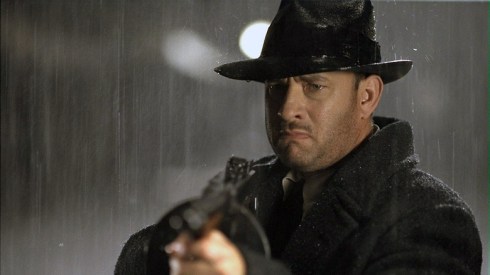
The best gangster movie (and adaptation of a graphic novel) of the decade is an unforgettable story about fathers, sons, sin, sacrifice, and redemption. The film’s origins are obvious from its strikingly beautiful visual style and iconic storytelling. Exclusive to the movie, however, are a sublime soundtrack and memorable performances from Tom Hanks, Paul Newman, Daniel Craig, Jude Law, etc.

______________________________

6. Brokeback Mountain (Ang Lee, 2005)

Located at the center of so much controversy (and humor), it was (and may still be) difficult to have an opinion of this film without appearing to make some sort of statement. I can’t put it any better than Entertainment Weekly: “Everyone called it ‘The Gay Cowboy Movie.’ Until they saw it.” I thought it was powerful, touching, and extremely well made when I first saw it in theaters. Curious to see if it lived up to my initial impression, I rewatched it a few years later and found that, if anything, Brokeback Mountain exceeded my memory of it.

______________________________

5. Pan’s Labyrinth (Guillermo del Toro, 2006)

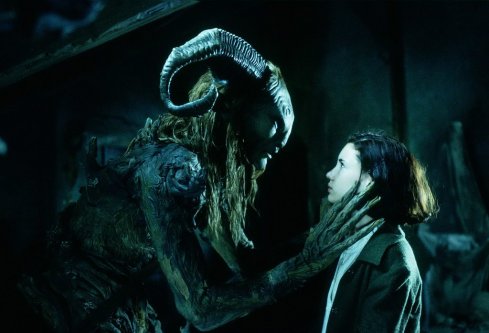
Guillermo del Toro brings a fantastically dark world to life in this fairy tale for adults set against the backdrop of the Spanish Civil War. Young Ofelia journeys to the countryside with her pregnant mother to join her new stepfather, a ruthless army captain tasked with cleaning out an isolated pocket of rebels, and discovers a hidden, parallel world of fairies and monsters in which she must complete a series of increasingly dangerous tasks. Del Toro’s ability to bring fantastical creatures vividly to life on-screen is rivaled only by his strength as a storyteller.

______________________________

4. No Country for Old Men (Joel Coen & Ethan Coen, 2007)

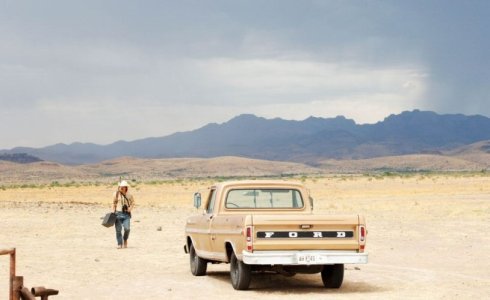
Every second of the Coen Brothers’ extraordinarily faithful adaptation of a Cormac McCarthy novel is note-perfect, from the haunting voice-over by Tommy Lee Jones that opens the film, to the abrupt, uncompromising ending. A West Texas man finds a satchel full of money from a drug deal gone bad, and is pursued by an assassin who is as unstoppable and implacable as he is evil. Meanwhile, the local sheriff follows in the wake of destruction the two leave behind, wondering what larger implications this outbreak of violence may have. The Coens show a Hitchcockian talent for building an incredible level of suspense that, even after multiple viewings, never fades.

______________________________

3. Eternal Sunshine of the Spotless Mind (Michel Gondry, 2004)

Charlie Kaufman brings us the definitive relationship drama of the decade. Lacuna, Inc. gives its customers the option to remove specific memories from their minds, prompting a quarreling couple to erase each other. As Clementine disappears from Joel’s mind, we see their relationship play out in reverse, reminding him of why he cared about her so much in the first place. Meanwhile, will forgetting their experiences together simply doom them to repeat the same mistakes? This film is mind-bending, awesome, and way better than that dating book you’re reading.

______________________________

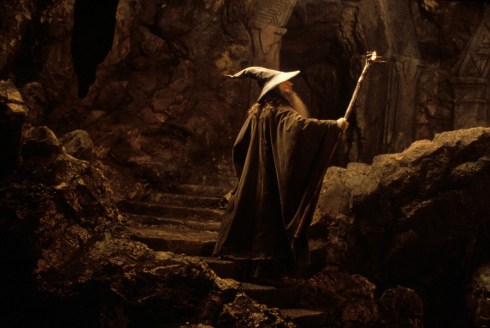
2. The Lord of the Rings trilogy (Peter Jackson, 2001-2003)

Peter Jackson’s critically and commercially successful adaptation of J.R.R. Tolkien’s epic, multi-volume fantasy saga is an incredible achievement in any decade, but it would have been unthinkable before now. Jackson combined revolutionary digital effects, fantastic creature, costume, and set designs, and a grueling production schedule to bring this 11-hour megastory to the screen over a period of two years. And, while no true fan could ever be completely satisfied with anything less than the original, we can all rejoice in a trilogy that overwhelmed expectations and sparked a genre revival.

______________________________

1. WALL·E (Andrew Stanton, 2008)

The first half-hour of WALL·E is one of the purest, most blissful examples of cinematic storytelling ever conceived. Pixar went out on a limb by denying the protagonist of a feature-length film the power of speech (though not of communication), and found themselves blazing trails in territory largely uncharted since the Silent Era. The result was the decade’s greatest romance (between two robots!) and most thrilling adventure. This is a funny, touching, exciting, infinitely-rewatchable movie full of hope, as we enter a new millennium, that the power of the human imagination will ultimately prove a match for our destructive nature.

______________________________

How to Train Your Dragon

•March 26, 2010 • Leave a Comment

starring Jay Baruchel, America Ferrera, Craig Ferguson, and Gerard Butler
written & directed by Dean DeBlois and Chris Sanders
Rated PG for sequences of intense action and some scary images, and brief mild language.
95%

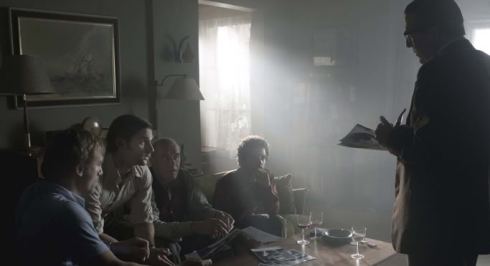
Hiccup Horrendous Haddock III (Baruchel) is a scrawny young viking desperate to join his community’s battle with the dragons that constantly raid their village. Unfortunately, no one takes him or his inventions seriously. One night, he brings down an incredibly rare Night Fury, and discovers that everything the vikings believe about dragons is wrong. But convincing everyone else in time to avert all-out war is going to take every ounce of cleverness and courage he possesses.

This may very well be DreamWorks’ best animated feature yet, though I’d be willing to hear arguments from fans of Kung Fu Panda and the first Shrek. It’s also (probably not coincidentally) their first film since Shrek that doesn’t rely on a sardonic, rapid-fire stream of pop culture references for its humor (i.e., the Shrek and Madagascar films), or on the tropes of a well-established genre for its story (i.e., Kung Fu Panda and Monsters vs. Aliens). Perhaps someone over there has realized that, while such devices may keep audiences in their seats for ninety minutes, the results often fail to enrich, enlighten, or even leave a lasting impression.

How to Train Your Dragon definitely made an impression on me. Its world feels both refreshingly original and comfortably familiar. “Of course,” one thinks, “dragons are the natural enemies of vikings.” Everything is conceived and designed more or less just as one would expect it to be, even though I can’t quite recall ever having encountered anything like it before. The concepts are fresh, but they are configured in broad strokes, which will occasionally stand out to anyone familiar with (for instance) the typical character arc of an animated, youthful protagonist.

This isn’t to say, of course, that the film is overly obvious or predictable in its design and storytelling. The lore is broad, deep, and rich. Everything about this movie conveys a sense that the creative minds behind it had far more wonderful ideas than they could possibly use; so many, in fact, that they can highlight their best ideas, and still have lots of great stuff left over to populate the margins of the story. There is a scene where Hiccup is poring over the vikings’ dragon manual, flipping past tantalizing glimpses of all of the different species, many of which we never actually see in action.

In any case, what we do see is great. Several species of dragons are highlighted throughout the film, each with particular unique abilities (some are explained by a particularly nerdy young viking who, today, would be memorizing the Dungeons & Dragons Monster Manual). Of course, the real star of the dragon gallery is Hiccup’s Night Fury, Toothless. He has personality, and his relationship with Hiccup feels real and important. One of the great things about this movie is that the dragons don’t talk. They are animals, albeit very intelligent ones in some cases. Denied spoken dialogue, Toothless comes to life as a character via body language and facial expressions, and feels as fully-realized and developed as any of the human characters.

What really brings it all to life, though, (in addition to the engaging design) is the texture. That’s not necessarily something an audience will notice in an animated movie, unless it is done wrong. With a movie that deals in such a fantastic range of textures, from leathery or scaly dragon hide to thick, bushy viking beards, it is particularly essential. And, in this case, the textures are noticeably fabulous. And How to Train Your Dragon sounds as great as it looks, with a gorgeous, Celtic-tinged score by John Powell.

I’m not sure quite at what point this turned into a rave, but it definitely is one now. I’ll just highlight one more thing, and then put this to bed. There’s nothing remotely new about a misfit outcast learning to just be true to himself, especially in animated movies. What’s not so common is what sets Hiccup apart from the other vikings. In a centuries-old culture of war that values skill in battle above all else, he does what no one else would ever have considered: he spares a life instead of taking one. I might not go so far as to call this story “radically nonviolent” in its values, but it’s definitely moving in the right direction.

The Top 101 Films of the Decade: 50-26

•March 20, 2010 • 3 Comments

Click here for 101-76, here for 75-51.

50. Slumdog Millionaire (Danny Boyle, 2008)

Slumdog Millionaire is a fairy tale, set in India, in which the hero must rescue the heroine by appearing on a live quiz show that (although he doesn’t know it) he has been preparing for his entire life. Boyle’s style is energetic, stylized, and totally absorbing. His film runs the audience through the full spectrum of emotions, but ends, of course, on the highest of highs.

______________________________

49. Munich (Steven Spielberg, 2005)

Munich is a film of deep, unresolvable ambiguities. That doesn’t play well with audiences who need to know who to hate and who to cheer for, but it’s the only honest way to deal with the history of conflict in the Middle East and the roots of modern terrorism. It’s also an interesting change of pace for Spielberg, whose considerable talent has most often been employed in the service of less nuanced stories.

______________________________

48. Fantastic Mr. Fox (Wes Anderson, 2009)

Wes Anderson’s first animated film, and adaptation of a story other than his own, is one of the best examples of either process I have ever seen. In a tour-de-force of inspired hilarity, Anderson tells Roald Dahl’s original story, and then proceeds to make it his own, spinning a fable about a fox-man whose inability to domesticate his wilder urges endangers his family and his whole community. Despite its light tone, the movie hits hard with its theme of repressing identity to fulfill one’s communal responsibility.

______________________________

47. Joyeux Noël (Christian Carion, 2005)

Forget schmaltz, sentimentality, and cheap warmth. This film takes the Christmas message about “peace on Earth” as literally as possible, fictionalizing the events of the spontaneous “Christmas truce” which transpired in the trenches during World War I. And layered comfortably alongside all the “goodwill toward men” is a hard-hitting look at the complicity of the Church in the evils of war.

______________________________

46. Kill Bill: Vols. 1 & 2 (Quentin Tarantino, 2003-2004)

Tarantino’s two-film revenge saga is full of all the fabulous dialogue and stylistic flair his audience has come to expect, and on a grand scale. He creates an unforgettable cast of characters, most of whom want each other dead and are both skilled and creative in their pursuit of this goal. Opinions vary on which volume is better (I lean towards the second), but really they’re best viewed as a single work.

______________________________

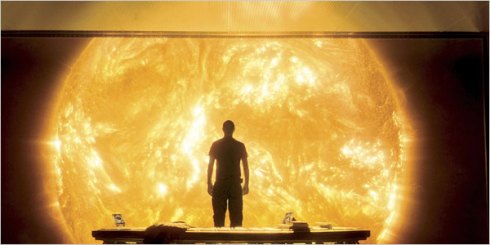
45. Sunshine (Danny Boyle, 2007)

What seems like a less-than-brilliant plot (a spaceship carries a nuclear payload to the center of the solar system in a desperate attempt to restart our dying sun) is elevated here into one of the greatest science fiction films of the last ten years. Boyle totally sells the concept with the help of an amazing cast and a perfect balance of action, suspense, and existential musings.

______________________________

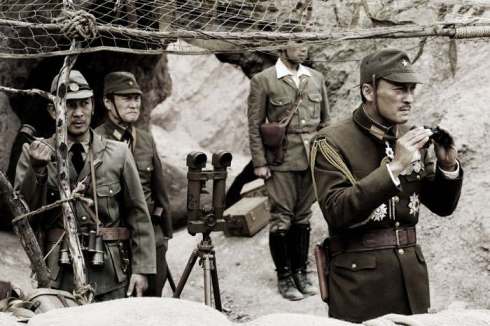
44. Flags of Our Fathers/Letters from Iwo Jima (Clint Eastwood, 2006)

While Letters from Iwo Jima is by far the better of these two films, it is well-worth acknowledging Eastwood’s accomplishment (which, I believe, is entirely unprecedented in film history) in simultaneously creating a pair of films which depict different sides of the same battle. Together or apart, they tell amazing stories (and tell them well), strikingly illustrating the devastation of warfare, whether it ends in victory or defeat.

______________________________

43. The New World (Terrence Malick, 2005)

The most painstaking of auteurs, Malick has directed only four films in the past 35 years. This one explores the well-known story of John Smith and Pocahantas. I say “explores” because this quiet, beautiful film is less about narrative and more about image and emotion, capturing what it might have felt like to set foot on a land unknown to, and untouched by, Europeans, and to experience the first encounters between such radically different cultures.

______________________________

42. Gone Baby Gone (Ben Affleck, 2007)

Who would have guessed that Ben Affleck could direct, especially a film like this? Gone Baby Gone hits like a punch to the gut, rubs the emotions raw, and asks serious, difficult questions that are meant to challenge without imposing its answers on the audience. I defy anyone to come out on the other side of this movie without a deep feeling of ambiguity that will hang around long after it’s over.

______________________________

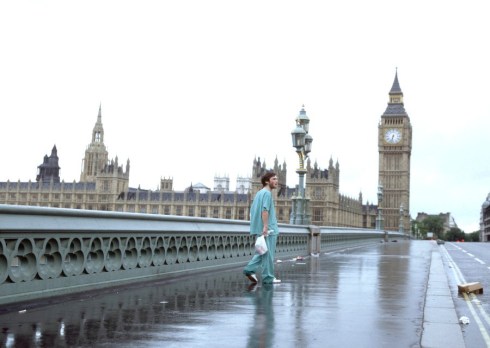
41. 28 Days Later (Danny Boyle, 2002)

28 Days Later hits the ground running and never lets up for a second until it’s over. When apes infected with an experimental “rage” virus are released by activists, an outbreak sweeps across London like wildfire. 28 days after the incident, Jim awakes from a coma in a deserted hospital and finds the people of London replaced with raging, bloodthirsty “infected,” and the quest for survival begins.

______________________________

40. The Dark Knight (Christopher Nolan, 2008)

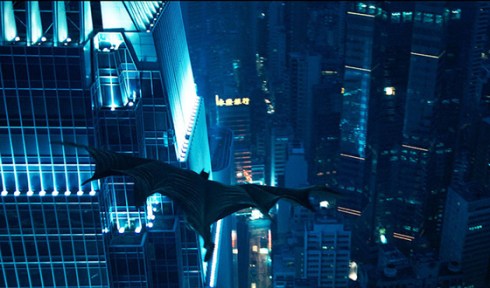
The Nolans’ first Batman movie breathed new life into a franchise that had gone off the rails in the ’90s. Their follow-up transcends the superhero genre entirely. It is an epic crime drama that uses dense philosophical problems as an excuse to stage jaw-dropping action sequences. The opening scene, which introduces the late Heath Ledger’s brilliant Joker character, is one of the best bank heists ever filmed.

______________________________

39. The Hurt Locker (Kathryn Bigelow, 2009)

The first (only?) good movie about the Iraq War, The Hurt Locker succeeds by taking the (one would think) obvious step of putting story above politics. This is war as suspense thriller, depicting the intense missions of an elite bomb squad. As they go from near-death experience to near-death experience, each responds differently to the incredible pressure of the job they do.

______________________________

38. Ratatouille (Brad Bird & Jan Pinkava, 2007)

The pitch for this movie must have sounded like the ramblings of a madman: A cartoon about a rat who wants to become a French chef? Fortunately, the folks at Pixar can do anything they want. Here, in addition to telling a story that is funny, charming, and a feast for the eyes, they produced one of the most profound statements about art, artists, and criticism to ever grace the screen.

______________________________

37. O Brother, Where Art Thou? (Joel Coen & Ethan Coen, 2000)

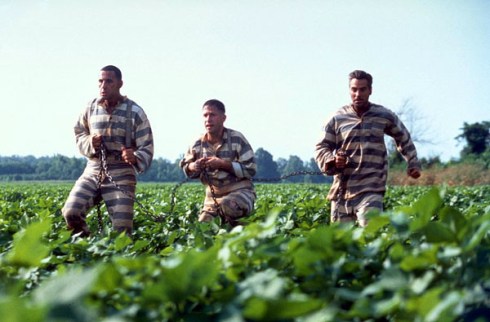
This was the first Coen brothers film I ever saw, and I was instantly hooked: An adaptation of Homer’s Odyssey set in Depression-era Mississippi? That idea is solid gold! O Brother is witty, literate, and laugh-out loud hilarious from beginning to end. Several years and countless viewings later, I’m still catching up with all of the cultural references and in-jokes, and enjoying the smash-hit soundtrack of “old-timey” hymns, bluegrass, and folk music.

______________________________

36. In Bruges (Martin McDonagh, 2008)

This film, written and directed by an award-winning Irish playwright, follows an odd-couple of hitmen who are sent to cool their heels in the oldest medieval city in Europe after a job goes wrong back home. It is the blackest of comedies, sustaining an impossible balancing act between humor and pathos before finally arriving at a weird sort of redemption for its protagonists.

______________________________

35. The Departed (Martin Scorsese, 2006)

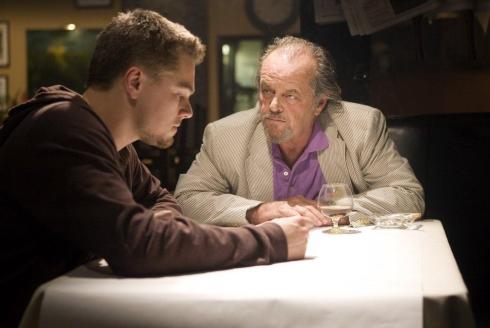
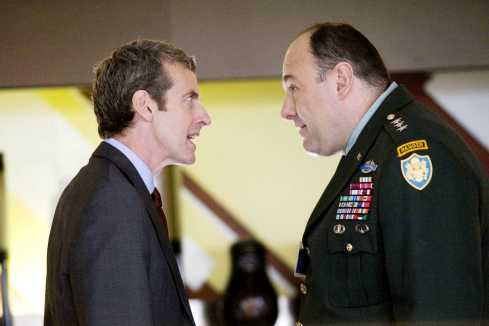
This is the film that got Scorsese his long-overdue notice from the Academy (and thank goodness it wasn’t for The Aviator). After a decade of Oscar-baiting, he finally reminded us of what made him so good in the first place. A remake of a Hong Kong crime thriller called Infernal Affairs, the film tells the story of two mortal enemies who have never met. One is a cop buried in deep cover in a mobster’s organization. The other is the mobster’s mole in the police force. Suspense and violence ensue.
______________________________

34. Almost Famous (Cameron Crowe, 2000)

William Miller, a 15-year old budding writer and music critic, finagles a commission out of Rolling Stone to tour with the up-and-coming rock group Stillwater and write a story about them. However, as days on the road turn into weeks, Will seems to have come down with a major case of writer’s block. From beginning to end, the film feels like nothing less than a labor of love, a semi-autobiographical story about great music, the fans who are passionate about it, and the all-too-human bands that make it happen.

______________________________

33. Artificial Intelligence: AI (Steven Spielberg, 2001)

David is a prototype android child, programmed to love his human “mother” unconditionally. But, when his mother rejects and abandons him, David embarks on a weird, unforgettable quest to earn her acceptance. Directed by Spielberg, but developed by Stanley Kubrick (who died in 1999), AI is a fascinating collaboration that film buffs will be debating and discussing for decades to come. Maybe philosophers will, too.

______________________________

32. Zodiac (David Fincher, 2007)

We already knew Fincher was capable of creating a terrifying serial killer movie that would sear itself into the memory, but with Zodiac he surpasses his earlier work. I’m not sure what it is: Maybe the painstaking attention to period detail, the unsettling atmosphere, or the brilliantly obsessive performance by Jake Gyllenhaal (and the spectacular supporting cast). Most likely though, it’s the fact that the events in this movie closely follow the real-life Zodiac murders that took place in the ’60s and ’70s, and the fact that they remain unsolved to this day.

______________________________

31. Moulin Rouge! (Baz Lurhmann, 2001)

I’ve never been able to come up with a satisfactory reason for why this movie should work at all, let alone succeed so perfectly on nearly every level. Maybe it’s because it seems to be trying so earnestly to tell the truth. Luhrmann clearly understands how to stage a musical when you don’t have to confine it to . . . well, a stage. The leads have incredible chemistry, and the movie dazzles and enchants with light, color, and a slate of anachronistic pop tunes transplanted into the Bohemian revolution in 1899 Paris (the story is based on the opera La boheme).

______________________________

30. The Incredibles (Brad Bird, 2004)

Not constrained by the weight of established characters, story arcs, and origin stories that burden most superhero movies, but free to explore all of the limitless possibilities that comic books have made available, The Incredibles delivers on its title in a big way. Throwing one great idea after another at the screen, the movie offers almost non-stop, mind-blowing action without sacrificing plot or character along the way.

______________________________

29. Hotel Rwanda (Terry George, 2004)

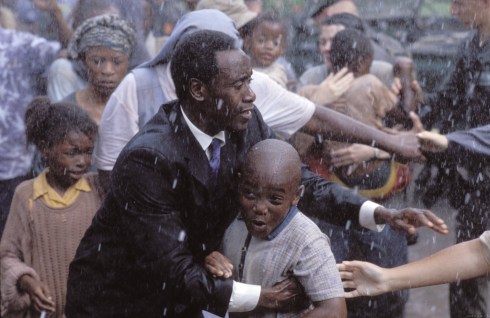
In 1994, genocide was taking place in Rwanda while the world stood by and did nothing. With no help forthcoming from outside the country, the victims were forced to save themselves. This is the unbelievable, inspiring true story of how Paul Rusesabagina saved the lives of over a thousand people (including his wife and children) by sheltering them in the Belgian-owned, four-star hotel he managed when the hotel’s foreign employees and guests abandoned the country.

______________________________

28. Traffic (Steven Soderbergh, 2000)

A top-notch ensemble cast populates several intersecting storylines (each one tinted with a different color) in this hard look at the progress of our decades-old War on Drugs. In addition to being an intensely well-crafted and compelling character drama, Traffic understands the biggest lesson of all: true change begins at home, in the family. It doesn’t pretend to have the solution to America’s drug problem, but it knows where the conversation should begin.

______________________________

27. Hero (Yimou Zhang, 2002)

In describing this film, one might be tempted to note only the perfectly-controlled, indescribably beautiful aesthetics and almost absurdly over-the-top fight scenes on display. To do so, however, would miss an intricately constructed tale reminiscent of Akira Kurosawa’s magnificent Rashomon. The result is a legend that plays like history . . . or maybe vice-versa.

______________________________

26. Dogville (Lars von Trier, 2003)

Lars von Trier has a somewhat interesting approach to cinematic storytelling. Some might call him a purist. With Dogville (a story about a small town that is transformed by the arrival of a woman fleeing the mob) he set out to make a feature-length film on a stage with a bare minimum of scenery. The result is a difficult but rewarding film which draws constant attention to its own artificiality, but also forces our attention onto the narrative and the performers (who are amazing).

______________________________

Top 25 coming soon . . .

The Top 101 Films of the Decade: 75-51

•March 16, 2010 • 2 Comments

Click here for 101-76.

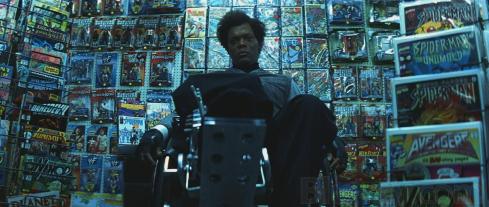
75. Unbreakable (M. Night Shyamalan, 2000)

Shyamalan’s follow-up to The Sixth Sense is his most interesting, artful film to-date. Many films of the last decade have tried to convincingly transplant comic book superheroes into a real-world context. In its own unique way, Unbreakable succeeds better than any of them.

______________________________

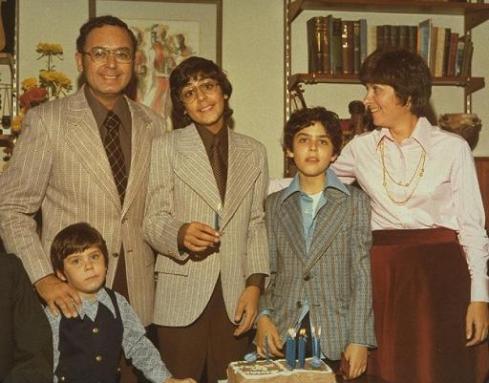
74. Capturing the Friedmans (Andrew Jarecki, 2003)

As an intimate portrait of the slow disintegration of a family, Capturing the Friedmans is riveting. As a horrifying nightmare of American justice run amok in a modern-day witch-hunt, it is practically required viewing (see also Witch Hunt, 2008). Either way, it is an incredible accomplishment of documentary filmmaking, made possible by a collection of home movies unlike any you’ve ever seen (I hope).

______________________________

73. Frost/Nixon (Ron Howard, 2008)

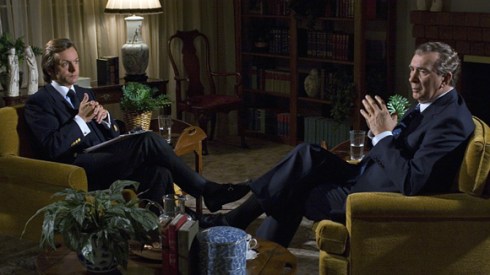
Its central premise revolves around a distortion of historical truth, but this film is still a crackling adaptation of a brilliant play. It’s hard to believe that a movie about a television interview could be so thoroughly gripping, but it is. This is razor-sharp, sweat-inducing drama that relies almost entirely on the gravitas of two men sitting in a room together, engaged in an intellectual battle to the (political) death.

______________________________

72. Gladiator (Ridley Scott, 2000)

Gladiator is about as historically accurate as . . . well, Braveheart. But that isn’t the only similarity between the two. Both are movies about men who were great leaders and skilled warriors driven to extremes by personal tragedy, and both feature impressive battle sequences involving loads of extras. Add to that a pulse-pounding soundtrack by Hans Zimmer, and strong performances from Russell Crowe and Joaquin Phoenix, and you have the makings of an excellent, inspiring epic.

______________________________

71. United 93 (Paul Greengrass, 2006)

United 93 could easily have been exploitative, saccharine, jingoistic, or just plain bad. It is none of these things. It is a respectful, thrilling, frighteningly-authentic account of a day that is seared into America’s collective memory, told from a perspective that most of us were not privy to at the time. And it is so well-constructed that future audiences (who may not be aware of the inevitable outcome) will find it just as compelling.

______________________________

70. Atonement (Joe Wright, 2007)

Although it begins as a quiet British country house drama, Atonement drags you head first into its world and holds you there all the way through its heartbreaking final moments. The gorgeous art-direction and cinematography (including an incredible sustained shot of the British Army stranded at Dunkirk) and several top-notch performances all work in support of a powerful story about unattainable forgiveness.

______________________________

69. Little Miss Sunshine (Jonathan Dayton & Valerie Faris, 2006)

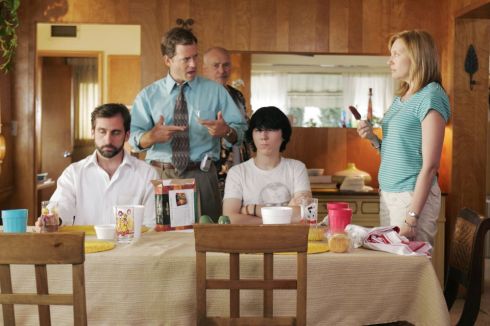
Equal parts hilarious and heartwarming, this movie features an incredibly dysfunctional family who discover a new sense of unity over the course of a road trip in a beat-up van to get young daughter Olive (Abigail Breslin, whose performance was nominated for an Oscar) to the Little Miss Sunshine pageant in southern California. The whole thing builds to an unforgettable climax on the pageant stage that never fails to crack me up when I remember it. Outstanding.

______________________________

68. Minority Report (Steven Spielberg, 2002)

In this mind-bending sci-fi murder mystery, an experimental future “precrime” police unit uses a group of precognitives who can reliably predict violent crimes before they happen, leading to arrests for murders that would have been committed. This slick system is disrupted, however, when the precogs say that unit chief John Anderton (Tom Cruise) will murder a man he’s never even met.  Convinced that he’s been framed, Anderton goes on the run and takes us on a thought-provoking journey through questions about the nature of free will.

______________________________

67. Hot Fuzz (Edgar Wright, 2007)

I have probably seen this movie upwards of 20 times since it was first released, and each time I notice something new (and laugh just as hard). This may well be the most flawless, intricately constructed comedy ever made; every single moment in the whole film is carefully connected to the larger structure, leading to gags that pay off again and again and again. Add to that a final, ridiculously-awesome action sequence that just keeps going and going, and you have the perfect formula for an entertaining evening, whether alone or with friends.

______________________________

66. Synecdoche, New York (Charlie Kaufman, 2008)

Charlie Kaufman is kind of a genius at writing screenplays, and with this film he proved that he’s an exceptional director, as well. None of his ideas ever sound anything like something you’ve seen in a movie before, and this is no exception. Its ambition alone is awe-inspiring. It effectively turns Shakespeare’s famous “All the world’s a stage” completely on its head.

______________________________

65. The Life Aquatic with Steve Zissou (Wes Anderson, 2004)

Wes Anderson is the king of the off-beat, hyper-stylized family dramedy. All of his films exist in their own little artificial worlds, which makes them both fun and funny, but he never ridicules his characters, even when they are ridiculous. In The Life Aquatic, Bill Murray is magnificent as Steve Zissou, a Cousteau-esque ocean explorer and documentarian who sets out with his estranged son and misfit crew on an insane mission to hunt down the shark that ate his best friend.

______________________________

64. Memento (Christopher Nolan, 2000)

The Nolan brothers’ break-out feature is a trippy noir mystery/thriller about a man searching for his wife’s killer. His search is complicated by the fact that his brain cannot record new memories and he is constantly forgetting everything that’s happened. The audience shares his disorientation via a simple but ingenious storytelling device: the scenes run in reverse chronological order.

______________________________

63. Big Fish (Tim Burton, 2003)

Everyone wants to be the star of their own life story, but few people pursue this goal as single-mindedly as Edward Bloom, who has constructed a fantastic and elaborate mythology around the events of his life. His son Will, who grew up adoring (and believing) his father’s stories, has grown distant with the realization that none of them can possibly be true. Now, as Edward dies of cancer, Will returns to his side, hoping to finally learn who his father really is. This is a beautiful, touching film about fathers and sons, stories and legacies, and the idea that truth is an essential ingredient of myth.

______________________________

62. Paprika (Satoshi Kon, 2006)

A brilliant team of scientists have unlocked a way for therapists to visit people inside their dreams. Unfortunately, before the proper safeguards are in place, a sinister figure hijacks the technology and begins trapping people inside their own minds. Unlike most American animators, the Japanese understand that cartoons don’t have to be for kids (and don’t have to be about talking animals), and this mind-boggling film pushes that freedom to the limit while telling an incredible story that blurs the line between fantasy and reality.

______________________________

61. In the Loop (Armando Iannucci, 2009)

This movie plays like the improvisational love child of Stanley Kubrick’s Dr. Strangelove and the hilarious British sitcom “Yes, Minister” (it is, in fact, based on another British series, “The Thick of It,” which I have not seen). The one-liners fly so thick and fast that you’ll either have to watch it twice, or pause frequently to give yourself a chance to laugh as the characters attempt to navigate the bureaucratic nightmare of Anglo-American diplomatic relations in the lead-up to war.

______________________________

https://i0.wp.com/www.algorithm.com.au/albums/screenshots/Serenity_Battle.sized.png

60. Serenity (Joss Whedon, 2005)

There have been many notable science fiction films during the past decade, but hardly anyone has attempted space opera, and certainly no one has done it half so well as Joss Whedon in Serenity, the epic follow-up to his short-lived but greatly-mourned TV series “Firefly.” This movie is awesome, and while it is not at all necessary to watch the television series first in order to appreciate or understand it, you’d be depriving yourself if you didn’t spend every possible minute with Serenity’s crew.

______________________________

59. The Prestige (Christopher Nolan, 2006)

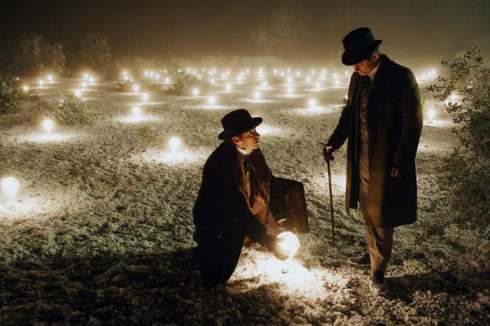
Hugh Jackman and Christian Bale play rival magicians in turn-of-the-century London, and what begins as a friendly competition eventually turns fatal as they go to increasingly dangerous and questionable extremes in their efforts to one-up each other. This incredibly rich tale of obsession has a complex “story within a story (within a story)” structure that will keep you riveted, and keep you guessing, until the final, devastating revelation.

______________________________

58. The Exorcism of Emily Rose (Scott Derrickson, 2005)

The stated purpose of this film is to “make believers think twice about what they believe and doubters have doubts about their doubts.” Based on a true story, it is an interesting hybrid between horror and courtroom drama, dealing with a priest on trial for the death of a girl, a death which may have resulted from an exorcism he was performing on her. As the story, which is both terrifying and thought-provoking, unfolds, viewers will find that the filmmakers have definitely achieved their goal.

______________________________

57. Russian Ark (Aleksandr Sokurov, 2002)

With Russian Ark, Sokurov has accomplished one of the most ambitious, awe-inspiring cinematic projects ever conceived: to film an entire feature in one single, unbroken shot. The movie is filmed from the point of view of a man who mysteriously finds himself moving invisibly through the Winter Palace in St. Petersburg. As he roams from room to room, he is joined by a 19th-century French aristocrat (and Russophobe), and together the two experience some 300 years of Russian history.

______________________________

56. Finding Neverland (Marc Forster, 2004)

An imaginative biopic about playwright J.M. Barrie, best known as the author of Peter Pan, this story focuses on Barrie’s relationship with the fatherless Davies boys, who serve as the inspiration for his enduring story of the boy who wouldn’t grow up. With an amazing cast that includes Johnny Depp, Kate Winslet, Dustin Hoffman, and Julie Christie, and a glorious, lyrical score, this movie is simply, thoroughly enchanting.

______________________________

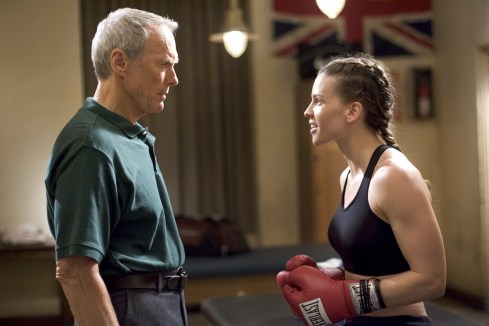
55. Million Dollar Baby (Clint Eastwood, 2004)

I don’t like sports movies, as a general rule. I find them largely formulaic, often manipulative, and generally uninteresting. However, I do have a lot of admiration for the films of Clint Eastwood. Million Dollar Baby pretends to be a fairly straight-forward boxing movie, but sneaks around behind you and attacks as a touching story about two broken people who fill an essential gap in each others’ lives; also, Morgan Freeman narrates. Enough said.

______________________________

54. Howl’s Moving Castle (Hayao Miyazaki, 2005)

Hayao Miyazaki is often referred to as the Japanese Walt Disney. The comparison is apt; he is a brilliant and innovative storyteller. In this fantasy, a young hatter named Sophie is magically aged by the Witch of the Waste, and becomes the housekeeper of the witch’s rival, the Wizard Howl, hoping to reverse the spell. It is one of Miyazaki’s most magical, beautifully-realized stories.

______________________________

53. Crouching Tiger, Hidden Dragon (Ang Lee, 2000)

Ang Lee started the decade strong with this high-flying martial arts drama. Perhaps best remembered for some of the most impressively staged and choreographed fight scenes ever filmed, the movie also has some very fine performances, achingly beautiful cinematography and art direction, and a stellar score featuring performances by Yo-Yo Ma.

______________________________

52. Lars and the Real Girl (Craig Gillespie, 2007)

Lars and the Real Girl is an incredibly delicate balancing act. It is extremely well-written, but it wouldn’t work at all if the performers had tried to maintain ironic distance. Lars, an extremely introverted young man, shocks his brother and sister-in-law when he orders a life-size sex doll and behaves as though she is a living, breathing human being. The family doctor advises everyone to humor him, and what follows is a funny and heartwarming portrait of love and community.

______________________________

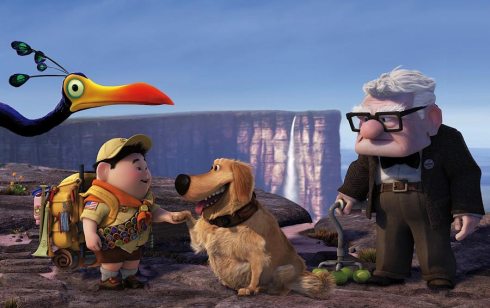
51. Up (Pete Docter & Bob Peterson, 2009)

If the opening sequence of Up doesn’t make you cry, then your heart is made of stone. After an incredibly effective yet pithy introduction, we get a rousing adventure story thinly draped over a deep lesson about dealing with grief and loss, and the weight of dreams deferred. This movie is full of clever ideas and eye-popping, white-knuckle action, but the personal journeys of the characters is what will stay with you long after it’s over.

______________________________

50-26 are here.

The Top 101 Films of the Decade: 101-76

•March 12, 2010 • 1 Comment

This list is utterly futile. I felt that I should begin by making that perfectly clear. It is futile for three reasons: the problem of quantity, the problem of selection, and the problem of criteria. Allow me to explain.

First, according to industry numbers, 7152 films were released in America during the past decade. I have seen slightly more than 10% of them. To see them all, one would need to average nearly two films a day for the entire decade. Now, of course, the vast, overwhelming majority of these movies are not worth seeing at all, but even assuming that I can weed most of those out before I waste time on them (which I can), I still haven’t had time to see everything worth my attention. As a result, there will automatically be films missing from a list such as this which should be on it.

Second, assuming (as I do) a better than average ability to select quality films, although I have only seen a fraction of the films released during the past decade, more than half of those were films that I greatly enjoyed. If you’re keeping up with the numbers, you’ll realize that I’m going to end up excluding a whole lot of movies that I really like; even a lot of movies that I would wholeheartedly recommend. These movies really ought to be on this list, but I don’t want it to go on forever, and blanket inclusiveness would cheapen the entire enterprise.


Finally, there is the problem of how to go about deciding what a “top film” is. There are essentially three qualities to consider for an endeavor like this: artistic significance, cultural significance, and personal significance. It is impossible for one list to meaningfully encompass all three of these qualities, although there would be a certain amount of overlap between them. In the end, I did not feel qualified to create a list of the greatest films of the decade. It is still too soon to do so, I have not seen enough films, and such a list would include a number of films that I recognize and appreciate as great works of art, but that I do not necessarily enjoy. I rejected the idea of “decade-defining” films, as well, because (despite my intense interest in films which somehow speak for a particular time and place) such a list would be made up of so many films which I personally dislike.

So, in the end, this is simply a list of many of my favorite films from the first decade of the 21st century. I think it reveals that while I take a very broad approach in my film experiences, my tastes remain decidedly Americentric, and even somewhat populist in a middle-brow sort of way. This list is changing even up to the moment that it is published here, and will continue to change immediately afterward. Nevertheless, on the whole I am quite satisfied with it, and I hope that (as with all such lists) it will generate both healthy discussion and debate, and some memorable movie-watching experiences. Enjoy.

101. Coraline (Henry Selick, 2009)

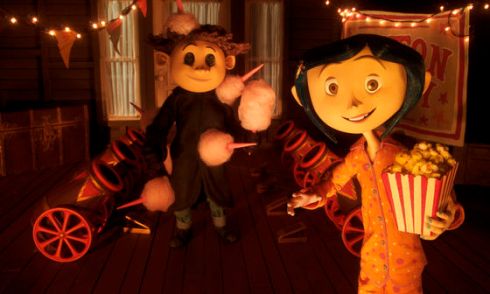
Selick brings Neil Gaiman’s  dark, thrilling take on an Alice in Wonderland story magically to life with stop-motion animation. I can’t think of many films which have so skillfully walked the line between enchanting and disturbing; this one keeps the visual surprises coming even as its story keeps you on the edge of your seat.

______________________________

100. Ocean’s Eleven (Steven Soderbergh, 2001)

Who doesn’t love a good heist film? This movie (which features George Clooney, Brad Pitt, Matt Damon, and company knocking over a casino) is one of the slickest, most stylish of its kind, oozing debonair charm from every pore. Everyone in it is having a great time, and the fun is infectious.

______________________________

99. Avatar (James Cameron, 2009)

12 years of obsessive planning and production paid off in a big way for Cameron. His latest mega-blockbuster is pure escapist spectacle, in the best possible way. Avatar may be a lightweight when it comes to story and character development, but Cameron really knows how to hit audiences where they live, by transporting them somewhere they’ve never been.

______________________________

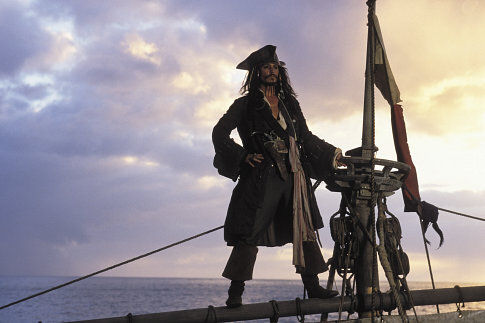
98. Pirates of the Caribbean: The Curse of the Black Pearl (Gore Verbinski, 2003)

This movie based on a Disney theme park ride was the surprise hit of the summer when it first hit theaters, thanks in no small part to Johnny Depp’s brilliant, now-iconic performance as the cocky, out-of-his-depth Captain Jack Sparrow. With a smart balance of action, comedy, and romance, Pirates is hard to beat for pure entertainment (and the two sequels aren’t half-bad, either).

______________________________

97. Chicken Run (Peter Lord & Nick Park, 2000)

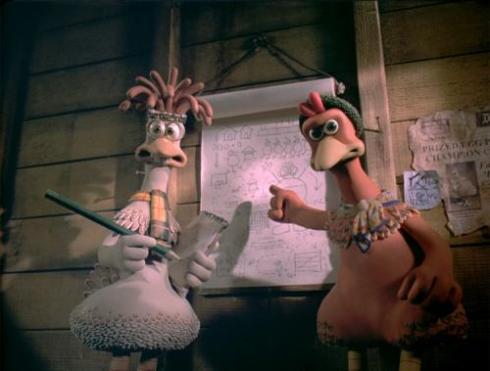
With three glorious stop-motion shorts starring eccentric inventor Wallace and his canine caretaker Gromit already under their belts, Park and Lord turned their incredible skill towards the creation of a feature film. The result was Chicken Run, a hilarious, affectionate parody of The Great Escape starring a group of feathered fowl who concoct a desperate plan to avoid the chopping block.

______________________________

96. Defiance (Edward Zwick, 2008)

I don’t know how filmmakers keep digging up brand new stories to tell about World War II, but this is one of the most interesting I’ve ever run across. Defiance is about one of the few major efforts by a group of Jews to openly resist genocide. The story that emerges is astounding and inspiring, but also refreshingly complex in its portrayal of both heroes and villains.

______________________________

95. Finding Forrester (Gus Van Sant, 2000)

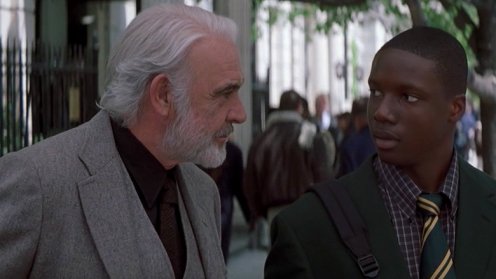
I’m not totally sure why I have such a soft spot for this movie, but I find watching it to be an incredibly cathartic experience. The characters are easy to connect with, the themes resonate, and I love what it has to say about writing, even if it is a bit cliche. Plus, this is the last good movie to feature the legendary Sean Connery before he retired from acting.

______________________________

94. Away We Go (Sam Mendes, 2009)

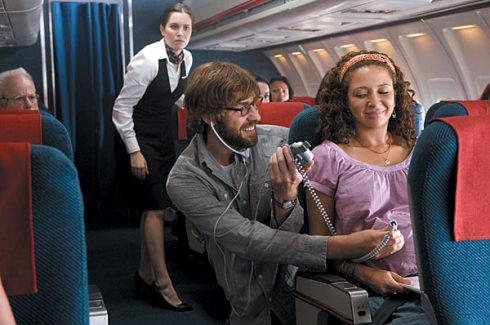
I can’t quite account for my affection for this movie, either. I imagine it has something to do with the irresistible charisma of the two leads, an amazing supporting cast, and a catchy, soothing soundtrack. I could also point to my own identification with the main characters’ dilemma: not sure where they want to wind up or what they want to do when they get there, and feeling that they’re too old not to have this figured out already.

______________________________

93. Maria Full of Grace (Joshua Marston, 2004)

Maria Full of Grace is a major work of social conscience about a subject that few people understand. That makes it potentially important, but would matter very little if the story weren’t so relentlessly compelling. Maria is a pregnant Colombian teenager who becomes a drug mule, running cocaine to the United States. The film is intense, and features a stand-out debut performance by Catalina Sandino Moreno (who received an Oscar nomination).

______________________________

92. The Curious Case of Benjamin Button (David Fincher, 2008)

Even if you can’t quite connect with the central character (born a very old man, he ages backwards, growing younger every day), it is difficult not to admire Fincher’s mastery of the visual aspects of cinema. Benjamin Button is a gorgeous film to look at, and it genuinely evokes the sensation of quietly traveling through history via a lifetime of experiences.

______________________________

91. The King of Kong: A Fistful of Quarters (Seth Gordon, 2007)

I absolutely love documentaries that illuminate bizarre, marginalized subcultures I’ve never heard of. This is probably the best of those. It is an epic account of the battle for video game dominance between an egotistical arcade champ and the underdog challenger who is determined to break his Donkey Kong high-score record.

______________________________

90. Garden State (Zach Braff, 2004)

When I first saw this movie several years ago, I felt that it spoke directly to my generation of directionless twenty-somethings; perhaps the most privileged generation in history, all they really want is meaning and purpose. Now, it doesn’t seem quite as profound as it once did, but it is still by turns poignant and hilarious, strikingly filmed, and has a killer soundtrack.

______________________________

89. The Bourne Ultimatum (Paul Greengrass, 2007)

The Bourne trilogy essentially deconstructed the spy thriller genre with a three-movie arc questioning the secret agent’s license to kill, while at the same time delivering marvelously kinetic action flicks. The third chapter even managed the rare and difficult feat of surpassing the first.

______________________________

88. Perfume: The Story of a Murderer (Tom Tykwer, 2006)

A baby is born in 18th-century France with a supernatural sense of smell. When he comes of age, he apprentices himself to a perfumer, which eventually leads him to become a serial killer on a quest to concoct the ultimate scent. This is a beautiful, often-disturbing, very challenging movie quite unlike anything else I’ve ever seen.

______________________________

87. Let the Right One In (Tomas Alfredson, 2008)

A Swedish vampire movie that gets everything right, this is the high-brow answer to the Twilight phenomenon (and, incidentally, predates it). It is flawlessly paced, with gobs of atmosphere, a delightfully creepy ambiguity, and an excellent understanding of what to show and what to leave to the viewer’s imagination.

______________________________

86. A Mighty Wind (Christopher Guest, 2003)

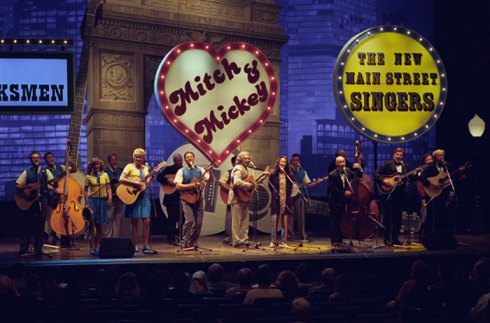
Christopher Guest and his regular collaborators are improvisational comic geniuses, as they’ve been demonstrating with side-splitting “mockumentaries” since This Is Spinal Tap. That magnum opus aside, A Mighty Wind (which takes on the folk music scene) is probably their best work. The laughs are non-stop, the music is fantastic, and there is a lived-in, human quality to the characters that makes them feel totally real.

______________________________

85. Chicago (Rob Marshall, 2002)

It didn’t quite bring back the big Hollywood musical, but it reminded us all of what was so great about the genre. Chicago has catchy songs, loads of razzle-dazzle, and paints a wickedly cynical portrait of the media, the American justice system, and the people who are adept at manipulating them both.

______________________________

84. Signs (M. Night Shyamalan, 2002)

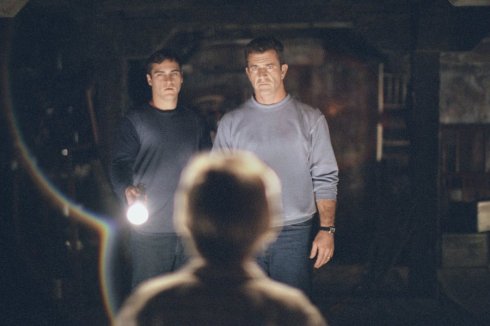
As a filmmaker, Shyamalan has a lot of bad, egotistical qualities, but he also takes a lot of his cues from the likes of Alfred Hitchcock. Signs is a very well-constructed alien invasion thriller, with a slow, ominous build-up and a tense climax. And if it falls prey to the Achilles’ heel of such films (the monster is neither scary nor convincing once you finally see it), it more than makes up for it with fine performances by Mel Gibson, Joaquin Phoenix, and Abigail Breslin (in her film debut!).

______________________________

83. Donnie Darko (Richard Kelly, 2001)

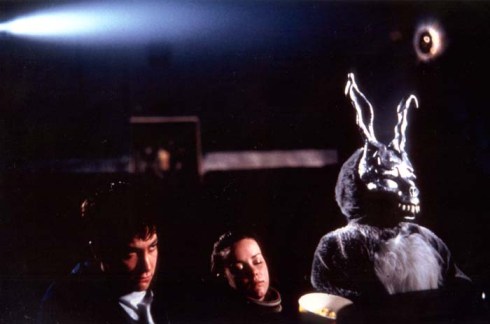
There are some movies that make you think, and some that make you think deeper. And then there are movies that just want to screw with your mind. That’s what Donnie Darko is. Kelly hasn’t done much yet, and what he has done has been uneven and deeply weird. But this movie put him on the map, and with good cause. Just take a look at the cast list: there is a reason that all of those high-quality performers signed onto a project so far outside the mainstream.

______________________________

82. District 9 (Neill Blomkamp, 2009)

I didn’t know what to expect walking into District 9, and it totally blew me away. Part mockumentary and part action thrill ride, this movie is all sci-fi brilliance. Producer Peter Jackson gave director Blomkamp a modest budget to do something with after their Halo project fell through, and he created an immersive alternate world in which aliens come to Earth, not as friends or invaders, but as refugees that no one wants to deal with.

______________________________

81. The Majestic (Frank Darabont, 2001)

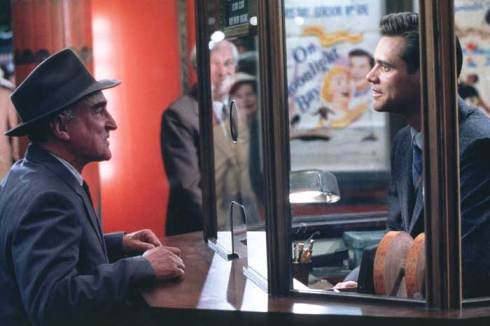
At one point Jim Carrey was best-known as a comedian, but the past decade has made it clear that his real gift is in drama. The Majestic is a simple, sentimental story about a blacklisted Hollywood writer who gets amnesia and finds himself in a sleepy little town, hailed as a war hero that everyone thought was dead. Its warmth, reminiscent of a Capra film from 50 years ago, conceals some very serious themes. And it’s just a great movie about movies.

______________________________

80. A Beautiful Mind (Ron Howard, 2001)

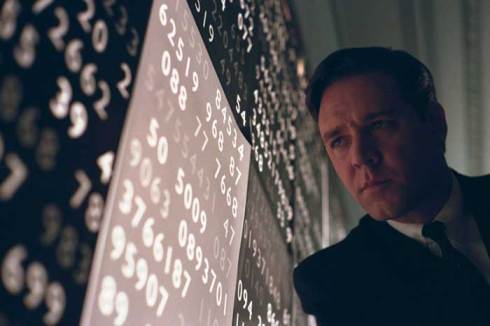
This film is far more fascinating than a biopic about a theoretical mathematician has any business being. Thanks to great performances by Russell Crowe, Paul Bettany, Ed Harris, etc., I was drawn completely inside John Nash’s life, and even into his titular mind. And, if the movie is not entirely accurate about its subject, it at least has the admirable quality of inspiring viewers to go find out more for themselves.

______________________________

79. Lake of Fire (Tony Kaye, 2006)

It would be impossible to make a case for or against abortion in a single documentary, but two and a half hours is a good start towards illuminating the deceptive complexity of the issue. What emerges is a disturbing portrait of two factions in the most highly-charged battle of the culture wars. Both sides are extreme, a little scary, and completely intractable. Ultimately, the film suggests that neither side can give ground because, in the end, neither is entirely right or entirely wrong.

______________________________

78. Monsters, Inc. (Pete Docter, David Silverman, & Lee Unkrich, 2001)

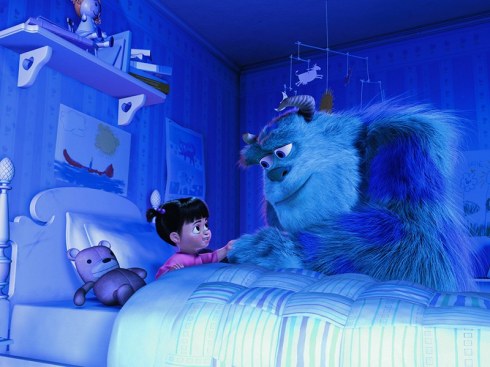
Pixar’s films are visual feasts; each successive effort breaks new ground in computer animation. But that wouldn’t matter very much if they weren’t such amazing and original storytellers. This movie imagines a world in which monsters are terrified of little children (whose touch is toxic), but need children’s screams to power their cities. And that’s just the beginning.

______________________________

77. Shaun of the Dead (Edgar Wright, 2004)

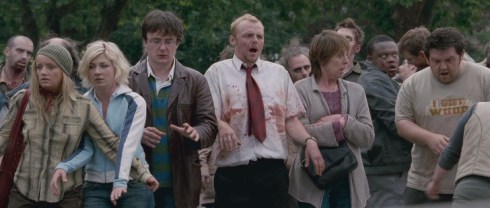
The minds behind the hilarious British TV show “Spaced” produced a zombie comedy that is one of the best movies ever in either genre. All good zombie movies have something to say about their social context. This one slyly (and hilariously) suggests that most people already go through life like the walking dead: mindlessly following routine without ever really living at all.

______________________________

76. Crash (Paul Haggis, 2005)

What I love most about Crash is not that it features a powerhouse ensemble cast, that it effectively juggles a number of riveting overlapping stories, or that it is incredibly moving (although all of those are true). What I love most is the way that it deals so honestly with the very real difficulties of connection and understanding across cultural boundaries, even among people who live side by side.

______________________________

75 – 51 are here.

2010: An Oscar Commentary

•March 7, 2010 • Leave a Comment

In movie terms, 2009 is now completely behind us, and overall, I would call this year’s Oscar show delightful. Despite a disappointing, underwhelming hosting job by Steve Martin and Alec Baldwin, this show was a huge improvement over last year’s show. Part of the difference, perhaps, had to do with much more satisfactory results this year. You may recall that last year my mood soured early when WALL-E, the best film of the year, was spurned again and again in favor of vastly inferior fare. It didn’t help, though, that last year’s ceremony felt oddly bloated in all the wrong ways. They were trying new ideas, and most of them were flopping.

This year, I would say, the new ideas worked beautifully, again and again. They were hitting nearly everything dead-on, until things started to wear just a little bit thin at the end of the broadcast. The presenters were solid, the speeches were largely short and sweet, and best of all: The focus really felt like it was on the art of film and filmmaking. The few digressions, like a retrospective on John Hughes, and a montage about horror movies, were low-key and entertaining (unlike last year’s not-so-great montage of show tunes).

Now, let’s see how the nominees did once the dust settled. The Hurt Locker, of course, was the big winner of the night, taking home 6 awards out of 9 nominations. This makes it the 3rd most-awarded film of the decade (tied with Chicago, behind The Return of the King and Slumdog Millionaire), but looking at all of Oscar history, it only ties for 26th place with 9 other films (including Forrest Gump and The Godfather, Part II). Avatar, meanwhile, despite being the highest-grossing film in movie history, only won 3 of its 9 nominations, all in “aesthetic” categories.

Meanwhile, of the other Best Picture contenders, Precious and Up both won 2 awards, while Inglourious Basterds and The Blind Side got only a single win (out of 8 and 2 nominations, respectively). The other 4 films went home empty-handed, a particularly biting loss for Up in the Air, which had 6 nominations and seemed like a front-runner a few months ago. Of the other nominees, Crazy Heart won 2 of its 3 nominations, The Young Victoria won 1 of its 3 nominations, and Star Trek won 1 of its 2 nominations. Perhaps the extra Best Picture nominees are what make the awards feel more spread out than normal. I don’t think they actually are.

Now, to see how my predictions went. It looks like I actually called 13 out of 19 with my initial predictions, and then nudged my score up to 15 when I re-examined my picks yesterday. Last year I had only 8 right originally, but managed to bring it up to 14 before the ceremony began. It’s a slight improvement, but an improvement nonetheless. Ironically, a few of my changes this year actually would have won originally, but I second-guessed myself. Even though I gained ground overall, I could have gained even more with a little more confidence. Ah, well.

Full commentary continues below the fold.

Continue reading ‘2010: An Oscar Commentary’