
Film History Essentials: Passage de Vénus (1874)
(English: Passage of Venus)
Summary:
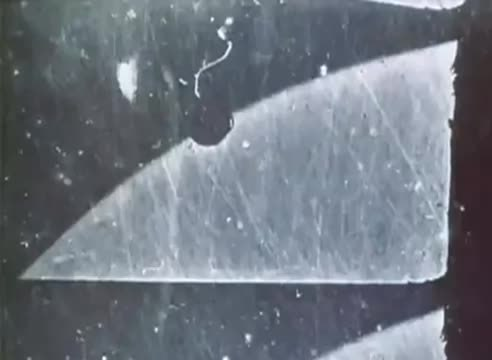
A series of a few dozen photographs show the transit of the planet Venus as it passes between the Earth and the sun.
Essentials:
On 9 December 1874, Venus passed directly between Earth and the sun for the first time since 1769, and it was kind of a big deal. The passage is an extremely rare occurrence. It happens twice, eight years apart, followed by a gap of over 100 years. The transit would happen again in 1882, and then return in 2004 and 2012. The next pair of transits will occur in 2117 and 2125.
Historically, the transit of Venus has had great scientific importance, providing observers with a variety of opportunities for research, refining measurements, and calibrating equipment. This was the first transit of Venus since the invention of photography. At least 60 known groups and individuals from all over the world, some privately-funded, set up observation points throughout the eastern hemisphere to observe and record the event. There were observers from the United States, France, England, Russia, Germany, Italy, Austria, Holland, Australia, and Mexico.
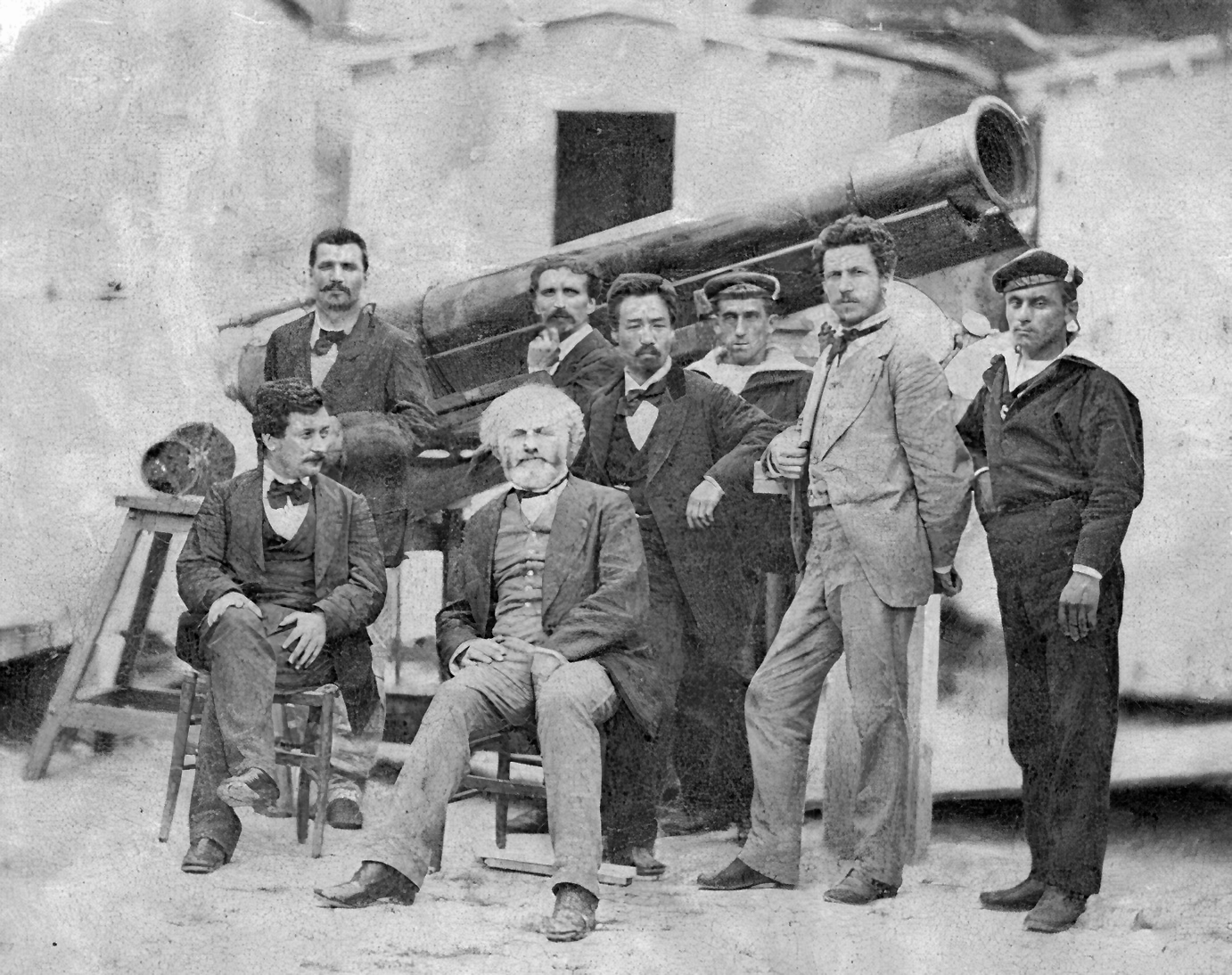
The series of photographs from Passage de Vénus was taken in Nagasaki, Japan by French astronomer Pierre Jules César Janssen and Brazilian engineer Francisco Antônio de Almeida Júnior. They used a device called the “Janssen revolver,” operated by Almeida (and developed, of course, by Janssen). The design, inspired by Samuel Colt’s famous repeating handgun, involved two discs rotating in front of a sensitive plate (also rotating) in such a way as to create a series of sequential photographic images that were reflected down from the lens in the revolver’s barrel. The Janssen revolver could record up to 48 images at a rate of one every 1.5 seconds.
Although it wasn’t as useful as he had hoped in gathering the data the expedition needed, Janssen’s invention was important to the development of chronophotography. One of the many precursors of cinema, chronophotography originally developed as a means of scientifically studying various types of motion by taking a sequence of photographs of a subject in action. Janssen presented his device before the Société Française de Photographie the following year, and soon others would take the application of similar devices further than Janssen could have imagined.
There isn’t one firm date that everyone can agree on as the definitive birth of film, though it certainly wasn’t in 1874. Cinema emerged gradually over a period of several decades, evolving out of a variety of artistic traditions, and advancing through many technological innovations in many different countries. Early film histories often look back several centuries at forms of “pre-cinema” such as shadow puppetry and magic lantern shows, that were in use long before even the invention of photography.
Passage de Vénus belongs to this era of pre-cinema. It was not the first film ever made. By any reckoning, that came much later. Technically, it’s not a motion picture at all, and was never conceived as one. It’s just a sequential series of photographs depicting an event. It is, however, the oldest entry in the best-known databases of films online, and modern viewers can now watch it as though it were a motion picture. The images taken by Almeida and Janssen have been strung together to create an animated view of Venus passing in front of the sun way back in 1874. Well, sort of.
Screening:
These images were produced nearly 150 years ago and they do simulate an image from 1874 in motion when passed before the eyes of the viewer. That much is true. However, even though the transit of Venus was successfully photographed by the expedition, none of those plates are known to have survived to the present day. What we have instead appears to be a set of test images taken of a model. It seems that, from the very beginning, motion photography was an art of illusion. There’s something decidedly poetic and strangely appropriate about that.
As the quote at the top of this page says, “A film is a petrified fountain of thought.” There is something genuinely remarkable about witnessing these images from so far in the past, frozen in time, but moving before our eyes. Let this sequence play through a few times (after all, it’s only five seconds long), and think about how it bridges the vast distance between us and the world of the people who made it. Think of all the many people who have seen it across all of the years since it was photographed, and think of the many viewers (perhaps even more!) yet to come.


 Moviegoings
[…] 20 years after Passage de Vénus captured the first known sequence of images of a body in motion, development of motion picture […]
LikeLike
Film History Essentials: Nicholas Sisters Split Dance (1895) | Moviegoings said this on February 8, 2023 at 10:02 am |
[…] previous president, Jules Janssen (see right), whose “Janssen revolver” captured the transit of Venus in 1874, and later inspired Marey’s own “chronophotographic gun.” At about 0:02 […]
LikeLike
Film History Essentials: Le Débarquement du Congrès de Photographie à Lyon (1895) | Moviegoings said this on February 11, 2023 at 10:00 am |
Honestly, not too much different from the 2012 passage! https://youtu.be/4Z9rM8ChTjY
LikeLike